
- Part 1. Why are LFP batteries used in electric scooters?
- Part 2. How does an LFP battery work in an electric scooter?
- Part 3. Key parameters for LFP battery electric scooters
- Part 4. LFP battery vs NMC battery for electric scooter
- Part 5. How to choose the right LFP battery for electric scooter
- Part 6. How long will an LFP battery last in an electric scooter?
- Part 7. Safety standards for LFP electric scooter batteries
- Part 8. Choosing the right charger for your LFP battery
- Part 9. Design considerations for custom LFP scooter batteries
- Part 10. Common issues with LFP electric scooter batteries
- Part 11. FAQs
A reliable LFP battery for electric scooter applications can provide excellent safety, long cycle life, and stable performance, making lithium iron phosphate (LiFePO4) batteries an attractive option for many scooter manufacturers and developers.
However, choosing the right battery is not only about chemistry. Factors such as voltage, capacity, discharge rate, battery size, BMS design, and operating environment all influence the final performance of an electric scooter with LFP battery technology.
This guide explains how LFP batteries work, why they are used in electric scooters, and what you should consider when designing or selecting an LFP battery solution.
Key takeaways
- LFP batteries offer excellent safety, long cycle life, and stable performance for electric scooters.
- An LFP battery scooter is especially suitable for applications requiring frequent charging, such as rental and delivery fleets.
- LFP batteries have lower energy density than NMC batteries but provide better thermal stability and longer lifespan.
- Proper battery pack design, BMS protection, and certifications are essential for reliable electric scooter operation.
- Custom LFP battery solutions allow manufacturers to optimize size, capacity, voltage, and performance for specific scooter designs.
Part 1. Why are LFP batteries used in electric scooters?
Electric scooters require batteries that can handle frequent charging, outdoor environments, vibration, and variable power demands.
Compared with traditional lead-acid batteries, lithium batteries provide higher energy density and longer service life. Among lithium technologies, LFP batteries have gained attention because they offer a strong balance between safety, durability, and cost.
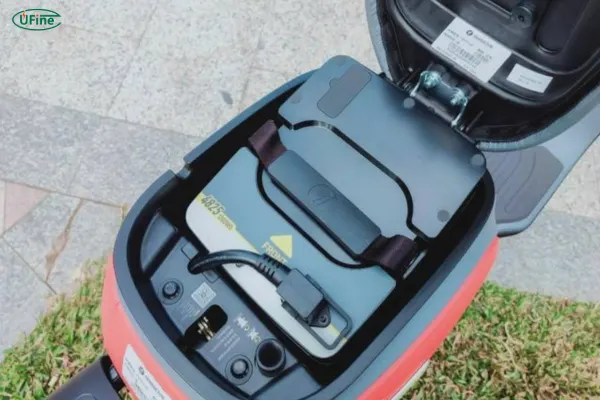
The adoption of LFP batteries in electric scooters is gaining traction due to their distinct advantages. However, like all technologies, they come with their own set of limitations.
1 Pros of LFP Batteries in Electric Scooters
- Safety: LFP batteries are safer than traditional Li-ion batteries due to their stable chemical structure. They are less prone to thermal runaway, reducing the risk of fires or explosions.
- Longer Lifespan: LFP batteries are known for their long cycle life. They can endure 3,000 to 5,000 charge cycles, meaning they will last significantly longer than typical Li-ion batteries.
- Better Performance in High Temperatures: LFP batteries have superior thermal stability, making them ideal for scooters used in hot climates or high-performance models that need to handle prolonged high power usage.
- Environmental Friendliness: Unlike some other lithium-based batteries, LFP batteries are free from toxic metals like cobalt and nickel, making them more environmentally sustainable.
- Cost-Efficient: LFP batteries tend to be less expensive than NCM (Nickel Cobalt Manganese) and NCA (Nickel Cobalt Aluminum) lithium-ion batteries due to the lower cost of iron and phosphate.
2 Cons of LFP Batteries in Electric Scooters
- Lower Energy Density: LFP batteries typically have lower energy density than other lithium-ion variants, meaning they store less energy per unit of weight. As a result, scooters with LFP batteries may have a slightly shorter range compared to Li-ion models.
- Charging Speed: While LFP batteries are relatively efficient, they do not charge as quickly as NCM or NCA batteries.
- Cold Weather Performance: LFP batteries are not as efficient in extremely cold conditions, though their battery management systems (BMS) help mitigate this issue.
Part 2. How does an LFP battery work in an electric scooter?
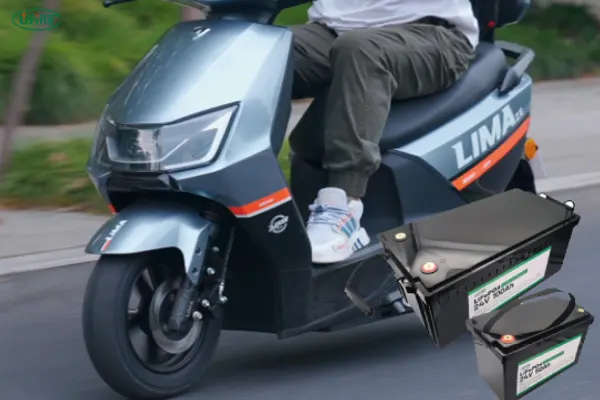
An LFP battery is a type of lithium-ion battery that uses lithium iron phosphate as the cathode material.
During discharge:
- Lithium ions move from the anode to the cathode.
- Chemical energy is converted into electrical energy.
- The battery provides power to the motor controller and electric motor.
During charging, the process reverses and lithium ions move back to the anode.
In an electric scooter, the battery pack works together with:
- Battery cells
- Battery management system (BMS)
- Protection circuit
- Charging system
- Motor controller
The overall design determines the scooter’s acceleration, riding range, charging speed, and reliability.
Part 3. Key parameters for LFP battery electric scooters
When choosing an LFP battery for your electric scooter, there are several key parameters to consider to ensure optimal performance:
- Voltage (V): Most electric scooters use 36V or 48V systems, but custom configurations can also be created based on the scooter’s design and performance requirements. Ufine Battery can provide tailored voltage configurations to meet specific needs.
- Capacity (Ah): Battery capacity, measured in amp-hours (Ah), determines how much energy the battery can store. A higher Ah rating provides longer range and more power for the scooter.
- Power (W): Power output, measured in watts, indicates the motor’s efficiency. For electric scooters, power ratings typically range from 250W to 2000W, depending on usage.
- Energy Density: LFP batteries tend to have lower energy density compared to other lithium-ion batteries, typically ranging from 90 to 160 Wh/kg.
- Cycle Life: One of the most significant advantages of LFP batteries is their long cycle life, often reaching 3,000 to 5,000 cycles before they degrade significantly.
- Charging Time: LFP batteries tend to have a slightly longer charging time, but they are more efficient in terms of discharge cycles.
Part 4. LFP battery vs NMC battery for electric scooter
When selecting a battery for an electric scooter, manufacturers often compare LFP and NMC lithium batteries.
| Feature | LFP battery | NMC battery |
|---|---|---|
| Safety | Excellent thermal stability | Good, but requires careful management |
| Cycle life | Longer, often thousands of cycles | Generally shorter |
| Energy density | Lower | Higher |
| Weight | Usually heavier | Usually lighter |
| Best applications | Fleet, delivery, long-life scooters | Lightweight, high-range scooters |
NMC batteries can be a better choice when maximum range and lightweight design are the top priorities.
However, an LFP battery for electric scooter applications is often preferred when safety, reliability, and long service life are more important.
Part 5. How to choose the right LFP battery for electric scooter
Choosing an LFP battery is not only about selecting capacity. You should evaluate the complete system requirements.
Voltage
Common electric scooter battery voltages include:
- 24V
- 36V
- 48V
- 52V
- 60V
The battery voltage must match the motor controller and electrical system.
Capacity
Battery capacity determines riding range.
Higher capacity provides longer runtime but also increases battery size and weight.
Battery dimensions
Many scooters have limited battery compartments.
A customized battery pack can optimize:
- Cell arrangement
- Shape
- Installation method
- Available space
Charging requirements
Charging speed depends on:
- Battery chemistry
- Cell specification
- BMS design
- Charger compatibility
Fast charging should always be evaluated together with battery lifespan and safety.
Part 6. How long will an LFP battery last in an electric scooter?
The lifespan of an LFP battery in an electric scooter depends on several factors, including how often you charge the scooter, the type of terrain you ride on, and how well you maintain the battery. However, LFP batteries generally have a longer lifespan than other lithium batteries, with the average cycle life being between 3,000 and 5,000 cycles.
For reference, if you use your electric scooter daily and charge it once a day, an LFP battery could last for 6-10 years, making it an excellent long-term investment. The longevity also depends on how you store and maintain your battery — avoiding deep discharges and extreme temperatures can further extend its useful life.
How to extend LFP scooter battery life
Proper usage can further improve battery performance.
Recommended practices include:
- Avoid deep discharge whenever possible
- Use a compatible charger
- Avoid storing batteries in extreme temperatures
- Keep batteries at an appropriate charge level during long storage
- Perform regular battery inspections
Although LFP batteries are highly durable, correct charging and storage habits remain important.
Part 7. Safety standards for LFP electric scooter batteries
Battery safety certifications help ensure reliability during transportation and operation.
Common certifications include:
- UN38.3 for lithium battery transportation safety
- IEC 62133 for portable battery safety requirements
- UL standards for electrical safety
- CE requirements for European markets
Working with an experienced battery manufacturer helps ensure that products meet international compliance requirements from prototype development to mass production.
Part 8. Choosing the right charger for your LFP battery
When selecting a charger for your electric scooter with an LFP battery, it’s crucial to ensure that the charger is designed for LFP chemistry. Using the wrong charger can reduce the lifespan of your battery or lead to safety issues.
Key considerations include:
- Voltage Compatibility: Make sure the charger matches your scooter’s voltage system (e.g., 36V or 48V).
- Amperage: The charger should have the appropriate current output for your battery’s capacity. For instance, a 5A charger is typically used for a 48V 20Ah battery to ensure efficient charging without overloading the system.
- Smart Charger: A smart charger with a built-in Battery Management System (BMS) is ideal, as it helps regulate the charging cycle and prevents overcharging.
Part 9. Design considerations for custom LFP scooter batteries
For scooter manufacturers, a standard battery is not always the best solution.
A customized LFP battery pack can be designed according to specific product requirements.
Important design factors include:
Cell selection
Battery manufacturers may select different cell formats:
- Cylindrical cells
- Prismatic cells
- Pouch cells
Each type has advantages depending on size, cost, and structural requirements.
Battery management system
The BMS is one of the most important components of an LFP battery pack.
A reliable BMS protects against:
- Overcharging
- Over-discharging
- Overcurrent
- Short circuits
- Temperature abnormalities
Smart BMS options can also support:
- Bluetooth monitoring
- CAN communication
- Battery status tracking
Mechanical protection
Electric scooters experience vibration and impact during daily use.
Battery packs should consider:
- Shock resistance
- Waterproof protection
- Secure mounting
- Enclosure design
Custom LFP battery solutions for electric scooter manufacturers
For electric scooter developers, battery selection should start from product requirements rather than choosing a standard model.
Ufine provides customized lithium battery solutions for electric scooter applications, including:
- Custom voltage and capacity design
- Battery pack structure optimization
- Flexible MOQ for prototypes and production
- Safety certification support
- Manufacturing from prototype to mass production
A well-designed LFP battery solution can help electric scooter manufacturers achieve better reliability, longer product lifespan, and improved user experience.
Part 10. Common issues with LFP electric scooter batteries
Why does my LFP scooter battery have reduced range?
Possible causes include:
- Battery aging
- Cold temperature
- Heavy loads
- Tire pressure issues
- Reduced cell performance
Why is my LFP battery not charging?
Possible reasons include:
- BMS protection activation
- Charger compatibility problems
- Extremely low temperature
- Battery protection state
Professional diagnosis is recommended before replacing the battery.
Part 11. FAQs
1. Can an LFP battery improve the range of an electric scooter?
Yes, an LFP battery can improve electric scooter range when it provides higher usable capacity compared with the previous battery system. However, range depends on multiple factors, including battery capacity, motor efficiency, riding speed, rider weight, terrain, and temperature conditions.
For manufacturers, optimizing battery capacity and energy management is usually more effective than simply increasing battery size.
2. What is the typical lifespan of an LFP battery used in electric scooters?
An LFP battery used in an electric scooter can often last several years depending on usage conditions, charging habits, and battery management system design.
Unlike some lithium chemistries that experience faster capacity degradation, LFP cells generally maintain performance over a higher number of charge cycles, making them suitable for high-usage applications such as rental and commercial scooters.
3. Can an LFP battery be used in cold weather electric scooters?
Yes, LFP batteries can be used in cold environments, but low temperatures may temporarily reduce charging efficiency and available power output.
4. What size LFP battery do I need for an electric scooter?
The required LFP battery size depends on the scooter’s motor power, expected riding distance, available installation space, and usage conditions.
For example, a commuter scooter may require a smaller battery pack, while delivery or fleet scooters usually need higher capacity designs for longer operating hours.
5. Can an LFP battery replace a lead-acid battery in an electric scooter?
Yes, many electric scooters can be upgraded from lead-acid batteries to LFP lithium batteries if the voltage, dimensions, charger, and electrical system are compatible.
Related Tags:

More Articles

Comparative Analysis: 14500 Battery Vs. 18650 Battery
Compare 14500 vs 18650 batteries by size, voltage, capacity, runtime, discharge current, charging, safety, and applications to choose the right cell.
12V Lithium-Ion What Voltage at Fully Charged and Why Your Battery Might Not Reach It
Check the 12V lithium battery voltage chart for 3S Li-ion and 4S LiFePO4. Learn full charge, resting voltage, charger limits, and fault checks.
LiFePO4 Voltage Chart Guide: Everything You Need to Know
Check the LiFePO4 voltage chart for 3.2V, 12V, 24V and 51.2V batteries. Compare SOC, charging voltage, cutoff limits and internal resistance.
Lithium Ion Cell Sizes: A Comprehensive Guide
Compare lithium ion cell sizes with a chart of dimensions, capacity ranges, cell types, applications, and key factors for selecting the right battery.
6 Volt Tractor Battery vs 12 Volt: Which One Fits Your Farm Equipment Best?
Compare 6V and 12V tractor batteries. Learn which voltage fits vintage or modern tractors, which specifications matter, and how to convert safely.


