
- Key Takeaways
- Part 1. Tesla battery types: A quick overview
- Part 2. LFP vs. lithium-ion: chemistry and performance
- Part 3. Tesla LFP battery pros and cons
- Part 4. Real-world performance data
- Part 5. Tesla LFP adoption and supply
- Part 6. EV industry trends: who else uses LFP?
- Part 7. Cost and total ownership
- Part 8. Tesla battery technology: the future
- Part 9. Should you buy a Tesla with LFP batteries?
- Part 10. Final thoughts
- Part 11. FAQs
Key Takeaways
- LFP (Lithium Iron Phosphate) batteries offer lower cost, longer lifespan, and improved safety.
- Slightly lower energy density may affect range, especially in cold climates.
- Tesla increasingly uses LFP batteries in entry-level models like the Model 3 Standard Range.
- Understanding battery chemistry, costs, and real-world performance helps you make the best choice for your needs.
Part 1. Tesla battery types: A quick overview
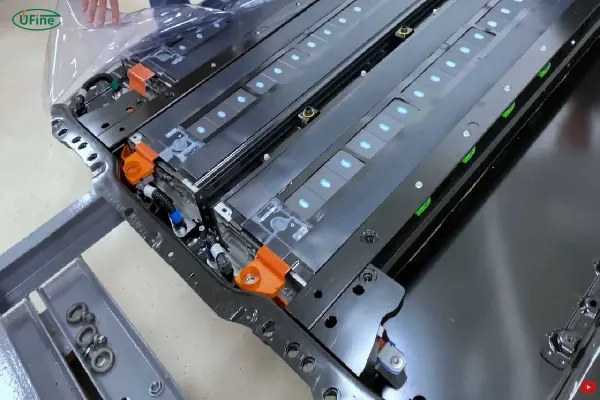
Tesla’s vehicles primarily use cylindrical 2170 and 4680 cells:
| Cell Type | Dimensions | Common Models | Key Advantage |
|---|---|---|---|
| 2170 | 21mm × 70mm | Model 3, Model Y | Optimized for energy density and cost |
| 4680 | 46mm × 80mm | Future Tesla models | Higher energy capacity, potential for faster production |
The transition to LFP chemistry in entry-level vehicles is significant. It impacts cost, longevity, safety, and even daily driving habits.
Part 2. LFP vs. lithium-ion: chemistry and performance
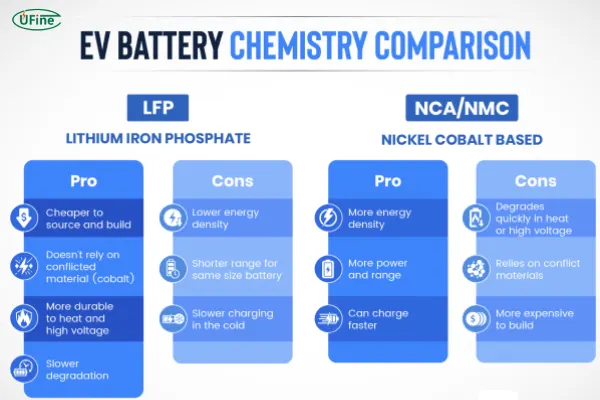
Tesla traditionally used Nickel Cobalt Aluminum (NCA) or Nickel Manganese Cobalt (NMC) batteries for high-performance vehicles. LFP batteries use Lithium Iron Phosphate for the cathode, leading to notable differences:
| Feature | LFP | NCA/NMC |
|---|---|---|
| Energy Density (Wh/kg) | 160-180 | 220-260 |
| Cycle Life | 3000-5000 | 1500-2500 |
| Fast Charge (0–80%) | 45–60 min | 30–40 min |
| Thermal Runaway Risk | Very Low | Medium |
| Cost per kWh | Lower | Higher |
Practical impact for you: LFP batteries are slightly heavier and provide a shorter range per charge, but they are safer, cheaper, and last longer.
For a deeper dive into how lithium batteries can overheat and what causes it, check out our guide to understand lithium battery overheating.
Part 3. Tesla LFP battery pros and cons
Advantages:
- Cost-Effective – Lower raw material costs translate to more affordable vehicles.
- Longer Lifespan – Can handle thousands of charge cycles before noticeable degradation.
- Enhanced Safety – Minimal risk of thermal runaway or fire.
- Eco-Friendly – Free from cobalt and nickel, reducing environmental impact.
Challenges:
- Lower Energy Density – Slightly reduced range per charge.
- Cold-Weather Efficiency – Range drops in sub-zero temperatures, though Tesla’s thermal management helps.
- Slower Charging – Compared to NCA cells, though Tesla is improving fast-charging rates.
Daily Use Tip:
- Keep charge between 20%-80%
- Limit frequent fast charging
- Precondition battery in extreme temperatures
To understand why temperature plays such a big role in battery performance, see our article on how temperature affects battery behavior.
Part 4. Real-world performance data
| Battery Type | 0°C Efficiency | Max Range (Model 3 SR+) | Typical Lifespan | Fast Charge Time |
|---|---|---|---|---|
| LFP | ~85% | 430 km (267 mi) | 3000–5000 cycles | 45–60 min |
| NCA | ~95% | 500 km (310 mi) | 1500–2000 cycles | 30–40 min |
For daily city commutes, LFP batteries are perfectly adequate. For frequent long-distance drives in cold climates, NCA may be preferable.
If you’re curious about whether LFP batteries will replace NMC, we’ve explored that trend in another detailed post.
Part 5. Tesla LFP adoption and supply
Tesla began equipping Model 3 SR+ vehicles with LFP batteries in China and Europe, aiming for affordability. Production is backed by CATL (Contemporary Amperex Technology Co. Limited), ensuring supply stability and competitive pricing.
Expect LFP adoption to expand globally as Tesla scales its EV lineup.
Part 6. EV industry trends: who else uses LFP?
Tesla isn’t alone:
- BYD – Extensive LFP deployment in China.
- Volkswagen – LFP for select budget ID series models.
- Ford – Future Mustang Mach-E variants will integrate LFP.
- GM – Exploring LFP for cost-sensitive markets, especially China.
Environmental Angle: Widespread LFP adoption reduces reliance on cobalt and nickel, supporting a more sustainable EV ecosystem.
Check Global EV Outlook for industry-wide trends.
Part 7. Cost and total ownership
If you drive 50 miles daily, LFP vehicles are more cost-effective, with lower charging costs and longer battery life, even if you slightly sacrifice range.
| Battery Type | Approx. Cost per kWh | Estimated Vehicle Price Impact | TCO over 8 Years |
|---|---|---|---|
| LFP | $100–120 | -$3,000 to -$5,000 | Lower due to longevity & safety |
| NCA | $150–200 | Base price higher | Higher due to shorter cycle life & more expensive materials |
Part 8. Tesla battery technology: the future
Tesla’s LFP strategy is about making EVs safer, longer-lasting, and more accessible, while staying environmentally responsible.
- 4680 Cells + LFP: Combining cost-effectiveness with improved energy efficiency.
- Energy Density Improvements: LFP chemistry is evolving, narrowing the gap with NCA.
- Supply Chain Stability: More LFP production globally ensures lower prices and sustainable growth.
Part 9. Should you buy a Tesla with LFP batteries?
Consider these questions:
- Daily Commute & Budget-Friendly: LFP is ideal if you mainly drive 200–300 km daily.
- Extreme Climates: Reduced efficiency in sub-zero temperatures; Tesla mitigates but doesn’t eliminate the issue.
- Long-Range Driving: NCA may be preferable if maximum range is essential.
LFP provides a safe, durable, and economical EV experience. For most urban drivers, it’s an excellent choice.
Part 10. Final thoughts
Tesla LFP batteries make EV ownership more accessible without compromising safety or durability. By understanding battery chemistry, cost, and real-world performance, you can confidently decide whether a Tesla LFP battery suits your lifestyle.
Part 11. FAQs
Do Tesla LFP batteries degrade faster in hot weather?
LFP batteries handle heat well but extreme temperatures may slightly reduce lifespan; proper thermal management is key.
Can LFP batteries be used in Tesla long-range models?
Currently, LFP is mostly for entry-level models; high-energy NCA batteries are still used for long-range performance.
Are LFP batteries recyclable?
Yes, LFP batteries are fully recyclable, and their simpler chemistry makes recycling more environmentally friendly.
Do Tesla LFP batteries need special maintenance?
No special maintenance is required, but keeping the charge between 20–80% extends battery life.
How does Tesla ensure LFP battery safety during accidents?
LFP batteries are inherently stable and less prone to fire; Tesla adds mechanical reinforcement and battery management systems for extra protection.
Will future Tesla models replace NCA with LFP entirely?
Tesla is exploring wider LFP adoption, but high-performance and long-range models will likely retain NCA/NMC for higher energy density.
Related Tags:

More Articles

JST vs Molex: The Right Battery Connector Choice
JST or Molex for your battery? Learn how connector selection affects current, voltage drop, reliability, and device performance.
Custom Battery Pricing: Costs Manufacturers Don’t Mention
A low battery quote may not be the final cost. Discover common hidden expenses that affect custom lithium battery projects.
Battery Wire Length: Hidden Cause of Power Loss
A longer battery wire can cause voltage drop, power loss, and unstable operation. Learn how wire length affects battery performance.
How Device Sleep Modes Affect Battery Life
Think sleep mode extends battery life? Learn why devices still drain power and how firmware, hardware, and batteries affect runtime.
LiPo Battery and PCB Design: Clearance, Insulation, and Placement
Learn how to optimize LiPo battery PCB clearance, insulation, placement, wiring, and thermal design—and avoid common integration mistakes.


