
- Part 1. Why do LiFePO4 batteries need a special charger?
- Part 2. How does a LiFePO4 charger work?
- Part 3. What types of LiFePO4 chargers are available?
- Part 4. LiFePO4 charger vs lithium-ion charger: what is the difference?
- Part 5. How does the BMS work with a LiFePO4 charger?
- Part 6. Can you charge LiFePO4 batteries in cold temperatures?
- Part 7. How to choose the best LiFePO4 battery charger
- Part 8. Common LiFePO4 charging mistakes to avoid
- Part 8. LiFePO4 charger buying checklist
- Part 9. FAQs
According to data from the International Energy Agency (IEA), global lithium battery demand reached more than 750 GWh in 2023 and continues to increase, driven by electric vehicles and energy storage systems. As LiFePO4 technology becomes more widely adopted, choosing the right charger has become increasingly important for battery performance, safety, and lifespan.
A LiFePO4 battery charger is a charger specifically designed for lithium iron phosphate batteries. It provides the correct voltage and charging current required by LiFePO4 cells while following the proper charging curve.
A LiFePO4 battery typically consists of multiple cells connected in series. Each cell has a nominal voltage of approximately 3.2V and a maximum charging voltage of about 3.65V. Therefore, the charger must provide the correct total voltage based on the battery configuration.
For example:
- A 12V LiFePO4 battery usually contains four cells (4S) and requires a 14.6V charger.
- A 24V LiFePO4 battery usually requires a 29.2V charger.
- A 36V LiFePO4 battery typically requires a 43.8V charger.
This is why selecting the correct lithium iron phosphate battery charger is critical. A charger designed for another battery chemistry may not provide the correct charging profile.
Key takeaways
- A LiFePO4 battery requires a charger designed specifically for lithium iron phosphate chemistry.
- The best LiFePO4 charger must match your battery voltage, charging current requirements, and application.
- A 12V LiFePO4 battery typically requires a 14.6V charger, while 24V and 36V systems need higher charging voltages.
- LiFePO4 batteries use a CC/CV charging process that differs from traditional lead-acid charging.
- The battery management system (BMS) and charger work together to protect battery safety and performance.
- Choosing the correct charger can improve charging efficiency, battery lifespan, and overall reliability.
Part 1. Why do LiFePO4 batteries need a special charger?
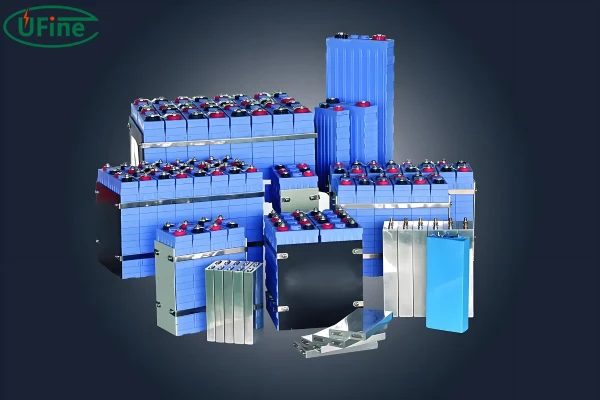
Many people ask, “What charger for LiFePO4 battery should I use?” The answer depends on the battery chemistry and voltage requirements.
Although LiFePO4 batteries are lithium batteries, they are different from other lithium-ion chemistries such as NMC or LCO. The charging voltage range and charging algorithm are different.
A dedicated LFP charger provides:
- Correct charging voltage
- Proper current regulation
- Compatible charging stages
- Battery protection features
Using a standard charger may cause several problems:
The battery may not fully charge
If the charger voltage is too low, the battery may only reach partial capacity. This reduces available energy and affects system performance.
The BMS may disconnect the battery
Most LiFePO4 batteries include a battery management system (BMS). If the charger delivers abnormal voltage or current, the BMS may activate protection and stop charging.
Battery lifespan may be reduced
Incorrect charging conditions can increase battery stress and affect cycle life.
For these reasons, choosing the best charger for LiFePO4 batteries is not simply about selecting the charger with the highest output power. Compatibility matters more than maximum charging speed.
Part 2. How does a LiFePO4 charger work?
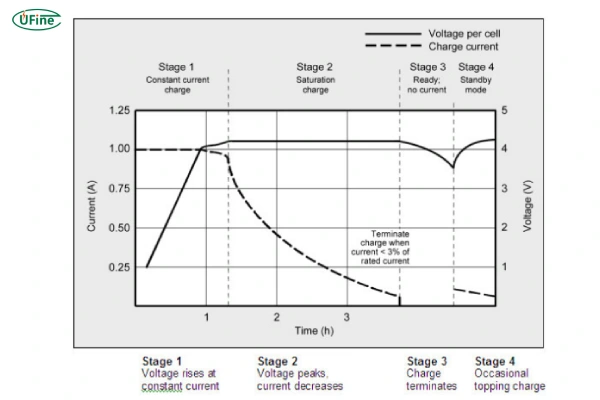
Most high-quality LiFePO4 chargers use a constant current and constant voltage (CC/CV) charging method.
How to Read Lithium Battery Discharge Curve and Charging Curve?
Constant current charging stage
During the first stage, the charger provides a stable current while the battery voltage gradually increases.
For example:
A 100Ah LiFePO4 battery charged with a 20A charger will receive approximately 20Ah of energy per hour during this stage.
This phase is responsible for most of the charging process.
Constant voltage charging stage
When the battery reaches its maximum charging voltage, the charger maintains a stable voltage while reducing the current.
During this stage:
- Battery cells become fully balanced.
- Charging current gradually decreases.
- The charger switches to standby or stops charging when complete.
This charging method helps LiFePO4 batteries achieve high efficiency while reducing unnecessary stress.
Part 3. What types of LiFePO4 chargers are available?
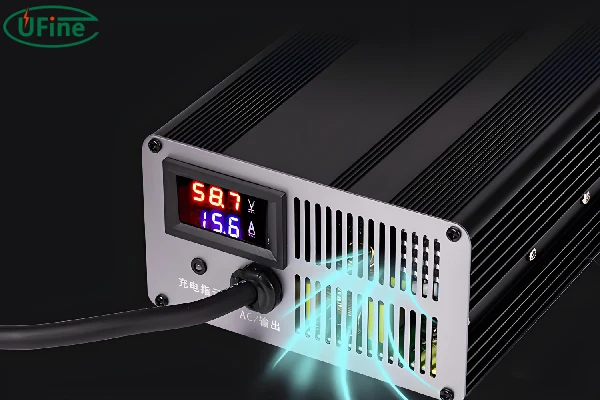
Different applications require different charger designs. The best LiFePO4 charger for one system may not be suitable for another. Understanding the available charger types helps you choose a solution that matches your specific needs.
1 AC LiFePO4 charger
AC chargers are the most common type for home, workshop, and general charging applications. They convert household AC power into the correct DC voltage required by a LiFePO4 battery.
Common applications include:
- RV batteries
- Marine batteries
- Backup power systems
- Portable energy storage
When selecting an AC LiFePO4 charger, consider output voltage, charging current, efficiency, and safety certifications.
2 Solar LiFePO4 charger
Solar charging systems usually require a solar charge controller rather than a traditional wall charger. A controller regulates energy from solar panels and ensures the LiFePO4 battery receives the correct charging profile.
For solar applications, MPPT (Maximum Power Point Tracking) controllers are often preferred because they can improve energy harvesting efficiency under changing sunlight conditions.
3 DC-to-DC LiFePO4 charger
DC-to-DC chargers are commonly used in vehicles where the battery is charged from an alternator or another DC power source.
Typical applications include:
- RV auxiliary batteries
- Off-grid vehicles
- Marine systems
- Mobile power solutions
A DC-to-DC LiFePO4 charger helps regulate unstable input power and protects both the battery and charging system.
4 Smart LiFePO4 charger
Smart chargers include additional monitoring and protection functions, such as:
- Automatic charging control
- Temperature monitoring
- Overcurrent protection
- Short-circuit protection
- Charging status indicators
These features can improve user convenience and provide better battery protection.
Part 4. LiFePO4 charger vs lithium-ion charger: what is the difference?
A common question is whether a standard lithium-ion charger can charge a LiFePO4 battery.
The short answer is: not always.
Although both are lithium-based batteries, they use different charging parameters.
| Feature | LiFePO4 battery | Other lithium-ion batteries |
|---|---|---|
| Cell chemistry | Lithium iron phosphate | NMC, LCO, etc. |
| Nominal cell voltage | 3.2V | Around 3.6V-3.7V |
| Full charge voltage | 3.65V/cell | Around 4.2V/cell |
| Charging profile | LiFePO4 specific | Different lithium profile |
A charger designed for NMC lithium batteries may provide an unsuitable voltage level for LiFePO4 batteries. This can result in incomplete charging or trigger battery protection.
Therefore, when searching for a charger for LiFePO4, always confirm that the charger specifically supports lithium iron phosphate chemistry.
Part 5. How does the BMS work with a LiFePO4 charger?
A battery management system (BMS) is an important part of most LiFePO4 battery packs. However, the BMS and charger have different functions.
The charger provides energy to the battery, while the BMS monitors and protects the battery.
A BMS typically manages:
- Overcharge protection
- Over-discharge protection
- Overcurrent protection
- Short-circuit protection
- Cell balancing
- Temperature monitoring
For example, if one cell reaches an unsafe voltage during charging, the BMS can disconnect the charging circuit to protect the battery.
A good LiFePO4 charging system requires both:
Compatible charger + properly designed BMS + suitable battery cells
The charger cannot replace the BMS, and the BMS cannot compensate for an incorrect charger.
Part 6. Can you charge LiFePO4 batteries in cold temperatures?
Temperature is another important factor when charging lithium iron phosphate batteries.
Most LiFePO4 batteries should not be charged below 0°C (32°F) unless they include low-temperature charging protection.
Charging at extremely low temperatures may cause lithium plating, which can permanently damage battery performance.
For cold environments, consider:
- Low-temperature cutoff BMS
- Heated battery packs
- Temperature-controlled charging systems
If your battery is used in outdoor environments, selecting a charger and battery system designed for the operating temperature range is essential.
Part 7. How to choose the best LiFePO4 battery charger
Choosing the right charger depends on several factors, including battery voltage, capacity, charging speed, and application requirements.
Match the charger voltage with your battery
The first step is selecting the correct voltage.
| Battery type | Nominal voltage | Full charge voltage | Recommended charger |
|---|---|---|---|
| 12V LiFePO4 battery | 12.8V | 14.6V | 14.6V charger |
| 24V LiFePO4 battery | 25.6V | 29.2V | 29.2V charger |
| 36V LiFePO4 battery | 38.4V | 43.8V | 43.8V charger |
| 48V LiFePO4 battery | 51.2V | 58.4V | 58.4V charger |
If you are looking for the best 12V LiFePO4 battery charger, make sure the charger output voltage matches the battery requirements instead of simply choosing the highest-rated model.
Select the right charging current
The charger’s current rating determines how quickly your battery charges.
A simple calculation is:
Charging time ≈ Battery capacity (Ah) ÷ Charger current (A)
Example:
A 100Ah LiFePO4 battery:
| Charger current | Approximate charging time |
|---|---|
| 10A charger | About 10 hours |
| 20A charger | About 5 hours |
| 40A charger | About 2.5 hours |
A higher-current charger provides faster charging, but the battery, BMS, and application must support that charging rate.
For many applications, a charging current between 0.2C and 0.5C is commonly used, depending on battery design and manufacturer specifications.
Part 8. Common LiFePO4 charging mistakes to avoid
Even with a high-quality charger, incorrect charging practices can affect battery performance.
Using a lead-acid battery charger
Some lead-acid chargers may use charging stages that are unsuitable for LiFePO4 batteries. Always confirm compatibility before use.
Choosing the wrong voltage charger
A charger with incorrect voltage output may prevent charging or cause protection shutdowns.
Using excessive charging current
A high-current charger may reduce charging time, but the battery pack must be designed to support that charging rate.
Ignoring temperature conditions
Charging below the recommended temperature range can damage lithium cells.
Assuming all lithium chargers are compatible
Different lithium chemistries require different charging profiles. Always check battery specifications.
Part 8. LiFePO4 charger buying checklist
Before purchasing a charger, check the following:
✅ Confirm battery chemistry: LiFePO4, not just lithium-ion
✅ Match charger voltage with battery voltage
✅ Select appropriate charging current
✅ Check connector compatibility
✅ Verify temperature operating range
✅ Consider safety protections
✅ Confirm charger efficiency and certifications
Choosing the right charger can improve charging performance, extend battery life, and ensure safer operation.
Part 9. FAQs
Should I fully discharge a LiFePO4 battery before charging?
No. LiFePO4 batteries do not require full discharge before charging. In fact, avoiding deep discharge can help extend battery lifespan. Regular partial charging is generally acceptable and does not create the same memory effect found in some older battery technologies.
Does a faster LiFePO4 charger reduce battery life?
A higher charging current does not always damage a LiFePO4 battery, but the battery pack must be designed to support that charging rate. Excessive charging current may increase heat generation and stress battery components, so always follow the recommended charging specifications.
Why does my LiFePO4 battery stop charging before reaching 100%?
This can happen when the BMS detects an abnormal condition, such as high cell voltage imbalance, low temperature, or excessive charging current. Checking the charger compatibility and battery protection settings can help identify the cause.
What is the difference between a standard LiFePO4 charger and a smart charger?
A standard LiFePO4 charger provides the required charging voltage and current, while a smart charger may include additional features such as automatic charging control, monitoring, temperature detection, and communication functions.
Can solar panels directly charge a LiFePO4 battery?
Solar panels should not usually connect directly to a LiFePO4 battery. A compatible solar charge controller, preferably an MPPT controller, is needed to regulate voltage and current during charging.
Related Tags:

More Articles

Best 24V Lithium Battery: Top 10 Compared
Discover the top 24V lithium batteries. We compare capacity, price, cycle life, safety features, and the best options for different applications.
Top LFP Cell Manufacturers in China You Should Know
Looking for reliable LiFePO4 cells? Explore China's top LFP battery manufacturers, key technologies, production capabilities, and supplier selection tips.
Check If Your Charger Works: Simple Test Guide
Think your battery charger's broken? Quick tests can show you for sure. See if it’s the charger or the battery that's causing issues. Read more.
Best Camera Batteries: 7 Brands Compared & Tested
Looking for the best camera battery? Compare 7 top brands, including OEM and third-party options, to find the right battery for your camera.
What You Need to Know About Portable Fan Batteries
Discover the best portable electric fan battery, its types, lifespan, and maintenance tips. Learn how to choose the right one and keep it running longer.


