
- Key Takeaways
- Part 1. What makes a 300Ah lithium battery special?
- Part 2. Understanding voltage and performance
- Part 3. How long will a 300Ah lithium battery last?
- Battery Run Time
- Part 4. 300Ah lithium battery vs lead-acid battery
- Part 5. How to optimize the lifespan of your 300Ah lithium battery
- Part 6. Charging a 300Ah lithium battery
- Part 7. Price and total cost of ownership
- Part 8. Common faults and maintenance tips
- Part 9. FAQs
Key Takeaways
- 300Ah lithium batteries are ideal for high-demand applications like RVs, boats, and off-grid solar setups, offering long life, stable voltage, and predictable performance.
- Understanding the battery chemistry, voltage characteristics, and proper maintenance can dramatically extend lifespan and save you money in the long run.
- Choosing the right 300Ah battery isn’t just about capacity—factors like BMS protection, cycle life, and total cost of ownership matter more than you might think.
Part 1. What makes a 300Ah lithium battery special?
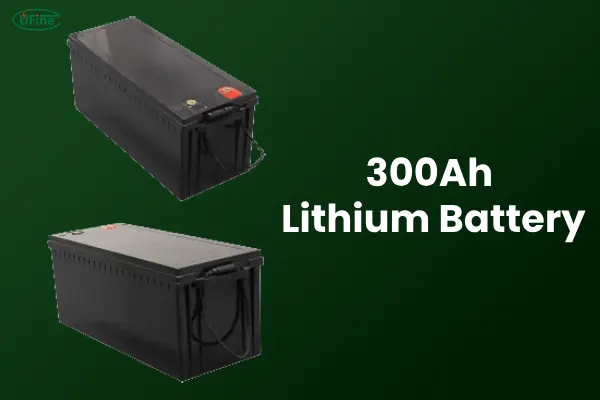
Whether a 300Ah lithium battery can handle your RV weekend getaway or solar cabin. This capacity—roughly 3600Wh at 12V—places it in the sweet spot for medium to high power users. Unlike typical lead-acid batteries, lithium batteries like LiFePO4 (lithium iron phosphate) offer lighter weight, higher efficiency, and far longer cycle life.
One thing to note: the rated 300Ah is the nominal capacity. In real-world use, factors like depth of discharge (DoD) and temperature influence how much usable energy you actually get. For instance, a LiFePO4 300Ah battery can safely deliver up to 90% of its capacity, giving you roughly 3300Wh usable energy—enough to power a small RV setup for several hours.
Why chemistry matters:
- LiFePO4 (LFP): Very stable, safe under high temperatures, cycles 3000–5000 times. Ideal for long-term use.
- Li-NMC or LiCoO2: Higher energy density but more expensive and sensitive to high heat.
The choice of chemistry will directly affect not just lifespan but also cost, weight, and safety—something every buyer should consider.
Part 2. Understanding voltage and performance
Voltage is where things get interesting, and understanding it helps you avoid surprises. Most 300Ah lithium batteries operate at 12.8V nominal. However, as you draw power, voltage drops slightly, and your devices may notice. A 12.8V battery at 50% load may read around 12.5V—still plenty for most RV appliances.
Temperature plays a big role: Cold weather reduces usable capacity, while high heat can accelerate degradation. Proper BMS (Battery Management System) protection ensures your battery shuts down before serious damage occurs, so you don’t have to constantly monitor voltage yourself.
You should also consider how temperature affects battery performance. Learn more in our guide on battery temperature effects.
Here’s a simple comparison of different 300Ah battery chemistries and their voltage characteristics:
| Chemistry | Nominal Voltage | Max Continuous Discharge | Cycle Life | Typical Use Case |
|---|---|---|---|---|
| LiFePO4 | 12.8V | 100A | 3000-5000 | RV, solar, marine |
| Li-NMC | 12.6V | 120A | 1000-2000 | High energy density, portable devices |
| Lead-acid | 12V | 80A | 400-800 | Budget solar setups (heavier, less efficient) |
By understanding these details, you’ll see why the right chemistry can mean the difference between a battery that lasts a decade and one that barely survives a few seasons.
Part 3. How long will a 300Ah lithium battery last?
It depends on what you’re running.
Imagine you’re powering a 1000W mini fridge, some LED lights, and a laptop. That’s roughly 120A at 12V. A 300Ah battery at 90% usable capacity could run this load for about 2.5–3 hours. For lower-draw applications like solar-powered cabin lights or charging small electronics, that same battery could last several days.
Cycle life also matters more than raw hours. A LiFePO4 300Ah battery cycled at 50% DoD can easily survive 3000–5000 cycles, translating into 7–10 years of regular use. By comparison, lead-acid batteries at similar loads may need replacement every 1–2 years.
Estimate battery runtime using our online calculator:
Part 4. 300Ah lithium battery vs lead-acid battery
If you’re choosing between a 300Ah lithium battery and a 300Ah lead-acid battery, there are some key differences to keep in mind.
- Weight: Lithium batteries are much lighter (35–45kg) compared to lead-acid (70–90kg), making installation easier.
- Usable capacity: A lithium battery can safely use up to 90% of its capacity, while lead-acid should only use 50%, giving you much less energy in practice.
- Lifespan: Lithium batteries last 3000–5000 cycles, often 7–10 years, while lead-acid usually lasts 400–800 cycles.
- Maintenance: Lithium is mostly maintenance-free with built-in BMS protection, whereas lead-acid needs regular water checks and careful charging.
- Cost over time: Lithium is more expensive upfront, but because of higher usable energy and longer lifespan, it’s usually cheaper in the long run.
In short, if you want efficiency, longer life, and less hassle, 300Ah lithium batteries are the smarter choice. Lead-acid still works for low-budget or occasional use, but you’ll trade convenience and durability.
If you’re still deciding between battery types, check this lead-acid vs lithium comparison for a deeper breakdown.
Part 5. How to optimize the lifespan of your 300Ah lithium battery
To ensure the longevity and performance of your 300Ah lithium battery, here are some tips:
1. Charge Regularly but Avoid Overcharging
Lithium batteries benefit from regular use and charging, but it’s important to avoid overcharging. Using a Battery Management System (BMS) helps regulate charging cycles and ensures the battery is not overcharged.
2. Temperature Management
For optimal performance, lithium batteries should be stored and charged in environments with temperatures between 20°C to 25°C (68°F to 77°F). Extreme temperatures can degrade the battery and reduce its capacity.
3. Use the Battery Regularly
Lithium batteries are best maintained when they are in use. Storing a battery for long periods without using it can lead to self-discharge, which may damage the cells. If you need to store your 300Ah lithium battery for an extended period, keep it at about 40-60% charge.
4. Regularly Check Battery Connections
Ensure the terminals and connectors are clean and secure. Dirty or loose connections can cause performance issues and even damage the battery over time.
Part 6. Charging a 300Ah lithium battery
1. Recommended Chargers for 300Ah Lithium Batteries
To ensure the optimal performance and lifespan of a 300Ah lithium battery, it is crucial to use a suitable charger that matches the battery’s specifications. Lithium batteries require a charger with a constant voltage and constant current (CC-CV) charging profile to ensure proper charging cycles and prevent overcharging.
- For 12V Systems: A 12V lithium battery charger rated for at least 40A to 60A would be ideal for a 300Ah battery, ensuring that it charges in a reasonable timeframe without damaging the cells.
- For 24V Systems: For a 300Ah 24V lithium battery, a charger rated between 30A and 40A is recommended.
- For 48V Systems: A charger rated for 20A to 30A is typically recommended for 48V lithium batteries.
It’s important to use chargers that are specifically designed for lithium batteries to ensure safety and efficiency. Always check the battery manufacturer’s recommendations for the charging requirements and avoid using conventional chargers designed for lead-acid batteries.
2. Charging Time for a 300Ah Lithium Battery
The charging time of a 300Ah lithium battery depends on the charger output and the depth of discharge (DoD). Typically, a 40A charger would charge a 300Ah lithium battery from 0% to 100% in about 8 to 10 hours. A faster charger with higher output (e.g., 60A) can reduce the charging time.
Using a smart charger with built-in protections such as overcharge, overcurrent, and temperature monitoring can ensure that your battery is charged safely, extending its lifespan.
Part 7. Price and total cost of ownership
Here’s where many people get tripped up: the upfront cost of a 300Ah lithium battery can seem high, typically ranging $1500–$2500 for quality LiFePO4 units.
But here’s the twist: when you factor in cycle life, maintenance, and efficiency, lithium often ends up cheaper over the long run.
| Cost Aspect | LiFePO4 300Ah | Lead-acid 300Ah |
|---|---|---|
| Initial cost | $2000 | $900 |
| Lifespan (cycles) | 4000 | 500 |
| Maintenance | Minimal | Regular watering & equalization |
| Effective cost per cycle | ~$0.50 | ~$1.80 |
So while lithium feels expensive at first, over 10 years, it often costs less per kWh delivered, making it a smarter investment if you plan to use it seriously
Part 8. Common faults and maintenance tips
Even the best batteries can run into issues if misused. Here are the most common problems:
- Over-discharge or overcharge: Your BMS should prevent this, but improper setups or cheap units can fail.
- High temperature exposure: Accelerates degradation. Avoid leaving batteries in enclosed hot spaces.
- Voltage sag under high load: Sometimes you’ll notice appliances dimming under peak loads; that’s normal, but frequent deep discharges shorten lifespan.
Maintenance tips:
- Store at around 50–60% charge if not using for weeks
- Avoid parallel/series connections without proper balancing
- Check BMS logs periodically if available
Part 9. FAQs
Is it safe to use a 300Ah lithium battery in extreme temperatures?
Most LiFePO4 batteries operate safely between -20°C to 60°C, but performance and lifespan may decrease outside optimal ranges.
How do I know if my 300Ah lithium battery needs balancing?
If cells become uneven, your BMS may alert you, or you may notice voltage inconsistencies across the pack.
Can I combine multiple 300Ah lithium batteries for larger systems?
Yes, series or parallel configurations are possible, but proper BMS and wiring are essential to avoid damage.
Do 300Ah lithium batteries require special chargers?
Yes, using chargers compatible with LiFePO4 chemistry ensures safe charging and maximizes lifespan.
How much does a 300Ah lithium battery weigh compared to lead-acid?
LiFePO4 300Ah typically weighs 35–45kg, much lighter than a lead-acid equivalent (70–90kg), making transport and installation easier.
Does frequent deep discharge harm a 300Ah lithium battery?
While LiFePO4 tolerates deep discharges better than lead-acid, regularly exceeding recommended DoD may slightly reduce total cycle life.
Related Tags:

More Articles
Buck vs. Boost vs. Buck-Boost Converter: Which Is Best for Battery?
Not sure which converter your battery-powered device needs? Compare Buck, Boost, and Buck-Boost designs and discover what affects voltage stability and runtime.
How to Match 18650 Cells for a Reliable Battery Pack?
Building an 18650 battery pack? Learn how to compare cell capacity, voltage, and internal resistance to avoid mismatches and improve reliability.
Why Do 18650 Battery Packs Get Hot During Discharge?
Is your 18650 battery pack overheating under load? Learn what causes excess heat, how to spot dangerous symptoms, and what to do next.
18650 Battery BMS: How to Get the Specs Right
Learn how to choose a BMS for an 18650 battery pack. Compare voltage, current ratings, protection features, and balancing before you buy.
Why Does My Ring Camera Battery Drain So Fast or Stop Charging?
Is your Ring camera battery draining fast or not charging? Discover common causes, practical fixes, and when to replace the battery.


