11.1 V 2000mAh 18650-3S Pack for Portable Instruments


- 16 Years Experience
- 200+ Certifications
- 1000+ Customers
- 7X24 Customer Support
-
Product Details
-
Specs
-
Content
-
FAQs

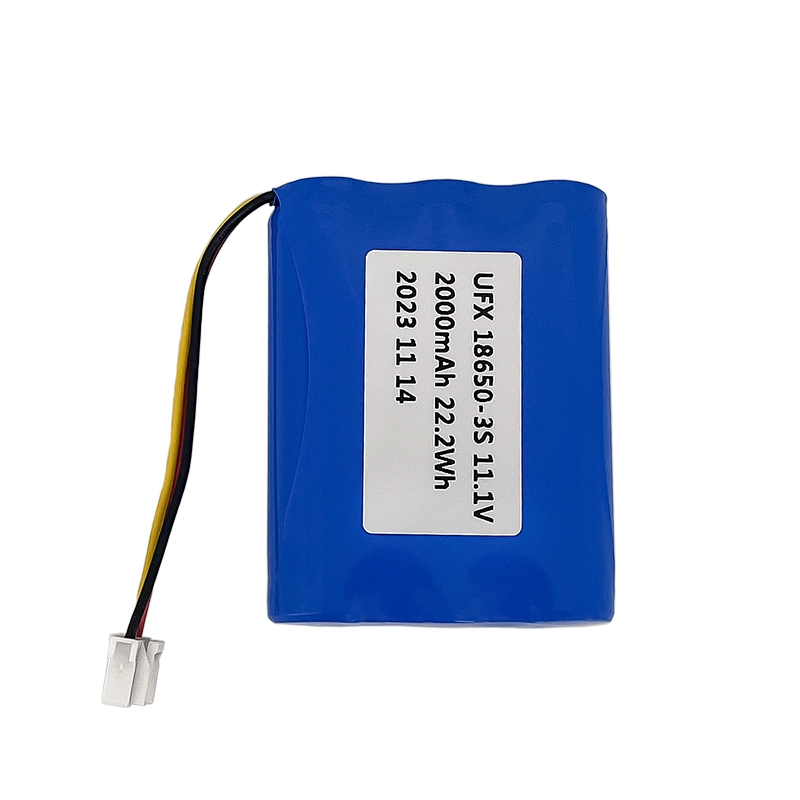
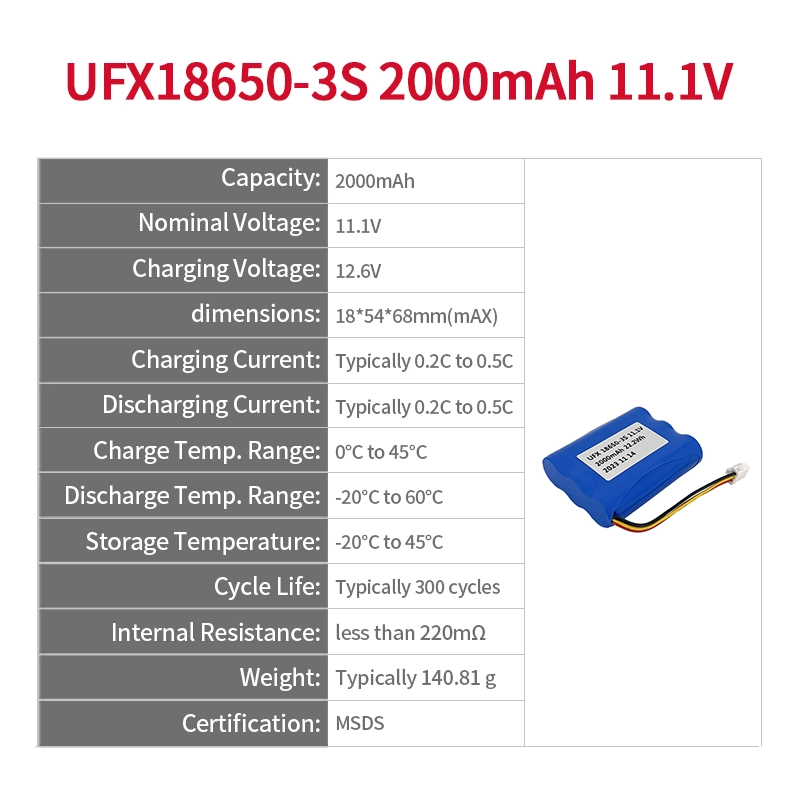
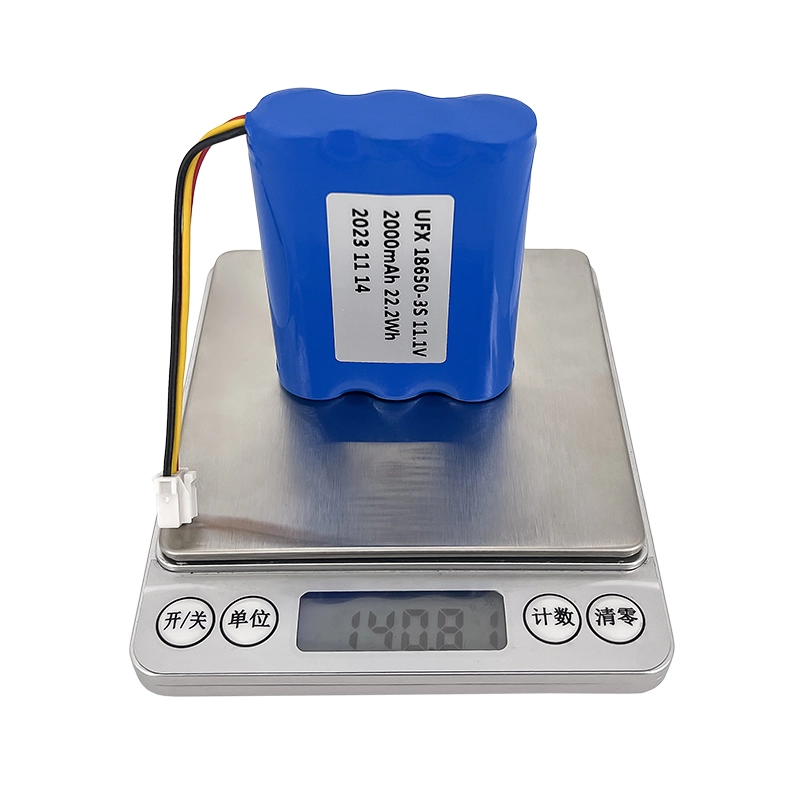
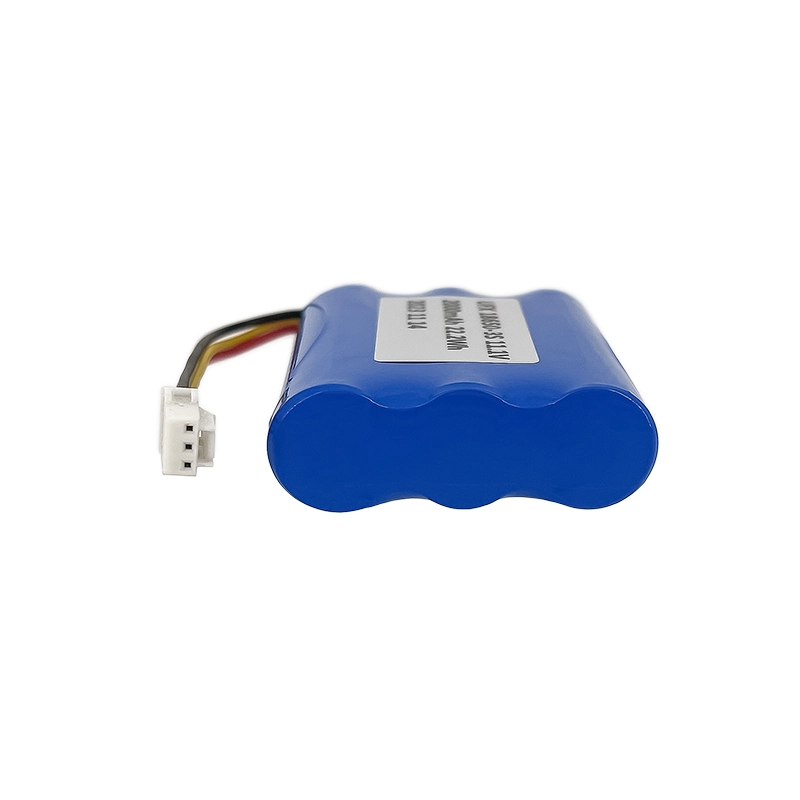
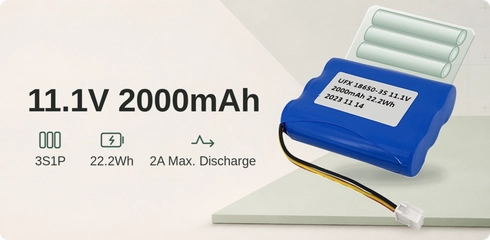
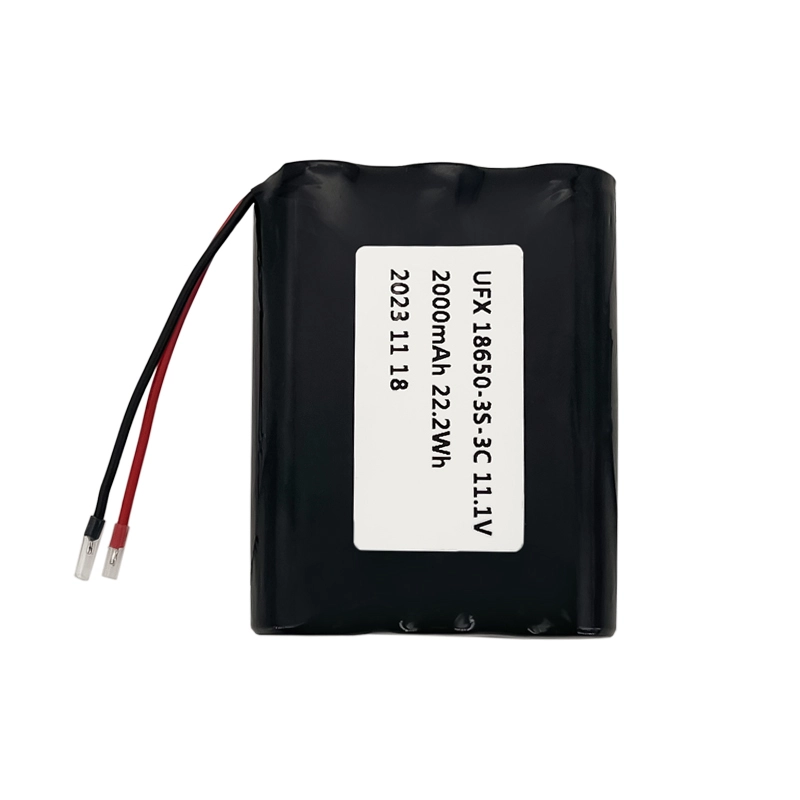
The Ufine 18650-3S 2000mAh battery pack uses three cylindrical 18650 cells in a 3S1P configuration. It provides 11.1V nominal voltage and 22.2Wh of nominal energy. The pack body measures up to 18 × 54 × 68 mm and weighs about 141 g. The listed configuration includes a protection circuit (PCM) and an NTC temperature sensor.
18650-3S Pack Ratings for OEM Selection
Use the pack voltage, current limits, and temperature ratings to screen the 2000mAh version for your equipment.
- Pack Output
- Cycle Life
- Storage
- Temperature
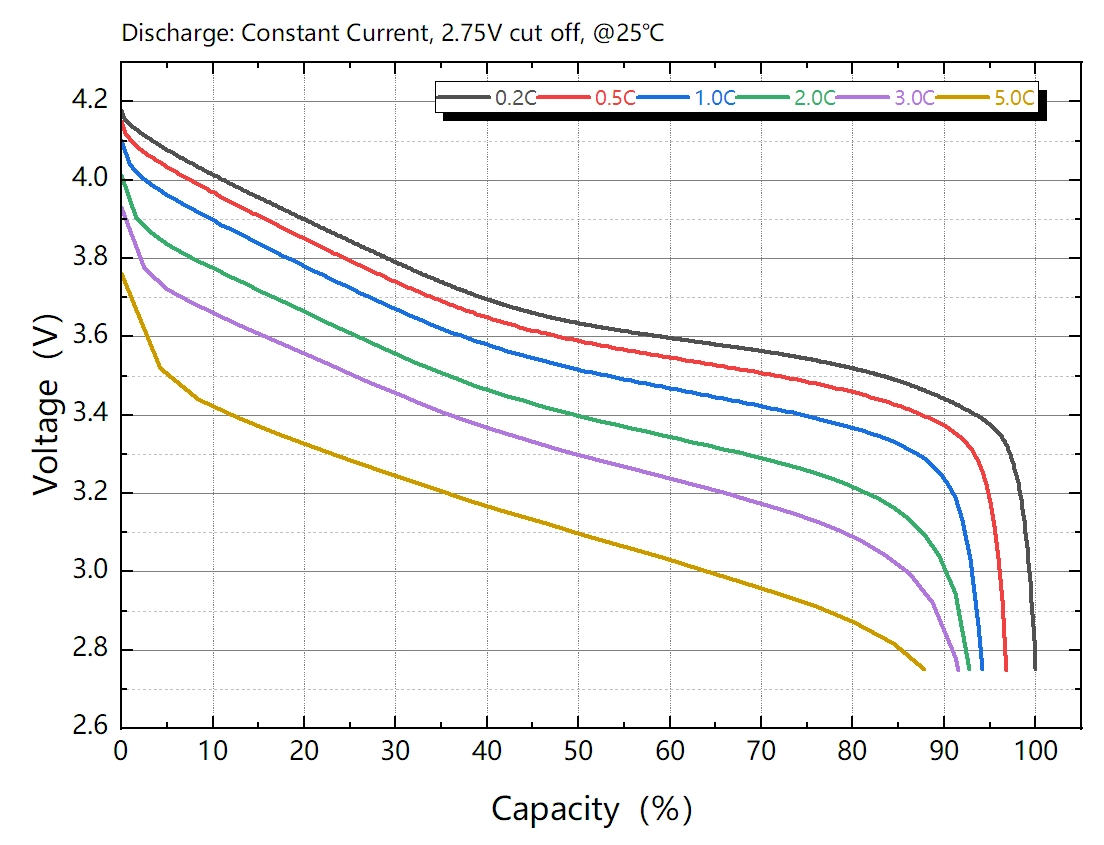
Check Input Voltage and Startup Current
The pack is rated at 11.1V nominal and has a 12.6V maximum charge voltage. Check that your equipment accepts the fully charged pack voltage. A 12V label alone does not confirm compatibility.
- Standard discharge current: 400mA (0.2C)
- Maximum discharge current: 2000mA (1C)
- Listed pack discharge cut-off: 8.25V
Check startup peaks and early shutdown under load. The listed cut-off is a pack specification value; confirm the usable shutoff point with your equipment and the actual pack.
Check Battery Startup Current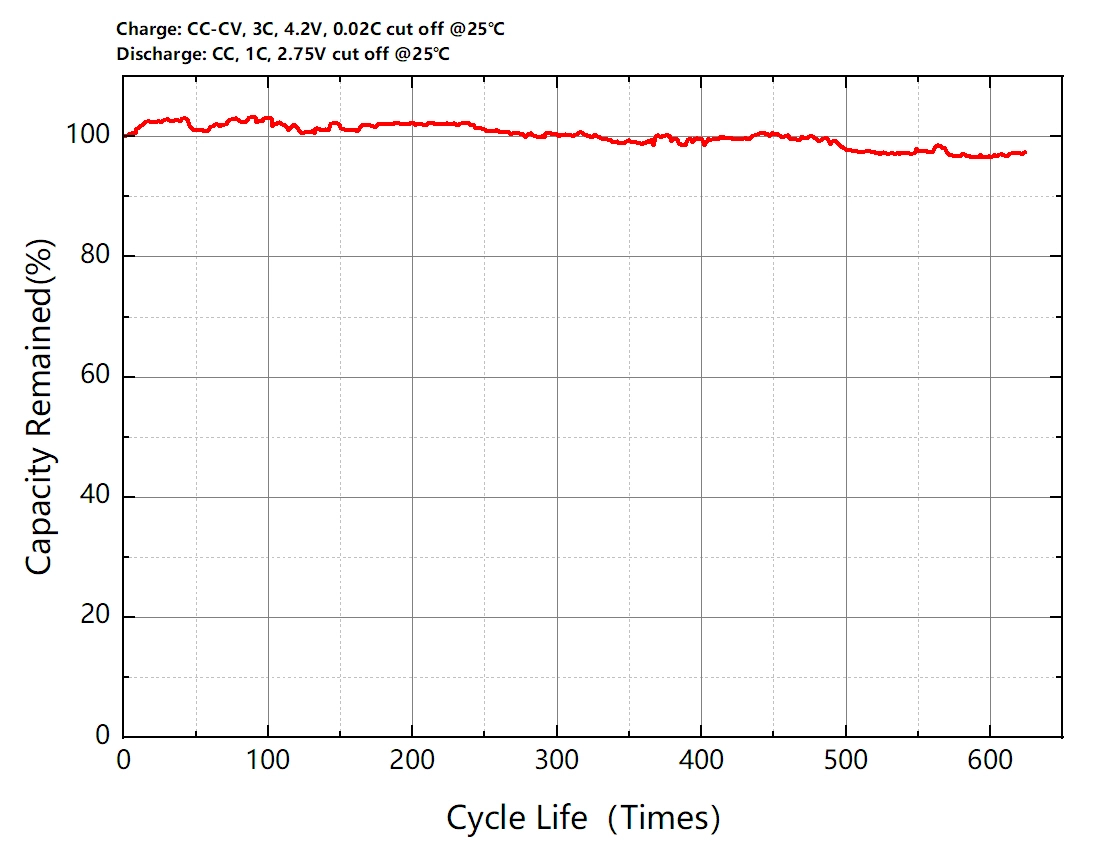
Set a Runtime Target for the Aged Pack
The detailed specification lists the following capacity retention figures:
- After 100 cycles: ≥92%
- After 300 cycles: ≥88%
- After 500 cycles: ≥80%
Ask Ufine for the test conditions before comparing these figures with another pack. Use your own minimum runtime as the equipment acceptance target.
Explore 18650 Battery Cycle Life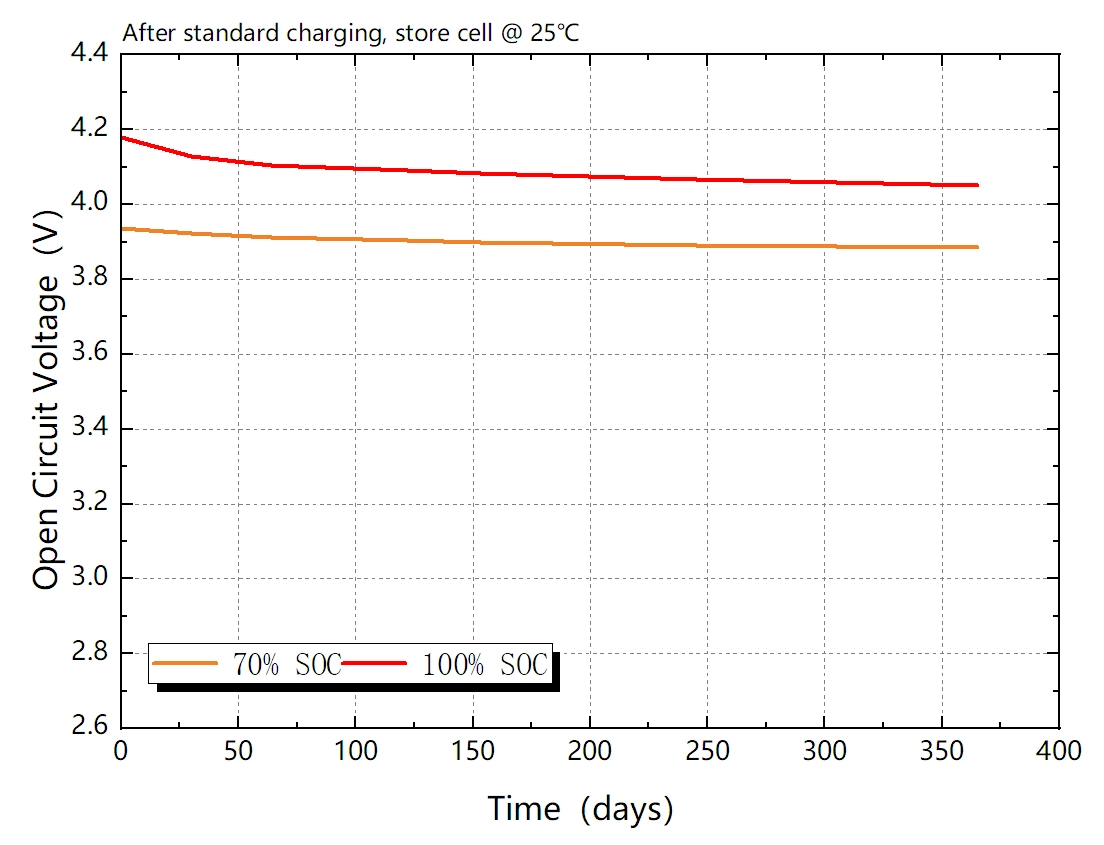
Match Stock Time to the Storage Range
The detailed specification lists a separate storage range for each duration:
- Up to 1 year: −20°C to +30°C
- Up to 3 months: −20°C to +45°C
- Up to 1 month: −20°C to +60°C
If packs will sit in stock inside finished equipment, include the current drawn while the equipment is switched off in your storage plan.
Review Battery Shelf Life and Storage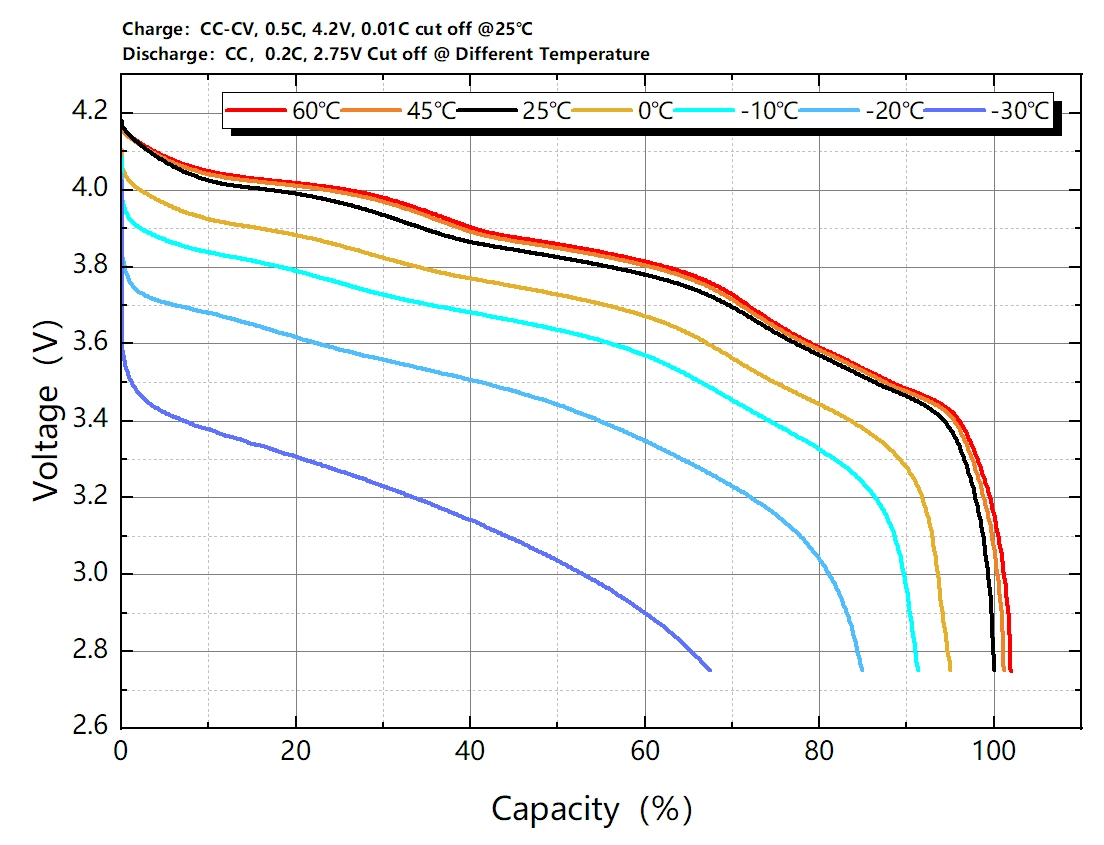
Review the 3S Charger and NTC Input
Use a charger matched to the approved 3S pack specification. Confirm that your charging circuit can read the supplied NTC.
- Maximum charge voltage: 12.6V
- Standard / maximum charge current: 400mA / 2000mA
- Charging temperature: 0°C to 45°C
- Discharge temperature: −20°C to 60°C
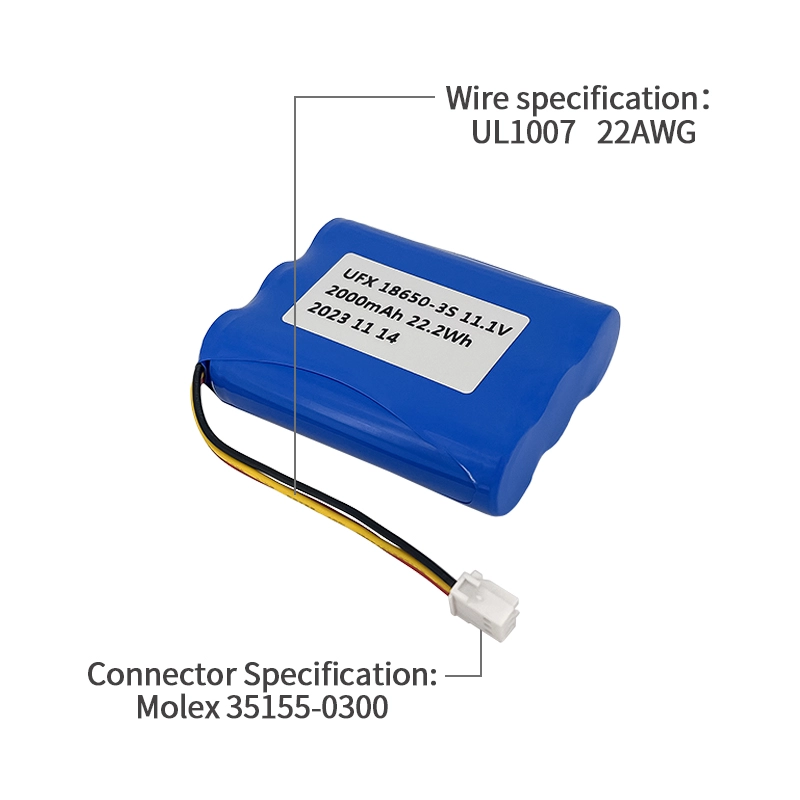
Confirm the NTC characteristics, connector pinout, and any balancing requirement before approving the sample.
Review Lithium-Ion Battery Temperature LimitsSpecify the 18650-3S Pack Connection
Confirm the connector, protection requirements, and temperature sensor together before ordering samples.
Match the Pack Drawing to Your Equipment
- Pack format: Confirm the 18 × 54 × 68 mm maximum body size, lead exit, and connector position on the assembly drawing.
- Pinout: Share the mating connector part number. Confirm each pin function and polarity on the drawing.
- Temperature sensing: Share the NTC characteristics expected by your charging circuit.
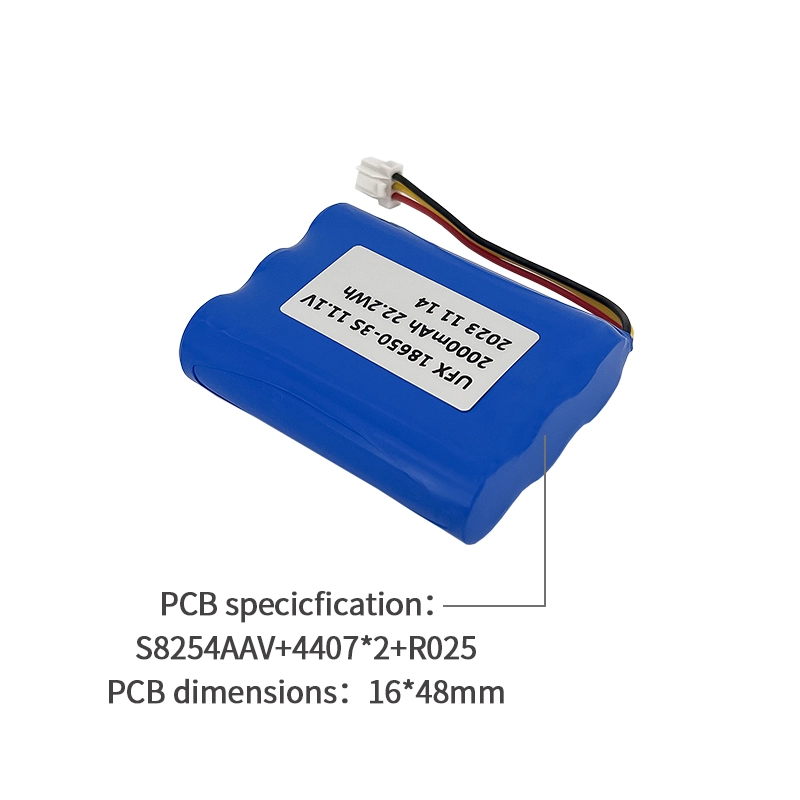
- Protection: Confirm the PCM functions and state any cell balancing requirement in the request.
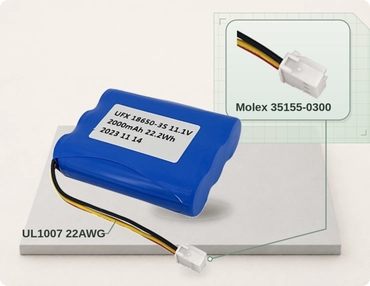
18650-3S Pack for Portable OEM Equipment
Consider the 2000mAh pack for handheld test instruments, portable monitoring units, or rechargeable controls with a compatible 3S input. A meter with a backlit screen or a monitor that transmits data may draw its highest current for only a short time.
Check startup and peak load against the 2A maximum discharge rating. If the equipment exceeds that limit, review a different pack configuration before sampling.
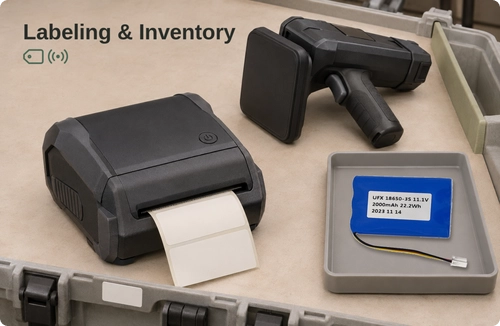
Keep the 2000mAh Pack Identifiable From Sample to Order
Use the same capacity, assembly drawing, and sample reference across engineering, purchasing, and incoming inspection.


Compare the 3400mAh 18650-3S Pack
The 11.1V 3400mAh 18650-3S pack offers 70% more rated capacity at the same listed maximum body dimensions. Check its current ratings, PCM, NTC, connector, and lead layout before treating it as a replacement.
18650-3S OEM Samples and Production Pricing
Specify the 2000mAh version and send your electrical and order requirements. Ufine can review the pack configuration and quote samples or production quantities.
- Equipment: input voltage range, running current, and startup peak
- Charging: charger details and NTC requirements
- Assembly: connector part number, pinout, and lead length
-
01Sample quantity and target delivery date.
-
02Pilot quantity and estimated production volume.
-
03Shipping destination and required documents.
Battery Specification
-
1. Mechanical Characteristics
Cell 18650-3S PCM Yes NTC Yes Weight appr. 141g Configuration 3S1P -
2. Electrical Specification
Capacity 2000mAh Nominal Voltage 11.1V Energy 22.2Wh Internal Resistance less than 180mΩ Max. Charge Voltage 12.6V Discharge Cut Off 8.25V Max. Charge Current 2000mA Max. Discharge Current 2000mA Standard Charge Current 400mA Standard Discharge Current 400mA Charging Temperature 0℃ to 45℃ Discharging Temperature -20℃ to 60℃ Storage Temp.Range 1 year at -20℃ to +30℃ 3 mos. at -20℃ to +45℃ 1 mo. at -20℃ to +60℃ Cycle life 100 cycles ≥92% 300 cycles ≥88% 500 cycles ≥80% -
3. Cell protection
Overcharge Detection 4.28V ±50mV (80 to 200msec delay, release 4.08V ±50mV) Overdischarge Detection 2.9V ±100mV (40 to 120msec. delay, release 3.0V ±100mV) Overcurrent Detection 5A to 9A (9 to 15msec. delay) Short protection Yes
The Ufine 18650-3S is a rechargeable 11.1V 2000mAh battery pack with 22.2Wh of nominal energy. It uses three 18650 cells in series. The standard pack includes a protection circuit (PCM) and an NTC temperature sensor.
A handheld inspection meter may work well on a 12V bench supply. Before you switch to the battery pack, check how the meter starts, runs, and shuts down as the pack voltage changes.
Part 1. Check both ends of the 18650-3S voltage range
The 11.1V rating is nominal. A fully charged pack can reach 12.6V. Check whether the meter accepts that voltage before connecting a sample.
-
With a full pack: Check that the meter starts and completes a normal reading.
-
With a low pack: Check whether the meter can still save a reading or shut down as intended.
The pack specification lists an 8.25V discharge cut-off. The meter may shut down earlier under load. Check where that happens on the finished device before you set a runtime target.
Part 2. Find out why the device resets under load
If the meter resets when the backlight turns on, measure current at the pack during that event. The 2000mAh 18650-3S has a listed maximum discharge current of 2A. The specification gives no separate rating for short peaks.
Compare the voltage at the pack connector with the voltage at the meter input during the same event. This helps show whether the voltage drops at the pack or along the connection.
Learn How to Check Battery Startup CurrentPart 3. Confirm how the charger reads the pack temperature
The 18650-3S includes an NTC sensor. Before you order a sample, share the charger input details with Ufine. Ask for the NTC specification and confirm that it matches what the charger expects.
-
Check each pin function on the approved drawing. Wire color alone does not identify the NTC pin.
-
Agree on how the charger should respond if it cannot read the sensor.
-
If your design needs cell balancing, confirm that function separately. The pack specification does not list it.
Part 4. Identify the 2000mAh version on the order
Ufine uses the 18650-3S name for more than one capacity. Write 11.1V 2000mAh 18650-3S on the sample request and purchase order. Include the agreed drawing revision so purchasing can match the pack that engineering approved.
For an OEM quote, send the sample quantity, equipment input range, and charger or connector details. If your team needs the safety data sheet (MSDS), request it for the exact 2000mAh configuration.
FAQs
-
Why is the 18650-3S pack rated at 2000mAh with three cells?
The three cells are connected in series. Their voltages add up to 11.1V nominal. The pack capacity stays at 2000mAh. -
Why does the 18650-3S specification list both 2A and 5–9A?
2A is the maximum discharge current for normal use. The 5–9A range is where the protection circuit can trip. Use the 2A rating when choosing the pack for your equipment. -
Does the third wire on the 18650-3S mean it supports cell balancing?
Wire count alone does not tell you. The specification lists an NTC temperature sensor, but it does not confirm cell balancing. Ask Ufine for the connector pinout and protection board details. -
Why might my device shut down before the 18650-3S reaches 8.25V?
Your device may have a higher shutoff voltage. Its input voltage may also drop briefly when it draws more current. Check the voltage at the device input under load. -
Does the 3400mAh 18650-3S provide 70% more runtime than the 2000mAh pack?
The 3400mAh version has 70% more rated capacity. Actual runtime depends on the device load, temperature, and shutoff voltage. Compare both packs under the same conditions.
Ready to Power Your Project?
We’ll help you design the perfect power source — tailored to your voltage, capacity, size, C-rate, and performance needs.
Contact Us NowWhat Our Customers Are Saying
We love hearing from you! Your experiences help us improve and inspire others. Check out what our happy customers have to say about our lithium batteries—share your thoughts with us too!









Latest Articles
About Lithium Battery Industry News
How to Qualify a Second Supplier for a Robot Vacuum Battery Pack
Qualify a second robot vacuum battery pack supplier with an A/B test plan for carpet boost, dock charging, fit, traceability, and pilot approval.
2026-11-20 Ufine
Robot Vacuum Battery Pack Design for a Low-Profile Chassis
Design a robot vacuum battery pack around bay height, connector clearance, and service access. Compare pouch and cylindrical packs in the same chassis.
2026-11-20 Ufine
How to Test a Robot Battery Pack Before Mass Production
Use this OEM checklist to test robot battery pack samples for startup load, usable energy, charging, protection, fit, and pilot-lot approval.
2026-11-20 Ufine