- Part 1. What battery powers a portable electric fan?
- Part 2. Portable fan battery structure explained
- Part 3. How to calculate portable fan battery runtime
- Part 4. What affects the life of a portable electric fan battery?
- Part 5. Signs that your portable fan battery needs replacement
- Part 6. How to replace a portable fan battery
- Part 7. Charger and plug
- Part 8. Charging and maintenance tips
- Part 9. FAQs
Portable electric fans are must-have gadgets for beating the heat, whether you’re commuting, camping, or relaxing at home. But what powers these handy devices? The battery is the true backbone of every portable fan, and understanding its types, performance, and care can make a big difference in your experience.
In this comprehensive guide, we’ll explore the different types of portable electric fan batteries, their characteristics, the factors affecting their lifespan, and tips for maintenance. By the end, you’ll have all the information you need to make an informed choice and keep your fan performing at its best.
Key takeaways
- Most modern portable fans use rechargeable lithium-ion or lithium polymer batteries because they offer high energy density and lightweight performance.
- A suitable portable fan battery replacement should match the original voltage, capacity, dimensions, connector, and protection requirements.
- Battery capacity directly affects fan runtime, but a larger capacity battery must also fit the available internal space.
- LiPo batteries are often preferred for slim and customized portable fan designs because they support flexible shapes and compact structures.
- Signs such as shorter runtime, charging problems, or battery swelling may indicate that your fan battery needs replacement.
Part 1. What battery powers a portable electric fan?
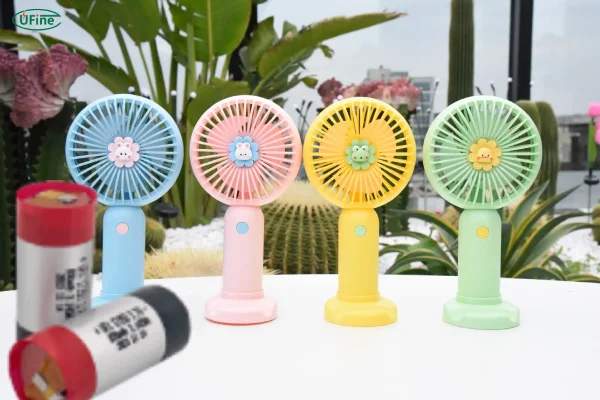
Portable electric fans use various types of batteries, each with unique advantages and drawbacks. Let’s examine the main options:
Alkaline Batteries
- Pros: Widely available and inexpensive.
- Cons: Non-rechargeable and have a limited runtime.
- Best For: Short-term use or emergency situations where recharging isn’t an option.
NiMH (Nickel-Metal Hydride) Batteries
- Pros: Rechargeable and more environmentally friendly than alkaline batteries.
- Cons: Shorter lifespan and prone to self-discharge when not in use.
- Best For: Budget-conscious users who need rechargeable options.
Lithium-Ion Batteries
- Pros: High energy density, long lifespan, and fast charging capabilities.
- Cons: More expensive than alkaline and NiMH batteries.
- Best For: Frequent users who prioritize reliability and performance.
Lithium Polymer Batteries
- Pros: Lightweight, flexible in shape, and safer due to lower chances of leakage.
- Cons: Slightly less energy-dense than lithium-ion batteries.
- Best For: Advanced portable fans with compact designs and long-lasting performance.
Key Takeaway: While alkaline and NiMH batteries are suitable for occasional use, lithium-ion and lithium polymer batteries dominate the market for their superior performance and reusability.
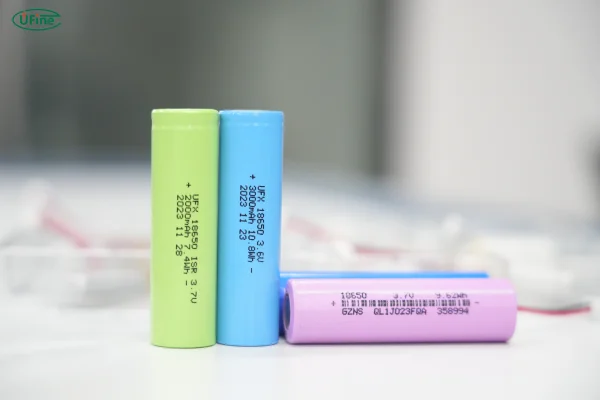
Li-ion vs LiPo battery for portable fans
Both lithium-ion and lithium polymer batteries are commonly used in portable fans, but they have different advantages depending on product requirements.
| Feature | Li-ion battery | LiPo battery |
|---|---|---|
| Structure | Cylindrical or prismatic cell | Pouch cell |
| Shape flexibility | Limited | Excellent |
| Weight | Lightweight | Very lightweight |
| Energy density | High | High |
| Custom size | More difficult | Easier |
| Best application | Standard portable fans | Slim and customized fans |
Whether you need a specific size, capacity, or voltage, Ufine Battery can deliver high-quality options to meet your requirements. With their expertise, you can trust Ufine to provide safe, reliable, and efficient batteries for your portable electric fans.
Part 2. Portable fan battery structure explained
A portable fan battery is more than just a battery cell. It is a complete power system designed to safely deliver energy to the fan motor.
A typical rechargeable fan battery includes:
Battery cell → Protection PCB → Connector → Fan circuit
Each part has a specific function:
Battery cell
The cell determines:
- Voltage
- Capacity
- Energy storage
- Runtime capability
Protection PCB
The protection circuit monitors battery conditions and provides protection against:
- Overcharging
- Over-discharging
- Excess current
- Short circuits
Connector and wiring
The connector connects the battery pack to the fan control board. Different manufacturers may use different connector types depending on the product design.
For replacement batteries, matching the connector and wiring configuration is important to ensure compatibility.
Part 3. How to calculate portable fan battery runtime
Battery capacity is usually measured in mAh, but runtime depends on both battery energy and fan power consumption.
The basic calculation is:
Battery energy (Wh) = Voltage (V) × Capacity (Ah)
For example:
A 3.7V 4000mAh battery:
3.7V × 4Ah = 14.8Wh
If the fan consumes 4W:
14.8Wh ÷ 4W ≈ 3.7 hours
Actual runtime may vary depending on:
- Fan speed setting
- Motor efficiency
- Battery age
- Temperature
- Control system power consumption
A higher-capacity battery can extend runtime, but only when the physical size and charging system support the upgrade.
Part 4. What affects the life of a portable electric fan battery?
Several factors influence how long a portable electric fan battery lasts, both in terms of daily use and overall lifespan. Let’s explore these factors:
- Charging Habits: Overcharging or undercharging can degrade the battery. Aim to unplug the charger once the battery reaches full capacity.
- Usage Intensity: Running the fan at maximum speed drains the battery faster, shortening its daily runtime.
- Temperature: High temperatures can damage the battery, while freezing conditions may reduce its performance temporarily.
- Storage Conditions: Storing the battery in a hot, humid, or damp environment can accelerate degradation.
- Age: All batteries lose capacity over time, even with proper care.
To maximize battery life, use the fan at medium settings when possible, store it in a cool, dry place, and follow recommended charging practices.
Part 5. Signs that your portable fan battery needs replacement
A portable fan battery does not last forever. Over time, repeated charging cycles and daily use gradually reduce battery performance.
If you notice any of the following problems, your fan battery may need replacement.
Shorter operating time
One of the most common signs is reduced runtime.
For example:
A new portable fan may run for 8 hours, but after several years, the same fan may only operate for 1–2 hours.
This usually happens because battery capacity decreases as the internal materials age.
The battery cannot hold a full charge
If your fan:
- Charges very quickly but dies soon
- Shows incorrect battery levels
- Stops working shortly after unplugging
The battery may have lost its effective capacity.
Fan stops suddenly
Aging batteries often experience increased internal resistance, which can cause voltage drops when the fan motor requires more power.
This may result in:
- Sudden shutdown
- Lower fan speed
- Unstable operation
Battery swelling
Battery swelling is a serious warning sign.
A swollen lithium battery may indicate internal damage caused by:
- Overcharging
- Excessive heat exposure
- Cell aging
- Manufacturing defects
Stop using a swollen battery and replace it with a suitable new battery.
Charging problems
A failing rechargeable fan battery may show issues such as:
- Cannot fully charge
- Takes unusually long to charge
- Stops charging randomly
Before replacing the battery, check the charger and charging port because these components can also cause charging problems.
Part 6. How to replace a portable fan battery
Replacing a portable fan battery requires checking several specifications to ensure compatibility.
Before purchasing a replacement battery, confirm:
1. Check the original battery label
Look for:
- Voltage
- Capacity
- Battery model
- Manufacturer information
A common label may show:
Example:
3.7V
2000mAh
Lithium polymer battery
2. Match voltage
The replacement battery voltage should be the same as the original battery.
For example:
Original battery:
3.7V
Recommended replacement:
3.7V
3. Choose suitable capacity
A higher capacity battery can provide longer runtime, but it must:
- Fit inside the fan housing
- Work with the existing charging system
- Maintain acceptable product weight
4. Match physical dimensions
Even a battery with the correct voltage may not work if it does not fit.
Always compare:
- Battery thickness
- Battery length
- Battery width
5. Check the connector
Different portable fans may use different connectors, including:
- JST connectors
- Molex connectors
- Custom connectors
For manufacturers, customized connectors and wiring solutions are often required to simplify assembly.
Part 7. Charger and plug
The type of charger and plug used with your portable electric fan battery can significantly impact its lifespan and performance.
Common Charger Types
- USB Chargers: Compatible with power banks, laptops, and wall adapters, USB chargers are the most versatile option.
- Dedicated Chargers: These are designed specifically for the fan model and ensure optimal charging.
- Universal Chargers: Useful for fans that use removable batteries, universal chargers can accommodate multiple battery types.
Plug Variants
- Standard Plugs: Common for wall charging, standard plugs deliver consistent power.
- Micro-USB/Type-C Ports: Increasingly popular due to their compact size and fast-charging capabilities.
Part 8. Charging and maintenance tips
Proper charging and maintenance can extend the life of your portable electric fan battery. Follow these tips:
- Charge Fully Before First Use: Ensure the battery is fully charged when you unbox the fan.
- Avoid Overcharging: Unplug the charger once the battery is full to prevent overheating.
- Use the Right Charger: Stick to the manufacturer-recommended charger for safety and efficiency.
- Store Properly: When not in use, store the battery in a cool, dry place.
- Recharge Periodically: If you’re not using the fan for a long time, recharge the battery every 2–3 months to maintain its health.
- Clean Contacts: Wipe the battery terminals and charger contacts regularly to ensure proper charging.
- Avoid Extreme Conditions: Keep the battery away from high heat or freezing temperatures.
Part 9. FAQs
-
What’s the best battery for a portable electric fan?
Lithium-ion or lithium polymer batteries are the best for their efficiency and long life. -
How long does a fully charged battery last?
It depends on the battery type and fan speed but typically ranges from 4 to 10 hours. -
Can I charge the fan with a power bank?
Yes, most portable fans with USB ports can be charged using a power bank. -
What happens if I overcharge the battery?
Overcharging can shorten the battery’s lifespan and lead to overheating. -
Can I replace the fan battery?
Yes, but ensure the replacement battery matches the original specifications. -
How do I know if my battery needs replacing?
If the fan runs for a much shorter time than usual, it’s time for a new battery. -
What is the average lifespan of a lithium-ion battery?
With proper care, it can last 2–5 years. -
Why does my fan battery heat up during use?
Slight heating is normal, but excessive heat could indicate a problem.
Related Tags:

More Articles
Buck vs. Boost vs. Buck-Boost Converter: Which Is Best for Battery?
Not sure which converter your battery-powered device needs? Compare Buck, Boost, and Buck-Boost designs and discover what affects voltage stability and runtime.
How to Match 18650 Cells for a Reliable Battery Pack?
Building an 18650 battery pack? Learn how to compare cell capacity, voltage, and internal resistance to avoid mismatches and improve reliability.
Why Do 18650 Battery Packs Get Hot During Discharge?
Is your 18650 battery pack overheating under load? Learn what causes excess heat, how to spot dangerous symptoms, and what to do next.
18650 Battery BMS: How to Get the Specs Right
Learn how to choose a BMS for an 18650 battery pack. Compare voltage, current ratings, protection features, and balancing before you buy.
Why Does My Ring Camera Battery Drain So Fast or Stop Charging?
Is your Ring camera battery draining fast or not charging? Discover common causes, practical fixes, and when to replace the battery.