
- Key Takeaways
- Part 1. What is lithium ion battery cell balancing?
- Part 2. Why do lithium battery cells become unbalanced?
- Part 3. Why is cell balancing necessary?
- Part 4. Cell balancing methods explained
- Part 5. Passive vs active cell balancing (Quick Comparison)
- Part 6. Benefits of cell balancing in lithium-ion battery packs
- Part 7. Real-world applications of cell balancing
- Part 8. How to balance lithium battery cells in practice?
- Part 9. FAQs about lithium ion battery cell balancing
Lithium-ion battery packs power everything from EVs to energy storage systems. But one hidden issue limits their performance: cell imbalance.
If not controlled, imbalance reduces usable capacity, shortens lifespan, and increases safety risks. This is why cell balancing is a core function in any reliable battery management system (BMS).
Key Takeaways
- Cell balancing equalizes voltage and charge across cells, improving usable capacity and pack efficiency.
- Unbalanced cells limit performance due to the “weakest cell” effect in series configurations.
- Passive balancing is low-cost but wastes energy, while active balancing improves efficiency and precision.
- Cell balancing is essential for safety, reducing risks like overcharge, over-discharge, and thermal runaway.
- All multi-cell lithium-ion packs require balancing, especially in EVs, ESS, and high-cycle industrial systems.
Part 1. What is lithium ion battery cell balancing?
Cell balancing is the process of equalizing the state of charge (SOC) and voltage of individual cells in a battery pack.
A lithium-ion pack contains many cells connected in series and/or parallel. Due to manufacturing tolerances and aging, each cell behaves slightly differently. Over time, this leads to voltage and capacity mismatch.
Cell balancing works by:
- Redistributing energy between cells
- Preventing overcharged or over-discharged cells
- Keeping all cells within safe voltage limits
👉 In simple terms: Cell balancing ensures all cells “work together” instead of limiting each other.
Part 2. Why do lithium battery cells become unbalanced?
Understanding imbalance helps explain how to balance lithium battery cells effectively.
1. Manufacturing Variations
Even high-quality cells have small differences in:
- Capacity (Ah)
- Internal resistance
- Self-discharge rate
2. Temperature Differences
Cells in different positions experience uneven cooling or heating, leading to:
- Faster aging in hot spots
- Voltage drift over cycles
3. Aging And Cycle Degradation
Over time:
- Some cells lose capacity faster
- Internal resistance increases unevenly
4. Pack Design And Usage Patterns
High current loads, poor thermal design, or deep cycling accelerate imbalance.
Part 3. Why is cell balancing necessary?
Prevents Cell Drift
Without balancing, small differences grow into cell drift, where some cells:
- Overcharge → risk of thermal runaway
- Over-discharge → permanent damage
Improves Pack Performance
In a series pack:
- The lowest-capacity cell limits total output
- This is known as the weakest link effect
Balancing ensures:
- Maximum usable capacity
- Stable voltage output
Enhances Safety
Unbalanced cells increase risk of:
- Overvoltage → overheating or fire
- Undervoltage → cell reversal damage
For safety standards, refer to external guidelines like UL battery safety standards.
Part 4. Cell balancing methods explained
1. Passive Cell Balancing
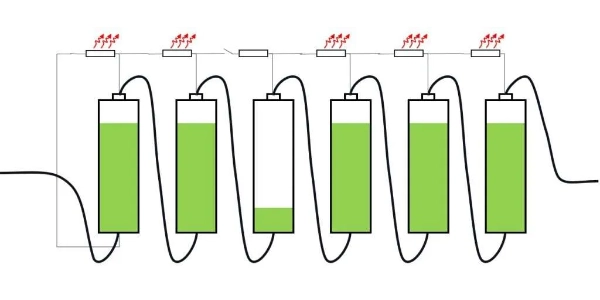
Passive balancing removes excess energy from higher-voltage cells using resistors.
Key characteristics:
- Simple and low cost
- Dissipates energy as heat
- Slower balancing speed
Best for:
- Low-cost consumer electronics
- Small battery packs
2. Active Cell Balancing
Active balancing transfers energy from high-voltage cells to low-voltage cells.
Key characteristics:
- Higher efficiency (minimal energy loss)
- Faster and more precise
- More complex circuitry
Best for:
- Electric vehicles (EVs)
- Energy storage systems (ESS)
- High-capacity industrial packs
3. Hybrid Cell Balancing
Hybrid systems combine:
- Passive balancing for baseline control
- Active balancing for precision correction
Advantages:
- Balanced cost vs performance
- Flexible for mid-to-high-end systems
Part 5. Passive vs active cell balancing (Quick Comparison)
| Feature | Passive Balancing | Active Balancing |
|---|---|---|
| Energy Efficiency | Low (heat loss) | High |
| Cost | Low | Higher |
| Complexity | Simple | Complex |
| Speed | Slow | Fast |
| Application | Consumer devices | EV, ESS, industrial |
Part 6. Benefits of cell balancing in lithium-ion battery packs
1. Higher Usable Capacity
Balanced cells allow the pack to reach full charge/discharge range.
2. Longer Battery Lifespan
Reduced stress on individual cells slows degradation.
3. Improved Safety
Minimizes risks of:
- Overcharging
- Thermal runaway
- Voltage reversal
4. Better Energy Efficiency
More energy is used effectively, especially with active balancing.
Part 7. Real-world applications of cell balancing
Electric Vehicles (EVs)
- Ensures consistent driving range
- Protects high-value battery packs
Energy Storage Systems (ESS)
- Stabilizes solar and wind energy storage
- Improves long-cycle reliability
Portable Electronics
- Extends battery runtime and device lifespan
Medical Devices
- Ensures stable and safe power delivery
Part 8. How to balance lithium battery cells in practice?
In real systems, cell balancing is handled by a Battery Management System (BMS).
A typical BMS performs:
- Cell voltage monitoring
- Temperature tracking
- Automatic balancing control
👉 For deeper system design, see: lithium battery management system (BMS) guide
Engineering tips:
- Choose matched cells during pack assembly
- Ensure proper thermal design
- Select balancing type based on application (cost vs performance)
Part 9. FAQs about lithium ion battery cell balancing
What is cell balancing in lithium-ion batteries?
Cell balancing equalizes voltage and charge across cells to improve safety, lifespan, and performance.
Is cell balancing necessary for all battery packs?
Yes. Any pack with multiple cells in series requires balancing to prevent drift and damage.
What happens if cells are not balanced?
You may see reduced capacity, faster degradation, and increased safety risks.
Passive vs active balancing: which is better?
Passive is cheaper but less efficient. Active is better for high-performance or large battery systems.
How often does cell balancing occur?
It depends on the BMS design. Some systems balance continuously, while others balance during charging cycles.
Related Tags:

More Articles

Dead Battery or Device Failure? How to Find the Cause
Think your device is broken? Learn how to tell if the problem comes from battery aging or hardware failure before replacing your electronics.
Why iPhone Duo Uses Two Batteries: The Engineering Behind Foldable Phone Power
Why do foldable phones need two batteries? Explore the engineering challenges behind iPhone Duo’s dual-battery architecture and future battery trends.
Solid-State Batteries: 3 Myths You Need to Know
Solid-state batteries promise safer EVs and longer range, but the reality is more complex. Discover the challenges behind this next-gen technology.
Battery Capacity vs Discharge Rate: The Choice Engineers Face
Higher capacity or higher discharge rate? Learn how to choose the right LiPo battery for longer runtime, stable power output, and better device performance.
Battery Cable Size Guide: Choose the Right Wire Fast
Not sure what battery cable size you need? Learn how to select the right wire gauge, terminal size, and cable for safer, more efficient battery systems.


