- Part 1. What is an amp breaker?
- Part 2. How does an amp breaker work?
- Part 3. Why are amp breakers important in DC systems?
- Part 4. Types of amp breakers used in DC systems
- Part 5. How to choose the right amp breaker?
- Part 6. Where are amp breakers typically installed?
- Part 7. Common mistakes to avoid with amp breakers
- Part 8. Amp breaker vs fuse: Which is better?
- Part 9. Signs your amp breaker is failing
- Part 10. How to install an amp breaker safely?
- Part 11. FAQs about amp breaker
What is an amp breaker and why is it important in DC power systems? An amp breaker is a vital device that protects DC circuits from overcurrent. It stops the flow of electricity when the current exceeds safe levels. This helps prevent fires, equipment damage, and power failures in DC power systems.
If you’re working with solar panels, battery banks, or off-grid systems, you’ve probably heard about amp breakers. But how do they really work, and why are they so important? In this guide, we’ll explain everything in plain English so you can understand how to make your DC system safe and efficient.
Part 1. What is an amp breaker?
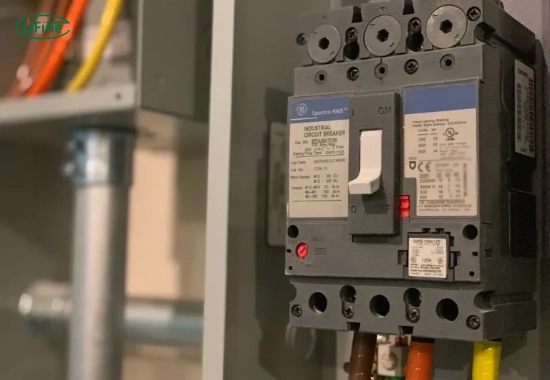
An amp breaker, also called an amperage circuit breaker, is an automatic switch that disconnects power when the electrical current goes beyond a set limit. It’s like a safety valve for electricity.
In simple words, when too much electricity tries to pass through the wires, the amp breaker stops it. This keeps your devices safe and avoids overheating or fire.
Amp breakers are essential in DC power systems, such as:
- Solar power systems
- RV and camper setups
- Marine power systems
- Off-grid battery banks
Part 2. How does an amp breaker work?
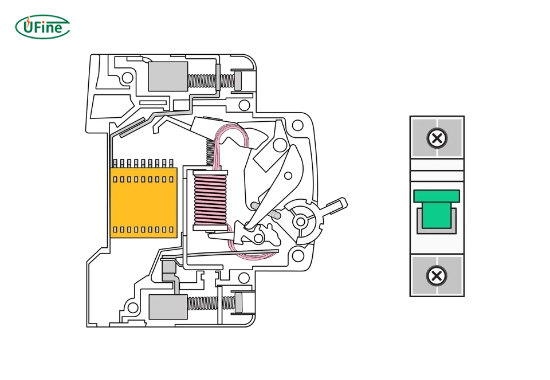
An amp breaker works by monitoring the electrical current. If the current gets too high, the breaker “trips,” cutting off the power. Here’s how it works step by step:
- Normal flow: When the current stays within the safe range, power flows normally.
- Overload: If the current rises above the set amp rating, the breaker senses it.
- Trip mechanism: The breaker activates a switch to stop power flow.
- Manual reset: Most DC amp breakers can be reset by hand after fixing the problem.
This automatic function makes amp breakers smarter and easier to use than fuses, which need to be replaced after they blow.
Part 3. Why are amp breakers important in DC systems?
DC power systems behave differently from AC systems. DC current doesn’t cross zero like AC, so arcs (sparks) can be more dangerous and harder to stop. That’s why DC-rated amp breakers are critical.
Here’s why they’re important:
- Fire prevention: Stops wires from overheating and catching fire
- Protects equipment: Prevents damage to batteries, inverters, and charge controllers
- System stability: Keeps the power system running smoothly
- Safety compliance: Meets electrical codes and insurance requirements
Without a proper amp breaker, one short circuit can destroy your entire system.
Part 4. Types of amp breakers used in DC systems
There are several types of amp breakers. Each has its own use, depending on your setup.
- Thermal breakers
These rely on heat. When the current is too high, a bimetal strip bends and trips the breaker. They’re slow to respond but good for steady loads. - Magnetic breakers
They use a magnetic coil. When current rises quickly (like in a short circuit), the coil pulls a latch to open the breaker. These react fast. - Thermal-magnetic breakers
Combines both types. Good for general use and offers the best of both worlds. - Manual reset breakers
After tripping, you need to press a button to reset them. Useful in RVs and boats. - Auto-reset breakers
These reset automatically after cooling down. Not ideal for critical systems, as they can cycle continuously during a fault.
Part 5. How to choose the right amp breaker?
Choosing the right amp breaker is crucial for safety. Here’s what to consider:
- Amp rating: Match it to the wire size and load. Common sizes are 10A, 20A, 30A, 50A, 100A, etc.
- Voltage rating: Must be rated for DC voltage, like 12V, 24V, or 48V.
- Trip curve: How fast it trips. Use fast-trip for sensitive electronics and slow-trip for motors.
- Environment: Choose waterproof or rugged breakers for outdoor or mobile use.
- Reset type: Decide between manual or automatic reset based on your needs.
Tip: Never use an AC breaker in a DC system. DC breakers are specially designed to handle continuous current and arc suppression.
Part 6. Where are amp breakers typically installed?
Amp breakers can be installed in several places within a DC system:
- Between battery and inverter
- Between charge controller and battery
- Between solar panels and charge controller
- Main DC distribution panel
Each location protects a different part of the system. It’s common to use multiple breakers for full protection.
Part 7. Common mistakes to avoid with amp breakers
Even experienced DIYers make mistakes with amp breakers. Here are some to avoid:
- Wrong amp rating: Too high won’t trip, too low trips too often.
- Using AC breakers in DC systems: Dangerous and ineffective.
- Bad wiring: Loose connections can cause heat and fire.
- No labeling: Makes troubleshooting hard.
- No insulation: Bare terminals can shock or arc.
Installing amp breakers the right way ensures your system is safe and reliable.
Part 8. Amp breaker vs fuse: Which is better?
Both amp breakers and fuses protect against overcurrent, but each has pros and cons.
| Feature | Amp Breaker | Fuse |
|---|---|---|
| Resettable | Yes (manual or auto) | No (must replace) |
| Cost | Higher upfront | Cheaper |
| Convenience | Easier to reset | Slower to fix |
| Safety | Safer restart process | Safer for one-time faults |
| Size | Larger | Compact |
Verdict: Use amp breakers for systems you maintain often. Use fuses for backup or rarely accessed circuits.
Part 9. Signs your amp breaker is failing
Sometimes the amp breaker itself can go bad. Watch for these signs:
- Frequent tripping: Even when loads are normal
- Won’t reset: Stays tripped even when the fault is fixed
- Hot to the touch: Overheating is a red flag
- Burn marks or smell: Signs of internal damage
- Loose or corroded terminals: Can cause voltage drops
If you notice these, replace the breaker to avoid system failures or fire hazards.
Part 10. How to install an amp breaker safely?
Follow these steps to install an amp breaker safely:
- Turn off all power
- Select proper wire size and breaker
- Mount the breaker securely
- Connect wires tightly
- Use insulated tools
- Label the breaker
- Test the system after installation
Safety tip: Always use a multimeter to check for voltage before touching wires.
Part 11. FAQs about amp breaker
Can I use an amp breaker in both AC and DC systems?
No. AC and DC breakers are built differently. DC breakers must handle continuous current and stronger arcs, so always use DC-rated breakers in DC systems.
What size amp breaker do I need?
It depends on your system’s wire size and load. For example, a 10 AWG wire usually supports up to 30 amps. Always match the breaker to the weakest part of the circuit.
Do amp breakers go bad over time?
Yes. Like any mechanical device, they wear out. Age, heat, and repeated tripping can reduce reliability. If in doubt, replace it.
Why does my amp breaker keep tripping?
The most common reasons are:
- Overloaded circuit
- Short circuit
- Faulty breaker
- Loose wires
Check each part of the system to find the cause.
Should I use an amp breaker for solar panels?
Yes. Every section of your solar system should be protected. Use amp breakers between the panels, charge controller, and battery to prevent overcurrent and potential fire hazards.
Related Tags:

More Articles

Best 5 Riding Lawn Mower Battery Manufacturers
Looking for the best riding mower battery? Compare top battery brands by lifespan, maintenance, price, and performance.
All You Need to Know About CB Certification for Lithium Batteries
Learn what CB certification and the IECEE CB Scheme mean for lithium batteries. Explore requirements, testing, benefits, and global market access.
How to Choose the Right 3S LiPo Battery 5000mAh for Your RC Hobby Projects?
Learn how to choose the best 3S LiPo battery 5000mAh for RC cars, drones, boats, and planes. Compare C ratings, runtime, connectors, charging, and safety tips.
Comparing Semi Truck Batteries vs. Truck Batteries
Compare semi truck batteries and truck batteries by size, CCA, lifespan, and battery type. Learn how to choose the right truck battery for your vehicle.
Top 10 Flat Lithium Ion Battery Options for Compact Devices
Explore top flat lithium ion battery options, key specifications, and selection factors for compact electronics, medical devices, and energy storage systems.