- Key Takeaways
- Part 1. What is a semi solid state battery?
- Part 2. Semi solid state vs lithium-ion vs solid-state
- Part 3. Why is the industry investing in semi solid state batteries?
- Part 4. Where are semi solid state batteries used?
- Part 5. Semi solid state battery challenges and limitations
- Part 6. Semi solid state battery in electric vehicles (evs)
- Part 7. Environmental impact of semi solid state batteries
- Part 8. FAQs about semi solid state battery
A semi solid state battery is a next-generation lithium battery that blends liquid and solid electrolyte technologies. It is designed to improve safety, increase energy density, and reduce manufacturing barriers compared to fully solid-state batteries.
This technology is gaining attention in EVs, energy storage, and high-performance electronics because it offers a practical balance: better performance than lithium-ion, but easier to scale than solid-state.
Key Takeaways
- Semi solid state batteries use a gel or slurry electrolyte, improving safety and stability.
- They offer 300–350 Wh/kg energy density, higher than standard lithium-ion.
- They reduce thermal runaway and dendrite risks, improving reliability.
- They are more scalable and cost-effective than full solid-state batteries.
- Adoption is accelerating in EVs, drones, and grid storage systems.
Part 1. What is a semi solid state battery?
A semi solid state battery is a rechargeable battery that sits between:
- Traditional lithium-ion batteries (liquid electrolyte)
- Fully solid-state batteries (solid electrolyte)
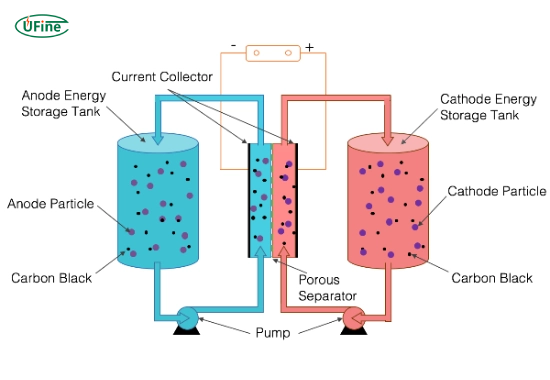
Instead of a liquid, it uses a viscous gel or slurry electrolyte. This hybrid design improves safety while maintaining manufacturability.
Why This Matters
- Liquid electrolytes → high performance but safety risks
- Solid electrolytes → safer but difficult to scale
- Semi-solid → engineering compromise with real-world viability
1 How does a semi solid state battery work?
All batteries share three core components:
- Anode
- Cathode
- Electrolyte
In a semi solid state battery:
- The electrolyte is thick and semi-fluid, not fully liquid
- Active materials are often suspended in the electrolyte
- Ion transport remains efficient, but material movement is restricted
Key Engineering Advantage
- Limits lithium dendrite growth
- Improves thermal stability
- Reduces leakage and flammability risks
For a deeper understanding of battery fundamentals, see:
👉 How do batteries work?
Part 2. Semi solid state vs lithium-ion vs solid-state
Understanding this comparison is critical for battery selection and product design.
| Feature | Lithium-Ion | Solid-State | Semi Solid State |
|---|---|---|---|
| Electrolyte | Liquid | Solid | Gel / Slurry |
| Energy Density | 200–260 Wh/kg | 400–500+ Wh/kg | 300–350 Wh/kg |
| Cycle Life | 500–1500 | 2000–5000 | 1000–3000 |
| Safety | Medium–High Risk | Very Safe | Safer |
| Cost | Low | Very High | Medium |
| Scalability | Mature | Limited | Emerging |
| Charging Speed | 1–2 h | 30–60 min | 30–90 min |
👉 Related comparison: Solid-state battery vs lithium-ion
Practical Insight
- Lithium-ion → best for cost-sensitive mass production
- Solid-state → future potential but not yet scalable
- Semi solid state → best near-term upgrade path
Part 3. Why is the industry investing in semi solid state batteries?
Major players are accelerating development due to faster commercialization potential.
- Tesla → exploring dry electrode + semi-solid approaches
- Toyota → hybrid solid/semi-solid R&D
- BMW → testing next-gen battery packs
- 24M Technologies → semi-solid architecture innovation
Core Reason
The industry needs batteries that are:
- Safer
- Higher energy density
- Easier to manufacture
Semi-solid delivers all three.
Part 4. Where are semi solid state batteries used?
Current and Emerging Applications
| Application | Why Semi-Solid Works |
|---|---|
| Electric Vehicles | Higher range + improved safety |
| Energy Storage Systems | Better thermal stability |
| Drones & Aerospace | High energy-to-weight ratio |
| Medical Devices | Safer and compact design |
Key benefits of semi solid state batteries
- Higher Energy Density
- Up to 350 Wh/kg
- Enables longer runtime or smaller battery packs
- Improved Safety
- Reduced flammability and leakage
- Lower risk of thermal runaway
- Better Scalability
- Easier to manufacture than solid-state
- Compatible with modified lithium-ion production lines
- Longer Cycle Life
- Typical 1000–3000 cycles
- Lower total cost of ownership
- Faster Charging Potential
- Improved ion transport in optimized designs
- Material Optimization
- Potential reduction in cobalt and nickel dependency
Part 5. Semi solid state battery challenges and limitations
Despite strong potential, there are still engineering challenges:
- Electrolyte stability: maintaining uniform slurry structure
- Manufacturing complexity: mixing and consistency control
- Cost: still higher than standard lithium-ion
- Temperature sensitivity: performance varies by formulation
For industry standards and safety frameworks, refer to:
👉 IEA Global EV Outlook
Part 6. Semi solid state battery in electric vehicles (evs)
Semi solid state batteries can directly improve EV performance:
- Longer range: higher energy density
- Faster charging: reduced downtime
- Improved safety: lower fire risk
- Lower lifecycle cost: longer lifespan
Real-World Implication
Future EVs may achieve:
- 500+ miles range
- <30 min fast charging
Part 7. Environmental impact of semi solid state batteries
Semi solid state batteries can reduce environmental burden:
- Longer lifespan → less waste
- Improved efficiency → lower energy loss
- Reduced toxic materials → cleaner supply chain
- Easier recycling potential
Part 8. FAQs about semi solid state battery
What is a semi solid state battery?
It is a lithium battery that uses a gel-like electrolyte, combining features of lithium-ion and solid-state batteries.
Are semi solid state batteries safer?
Yes. They reduce risks like thermal runaway, leakage, and short circuits.
When will they be widely available?
Early deployments are underway. Broader adoption is expected within 2–5 years.
How long do they last?
Typically 1000–3000 cycles, depending on design and use case.
Can semi solid state batteries be recycled?
Yes. Many designs aim for simpler disassembly and improved recyclability.
Related Tags:

More Articles

JST vs Molex: The Right Battery Connector Choice
JST or Molex for your battery? Learn how connector selection affects current, voltage drop, reliability, and device performance.
Custom Battery Pricing: Costs Manufacturers Don’t Mention
A low battery quote may not be the final cost. Discover common hidden expenses that affect custom lithium battery projects.
Battery Wire Length: Hidden Cause of Power Loss
A longer battery wire can cause voltage drop, power loss, and unstable operation. Learn how wire length affects battery performance.
How Device Sleep Modes Affect Battery Life
Think sleep mode extends battery life? Learn why devices still drain power and how firmware, hardware, and batteries affect runtime.
LiPo Battery and PCB Design: Clearance, Insulation, and Placement
Learn how to optimize LiPo battery PCB clearance, insulation, placement, wiring, and thermal design—and avoid common integration mistakes.