- Key Takeaways
- Part 1. What happens when a battery sits uncharged for a long time?
- Part 2. Why batteries lose charge even when not in use
- Part 3. Sulfation: the main cause of lead-acid battery failure
- Part 4. Deep discharge risks in lithium-ion batteries
- Part 5. How long can a battery sit without charging?
- Part 6. Signs a battery is dying after storage
- Part 7. Is it better to store a battery charged or uncharged?
- Part 8. Best practices for long-term battery storage
- Part 9. Can you revive a dead battery?
- Part 10. FAQs
Batteries can fail if they remain unused for long periods. When a battery is not charged for a long time, natural self-discharge continues and internal chemical reactions gradually damage the battery.
For example, lead-acid batteries may develop sulfation that reduces capacity, while lithium-ion batteries can suffer deep discharge that causes permanent degradation. Understanding these processes helps prevent battery failure and extend battery lifespan.
Key Takeaways
- Leaving a battery uncharged for long periods can cause irreversible damage due to self-discharge and chemical degradation.
- Lead-acid batteries commonly fail because of sulfation, which blocks normal charging reactions.
- Lithium-ion batteries can suffer deep discharge below ~3.0V per cell, leading to internal damage and permanent capacity loss.
- High temperatures accelerate self-discharge and chemical aging, making improper storage a major cause of battery failure.
- Storing batteries at partial charge (40–60%) and moderate temperatures is the safest long-term storage strategy.
Part 1. What happens when a battery sits uncharged for a long time?
When a battery remains unused for months, three primary processes occur:
- Self-discharge slowly drains stored energy
- Chemical degradation damages internal materials
- Deep discharge may push voltage below safe thresholds
These processes affect battery types differently.
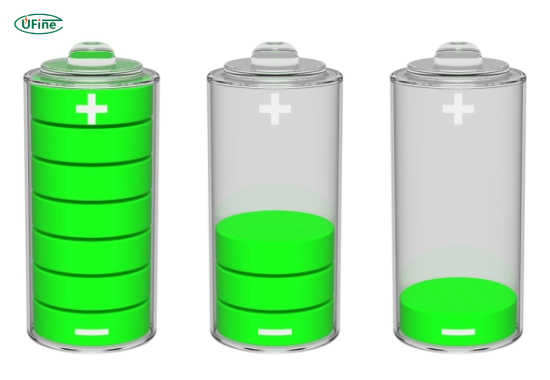
Battery Damage Comparison
| Factor | Lead-Acid Batteries | Lithium-Ion Batteries |
|---|---|---|
| Critical Voltage | Below ~12.4V (12V battery) | Below ~3.0V per cell |
| Main Failure Mechanism | Sulfation crystals | Deep discharge / copper dissolution |
| Self-Discharge Rate | 3–5% per month | 1–2% per month |
| Recovery Chance | Moderate if sulfation is mild | Very low below 2.5V per cell |
For example, if a car battery sits unused for several months, self-discharge combined with parasitic loads may completely drain it. This is one reason users often ask “why does my battery die so fast after storage?”
Part 2. Why batteries lose charge even when not in use
All batteries experience self-discharge, meaning they gradually lose stored energy even when disconnected from a device.
1 Internal chemical reactions
Inside lithium-ion batteries, small side reactions occur between electrodes and electrolyte. These reactions slowly consume charge.
In lead-acid batteries, internal chemical equilibrium shifts over time, gradually converting active material into inactive compounds.
2 Temperature effects
Temperature plays a critical role.
- High temperature (>25°C / 77°F) significantly accelerates self-discharge.
- Heat also speeds up internal chemical aging.
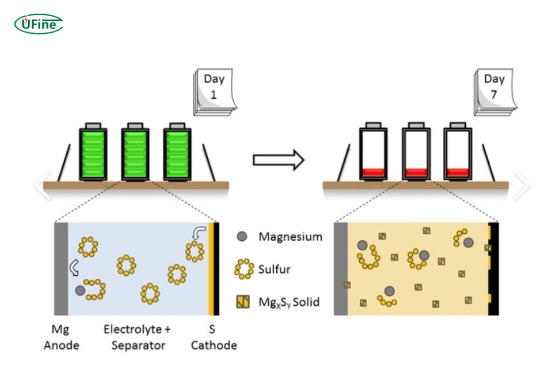
For example, storing batteries in a hot garage or vehicle can double the self-discharge rate compared to cool storage conditions.
For technical background on lithium battery chemistry, see: What Does C Rating Mean in Batteries
Part 3. Sulfation: the main cause of lead-acid battery failure
One of the most common reasons a battery dies after sitting unused is sulfation.
1 How sulfation forms
When a lead-acid battery remains discharged:
- Lead sulfate crystals grow on battery plates.
- These crystals harden over time.
- Charging reactions become less effective.
- Eventually, the battery can no longer hold or accept charge.
2 Real-world example
This problem frequently occurs with:
- Seasonal vehicles (motorcycles, boats)
- Backup generators
- Stored cars
After several months without charging, a 12V lead-acid battery may lose up to half its usable capacity.
For further technical details on lead-acid chemistry, refer to: Battery University – Sulfation and How to Prevent It.
Part 4. Deep discharge risks in lithium-ion batteries
Lithium-ion batteries behave differently but can still suffer severe damage if stored empty.
1 What is deep discharge?
Deep discharge occurs when voltage drops below the safe operating limit, typically:
- 3.0V per cell – performance degradation begins
- Below ~2.5V per cell – permanent damage likely
2 Internal damage mechanisms
If voltage drops too low:
- Copper from the current collector may dissolve
- Internal resistance increases
- The battery may fail to recharge safely
This is why users searching “how long can a lithium-ion battery last without charging” should understand that storage conditions matter more than time alone.
Part 5. How long can a battery sit without charging?
The safe storage period varies by battery type.
| Battery Type | Typical Safe Storage Time | Notes |
|---|---|---|
| Lead-acid | 2–3 months | Requires periodic charging |
| Lithium-ion | 6–12 months | Best stored at partial charge |
| Lithium iron phosphate (LiFePO₄) | 6–12 months | Lower self-discharge |
For example:
- A Power Wheels battery not charged for 18 hours usually suffers no damage.
- But months of deep discharge can permanently damage the battery pack.
Proper storage dramatically extends battery life.
Part 6. Signs a battery is dying after storage
If a battery has been unused for a long time, watch for these warning signs:
- Reduced capacity – devices run for shorter periods
- Longer charging times
- Failure to hold charge
- Voltage drops quickly under load
- Swelling or leakage (severe failure)
Physical deformation or leakage indicates a safety risk, and the battery should be replaced immediately.
Part 7. Is it better to store a battery charged or uncharged?
A common question is: “Is it better to leave a battery charged or uncharged?”
The optimal strategy depends on battery chemistry.
| Battery Type | Ideal Storage Charge |
|---|---|
| Lithium-ion | 40–60% |
| Lead-acid | Fully charged |
| LiFePO₄ | 40–60% |
Why?
- Fully empty lithium batteries risk deep discharge damage
- Fully charged lithium batteries age faster
- Lead-acid batteries must remain charged to prevent sulfation
Part 8. Best practices for long-term battery storage
If a device will not be used for months, follow these guidelines.
- Maintain Partial Charge: Lithium batteries should be stored around 40–60% charge.
- Store in a Cool Environment: Ideal temperature range: 10–20°C (50–68°F). Avoid hot cars, direct sunlight, and humid storage spaces.
- Check Voltage Periodically: For long storage periods, inspect every 3–6 months and recharge if voltage drops too low.
- Use Battery Maintenance Chargers: For lead-acid batteries, a trickle charger or maintainer prevents sulfation during storage.
Part 9. Can you revive a dead battery?
Many users search “how to revive a dead battery.” Recovery depends on the battery type and how deeply it discharged.
1 Lead-acid recovery
Possible methods:
- Pulse desulfation charging
- Slow charging with a smart charger
- Equalization charging (for flooded batteries)
However, heavily sulfated batteries often cannot fully recover.
2 Lithium-ion recovery
Lithium batteries are harder to revive.
- Some chargers apply low-current pre-charge
- If voltage is extremely low (<1.5V per cell), the battery is usually unsafe to recharge.
For troubleshooting charging problems, see: Lithium Battery Not Charging and How to Solve it
Part 10. FAQs
Can a battery die from sitting too long?
Yes. If a battery is not used for a long time, self-discharge can drain it completely. Lead-acid batteries often develop sulfation, while lithium batteries may suffer deep discharge damage.
Why does my battery die so fast after storage?
Capacity loss can occur due to chemical aging, sulfation, or internal resistance increases during long inactivity.
How long can a lithium-ion battery last without charging?
Most lithium-ion batteries can sit 6–12 months if stored around 40–60% charge in a cool environment.
What happens if you don’t charge a battery for months?
The battery gradually self-discharges. If voltage drops below safe levels, irreversible damage may occur and the battery may not recharge.
Can a completely dead battery be restored?
Sometimes. Mildly discharged batteries may recover through slow charging, but deeply discharged lithium batteries are often permanently damaged and should be replaced.
Related Tags:

More Articles
LiFePO4 Voltage Chart Guide: Everything You Need to Know
Check the LiFePO4 voltage chart for 3.2V, 12V, 24V and 51.2V batteries. Compare SOC, charging voltage, cutoff limits and internal resistance.
Lithium Ion Cell Sizes: A Comprehensive Guide
Compare lithium ion cell sizes with a chart of dimensions, capacity ranges, cell types, applications, and key factors for selecting the right battery.
6 Volt Tractor Battery vs 12 Volt: Which One Fits Your Farm Equipment Best?
Compare 6V and 12V tractor batteries. Learn which voltage fits vintage or modern tractors, which specifications matter, and how to convert safely.
The Ultimate Guide to a Molten Salt Battery
Learn how a molten salt battery works, its main types, advantages, disadvantages, operating temperature, safety, and grid energy storage uses.
2000mAh Battery Runtime: How Long Will It Last in Real Devices?
Learn how to calculate 2000mAh battery runtime and backup time. See real device examples, power-loss factors, and battery replacement checks.