- Key takeaways
- Part 1. What is a USB LiPo charger?
- Part 2. How does a USB LiPo charger work?
- Part 3. How a LiPo battery charging process works
- Part 4. Types of USB LiPo chargers
- Part 5. USB-C LiPo charger vs traditional USB charger
- Part 6. Can you charge a LiPo battery directly with USB?
- Part 7. How to choose a USB LiPo charger
- Part 8. Common mistakes in USB LiPo charging design
- Part 9. Custom LiPo battery solutions with USB charging design
- Part 10. FAQs
As portable devices become smaller, USB charging has become one of the most popular power solutions. A USB LiPo charger allows LiPo batteries to be charged conveniently from common USB power sources, including USB-A adapters, USB-C chargers, laptops, and power banks.
However, charging a LiPo battery through USB is not as simple as connecting a battery directly to a USB cable. A proper charging circuit is required to regulate voltage, current, and safety protection.
This guide explains how USB LiPo chargers work, how USB-C charging differs from traditional USB solutions, how to select the right charger, and what engineers should consider when designing products with LiPo batteries.
Key takeaways
- A USB LiPo charger requires a dedicated charging circuit to safely convert USB power into suitable charging conditions for LiPo batteries.
- USB-C LiPo chargers provide a smaller, more modern charging interface, but USB-C does not automatically mean faster charging.
- Charging current, battery capacity, voltage, thermal management, and protection features must be considered together.
- Directly connecting a LiPo battery to a USB power source can damage the battery and create safety risks.
- Custom LiPo battery solutions can integrate charging requirements for wearable devices, IoT products, medical devices, and portable electronics.
Part 1. What is a USB LiPo charger?
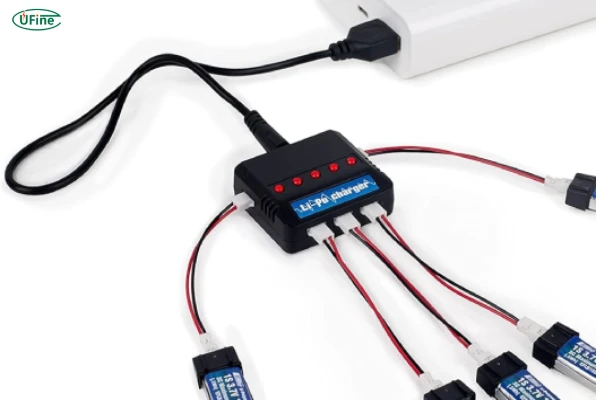
A USB LiPo charger is a charging solution designed to charge lithium polymer batteries using a USB power input.
Unlike standard USB chargers used for phones or other electronics, a LiPo battery charger must control the charging process according to lithium battery requirements.
A typical USB LiPo charging system includes:
- USB input connector
- Charging IC (integrated circuit)
- Battery protection circuit
- LiPo battery cell
- Device power management system
The USB port usually provides a 5V power source, while a single-cell LiPo battery typically requires a controlled charging voltage up to 4.2V. Therefore, the USB power must pass through a dedicated charging circuit before reaching the battery.
Part 2. How does a USB LiPo charger work?
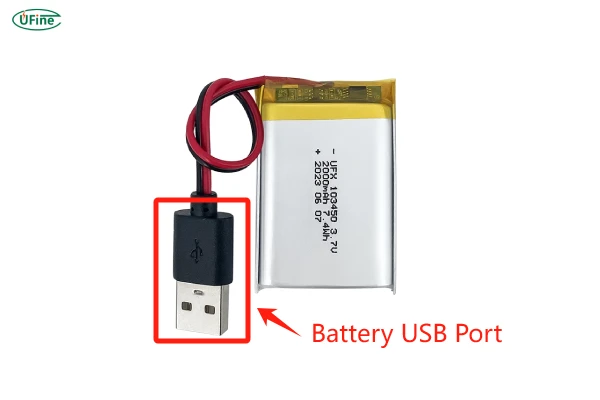
A lipo USB charger works by managing the charging process through several stages.
USB power input
The USB port provides electrical energy from a power adapter, computer, or power bank.
The charger circuit regulates:
- Input voltage
- Charging current
- Power protection
Charging IC regulation
The charging IC is the core component of a USB LiPo battery charger.
It manages:
- Constant current (CC) charging
- Constant voltage (CV) charging
- Charge termination
- Overcharge protection
For a typical 3.7V LiPo battery, the charger gradually increases battery voltage until it reaches approximately 4.2V, then reduces current until charging is complete.
Battery protection
A protection circuit helps prevent:
- Overcharging
- Over-discharging
- Excessive current
- Short circuits
- Abnormal temperature conditions
For commercial products, battery protection is essential for improving reliability and user safety.
Part 3. How a LiPo battery charging process works
A professional lipo battery USB charger usually follows four charging stages.
1. Pre-charge stage
If the battery voltage is extremely low, the charger applies a small current to safely recover the battery.
2. Constant current stage
During the main charging stage:
- Charging current remains stable
- Battery voltage gradually increases
- Most battery capacity is restored during this phase
3. Constant voltage stage
When the battery reaches the maximum charging voltage:
- Voltage remains constant
- Charging current gradually decreases
4. Charge termination
When current drops below a preset threshold, the charger stops charging or switches to standby mode.
This controlled process helps maintain battery lifespan and prevent safety issues.
How to Choose a Lithium Battery Charger
Part 4. Types of USB LiPo chargers
USB LiPo chargers can be categorized based on their connector type, charging circuit design, and application requirements. Different charging solutions are suitable for different electronic products depending on available space, charging speed, and integration requirements.
1 USB-C LiPo chargers
USB-C LiPo chargers are becoming increasingly popular in modern portable electronics because USB-C provides a compact connector design, reversible plug orientation, and improved compatibility with newer devices.
These chargers are commonly used in:
- Wearable devices
- Portable consumer electronics
- Smart sensors
- Medical equipment
Compared with older USB interfaces, USB-C allows manufacturers to design thinner and more user-friendly products. However, the actual charging performance still depends on the charging IC, battery specification, and power management design rather than the connector type alone.
2 Micro USB LiPo chargers
Micro USB LiPo chargers were widely used in earlier generations of portable electronics because Micro USB connectors are inexpensive and easy to integrate.
They are commonly found in:
- DIY electronics projects
- Small IoT devices
- Older rechargeable products
Although Micro USB remains functional for many applications, many manufacturers are gradually replacing it with USB-C due to better durability and user experience.
3 USB charging modules for LiPo batteries
A USB LiPo charging module integrates the USB input interface and charging circuit into a small PCB board.
These modules are commonly used by engineers during:
- Prototype development
- Low-volume production
- DIY projects
A typical module includes:
- USB connector
- Charging IC
- Status indicators
- Battery connection terminals
- Protection functions
For mass-produced products, however, manufacturers usually customize the charging circuit according to battery specifications, product dimensions, and safety requirements instead of using standard modules.
4 Integrated USB LiPo charging solutions
For commercial electronic products, the USB charging circuit is often integrated directly into the product design.
This approach allows engineers to optimize:
- Battery size
- Charging speed
- PCB layout
- Thermal management
- Product appearance
Integrated solutions are commonly used in products that require high reliability and compact designs, such as wearable devices, medical electronics, and industrial equipment.
5 USB power bank style LiPo chargers
Some applications require LiPo batteries to work as portable power sources. In these cases, the charging system may include both battery charging and power output functions.
These solutions are commonly found in:
- Portable power devices
- Emergency backup products
- Mobile electronics
They require additional power management circuits because the system must control both battery charging and external power delivery.
USB LiPo charger types comparison
| Type | Main advantage | Common applications |
|---|---|---|
| USB-C LiPo charger | Compact design and modern compatibility | Wearables, portable electronics |
| Micro USB LiPo charger | Low cost and simple integration | DIY products, older devices |
| USB charging module | Easy prototyping and development | Engineering prototypes |
| Integrated charging solution | Optimized performance and reliability | Commercial products |
| USB power management solution | Supports charging and power output | Portable power devices |
Part 5. USB-C LiPo charger vs traditional USB charger
With more electronic products adopting USB-C, USB-C LiPo chargers are becoming increasingly common.
However, USB-C does not automatically make charging faster. The charging speed depends mainly on:
- Charging IC capability
- Battery capacity
- Battery charging rate
- Thermal design
- Power input capability
| Feature | Traditional USB charger | USB-C LiPo charger |
|---|---|---|
| Connector type | USB-A or Micro USB | USB-C |
| Plug direction | Limited | Reversible |
| Size | Larger in many designs | Compact |
| Modern device compatibility | Moderate | Excellent |
| Fast charging support | Limited | Possible with suitable design |
USB-C is especially useful for compact products because it provides a smaller connector and better user experience.
For official USB specifications, you can refer to the USB Implementers Forum:
Part 6. Can you charge a LiPo battery directly with USB?
No. You should not connect a LiPo battery directly to a USB power source.
A USB port normally outputs around 5V, while a single-cell LiPo battery requires a carefully controlled charging voltage.
Direct connection may cause:
- Excessive charging current
- Battery swelling
- Reduced cycle life
- Potential safety hazards
A proper USB charger for LiPo battery applications requires a charging management circuit between the USB input and the battery.
Part 7. How to choose a USB LiPo charger
Selecting the right USB LiPo battery charger depends on several factors.
Battery voltage
The charger must match the battery configuration.
Common examples:
- Single-cell LiPo: 3.7V nominal voltage, 4.2V full charge voltage
- Multi-cell LiPo packs: require different charging solutions
Charging current
Charging current should match battery capacity and manufacturer specifications.
For example:
- 500mAh battery → around 250mA–500mA charging current
- 1000mAh battery → around 500mA–1A charging current
Higher charging current is not always better. Excessive current can increase heat generation and reduce battery lifespan.
Product size requirements
Wearable and portable devices often require:
- Small charging circuits
- Thin battery designs
- Low standby power consumption
Safety features
A reliable charger should include:
- Overcharge protection
- Temperature monitoring
- Short-circuit protection
- Over-current protection
Part 8. Common mistakes in USB LiPo charging design
When developing products with LiPo batteries, engineers often encounter these issues.
Using USB voltage directly to charge the battery
USB power must always pass through a suitable charging IC.
Selecting charging current without considering battery size
A small battery may not support high charging current.
Ignoring thermal management
Charging generates heat, especially in compact devices. Poor thermal design can affect battery performance and safety.
Choosing the wrong charging solution
Different applications require different approaches. A wearable device, medical device, and industrial sensor may have completely different charging requirements.
Part 9. Custom LiPo battery solutions with USB charging design
For product developers, the battery and charging system should be designed together.
Ufine provides customized LiPo battery solutions with flexible options for:
- Battery size
- Capacity
- Voltage
- Shape
- Connector design
- Charging requirements
By combining battery design and charging considerations early in development, manufacturers can achieve better performance, reliability, and product integration.
Part 10. FAQs
1. What is the difference between a USB LiPo charger and a battery charger?
A USB LiPo charger specifically uses a USB power input and includes charging management components designed for lithium polymer batteries. A general battery charger may support different battery chemistries, such as NiMH, lead-acid, or lithium-ion batteries, which require different charging methods and voltage settings.
2. Does charging speed affect LiPo battery lifespan?
Yes. Charging speed can influence battery aging. Higher charging currents may reduce charging time but can generate more heat and increase stress on the battery materials. A properly optimized charging current helps balance charging speed, safety, and long-term cycle life.
3. Can a USB LiPo charger work while the device is operating?
Some USB LiPo charging systems support power path management, allowing the device to operate while the battery is charging. This feature is commonly used in IoT devices, portable electronics, and smart equipment that need continuous operation during charging.
4. Why does my LiPo battery stop charging before reaching full capacity?
Several factors may cause charging to stop early, including battery protection activation, incorrect charger settings, insufficient input power, high temperature, or a mismatch between the charger and battery specifications.
5. What factors affect USB LiPo charging efficiency?
Charging efficiency depends on multiple factors, including charging IC quality, input voltage stability, charging current, battery condition, temperature, and power conversion losses. Proper matching between the battery and charging circuit can improve overall system efficiency.
Related Tags:

More Articles
LiFePO4 Voltage Chart Guide: Everything You Need to Know
Check the LiFePO4 voltage chart for 3.2V, 12V, 24V and 51.2V batteries. Compare SOC, charging voltage, cutoff limits and internal resistance.
Lithium Ion Cell Sizes: A Comprehensive Guide
Compare lithium ion cell sizes with a chart of dimensions, capacity ranges, cell types, applications, and key factors for selecting the right battery.
6 Volt Tractor Battery vs 12 Volt: Which One Fits Your Farm Equipment Best?
Compare 6V and 12V tractor batteries. Learn which voltage fits vintage or modern tractors, which specifications matter, and how to convert safely.
The Ultimate Guide to a Molten Salt Battery
Learn how a molten salt battery works, its main types, advantages, disadvantages, operating temperature, safety, and grid energy storage uses.
2000mAh Battery Runtime: How Long Will It Last in Real Devices?
Learn how to calculate 2000mAh battery runtime and backup time. See real device examples, power-loss factors, and battery replacement checks.