- Part 1. Learn 5V battery
- Part 2. What’s the difference between a 5V battery cell and a 5V battery pack?
- Part 3. Types of 5V batteries (Li-ion, NiMH, LiFePO4, and more)
- Part 4. How long will a 5V battery last? (mAh & Wh explained)
- Part 5. Are 5V batteries rechargeable or disposable?
- Part 6. 5V power banks: The most common 5V battery pack
- Part 7. Choosing the right charger for a 5V battery
- Part 8. 5V battery price
- Part 9. Conclusion
- Part 10. FAQs
Looking for a reliable 5V battery to power your electronics? Whether it’s a 5V rechargeable battery pack for your project or a small 5V coin cell battery for compact devices, understanding how these batteries work helps you choose the right one.
In this guide, we’ll explain what a 5 volt battery is, its main types, capacity, rechargeability, and how to select the best charger.
Key takeaways
- A true 5V battery cell is uncommon. Most 5V batteries are battery packs or regulated power systems that convert lithium battery voltage into a stable 5V output.
- Most rechargeable 5V battery solutions use lithium-ion, lithium polymer, or LiFePO4 batteries combined with voltage regulation circuits.
- A 5V rechargeable battery should be selected based on voltage output, current requirements, capacity, size, and charging method.
- A small 5V rechargeable battery is often customized for compact devices such as wearables, IoT sensors, and medical electronics.
Part 1. Learn 5V battery
A 5V battery is a battery system designed to provide a stable 5-volt DC output for electronic devices.
Unlike traditional battery labels such as 3.7V lithium batteries or 3.2V LiFePO4 batteries, “5V” usually describes the output voltage of the complete battery system, not the voltage of an individual battery cell.
For example, a typical lithium battery cell has:
| Battery type | Nominal voltage |
|---|---|
| Lithium-ion (Li-ion) | 3.6V–3.7V |
| Lithium polymer (LiPo) | 3.7V |
| LiFePO4 | 3.2V |
To create a DC 5V battery, manufacturers usually add voltage conversion components such as boost converters or power management circuits.
A typical 5V battery system works like this:
Lithium battery cell (3.7V)
↓
Protection circuit + voltage converter
↓
Stable 5V DC output
This allows a battery-powered device to receive the same voltage level commonly provided by USB chargers.
Does a 5V battery exist?
Yes, but a 5V battery is usually not a single battery cell.
When people ask for “is there a 5V battery” or “what is a 5 volt battery,” they are often looking for a compact power source that can directly replace a 5V adapter or USB power supply.
In practice, most 5V battery solutions include:
- Rechargeable lithium battery cells
- Battery protection circuits
- Voltage regulation modules
- Charging circuits
- Custom connectors or cables
For example, a portable electronic device may use a 3.7V lithium polymer battery internally, while a built-in circuit boosts the voltage to provide a 5V output.
Therefore, when choosing a 5V rechargeable battery, it is more important to consider the complete battery system rather than only the voltage label.
Part 2. What’s the difference between a 5V battery cell and a 5V battery pack?
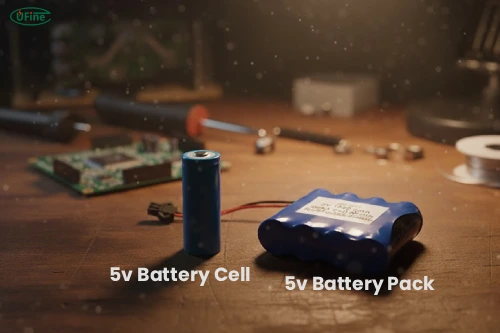
Let’s clarify the difference between a 5V battery cell and a 5V battery pack. Though they share the same voltage output, they serve different functions and applications:
-
5V Battery Cell: A single 5V battery cell is a compact, individual power source that outputs a steady 5 volts. You’ll often find these cells in smaller gadgets or single-use devices where a stable voltage is essential. These cells are ideal for compact electronics that need reliable, uninterrupted power without added bulk.
-
5V Battery Pack: A 5V battery pack, on the other hand, combines multiple 5V cells into a single unit, increasing the total capacity and thus extending battery life. Battery packs are designed for devices that require higher energy over extended periods, such as portable chargers or power banks. By integrating several cells, these packs deliver the same voltage output but with much greater endurance, making them perfect for power-hungry gadgets.
Understanding the difference between these types of 5V batteries can help you decide which is best suited for your needs. A single cell might be perfect for a flashlight, while a pack could be essential for longer-lasting devices or for applications like emergency backups.
Part 3. Types of 5V batteries (Li-ion, NiMH, LiFePO4, and more)
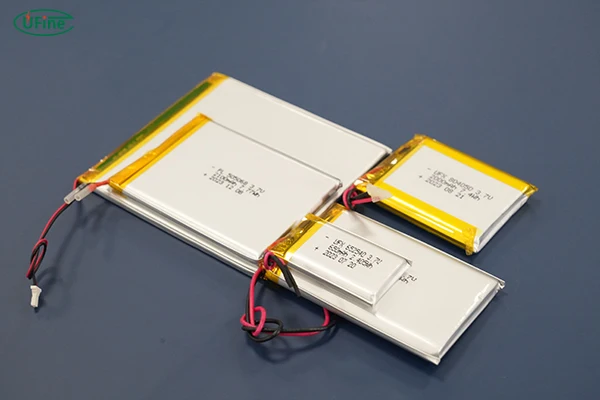
The world of 5V batteries is diverse, with each type offering unique characteristics depending on its chemical composition. Let’s explore some of the most common types:
-
Lithium-Ion (Li-ion): Known for their high energy density and lightweight design, Li-ion batteries dominate the market for portable devices. Their impressive energy-to-weight ratio makes them ideal for electronics where compact design and portability are priorities. However, they can be sensitive to high temperatures, requiring careful usage and storage.
-
Nickel-Metal Hydride (NiMH): NiMH batteries are cost-effective and generally safer in terms of overheating risks, though they tend to have a lower energy density than Li-ion. Often used in household electronics and rechargeable AA/AAA batteries, they’re reliable and less expensive, but they may require more frequent recharging.
-
Alkaline: Alkaline 5V batteries are typically single-use and often found in remote controls, flashlights, and toys. They provide solid power output but lack the rechargeability of other types, making them suitable for low-drain devices that don’t demand high energy.
-
Lithium-Iron Phosphate (LiFePO4): LiFePO4 batteries are durable, stable, and safe for various applications. They have a slower discharge rate, making them perfect for applications that need a steady power supply over time, like backup systems or even solar-powered units. While they’re more expensive, they offer excellent longevity.
| Battery Type | Rechargeable | Typical Capacity (mAh) | Key Features | Common Uses |
|---|---|---|---|---|
| Li-ion | ✅ Yes | 1500–5000 | Lightweight, high energy density | Phones, cameras |
| NiMH | ✅ Yes | 1000–3000 | Safe, cost-effective | Toys, remotes |
| LiFePO4 | ✅ Yes | 2000–6000 | Long life, stable | Solar systems, UPS |
| Alkaline | ❌ No | 500–1500 | Cheap, single-use | Flashlights, remotes |
NiMH Battery vs Li-Ion Battery vs NiCad Battery: How are they different?
Part 4. How long will a 5V battery last? (mAh & Wh explained)
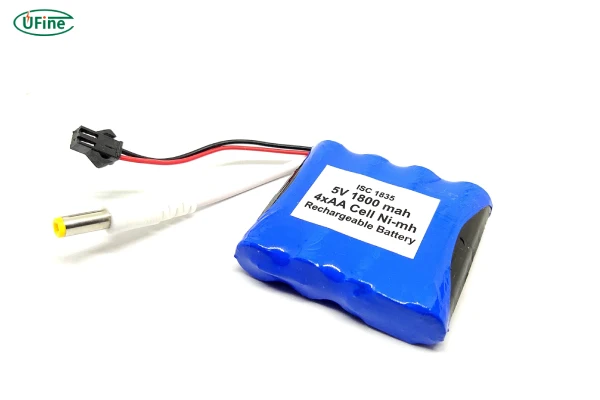
The capacity of a 5V battery indicates how much power it can deliver over time. Measured in milliampere-hours (mAh) or watt-hours (Wh), the capacity can vary significantly:
-
Low Capacity (500-1,500 mAh): These batteries are best suited for small devices like wearable gadgets, LED lights, and remote controls. They’re compact, lightweight, and efficient for low-drain applications.
-
Medium Capacity (1,500-5,000 mAh): Ideal for portable electronics, such as smartphones, digital cameras, and some portable gaming devices. Medium capacity batteries balance size with longevity, providing enough energy to last several hours before recharging.
-
High Capacity (5,000-10,000 mAh and beyond): High-capacity batteries are often found in power banks, tablets, and other high-energy devices. While they’re larger and heavier, they’re capable of delivering power for extended periods, making them invaluable for travel or emergency power.
Selecting the right battery capacity means finding the balance between size, weight, and power duration. For instance, if you’re frequently on the go, a medium-to-high capacity battery is likely best for your needs, while a low-capacity battery might suffice for intermittent or stationary use.
Part 5. Are 5V batteries rechargeable or disposable?
Rechargeability is a common question when it comes to batteries. Thankfully, many 5V batteries are rechargeable, although it largely depends on the battery type:
-
Rechargeable 5V Batteries: Li-ion, NiMH, and LiFePO4 batteries are all rechargeable, designed to be reused hundreds of times. These are ideal for electronics that see frequent use, as they provide a more sustainable, cost-effective power solution.
-
Non-Rechargeable 5V Batteries: Alkaline batteries are generally not rechargeable. Once depleted, they must be replaced. These are usually found in low-power applications where consistent recharging is unnecessary or inconvenient.
Part 6. 5V power banks: The most common 5V battery pack
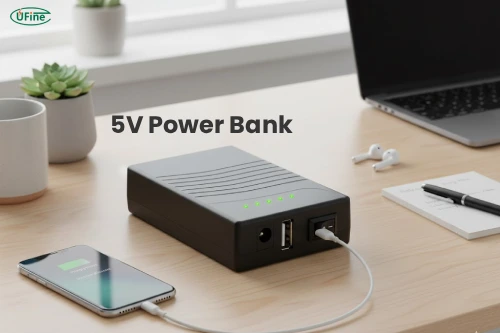
A 5V power bank is a popular portable battery pack designed to recharge devices while you’re on the go. For those of us constantly using our smartphones or tablets, a power bank is a lifesaver:
-
Portable and Convenient: Small enough to carry in your pocket, yet powerful enough to recharge most devices multiple times. This portability makes it a favorite for travelers, students, and anyone constantly on the move.
-
High Capacity and Versatile Output: With capacities often ranging from 2,000 mAh to 20,000 mAh or more, these power banks are suitable for a variety of devices. Most come with USB or USB-C ports, making them compatible with phones, tablets, and even laptops.
-
Safety Features: Many 5V power banks include built-in protections like overcharge, overcurrent, and short-circuit protection, adding a layer of safety for your devices.
Part 7. Choosing the right charger for a 5V battery
The type of charger you use plays a significant role in how well your battery performs over time:
-
USB Charger: This is the most common type, used for portable devices, power banks, and small electronics. USB chargers are easy to use, versatile, and widely available.
-
Smart Charger: A smart charger automatically adjusts the current to match the battery’s requirements, helping to avoid overcharging and extending the battery’s life. It’s especially beneficial for higher-capacity batteries, ensuring they are recharged efficiently.
-
Solar Charger: Solar chargers are perfect for outdoor enthusiasts or emergencies. By harnessing solar energy, these chargers provide a green, sustainable way to recharge a 5V battery without relying on traditional electricity.
Part 8. 5V battery price
| Battery Type | Price Range | Use Case |
|---|---|---|
| Small 5V Alkaline | $3–$10 | Remote, toy |
| Rechargeable 5V Li-ion | $10–$30 | Daily electronics |
| LiFePO4 5V Pack | $30–$60 | Solar backup, DIY |
| 5V Power Bank | $15–$50 | Phones, travel use |
The price of a 5V battery can vary widely depending on several factors:
-
Battery Type: Li-ion and LiFePO4 batteries tend to be more expensive due to their advanced technology and longer lifespan, while NiMH and alkaline options are typically more affordable.
-
Capacity: Higher capacity batteries are naturally more expensive as they store more energy and require higher-quality materials to deliver consistent performance.
-
Brand and Quality: Established brands with proven track records often charge more, but they also offer quality assurance, advanced safety features, and better longevity.
In general, you can find 5V batteries ranging from as low as $5 for smaller, disposable models to $50 or more for high-capacity rechargeable power banks.
Part 9. Conclusion
Choosing a 5V battery might seem straightforward, but the vast variety of types, capacities, and options available makes it worth doing a bit of research. Whether you need a small, disposable cell for occasional use or a high-capacity, rechargeable pack for everyday tech support, understanding these factors can help you pick the right battery for your needs. So next time you’re shopping for a battery, think about how much power you need, how often you’ll use it, and what features matter most to you.
By selecting the right 5V battery, you’re investing in a reliable source of energy that will keep your devices powered up whenever you need them most.
Part 10. FAQs
What is the difference between a 5V battery and a 3.7V battery?
A 5V battery provides a constant 5 volts output, often regulated from multiple 3.7V cells connected in series or boosted via circuitry. A 3.7V battery cell alone cannot directly power USB devices without voltage conversion.
Can I charge a 5V battery with a USB charger?
Yes, most 5V rechargeable batteries and power banks are designed for USB charging, as USB ports deliver 5V DC output.
How long does a small 5V rechargeable battery last?
Depending on capacity and usage, a 5V battery can last anywhere from a few hours to several days per charge, and typically supports 300–1000 charge cycles.
Are all 5V batteries safe to use?
Generally yes, but you should avoid overcharging and always use certified chargers. LiFePO4 batteries are considered the safest among rechargeable types.
Related Tags:

More Articles
Buck vs. Boost vs. Buck-Boost Converter: Which Is Best for Battery?
Not sure which converter your battery-powered device needs? Compare Buck, Boost, and Buck-Boost designs and discover what affects voltage stability and runtime.
How to Match 18650 Cells for a Reliable Battery Pack?
Building an 18650 battery pack? Learn how to compare cell capacity, voltage, and internal resistance to avoid mismatches and improve reliability.
Why Do 18650 Battery Packs Get Hot During Discharge?
Is your 18650 battery pack overheating under load? Learn what causes excess heat, how to spot dangerous symptoms, and what to do next.
18650 Battery BMS: How to Get the Specs Right
Learn how to choose a BMS for an 18650 battery pack. Compare voltage, current ratings, protection features, and balancing before you buy.
Why Does My Ring Camera Battery Drain So Fast or Stop Charging?
Is your Ring camera battery draining fast or not charging? Discover common causes, practical fixes, and when to replace the battery.