- Part 1. What is a 14.8v lipo battery?
- Part 2. Internal structure of a 14.8v lithium battery
- Part 3. Key specifications of a 14.8v lipo battery
- Part 4. 14.8v lipo battery vs 14.8v lithium ion battery
- Part 5. How to calculate the runtime of a 14.8v battery
- Part 6. Common applications of 14.8v lipo batteries
- Part 7. How to choose the right 14.8v battery
- Part 8. How to charge a 14.8v lipo battery safely
- Part 9. Safety considerations for 14.8v lithium batteries
- Part 10. Custom 14.8v lithium battery solutions
- Part 11. FAQs
A 14.8V LiPo battery is one of the most widely used rechargeable lithium battery solutions for devices that require a balance between high power output, compact size, and flexible design. From drones and robotics to portable equipment and industrial devices, a 14.8v battery provides a higher voltage platform compared with common 3.7V or 7.4V battery packs.
However, choosing the right 14.8V lithium battery is not only about voltage. Factors such as capacity, discharge rate, battery configuration, size, safety protection, and application requirements all affect battery performance.
This guide explains everything you need to know about 14.8V LiPo batteries, including their structure, specifications, charging requirements, applications, and how to select or customize the right battery solution for your product.
Key takeaways
- A 14.8V LiPo battery typically uses a 4S configuration, meaning four 3.7V lithium polymer cells connected in series.
- The fully charged voltage of a 14.8V battery is 16.8V because each cell reaches 4.2V when fully charged.
- Battery capacity determines runtime, while C-rate determines how much current the battery can deliver.
- A 14.8 v lipo battery is commonly used in drones, robotics, medical equipment, portable electronics, and industrial devices.
- Proper battery selection requires considering voltage, capacity, size, discharge performance, protection circuits, and certifications.
- Custom 14.8V lithium battery solutions can be designed according to specific product requirements.
Part 1. What is a 14.8v lipo battery?
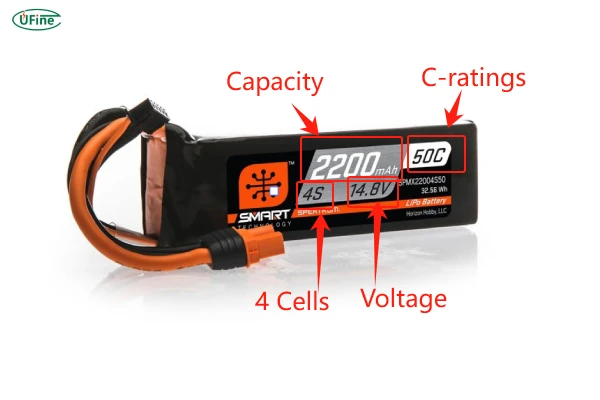
A 14.8v lipo battery is a rechargeable lithium polymer battery pack with a nominal voltage of 14.8V. Unlike a single lithium cell, which normally provides around 3.7V, a 14.8V battery pack combines multiple cells to achieve higher voltage.
The most common structure is a 4S battery configuration:
3.7V × 4 cells = 14.8V
The “S” refers to cells connected in series. Connecting cells in series increases voltage while keeping the capacity unchanged.
For example:
- One 3.7V 5000mAh cell → 3.7V 5000mAh
- Four cells in series → 14.8V 5000mAh
A 14.8V lithium battery is often selected when a product requires more power than a single-cell or lower-voltage battery can provide.
14.8v battery voltage explained
One common misunderstanding is that a 14.8V battery always outputs exactly 14.8V. In reality, lithium batteries have different voltage levels depending on their charge state.
A 14.8V LiPo battery normally has three important voltage values:
| Battery status | Voltage |
|---|---|
| Fully charged | 16.8V |
| Nominal voltage | 14.8V |
| Recommended cutoff range | About 12.0V–12.8V |
A lithium polymer cell has:
- 4.2V maximum charging voltage
- 3.7V nominal voltage
- Around 3.0V minimum discharge voltage
Therefore:
4.2V × 4 cells = 16.8V
This explains why a charger for a 14.8V lithium battery must support a 4-cell (4S) charging profile.
Part 2. Internal structure of a 14.8v lithium battery
A professional 14.8V lithium battery pack contains more than just battery cells.
The main components include:
Lithium polymer cells
Most 14.8V LiPo batteries use pouch-type lithium polymer cells because they provide:
- Flexible shape design
- High energy density
- Lightweight construction
- Better space utilization
Battery management system
A protection circuit or battery management system (BMS) is essential for safe operation.
A BMS can provide:
- Overcharge protection
- Over-discharge protection
- Over-current protection
- Short-circuit protection
- Cell balancing
Packaging and connectors
The final battery design may include:
- Custom connectors
- Protective film
- Wiring harnesses
- Insulation materials
- Mechanical housing
For product developers, these design details directly affect how easily the battery integrates into the final device.
Part 3. Key specifications of a 14.8v lipo battery
Selecting a 14.8 v lipo battery requires more than checking voltage. The following specifications determine whether the battery matches your application.
Capacity
Battery capacity is measured in mAh or Ah and determines how long a device can operate.
For example:
A 14.8V 5000mAh battery stores:
14.8V × 5Ah = 74Wh
A higher-capacity battery provides longer runtime but usually requires more space and weight.
Energy capacity
Energy is measured in watt-hours (Wh):
Wh = Voltage × Capacity (Ah)
This value is useful when comparing batteries with different voltages.
For example:
- 14.8V 5000mAh = 74Wh
- 14.8V 10000mAh = 148Wh
The second battery stores approximately twice the energy.
Discharge rate
The C-rate describes how quickly a battery can release energy.
Formula:
Maximum current = Capacity (Ah) × C-rate
Example:
A 14.8V 5000mAh 30C battery:
5Ah × 30C = 150A maximum theoretical discharge current
High discharge 14.8V LiPo batteries are commonly used in:
- UAV systems
- RC models
- Robotics
- High-power equipment
Part 4. 14.8v lipo battery vs 14.8v lithium ion battery
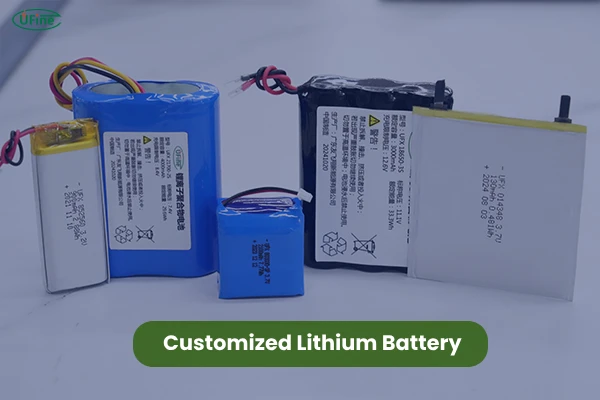
When searching for a 14.8V battery, you may notice different terms such as 14.8 volt li ion battery, 14.8 v lithium ion battery, and 14.8 v lipo battery. These terms are often used interchangeably, but technically there are some differences.
Both Li-ion and LiPo batteries belong to the lithium battery family. The main difference is the electrolyte material and cell structure.
A traditional lithium-ion battery often uses cylindrical or prismatic cells with liquid electrolyte, while a lithium polymer battery typically uses a pouch cell structure with a polymer electrolyte.
The choice between them depends on the product design requirements.
| Feature | 14.8V LiPo battery | 14.8V Li-ion battery |
|---|---|---|
| Cell structure | Pouch cell | Cylindrical or prismatic cell |
| Design flexibility | High, customizable shapes | More standardized sizes |
| Weight | Lightweight | Slightly heavier depending on design |
| Energy density | High | High |
| Common applications | Drones, portable electronics, robotics | Tools, energy storage, industrial devices |
For products that require a thin, lightweight, or customized battery shape, a 14.8V LiPo battery is often the preferred choice. For applications requiring standardized cells and mechanical durability, traditional lithium-ion solutions may be more suitable.
Part 5. How to calculate the runtime of a 14.8v battery
Battery runtime is one of the most important factors when selecting a battery for an electronic device.
The basic calculation is:
Runtime (hours) = Battery energy (Wh) ÷ Device power consumption (W)
For example:
A device consumes 20W and uses a:
14.8V 5000mAh battery
First calculate energy:
14.8V × 5Ah = 74Wh
Then calculate runtime:
74Wh ÷ 20W ≈ 3.7 hours
In real-world applications, actual runtime may be shorter because of:
- Power conversion losses
- Temperature changes
- Battery aging
- High current demand
- Protection circuit limitations
Therefore, engineers usually leave additional capacity margin when designing products.
Part 6. Common applications of 14.8v lipo batteries
A 14.8V LiPo battery is widely used in applications that require compact size, high energy density, and reliable power output.
Drones and unmanned systems
Many drones use 14.8V battery packs because the voltage provides a good balance between:
- Motor performance
- Flight time
- Weight
A 4S LiPo battery is one of the most common configurations for professional and hobby UAV systems.
Robotics and automation equipment
Robots often require batteries that can deliver stable power while fitting into limited spaces.
14.8V lithium batteries are used in:
- Mobile robots
- AGV systems
- Service robots
- Inspection robots
Custom battery shapes allow manufacturers to maximize internal product space.
Portable medical equipment
Medical devices require batteries with:
- Stable output
- Reliable safety protection
- Long operating time
Examples include:
- Portable monitoring equipment
- Diagnostic devices
- Mobile medical systems
Battery design must consider safety standards and long-term reliability.
Industrial and commercial equipment
A 14.8V battery can also power:
- Portable measurement devices
- Communication equipment
- Security systems
- Specialized electronic instruments
For industrial applications, battery customization is often required due to unique size and operating conditions.
Part 7. How to choose the right 14.8v battery
Choosing a suitable 14.8V battery requires evaluating both electrical and mechanical requirements.
Confirm the required voltage
The device must be designed for a 14.8V nominal input.
Using an incorrect voltage battery may cause:
- Device malfunction
- Reduced performance
- Safety risks
Always confirm the operating voltage range of the device before selecting a battery.
Select the appropriate capacity
Higher capacity means longer runtime, but it also increases:
- Battery size
- Weight
- Cost
Engineers need to balance runtime requirements with available installation space.
Check discharge requirements
Different devices require different current outputs.
Low-power electronics may only need a standard discharge battery, while motors or robotics systems may require a high-rate discharge 14.8V LiPo battery.
Important factors include:
- Continuous discharge current
- Peak discharge current
- C-rate rating
Consider battery dimensions
One advantage of LiPo technology is flexible design.
A manufacturer can customize:
- Length
- Width
- Thickness
- Shape
- Connector position
This is especially important for compact electronic products where every millimeter matters.
Evaluate safety requirements
Depending on the application, the battery may require:
- Protection circuit
- Temperature monitoring
- Cell balancing
- Safety certifications
Professional battery manufacturers usually perform electrical and safety testing before mass production.
Part 8. How to charge a 14.8v lipo battery safely
A 14.8V LiPo battery requires a compatible 4S LiPo charger.
Because the fully charged voltage is 16.8V, using an incorrect charger may damage the battery.
Important charging practices include:
Use a balance charger
A balance charger ensures that all four cells charge evenly.
Without cell balancing, individual cells may have different voltage levels, which can reduce battery lifespan.
Avoid overcharging
Overcharging can cause:
- Battery swelling
- Reduced cycle life
- Safety hazards
Always use a charger designed for lithium polymer batteries.
For general lithium battery safety guidance, you can refer to resources from Battery University.
Control charging temperature
Charging should normally be performed within the recommended temperature range provided by the battery manufacturer.
Extreme temperatures can negatively affect:
- Charging efficiency
- Battery lifespan
- Safety performance
Part 9. Safety considerations for 14.8v lithium batteries
Although lithium batteries are widely used, proper design and usage are essential for safe operation.
Common risks include:
Overcharging
Charging beyond the recommended voltage can damage lithium cells.
Deep discharge
Discharging a lithium battery below its safe voltage range can permanently reduce capacity.
Physical damage
Pouch cells are lightweight and flexible, but sharp impacts or crushing forces may damage internal structures.
High temperature operation
Excessive heat accelerates battery aging and may affect safety performance.
Professional battery solutions usually include:
- High-quality cells
- Protective circuits
- Cell matching
- Safety testing
Many battery products are tested according to international standards such as UN38.3 and IEC 62133.
More information about lithium battery transportation testing requirements can be found through the United Nations Economic Commission for Europe (UNECE) regulations.
Part 10. Custom 14.8v lithium battery solutions
Different products have different battery requirements. A standard off-the-shelf battery may not always provide the best fit.
A professional battery manufacturer can customize a 14.8V lithium battery based on:
Electrical requirements
Including:
- Voltage
- Capacity
- Discharge current
- Charging requirements
Mechanical requirements
Including:
- Battery dimensions
- Thickness
- Shape
- Weight limitations
Functional requirements
Including:
- Connector type
- Protection circuit
- Communication functions
- Temperature sensors
Manufacturing process
A typical custom battery development process includes:
- Requirement analysis
- Battery design
- Prototype production
- Performance testing
- Certification testing
- Mass production
This approach helps ensure the final battery matches the product design and performance requirements.
Part 11. FAQs
1. What is the difference between a 14.8V LiPo battery and a 14.8V 18650 battery pack?
A 14.8V LiPo battery typically uses lightweight pouch cells, allowing more flexible shapes and compact designs. A 14.8V 18650 battery pack uses cylindrical cells, which usually provide stronger mechanical durability and standardized dimensions.
2. Can I connect two 14.8V LiPo batteries together?
Yes, but the connection method depends on the required output. Connecting batteries in parallel can increase capacity, while connecting them in series increases voltage. The battery packs must have compatible specifications and protection systems.
3. How do I know if my 14.8V battery needs a high discharge rating?
A high discharge rating is usually needed for devices with sudden power demands, such as motors, drones, and robotics systems. Low-power electronics typically do not require high C-rate batteries.
4. What certifications should a 14.8V lithium battery have?
Depending on the application and market, common certifications and tests may include UN38.3, IEC 62133, UL, CE, RoHS, and other regional compliance requirements.
Related Tags:

More Articles
LiFePO4 Voltage Chart Guide: Everything You Need to Know
Check the LiFePO4 voltage chart for 3.2V, 12V, 24V and 51.2V batteries. Compare SOC, charging voltage, cutoff limits and internal resistance.
Lithium Ion Cell Sizes: A Comprehensive Guide
Compare lithium ion cell sizes with a chart of dimensions, capacity ranges, cell types, applications, and key factors for selecting the right battery.
6 Volt Tractor Battery vs 12 Volt: Which One Fits Your Farm Equipment Best?
Compare 6V and 12V tractor batteries. Learn which voltage fits vintage or modern tractors, which specifications matter, and how to convert safely.
The Ultimate Guide to a Molten Salt Battery
Learn how a molten salt battery works, its main types, advantages, disadvantages, operating temperature, safety, and grid energy storage uses.
2000mAh Battery Runtime: How Long Will It Last in Real Devices?
Learn how to calculate 2000mAh battery runtime and backup time. See real device examples, power-loss factors, and battery replacement checks.