- Key Takeaways
- Part 1. 14500 battery 3.7v li-ion rechargeable: How this comparison was built
- Part 2. 14500 battery 3.7v li-ion rechargeable options: Quick comparison
- Part 3. 14500 battery listings compared: Which products match the 14500 format?
- Part 4. 14500 battery 1000mah capacity: What is realistic?
- Part 5. 14500 battery engineering criteria: Voltage, size, protection and discharge current
- Part 6. 14500 battery usb charging: Charger and compatibility requirements
- Part 7. 14500 battery suppliers: What commercial buyers should verify
- Part 8. 14500 battery 3.7v li-ion rechargeable near me: Where to buy
- Part 9. 14500 battery FAQs
A 14500 battery 3.7V Li-ion rechargeable cell may look similar to an AA battery, but its voltage, charging requirements, capacity, protection, and dimensions are different. This guide compares common 14500 listings and explains how to verify compatibility before buying.
For flashlights, portable electronics, replacement batteries, or product-development projects, focus on electrical and mechanical specifications rather than advertised capacity alone.
Key Takeaways
- 14500 format and dimensions: whether the product is actually a cylindrical 14500 cell and whether its size and terminal design match the device.
- Voltage and charging: compatibility with 3.6V/3.7V Li-ion charging requirements.
- Capacity and discharge: whether the stated capacity is credible and whether the cell can support the required load.
- Application fit: whether the product suits replaceable-cell use, USB charging, consumer replacement, or equipment integration.
Part 1. 14500 battery 3.7v li-ion rechargeable: How this comparison was built
This comparison uses publicly available manufacturer specifications and retailer listings. The products were not physically tested by Ufine, so the order below is not a performance ranking and does not identify a “best overall” battery.
Disclosure: Ufine publishes this article and manufactures the Ufine 3.7V 1000mAh 14500 cell included below. Its inclusion represents one manufacturer-supplied option and should not be interpreted as an independent third-party endorsement.
Each listing is evaluated by four practical criteria:
- 14500 format and dimensions: whether the product is actually a cylindrical 14500 cell and whether its size and terminal design match the device.
- Voltage and charging: compatibility with 3.6V/3.7V Li-ion charging requirements.
- Capacity and discharge: whether the stated capacity is credible and whether the cell can support the required load.
- Application fit: whether the product suits replaceable-cell use, USB charging, consumer replacement, or equipment integration.
Part 2. 14500 battery 3.7v li-ion rechargeable options: Quick comparison
| Product or Listing | Listed Capacity | 14500 Match | Main Point to Verify |
|---|---|---|---|
| Ufine 14500 | 1000mAh | Confirmed 14500 format | Discharge requirements and configuration |
| CBJJ 14500 | 2500mAh claimed | Listing claims 14500 | Capacity and dimensions |
| CPZZ 14500 | 2500mAh claimed | Listing claims 14500 | Capacity and discharge rating |
| EBL 18J USB Battery | 3000mAh | Not the standard EBL 14500 product | Battery format and size |
| Blomiky RC Battery | 500mAh | Not a standard 14500 cell | Pack dimensions and connector |
| Tokeyla Charger Kit | Varies | 14500-related accessory kit | Included cell and charger specifications |
| YTKavq Connector Battery | 2600mAh | Not a standard removable 14500 cell | Dimensions, connector and polarity |
| TOPUSSE 14500 | 800mAh claimed | Potential 14500 match | Dimensions, terminal and protection |
| HW USB Battery | 3500mAh claimed | 14500 format not confirmed | Physical size and capacity |
| CBJJ USB-C 14500 | 700mAh claimed | Potential 14500 match | Length and USB-C configuration |
Part 3. 14500 battery listings compared: Which products match the 14500 format?
Ufine 3.7V 1000mAh cylindrical battery 14500
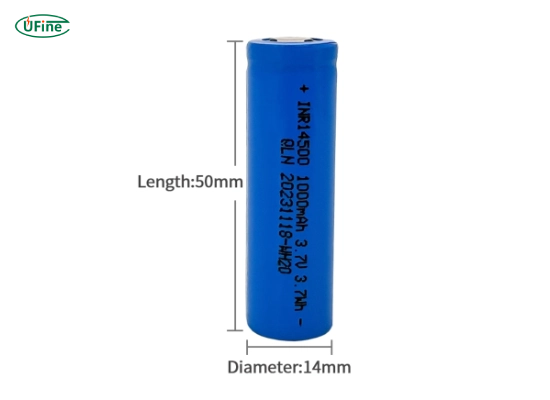
The Ufine 3.7V 1000mAh cylindrical 14500 battery is a manufacturer-supplied Li-ion cell for applications that require the 14500 format. Its product specification provides defined voltage, capacity, charging, and discharge parameters.
- Nominal voltage: 3.7V
- Capacity: 1000mAh
- Maximum charge voltage: 4.2V
- Maximum discharge current: 1000mA
- Chemistry: Lithium-ion
Best fit: Product-development teams that need a documented 14500 cell and manufacturer support.
Key consideration: Applications requiring several amps of continuous discharge should use a cell specifically rated for that load.
CBJJ 14500 3.7V rechargeable battery
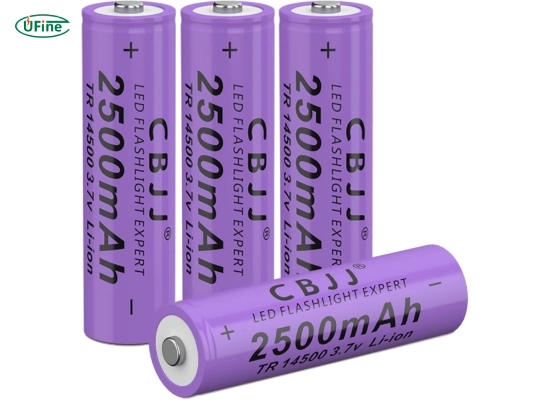
The CBJJ 14500 rechargeable battery listing describes a 3.7V cell with a claimed 2500mAh capacity. Because this capacity is unusually high for the 14500 format, verify the actual dimensions and measured capacity before purchase.
Best fit: Retail replacement applications where specifications can be checked before use.
Key consideration: Confirm discharge-current rating, terminal design, protection status, and actual capacity.
CPZZ 14500 3.7V Li-ion rechargeable battery
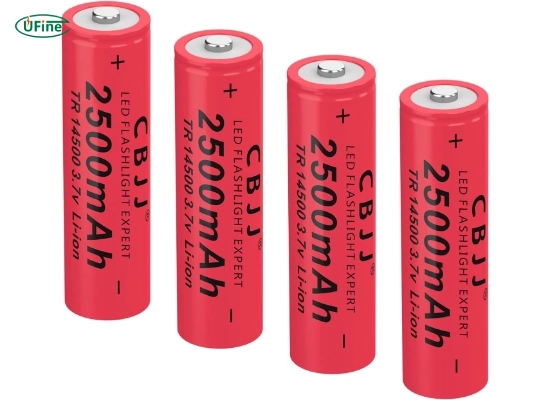
The CPZZ 14500 rechargeable battery listing also claims 2500mAh at 3.7V. Buyers should verify the physical size, actual capacity, and discharge specifications rather than comparing it by mAh alone.
Best fit: Consumer devices explicitly designed for compatible 14500 cells.
Key consideration: High advertised capacity does not confirm high-current capability.
EBL 3.7V 3000mAh 18J USB rechargeable battery
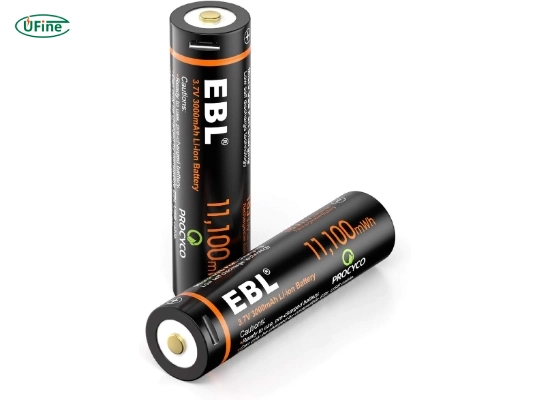
The EBL 3.7V 3000mAh USB battery should not be treated as EBL’s standard 14500 cell. EBL lists its 3.7V 800mAh 14500 rechargeable battery separately.
Best fit: Devices designed for the specific EBL USB battery format.
Key consideration: Similar voltage does not mean the battery will physically replace a 14500 cell.
Blomiky 3.7V rechargeable RC battery pack
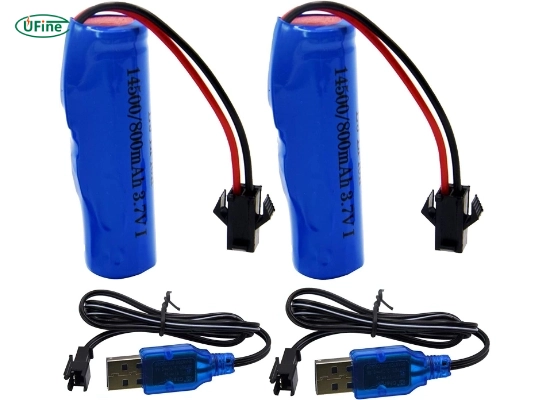
The Blomiky 3.7V rechargeable RC battery pack is a connectorized battery for compatible toys and RC products, not a standard cylindrical 14500 replacement.
Best fit: Compatible RC products requiring the specified battery pack.
Key consideration: Match dimensions, connector type, and polarity.
Tokeyla universal 14500 battery charger kit
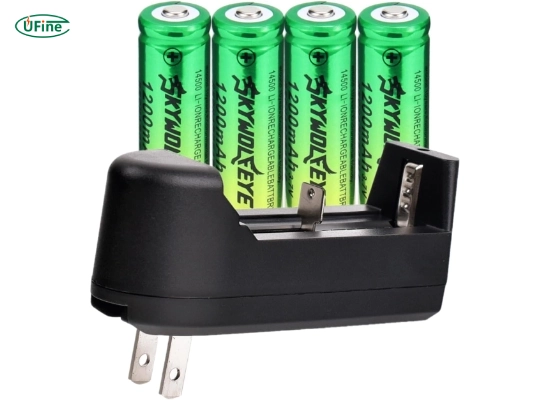
The Tokeyla 14500 battery charger kit is better evaluated as a charging bundle rather than an individual battery model.
Best fit: Users who need compatible cells and a charger in one package.
Key consideration: Check the specifications of both the included batteries and the charger.
YTKavq 3.7V connectorized lithium-ion battery
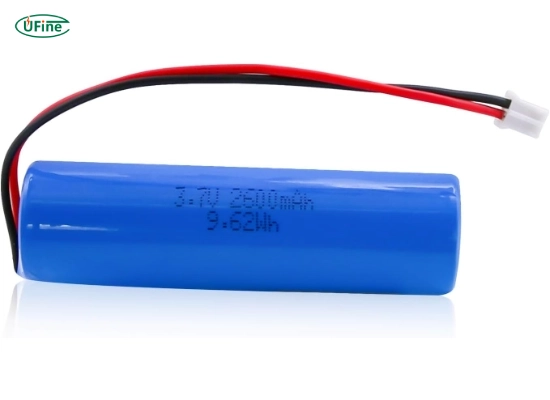
The YTKavq 3.7V connector battery uses a wired connection and does not provide the same mechanical interface as a removable cylindrical 14500 cell.
Best fit: Devices designed around its specific battery pack and connector.
Key consideration: Confirm pack dimensions, connector housing, pin pitch, and polarity.
TOPUSSE 14500 rechargeable battery
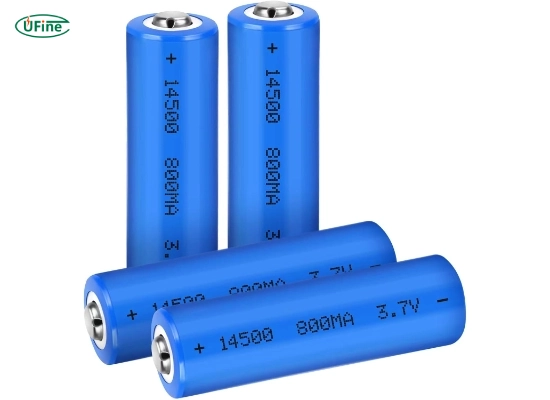
The TOPUSSE 14500 rechargeable battery listing describes an 800mAh cell for flashlights and similar devices. Confirm current dimensions and terminal design before buying.
Best fit: Devices explicitly designed for compatible 14500 cells.
Key consideration: Check button-top or flat-top requirements and whether the cell is protected.
HW 3.7V USB rechargeable lithium battery
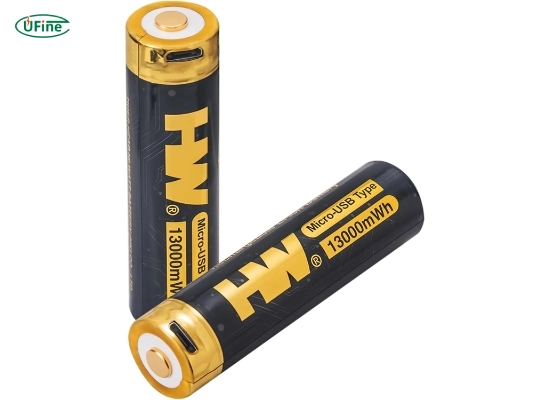
The HW 3.7V USB rechargeable battery listing advertises a 3500mAh capacity, but its status as a standard 14500 cell is not sufficiently clear from the available product information.
Best fit: Only devices confirmed to accept the exact physical battery specified by the seller.
Key consideration: Verify diameter and length before treating it as a 14500 replacement.
CBJJ 3.7V USB-C 14500 battery
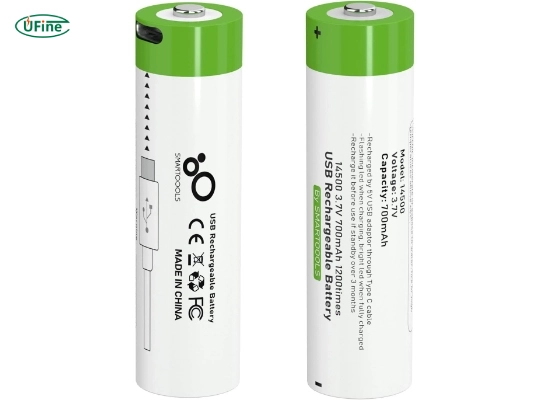
The CBJJ USB-C 14500 battery listing describes a 3.7V, 700mAh rechargeable cell with integrated USB-C charging.
Best fit: Compatible portable devices where direct USB-C charging is useful.
Key consideration: Integrated charging electronics can increase overall cell length, so check battery-compartment clearance.
Part 4. 14500 battery 1000mah capacity: What is realistic?
Capacity should be evaluated together with cell size and supporting technical data. Current manufacturer examples include the Ufine 1000mAh 14500 cell, EBL 800mAh 14500 battery, NITECORE NL1410 1000mAh 14500 battery, and NITECORE NL1411R 1100mAh USB-C 14500 battery.
These products do not establish an absolute capacity limit for every 14500 design, but they provide a useful reference. Claims of 2000mAh, 2500mAh, 3000mAh, or more in a standard 14500 body should be supported by credible dimensions and discharge data before they influence a purchasing decision.
Part 5. 14500 battery engineering criteria: Voltage, size, protection and discharge current
14500 battery voltage vs AA battery voltage
A rechargeable Li-ion 14500 cell typically has a nominal voltage of about 3.6V to 3.7V and charges to approximately 4.2V. A conventional alkaline AA is about 1.5V, so the two battery types are not automatically interchangeable even though their dimensions can look similar.
The 14500 lithium battery size and voltage guide explains the basic differences in more detail.
14500 battery dimensions and mechanical fit
The 14500 designation generally refers to a cylindrical cell approximately 14mm in diameter and 50mm long. Protection circuits, button-top terminals, and integrated USB charging electronics can increase the finished length.
Always compare the manufacturer’s maximum dimensions with the device battery compartment.
Protected vs unprotected 14500 batteries
Protected 14500 cells add circuitry for functions such as overcharge, over-discharge, overcurrent, and short-circuit protection, which may increase cell length. Use an unprotected cell only when the device provides appropriate battery protection.
Button-top vs flat-top 14500 batteries
Some devices require a button-top 14500, while others accept flat-top cells. Check both terminal style and total battery length before purchase.
14500 battery discharge current
Capacity indicates stored charge, not how much current the cell can safely supply. High-output flashlights, motors, and other demanding loads may require a higher continuous discharge-current rating than low-power electronics.
Match the battery’s documented continuous and peak discharge ratings to the device load rather than selecting a cell by mAh alone.
Part 6. 14500 battery usb charging: Charger and compatibility requirements
USB charging for a 14500 battery can mean either a cell with an integrated USB or USB-C charging circuit or a separate Li-ion charger powered through USB.
Standard 3.6V/3.7V Li-ion 14500 cells require a charger designed for lithium-ion chemistry. A conventional AA NiMH charger should not be used unless it specifically supports Li-ion 14500 cells.
The Li-ion CC/CV charging process explains how lithium-ion batteries are normally charged and why the correct termination voltage matters.
Before choosing a 14500 charging solution, confirm:
- The charger supports 3.6V/3.7V Li-ion cells.
- The charging termination voltage matches the battery specification.
- The charging current is within the cell’s rated limit.
- The charger slot accepts the actual battery length.
- The polarity and charge-protection design are appropriate.
Part 7. 14500 battery suppliers: What commercial buyers should verify
Commercial battery selection requires more than finding a compatible cell once. Engineers and procurement teams should confirm that the same specification can be documented, qualified, and supplied consistently for future production.
When evaluating a 14500 battery supplier, check:
- Exact battery specification: model, voltage, capacity, dimensions, terminal design, and discharge limits.
- Technical documentation: datasheets and applicable test or transport documents.
- Quality control: capacity, internal resistance, dimensions, and batch consistency.
- Traceability: ability to identify production batches and controlled configurations.
- Customization: support for protection circuits, wires, connectors, or assembled battery packs when required.
- Repeat-order consistency: ability to reproduce the approved battery configuration across future orders.
For product-development projects requiring something beyond a standard removable cylindrical cell, manufacturers may also provide custom lithium battery configurations based on available space, electrical load, connector, protection, and application requirements.
Part 8. 14500 battery 3.7v li-ion rechargeable near me: Where to buy
If you search for a “14500 battery 3.7V Li-ion rechargeable near me,” check specialist battery stores, flashlight retailers, electronics suppliers, or established online sellers. Before buying, confirm that the product is actually a 14500 cell and matches the required voltage, dimensions, terminal style, protection, and charging method.
For production quantities, controlled specifications, or customized configurations, sourcing from a battery manufacturer or technical supplier may be more appropriate than purchasing consumer replacement cells from a local retailer.
Part 9. 14500 battery FAQs
What is the best 14500 battery 3.7V Li-ion rechargeable?
There is no single best 14500 battery for every device. Match voltage, size, terminal type, protection, discharge current, capacity, and charger compatibility to the application.
Is a 14500 battery the same as an AA battery?
No. A Li-ion 14500 is typically 3.6–3.7V, while an alkaline AA is about 1.5V. Use a 14500 only in devices designed for its voltage.
Is 1000mAh realistic for a 14500 battery?
Yes. Current manufacturer examples commonly fall around 800–1100mAh. Much higher capacity claims should be verified with dimensions and discharge data.
Can a 14500 battery be charged by USB?
Yes, if the cell has built-in USB charging or is used with a compatible Li-ion charger. Do not use a standard AA charger unless it supports 14500 Li-ion batteries.
Where can I buy a 14500 battery 3.7V Li-ion rechargeable near me?
Check battery stores, flashlight retailers, electronics suppliers, and reputable online sellers. Confirm the exact battery specifications before purchase.
Related Tags:

More Articles
Glucometer Battery Types, Sizes and 10 Options Compared
Compare glucometer battery types, sizes and compatibility, including CR2032, AAA and rechargeable options, plus replacement and price guidance.
18650 Button Top Battery Guide: 10 Options Compared
Compare 18650 button top battery options by terminal type, protection, size and discharge needs, with practical tips for choosing the right battery.
2600mAh 18650 Battery: Specifications, Models, and Selection Guide
Compare 2600mAh 18650 battery specs, discharge ratings, protected vs unprotected designs, applications, safety, and supplier checks before choosing.
10 Drone Battery Options Compared for RC, FPV and Custom UAV Builds
Compare 10 drone battery options by voltage, capacity, C-rate, chemistry, connector and application fit, with guidance for RC, FPV and custom UAV builds.
15V Battery Guide: From AA to Square
Confused by 15V batteries? Understand the differences among AA to square types. Get informed today!