
- Part 1. Smart watch battery types
- Part 2. How long do smart watch batteries last?
- Part 3. Factors affecting smartwatch battery drain
- Part 4. Is a 1000mAh battery suitable for a smartwatch?
- Part 5. Can a smartwatch battery be replaced?
- Part 6. Smartwatch battery vs fitness tracker battery
- Part 7. How to extend the life of smart watch batteries?
- Part 8. Smart watch battery charger & charging tips
- Part 9. Why won’t my smart watch battery charge?
- Part 10. Smart watch battery price
- Part 11. FAQs
According to industry research, the global smartwatch market is expected to reach $97 billion by 2028, with millions of users relying on their devices daily. However, one of the most common frustrations among smartwatch users is battery life. A smartwatch with a weak or fast-draining battery can disrupt daily routines, fitness tracking, and communication.
Key takeaways
- Most smart watches use lithium polymer batteries because they provide high energy density, lightweight construction, and flexible designs.
- Smartwatch battery life depends on battery capacity, display technology, sensors, wireless functions, and software optimization.
- Common smartwatch batteries range from around 50mAh to 1000mAh depending on device size and features.
- A 1000mAh smart watch battery may support longer runtime but requires careful consideration of thickness and weight.
Part 1. Smart watch battery types
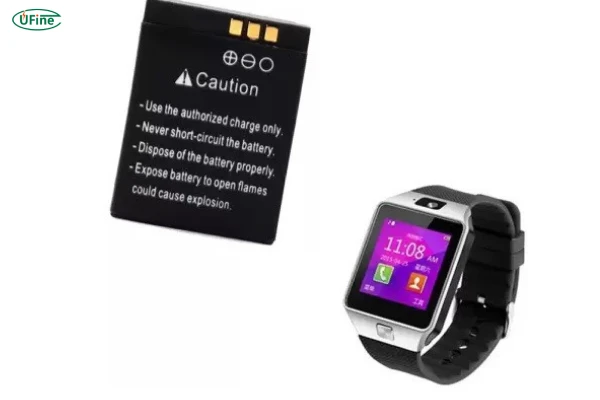
1. Lithium-Ion (Li-Ion) Batteries
Lithium-ion batteries are commonly used in high-end smartwatches because they offer:
- High energy density, providing longer usage time.
- Lightweight design, making them ideal for compact devices.
- Rechargeability with minimal memory effect, ensuring a longer lifespan.
2. Lithium-Polymer (Li-Po) Batteries
Li-Po batteries are also widely used in smartwatches due to:
- Flexibility in shape and size, allowing for custom smartwatch designs.
- Better safety compared to Li-Ion batteries, as they are less prone to leakage.
- Higher efficiency, ensuring a steady power supply for daily usage.
3. Coin Cell Batteries (CR and SR Series)
Some digital watches and basic smartwatches use coin cell batteries like CR2032 or SR927. These non-rechargeable batteries are common in fitness trackers, hybrid smartwatches, and budget-friendly wearables.
Custom Smartwatch Battery Solutions by Ufine Battery
Ufine Battery provides custom lithium-ion and lithium-polymer battery packs to meet different smartwatch requirements. Whether you need higher capacity or unique shapes, Ufine can deliver tailored battery solutions.
Smart watch battery voltage
The voltage of a smartwatch battery is crucial for device performance and compatibility.
Common Voltage Ratings
| Battery Type | Voltage Range |
|---|
| Lithium-Ion (Li-Ion) | 3.7V – 4.2V |
| Lithium-Polymer (Li-Po) | 3.7V – 4.2V |
| Coin Cell Batteries | 1.5V – 3V |
Part 2. How long do smart watch batteries last?
Battery capacity, measured in mAh (milliampere-hours), determines how long a smartwatch can run before needing a recharge.
Typical Smartwatch Battery Capacities
- Basic fitness trackers: 100mAh – 250mAh
- Standard smartwatches: 250mAh – 500mAh
- Premium smartwatches (Apple Watch, Samsung Galaxy Watch, etc.): 500mAh – 600mAh
- Rugged or sports smartwatches: 600mAh – 1000mAh
If you need customized battery capacities for smartwatch development, Ufine Battery can manufacture high-capacity, compact lithium batteries to match unique device specifications.
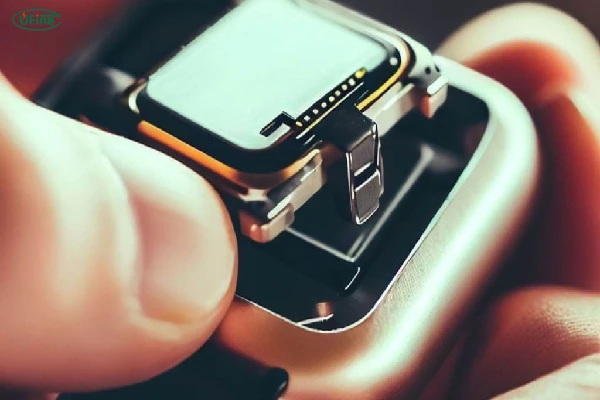
The average smartwatch battery lasts between 1 to 7 days, depending on several factors:
| Smartwatch Type | Battery Life Estimate |
|---|---|
| Basic fitness trackers | 5 – 7 days |
| Standard smartwatches | 2 – 5 days |
| Premium smartwatches with GPS | 1 – 3 days |
| Hybrid smartwatches (Analog + Smart Features) | 2 weeks – 6 months |
Part 3. Factors affecting smartwatch battery drain
Many users search for factors affecting smartwatch battery drain because battery life depends on more than the battery itself. The main factors include:
Display technology
The display is usually one of the largest power consumers in a smartwatch.
Battery drain increases with:
- Higher brightness settings
- Always-on display mode
- Larger screen size
- Higher refresh rates
AMOLED displays can improve efficiency by turning off individual pixels, but always-on features can still increase power consumption.
Health monitoring sensors
Modern smart watches include multiple sensors, such as:
- Heart rate monitoring
- Blood oxygen detection (SpO2)
- Sleep tracking
- Body temperature monitoring
Continuous sensor operation requires more energy and can reduce battery runtime.
GPS and wireless connectivity
Advanced connectivity features significantly affect battery consumption.
Examples:
- GPS tracking requires continuous positioning calculations.
- LTE connectivity consumes more power than Bluetooth.
- Wi-Fi usage increases battery drain during data transfer.
Outdoor smart watches designed for sports activities usually require larger batteries because of these power demands.
Software optimization
Battery life is also influenced by software efficiency.
Manufacturers can improve smartwatch battery life technology through:
- Better power management algorithms
- Optimized operating systems
- Low-power standby modes
- Efficient sensor scheduling
A well-optimized device can achieve longer runtime even with a smaller battery.
Part 4. Is a 1000mAh battery suitable for a smartwatch?
A smart watch battery 1000mah capacity is considered relatively large for wearable devices. While a higher capacity battery can provide longer runtime, it is not always the best choice for every smartwatch design.
A 1000mAh battery is more suitable for:
- Outdoor smart watches with GPS functions
- Sports watches requiring extended tracking time
- Larger smartwatches with bigger displays
- Devices with advanced health monitoring features
However, increasing battery capacity also increases:
- Battery thickness
- Device weight
- Charging time
- Design limitations
For example, a compact fitness tracker may prioritize a smaller and lighter battery, while an outdoor smartwatch may accept a larger battery to achieve longer operating time.
The ideal battery capacity depends on the balance between:
- Expected usage time
- Available internal space
- Product size
- User comfort
- Power consumption
For manufacturers, battery customization is often the best approach because it allows the battery size and capacity to match the device design.
Part 5. Can a smartwatch battery be replaced?
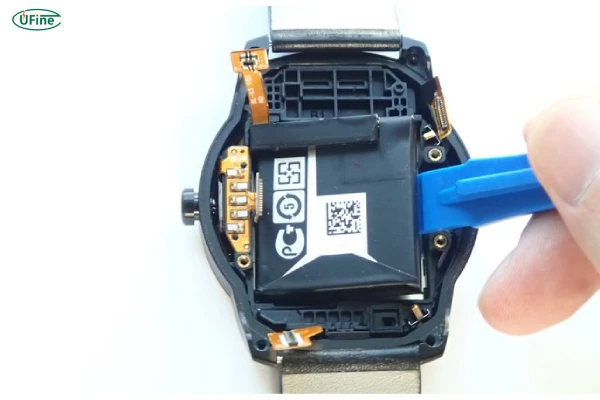
Many users search for “can smart watch battery be replaced” when their device no longer holds a charge. The answer depends on the smartwatch design and battery construction.
In general, a smartwatch battery can be replaced if:
- The device structure allows access to the battery
- Replacement batteries are available
- The waterproof sealing can be restored properly
However, many modern smart watches use tightly integrated designs to maintain water resistance and compact size. Replacing the battery may require professional tools and technical experience.
For manufacturers, battery replacement is also an important design consideration. A well-designed smartwatch battery system should consider:
- Reliable battery connections
- Long cycle life
- Safe charging performance
- Stable battery protection
Using high-quality lithium polymer batteries can help extend product lifespan and reduce battery-related failures.
Part 6. Smartwatch battery vs fitness tracker battery
Although smart watches and fitness trackers use similar battery technologies, their requirements are different.
| Feature | Smartwatch battery | Fitness tracker battery |
|---|---|---|
| Capacity | Usually higher | Usually lower |
| Display size | Larger | Smaller |
| Sensors | More advanced | Basic monitoring |
| Connectivity | Bluetooth, Wi-Fi, LTE | Mainly Bluetooth |
| Battery priority | Performance and features | Lightweight and long runtime |
A fitness tracker often focuses on long battery life with limited functions, while a smartwatch requires higher power output for advanced applications.
Both products commonly use lithium polymer batteries because they provide the flexibility required for wearable designs.
Part 7. How to extend the life of smart watch batteries?
- Lower screen brightness and reduce always-on display usage.
- Disable GPS and Wi-Fi when not in use.
- Limit background apps and notifications.
- Use battery-saving modes available in most smartwatches.
- Avoid overcharging—disconnect the charger once the battery reaches 100%.
Part 8. Smart watch battery charger & charging tips
Types of Smartwatch Chargers
- Magnetic Charging Docks – Common in Apple Watch and Samsung Galaxy Watch.
- Wireless Charging Pads – Qi-compatible smartwatches support wireless charging.
- USB Clip Chargers – Found in some budget smartwatches and fitness trackers.
Best Charging Practices
- Use the original charger to prevent battery damage.
- Avoid extreme temperatures during charging.
- Charge between 20%-80% for longer battery lifespan.
Part 9. Why won’t my smart watch battery charge?
If your smartwatch won’t charge, it could be due to several reasons. Here’s a breakdown of common issues and how to fix them.
1. Dirty or Damaged Charging Contacts
🔹 Issue: Dust, sweat, and dirt can build up on the charging contacts, preventing proper charging.
🔹 Solution: Clean the charging contacts using a dry microfiber cloth or a cotton swab with a little rubbing alcohol.
2. Faulty Charging Cable or Adapter
🔹 Issue: A damaged or incompatible charger can prevent the battery from charging.
🔹 Solution: Try using a different charging cable and adapter that is compatible with your smartwatch.
3. Battery Is Completely Drained
🔹 Issue: If the battery is completely dead, the watch may not respond immediately when plugged in.
🔹 Solution: Leave it on the charger for 15-30 minutes before trying to turn it on.
4. Software Glitch or Firmware Issue
🔹 Issue: Some smartwatches may freeze or experience a software bug that prevents charging.
🔹 Solution: Restart your smartwatch or check if there are any firmware updates available.
5. Overheating or Battery Damage
🔹 Issue: If your smartwatch gets too hot, it may stop charging to prevent damage.
🔹 Solution: Let it cool down before attempting to charge again. If overheating continues, the battery may need replacement.
If your smartwatch battery is failing despite trying these solutions, you may need a battery replacement. Ufine Battery offers custom smartwatch battery replacements for manufacturers and businesses.
Part 10. Smart watch battery price
Smartwatch battery prices vary depending on:
- Brand and Model – Premium smartwatch batteries cost more.
- Capacity and Voltage – Higher-capacity batteries are pricier.
- Battery Type – Li-Po batteries are slightly more expensive than Li-Ion batteries.
| Battery Type | Price Range |
|---|---|
| Standard Li-Ion Battery | $10 – $30 |
| High-Capacity Li-Po Battery | $20 – $50 |
| Custom Smartwatch Battery | Varies (Contact Ufine Battery) |
If you’re searching for custom smartwatch battery solutions, Ufine Battery specializes in high-performance lithium-ion and lithium-polymer batteries. Contact Ufine Battery today for tailored battery solutions!
Part 11. FAQs
1. How Often Should I Charge My Smartwatch?
It depends on usage, but charging once a day is common for most premium smartwatches. If you have a basic fitness tracker, you may only need to charge it once every 4-7 days.
2. Can I Overcharge My Smartwatch Battery?
Most modern smartwatches have overcharge protection, but it’s still best to unplug the charger once it reaches 100% to maintain battery health.
3. Does Fast Charging Damage Smartwatch Batteries?
Fast charging generates more heat, which can reduce long-term battery lifespan. It’s safe occasionally, but for everyday use, a slower charge is better.
6. Can I Replace My Smartwatch Battery Myself?
Most smartwatches have sealed batteries, so replacing them yourself can be tricky. It’s best to seek professional battery replacement services.
7. Does Extreme Weather Affect Smartwatch Battery Life?
Yes! Cold weather can cause the battery to drain faster, while hot temperatures can reduce battery lifespan. Try to keep your watch at room temperature for best performance.
8. How Do I Store My Smartwatch If I’m Not Using It?
If you won’t be using your smartwatch for a while, store it at 50% charge in a cool, dry place to prevent battery damage.
9. Can a Smartwatch Battery Explode?
While rare, damaged lithium batteries can overheat and swell, posing a safety risk. If you notice a swollen battery, stop using the watch immediately.
Related Tags:

More Articles

Buck vs. Boost vs. Buck-Boost Converter: Which Is Best for Battery?
Not sure which converter your battery-powered device needs? Compare Buck, Boost, and Buck-Boost designs and discover what affects voltage stability and runtime.
How to Match 18650 Cells for a Reliable Battery Pack?
Building an 18650 battery pack? Learn how to compare cell capacity, voltage, and internal resistance to avoid mismatches and improve reliability.
Why Do 18650 Battery Packs Get Hot During Discharge?
Is your 18650 battery pack overheating under load? Learn what causes excess heat, how to spot dangerous symptoms, and what to do next.
18650 Battery BMS: How to Get the Specs Right
Learn how to choose a BMS for an 18650 battery pack. Compare voltage, current ratings, protection features, and balancing before you buy.
Why Does My Ring Camera Battery Drain So Fast or Stop Charging?
Is your Ring camera battery draining fast or not charging? Discover common causes, practical fixes, and when to replace the battery.


