
- Part 1. What is the 3.7V 18650 battery?
- Part 2. Learn 18650 battery voltage
- Part 3. 18650 Voltage curve
- Part 4. Typical capacity range of 3.7V 18650 batteries
- Part 5. Discharge current of a 3.7V 18650 battery
- Par 6. The chemistry of 3.7v 18650 battery
- Part 7. Protected vs unprotected 18650 batteries
- Part 8. 3.7v 18650 batteries in series and parallel
- Part 9. How to choose a suitable 3.7V 18650 battery charger?
- Part 10. What battery can replace a 3.7V 18650 battery?
- Part 11. FAQs
Part 1. What is the 3.7V 18650 battery?
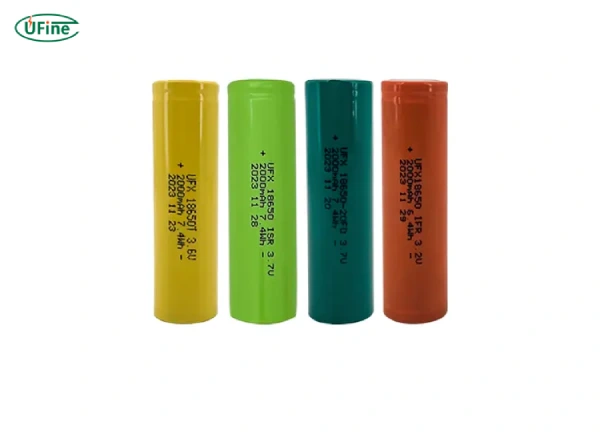
The 3.7V 18650 battery is a rechargeable lithium-ion cell with a standard nominal voltage of 3.7 volts. Its name derives from its dimensions: 18mm in diameter and 65mm in length. Widely utilized in various electronic devices such as laptops, flashlights, and power tools, this battery offers a balance of compact size and high energy density.
The battery typically uses lithium-ion chemistry such as:
- NCM (Nickel Cobalt Manganese)
- NCA (Nickel Cobalt Aluminum)
- LCO (Lithium Cobalt Oxide)
These chemistries provide high energy density, low self-discharge rates, and long cycle life, making 18650 cells one of the most versatile rechargeable batteries available.
Because of their balance between capacity, size, and cost, 18650 batteries have become a standard power source for both consumer and industrial applications.
Typical Specifications of a 3.7V 18650 Battery
Although specifications vary between manufacturers, most 18650 batteries fall within the following ranges:
| Specification | Typical Range |
|---|---|
| Nominal Voltage | 3.6V–3.7V |
| Charge Voltage | 4.2V |
| Capacity | 1800–3500mAh |
| Diameter | 18 mm |
| Length | 65 mm |
| Weight | 40–50 g |
| Cycle Life | 300–1000+ cycles |
Premium cells can exceed 1000 cycles when used under proper charging and temperature conditions.
Part 2. Learn 18650 battery voltage
| Battery State | Voltage |
|---|---|
| Fully Charged | 4.2V |
| Nominal Voltage | 3.7V |
| 50% Charged | 3.6–3.7V |
| Low Battery | 3.0–3.3V |
| Discharge Cutoff | 2.5–3.0V |
18650 battery voltage is one of the important parameters of an 18650 lithium battery. Normally, the voltage of a single 18650 cell is as follows:
1. Nominal (Working) voltage
The core of the 18650 battery voltage is the working voltage, also called the nominal voltage, which is 3.7V. This is equivalent to three nickel-cadmium or nickel-metal hydride batteries connected in series. Some battery manufacturers design the working voltage of 18650 batteries to be 3.6V.
2. Charging limit voltage (Maximum voltage)
This is the maximum limit for the 18650 battery voltage, which is 4.2V. The 18650 battery charging process increases the 18650 battery voltage from 3.7V during operation to 4.2V. The process ends, indicating that the battery is fully charged. If it exceeds 4.2V, it is overcharged, which will cause damage to the 18650 battery.
3. Discharge termination voltage (Minimum discharge voltage )
That is the voltage of the 18650 battery drops to the lowest working voltage, which is unsuitable for continuous discharging, which is 2.75V. If the battery is placed below the cut-off voltage, it is over-discharged. Over-discharging the battery will damage the electrode structure of the 18650 battery, causing irreversible reactions of lithium ions, seriously affecting the life of the 18650 battery.
Overcharging and over-discharging will cause serious damage to the 18650 battery. Therefore, most 18650 batteries have PCBs that allow the 18650 battery voltage to automatically stop when it reaches the upper and lower limits.
The value most often printed on the battery is 3.7V, which is known as the nominal voltage.
Nominal voltage represents the average operating voltage during discharge rather than the maximum voltage.
Therefore:
- 4.2V = fully charged voltage
- 3.7V = nominal voltage
- 2.5–3.0V = minimum safe discharge voltage
This explains why a 3.7V 18650 battery can measure 4.2V immediately after charging.
Part 3. 18650 Voltage curve
Unlike alkaline batteries, lithium-ion batteries have a relatively flat discharge curve.
After charging to 4.2V, the voltage quickly drops to around 3.9V and then remains relatively stable for much of the discharge cycle.
A typical voltage curve looks like this:
| Remaining Capacity | Voltage |
|---|---|
| 100% | 4.2V |
| 90% | 4.0V |
| 80% | 3.9V |
| 60% | 3.8V |
| 40% | 3.7V |
| 20% | 3.4V |
| 10% | 3.2V |
| 0% | 2.5–3.0V |
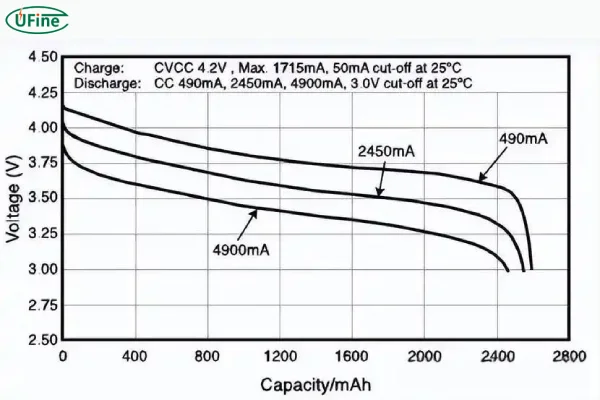
This 18650 voltage curve is the discharge curve of a Panasonic 2550mAh lithium-ion battery using lithium cobalt oxide as the positive electrode material. The three curves from top to bottom represent the changes in voltage and capacity when using three different discharge currents.
First, during the charge and discharge process, the voltage changes continuously. Taking 4900mA as an example, the open circuit voltage is 4.2V when the battery is fully charged. As the discharge progresses, the voltage (vertical axis) slowly decreases, and the amount of electricity discharged (horizontal axis) gradually increases until the voltage begins to drop sharply at 3.5V. Although the voltage has been changing throughout the discharge process, for simplicity, only the average value of the flat discharge part of the curve, 3.7V, is marked as the battery voltage. This voltage is also called the nominal voltage.
This voltage is measured under low current and room temperature conditions, and will decrease as the discharge current increases and the temperature decreases.
Another important factor affecting the battery voltage is the positive and negative electrode materials. The above-mentioned Panasonic battery uses lithium cobalt oxide and graphite as the positive and negative electrode materials, which are also the standard materials for the entire lithium battery industry in the past few years. With the application of new materials in batteries, some 3.6V or 3.8V lithium batteries have appeared in the past two years, which use different positive electrode materials. Compared with lithium cobalt oxide batteries, they can improve energy density, that is, store more electricity per unit weight and volume.
Part 4. Typical capacity range of 3.7V 18650 batteries
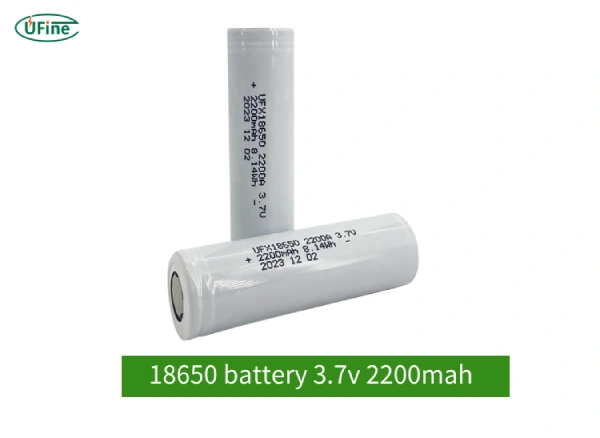
Not all 18650 batteries have the same capacity.
The most common ranges include:
| Capacity | Typical Applications |
|---|---|
| 1800–2200mAh | Basic electronics |
| 2400–2600mAh | Flashlights |
| 2800–3000mAh | Portable devices |
| 3200–3500mAh | High-end battery packs |
In general:
- Higher capacity = longer runtime
- Higher capacity does not always mean higher power output
This distinction becomes important when selecting cells for high-drain applications.
If you want to understand how far 18650 technology can go in terms of performance, you can also check this guide on 18650 maximum capacity for more technical insights.
Part 5. Discharge current of a 3.7V 18650 battery
When choosing an 18650 battery, capacity is only part of the equation.
You should also consider discharge current.
Energy Cells
Designed for maximum runtime.
Typical continuous discharge:
3A–10A
Applications:
- Power banks
- Solar storage
- Portable electronics
Power Cells
Designed for balanced performance.
Typical discharge:
10A–20A
Applications:
- Power tools
- Robotics
- Industrial devices
High-Drain Cells
Designed for high current output.
Typical discharge:
20A–35A+
Applications:
- Electric mobility products
- High-power equipment
- Performance devices
As a general rule:
Higher capacity cells often have lower maximum discharge current.
Par 6. The chemistry of 3.7v 18650 battery
Most modern 18650 cells use lithium-ion chemistries that naturally produce nominal voltages between 3.6V and 3.7V.
1 NCM Batteries
NCM batteries offer:
- High energy density
- Long cycle life
- Excellent balance of performance and safety
Nominal voltage:
3.6V–3.7V
2 NCA Batteries
NCA chemistry is widely used in electric vehicles and high-energy applications.
Advantages include:
- Higher energy density
- Longer runtime
- Good cycle life
Nominal voltage:
3.6V–3.7V
3 LCO Batteries
LCO batteries are common in consumer electronics.
Advantages:
- High energy density
- Compact size
Nominal voltage:
3.7V
4 What About LiFePO4 Batteries?
LiFePO4 batteries are different.
Their nominal voltage is only:
3.2V
This difference comes from the chemistry itself rather than the battery size.
As a result, not every lithium battery is a 3.7V battery.
Part 7. Protected vs unprotected 18650 batteries
18650 batteries are available in two main versions.
1 Protected Batteries
Include a protection circuit that helps prevent:
- Overcharging
- Over-discharging
- Overcurrent
- Short circuits
Best for:
- Consumer products
- Portable devices
- General-purpose use
2 Unprotected Batteries
Do not contain built-in protection.
Best for:
- Battery packs with external BMS
- Industrial systems
- Engineering projects
Protected batteries generally offer greater safety for individual-cell applications.
To choose a safer battery for your application, it is important to understand the difference between protected and unprotected 18650 batteries before making a decision.
Part 8. 3.7v 18650 batteries in series and parallel
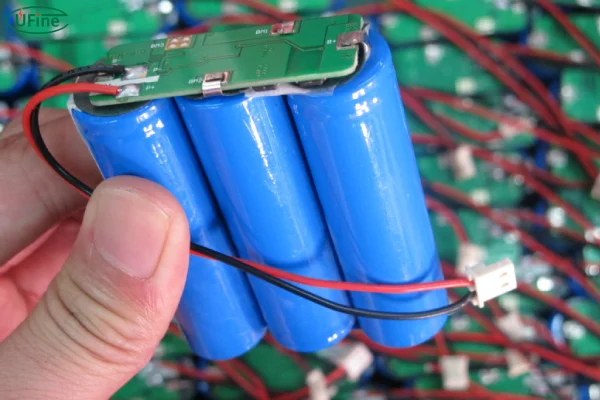
To customize the power output and capacity, 3.7V 18650 batteries can be connected in series, parallel, or both:
-
Parallel Connection
In parallel, the voltage remains the same, but the capacity adds up. For example, two 2200mAh 3.7V cells connected in parallel will form a battery pack with 3.7V and 4400mAh. -
Series Connection
In a series, the voltage increases while the capacity stays the same. For example, three 2200mAh 3.7V cells connected in series would form a pack with 11.1V but the same 2200mAh capacity. -
Series-Parallel Combination
Combining both methods allows for both increased voltage and capacity. For example, three 2200mAh cells in series and two sets of these in parallel would give you 11.1V and 4400mAh.
Part 9. How to choose a suitable 3.7V 18650 battery charger?
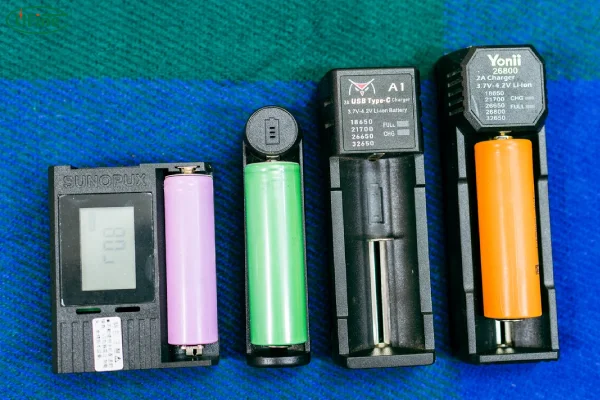
Choosing the right charger for your 3.7V 18650 battery is crucial for maintaining its performance and longevity. Here are some key factors to consider:
-
Match the Chemistry
Ensure the charger is compatible with the battery’s chemistry—LiCoO2, LiFePO4, or NMC—as each type may require different charging profiles. -
Voltage and Current Output
The charger should output 4.2V and be able to provide the correct current (usually between 0.5C and 1C) to avoid overcharging and potential damage. -
Safety Features
Look for chargers with overcharge protection, short circuit protection, and temperature monitoring to enhance safety during the charging process. -
Charging Speed
If you don’t need a fast charge, opt for a slower charger to reduce heat generation and extend battery life. Fast chargers may shorten battery lifespan if used regularly. -
Compatibility
Ensure the charger supports the size and capacity of your 18650 battery. Some chargers work with multiple sizes and chemistries, providing added flexibility.
Part 10. What battery can replace a 3.7V 18650 battery?
If you need a replacement for a 3.7V 18650 battery, the most common options depend on the device you’re using it in. Here are some alternatives:
-
Other Lithium-Ion Batteries
Many devices that use the 18650 battery can also be compatible with other 18650-sized lithium-ion batteries with similar voltage ratings (3.7V nominal). However, make sure to match the capacity (mAh) and discharge rate (C rating) to ensure proper performance. -
LiFePO4 Batteries
LiFePO4 batteries, often found in higher-performance applications, can be used as a replacement for 18650 batteries, especially in cases where thermal stability and safety are more important than high energy density. -
18650 Lithium-Ion Batteries with Higher Capacity
If your device supports it, you can upgrade to an 18650 battery with a higher mAh rating for extended runtime. Just ensure that the battery is within the voltage range and is compatible with your device’s power requirements. -
Other Lithium-Based Batteries
While not always a direct replacement, some lithium-ion or lithium-polymer (LiPo) batteries may fit the form factor and voltage requirements of certain devices. However, they may require modifications to the device or an adapter.
Part 11. FAQs
1. Can I use a 3.7V 18650 battery without a protection circuit?
Yes, but only in systems with an external BMS. Without protection, the risk of over-discharge or short circuit increases significantly.
2. How do I know if my 18650 battery is high quality?
High-quality 18650 cells usually have:
Stable discharge curve
Low internal resistance
Verified capacity testing
Certifications like UN38.3 or IEC62133
3. Can 18650 batteries be connected in series or parallel safely?
Yes, but they must be:
Same model
Same capacity
Same state of charge
Otherwise imbalance can reduce performance and safety.
4. What is the shelf life of a 3.7V 18650 battery?
Typically 2–5 years depending on storage conditions, with optimal storage at around 40–60% charge in cool environments.
5. What is the difference between real capacity and rated capacity of an 18650 battery?
Rated capacity is lab-tested under controlled conditions, while real capacity varies depending on load, temperature, and discharge rate.
Related Tags:

More Articles
Best 24V Lithium Battery: Top 10 Compared
Discover the top 24V lithium batteries. We compare capacity, price, cycle life, safety features, and the best options for different applications.
Top LFP Cell Manufacturers in China You Should Know
Looking for reliable LiFePO4 cells? Explore China's top LFP battery manufacturers, key technologies, production capabilities, and supplier selection tips.
Check If Your Charger Works: Simple Test Guide
Think your battery charger's broken? Quick tests can show you for sure. See if it’s the charger or the battery that's causing issues. Read more.
Best Camera Batteries: 7 Brands Compared & Tested
Looking for the best camera battery? Compare 7 top brands, including OEM and third-party options, to find the right battery for your camera.
What You Need to Know About Portable Fan Batteries
Discover the best portable electric fan battery, its types, lifespan, and maintenance tips. Learn how to choose the right one and keep it running longer.


