
- Part 1. Understand lithium AAA battery
- Part 2. AAA lithium battery types
- Part 3. Lithium AAA batteries vs alkaline and NiMH batteries
- Part 4. Is the lithium AAA battery rechargeable?
- Part 5. Lithium AAA battery charger
- Part 6. Price
- Part 7. Best lithium AAA battery
- Part 9. What is the longest-lasting AAA lithium battery?
- Part 10. FAQs
Key takeaways
- Lithium AAA batteries provide higher energy density, lighter weight, and longer shelf life compared with traditional alkaline AAA batteries.
- The term AAA lithium battery may refer to different lithium chemistries, including lithium iron disulfide (Li-FeS₂) primary batteries and rechargeable lithium-based battery solutions.
- The best AAA battery depends on your application requirements, including power consumption, discharge rate, operating temperature, and required runtime.
- Standard AAA batteries have fixed dimensions, but custom lithium battery solutions can provide optimized capacity, shape, voltage, and battery management systems for specialized products.
- Battery chemistry selection is critical because different lithium technologies offer different advantages in energy density, safety, cycle life, and performance.
Part 1. Understand lithium AAA battery
Lithium AAA batteries may seem like just another type of battery. But once you understand how they work and what they offer, it’s easy to see why they’re considered a step above traditional alkaline cells.
These batteries use lithium chemistry, typically lithium iron disulfide (Li-FeS₂), giving them a longer lifespan, higher energy density, and better performance in extreme temperatures. If you’ve ever had a device stop working too soon, it’s probably because it was using a cheaper battery that couldn’t keep up.
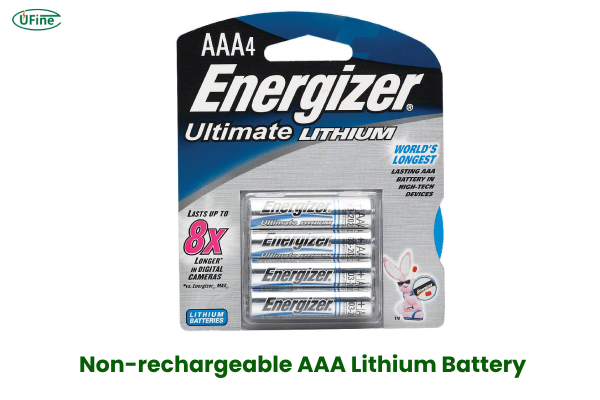
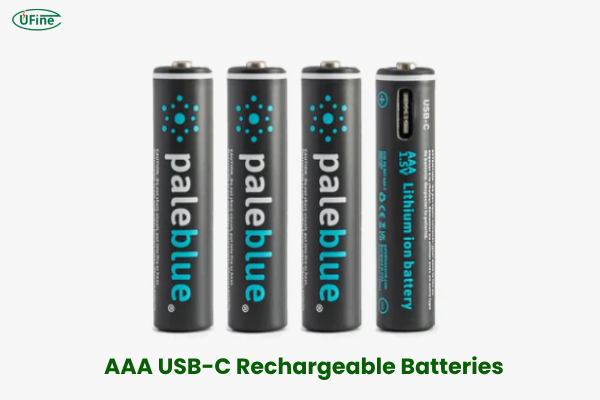
The lithium AAA battery is ideal for high-drain devices such as cameras, wireless keyboards, medical instruments, and smart remotes. It’s also perfect for emergency kits, thanks to its long shelf life—up to 20 years in some cases.
And let’s be honest—nothing’s more annoying than a remote or flashlight dying when you need it most. That’s why switching to lithium just makes sense.
1 Weight
You might not think weight matters for batteries this small—but it does. A typical lithium AAA battery weight ranges from 7.6 to 8 grams, while an alkaline AAA battery usually weighs around 11.5 grams.
That’s a 30% weight reduction.
Why does it matter? Well, if you’re loading a headlamp or carrying spares for a long hike, every gram counts. Lightweight batteries reduce the burden on your gear, especially when you’re carrying multiples.
Moreover, in sensitive devices like drones or wearable medical tools, a lighter battery helps maintain balance, efficiency, and comfort.
2 Size
In terms of dimensions, lithium AAA batteries follow standard AAA sizing: approximately 44.5 mm in length and 10.5 mm in diameter.
That means they’re physically compatible with any device designed for AAA batteries. No adjustments or special enclosures are needed. So, switching to lithium is seamless. Just swap them in, and you’re good to go.
However, due to their lighter material composition, some lithium batteries may feel slightly different to the touch—but the size remains universally standard.
3 Voltage
Voltage plays a huge role in how your device performs.
A typical lithium AAA battery voltage is 1.5 volts. What sets lithium apart is that this voltage stays consistently high during discharge. Alkaline batteries, in contrast, start strong but drop voltage quickly, which can cause your device to malfunction or shut off prematurely.
In devices that require a steady power input—like medical thermometers, wireless mouses, or LED lights—voltage stability is everything. A drop can mean flickering lights or inaccurate readings.
With a 1.5V lithium AAA battery, you get smooth, reliable performance for longer. And yes, your gadgets will thank you for it.
Understanding AAA Battery Voltages in Simple Terms
4 Capacity
Now let’s talk power. Battery capacity, measured in milliamp-hours (mAh), tells you how long the battery can power a device before it’s drained.
A good lithium AAA battery capacity is typically between 1100 to 1200 mAh, which is significantly more than the 850 to 1000 mAh you’d get from a standard alkaline.
In real-world terms, that means you’ll get more photos from your camera, longer life from your wireless mouse, and fewer battery swaps overall. For high-drain devices, this extra power is more than just convenient—it’s essential.
Enerything You Should Know About Li-ion Battery Capacity
Part 2. AAA lithium battery types
The term “AAA lithium battery” is often used broadly, but different battery technologies can have very different characteristics. Understanding these differences helps you choose the right battery for your application.
| Battery type | Chemistry | Rechargeable | Typical voltage | Suitable applications |
|---|---|---|---|---|
| Lithium AAA | Lithium iron disulfide (Li-FeS₂) | No | 1.5V | Cameras, sensors, flashlights, emergency devices |
| NiMH AAA | Nickel metal hydride | Yes | 1.2V | Frequently used rechargeable electronics |
| Alkaline AAA | Zinc-manganese dioxide | No | 1.5V | Low-cost consumer electronics |
| Rechargeable lithium battery | Li-ion / Li-polymer | Yes | Application dependent | Portable electronics and custom battery systems |
Lithium iron disulfide (Li-FeS₂)
Lithium iron disulfide is the most common chemistry used in disposable lithium AAA batteries. These batteries are designed as direct replacements for traditional 1.5V AAA batteries while providing improved performance.
Compared with alkaline batteries, Li-FeS₂ batteries typically offer higher energy density, lower weight, and better performance at extreme temperatures. This makes them suitable for products that need long operating periods or reliable performance after extended storage.
Common applications include:
- Outdoor monitoring equipment
- Wireless sensors
- Digital cameras
- Emergency equipment
- Security devices
Rechargeable lithium AAA batteries
Rechargeable lithium AAA batteries use lithium-based rechargeable chemistry, such as lithium-ion technology. Unlike traditional disposable lithium AAA batteries, these products are designed for repeated charging cycles.
However, rechargeable lithium AAA batteries require careful voltage management because conventional AAA devices are usually designed around a 1.5V power source, while lithium-ion cells normally operate at a higher voltage.
For specialized applications, engineers may integrate additional electronic circuits to regulate voltage and ensure compatibility with the device.
Part 3. Lithium AAA batteries vs alkaline and NiMH batteries
When you compare the best AAA batteries, the choice is usually between lithium AAA, alkaline AAA, and rechargeable NiMH AAA batteries. Each technology has its own advantages, and the best option depends on whether you prioritize runtime, cost, rechargeability, or long-term reliability.
Lithium AAA batteries are generally selected for high-performance applications where battery replacement is inconvenient or where stable operation is important. Alkaline batteries remain popular because of their low cost and wide availability, while NiMH batteries are preferred for applications that require frequent recharging.
| Performance factor | Lithium AAA | Alkaline AAA | NiMH AAA |
|---|---|---|---|
| Energy density | High | Medium | Medium |
| Rechargeability | Usually no | No | Yes |
| Weight | Lightweight | Heavier | Heavier |
| Shelf life | Excellent | Good | Moderate |
| Low-temperature performance | Excellent | Limited | Moderate |
| Voltage stability | More stable | Gradually decreases | Stable |
| Best use case | Long-life and high-reliability devices | Low-cost everyday electronics | Frequently used rechargeable devices |
Lithium AAA vs alkaline AAA batteries
The biggest advantage of lithium AAA batteries is their ability to provide consistent performance over a longer period. While alkaline batteries are suitable for many basic electronics, their voltage gradually decreases during discharge, which may reduce device performance.
Lithium AAA batteries are often a better choice for:
- Devices that must operate for long periods without battery replacement
- Equipment used in cold environments
- Products where weight reduction is important
- Emergency and backup systems
For example, a wireless sensor installed in an outdoor environment may require a battery that can operate reliably for several years. In this situation, the longer shelf life and better temperature performance of lithium chemistry can provide significant advantages.
Lithium AAA vs NiMH AAA batteries
NiMH batteries are one of the most common rechargeable AAA battery options. They are environmentally friendly because they can be charged and reused many times, making them suitable for frequently used consumer electronics.
However, NiMH batteries also have some limitations, including:
- Higher self-discharge compared with lithium primary batteries
- Lower energy density
- Heavier weight
- Reduced performance in some extreme environments
If your application requires frequent daily use and charging is convenient, NiMH may be a practical solution. However, if your priority is maximum runtime, long storage capability, or reliable operation in challenging environments, lithium AAA batteries are often the better choice.
Part 4. Is the lithium AAA battery rechargeable?
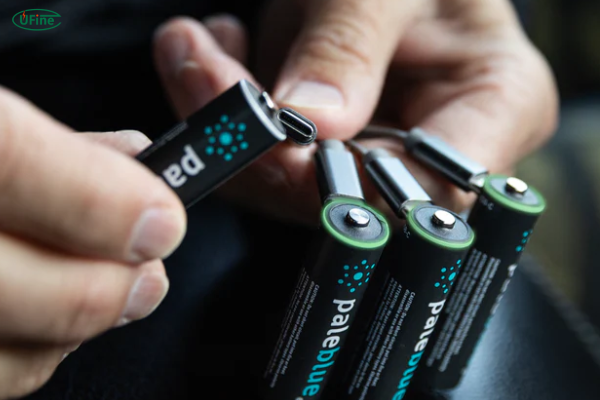
This is where it gets interesting.
Not all lithium AAA batteries are rechargeable. In fact, the majority—like the popular L92 lithium AAA battery from Energizer—are single-use.
However, there are rechargeable lithium AAA batteries available. These usually operate using lithium-ion chemistry and provide thousands of recharge cycles. Just make sure you pair them with a lithium AAA battery charger that’s compatible.
Rechargeables are a smart investment if you go through batteries quickly. Yes, they cost more upfront, but they can pay off in just a few months. They’re also better for the planet. Fewer disposables = less waste.
But be careful: never try to recharge a non-rechargeable lithium battery. It’s dangerous and could lead to overheating or leakage.
Part 5. Lithium AAA battery charger
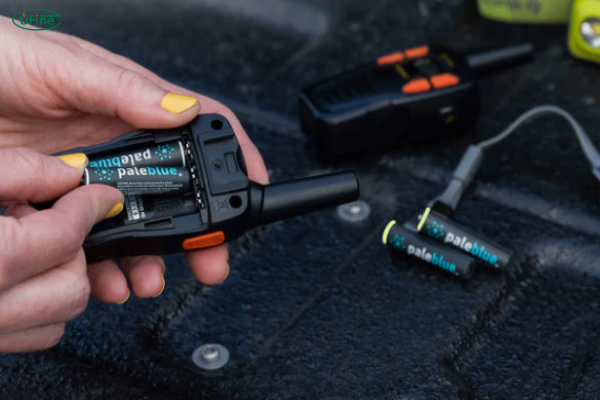
Lithium batteries charge differently from traditional types. They need precise voltage and current control to prevent overcharging, overheating, or reduced battery lifespan. That’s why most lithium AAA battery chargers include:
- Smart charging circuits
- Automatic cut-off when full
- Overcharge and short-circuit protection
- LED indicators for charge status
- USB or USB-C inputs for flexible charging anywhere
Some advanced chargers can even recondition or balance cells, extending their usable life.
Top Picks for Lithium AAA Battery Chargers
Here are a few reliable chargers made specifically for lithium AAA batteries:
- EBL Smart Lithium Charger
- Works with 1.5V rechargeable lithium AAA and AA batteries. Features individual charging channels and smart protection.
- Tenavolts USB Charger
- Specifically designed for Tenavolts lithium batteries. Offers constant voltage charging and great portability.
- XTAR VC4 Charger
- A more advanced, universal charger that supports lithium-ion, NiMH, and other battery chemistries. Great for users who have multiple battery types.
Can I Use a Regular NiMH Charger?
No, and this is very important.
Do not use a NiMH charger for lithium batteries unless it explicitly says it supports lithium-ion cells. NiMH chargers operate at lower voltages and lack the precision needed to safely charge lithium batteries. It’s like trying to fill a high-pressure tire with a hand pump—not only ineffective but potentially dangerous.
A Few Charging Tips
- Always monitor the first few charge cycles of new batteries.
- Use the recommended charger from the battery brand if possible.
- Unplug once fully charged to preserve battery health (unless the charger has auto shut-off).
- Store batteries and chargers in a cool, dry place.
Part 6. Price
Let’s talk money.
Yes, lithium AAA batteries cost more—usually between $1.50 to $2.50 per battery, compared to less than $1 for alkaline. Rechargeables can run higher, but they last for hundreds (even thousands) of cycles.
Here’s the thing: you get what you pay for.
With lithium, you’ll:
- Replace batteries less often
- Get better device performance
- Enjoy longer shelf life
- Avoid messy leaks
So while the initial cost is higher, the long-term savings and convenience make it worthwhile—especially for mission-critical devices or frequently used electronics.
Part 7. Best lithium AAA battery
If you’re looking for the best AAA lithium batteries, here are some trusted names:
1. Energizer Ultimate Lithium L92
-
1100–1200 mAh, 1.5V
-
Excellent in extreme temps (-40°F to 140°F)
-
Industry gold standard
-
Up to 20-year shelf life
2. EBL Rechargeable Lithium AAA Batteries
-
Rechargeable via USB
-
Constant 1.5V output
-
Good for daily-use gadgets
-
Eco-friendly
3. Tenavolts 1.5V Rechargeable Lithium Batteries
- Stable voltage across discharge cycle
- Comes with smart charger
- High performance and reusable
These are great for everything from smart home devices to emergency gear. Choose based on whether you want rechargeables or single-use batteries—and how often you’ll use them.
Part 9. What is the longest-lasting AAA lithium battery?
In most tests and reviews, the Energizer Ultimate Lithium L92 consistently comes out on top. It’s designed to last up to 9x longer in digital cameras than regular alkaline batteries.
Its secret? High energy density, stable voltage, and unmatched durability—even in harsh weather.
If you’re preparing an emergency kit, heading into the outdoors, or just want the best of the best, this is the battery to get.
Part 10. FAQs
1. Can AAA lithium batteries be used in all AAA devices?
Most AAA lithium batteries are designed to replace standard AAA batteries in compatible devices, especially products using 1.5V power sources. However, you should always check the device manufacturer’s voltage requirements before replacing batteries, as some rechargeable lithium-based AAA solutions may have different voltage characteristics.
2. Why do lithium AAA batteries cost more than alkaline batteries?
Lithium AAA batteries typically cost more because they use advanced materials that provide higher energy density, longer storage life, lighter weight, and better performance under demanding conditions. For applications where battery replacement is difficult, the longer service life can offset the higher initial cost.
3. Can mixing AAA lithium batteries with other battery types damage a device?
Yes, mixing different battery chemistries, brands, or charge levels in the same device is generally not recommended. Different batteries may have different voltage characteristics and discharge behavior, which can reduce performance or potentially cause leakage or device issues.
4. Are lithium AAA batteries suitable for high-drain devices?
Lithium AAA batteries are often a good choice for high-drain devices because they can deliver stable power output and maintain performance better than many traditional batteries. However, the specific battery model should match the device’s peak current and discharge requirements.
Related Tags:

More Articles
Buck vs. Boost vs. Buck-Boost Converter: Which Is Best for Battery?
Not sure which converter your battery-powered device needs? Compare Buck, Boost, and Buck-Boost designs and discover what affects voltage stability and runtime.
How to Match 18650 Cells for a Reliable Battery Pack?
Building an 18650 battery pack? Learn how to compare cell capacity, voltage, and internal resistance to avoid mismatches and improve reliability.
Why Do 18650 Battery Packs Get Hot During Discharge?
Is your 18650 battery pack overheating under load? Learn what causes excess heat, how to spot dangerous symptoms, and what to do next.
18650 Battery BMS: How to Get the Specs Right
Learn how to choose a BMS for an 18650 battery pack. Compare voltage, current ratings, protection features, and balancing before you buy.
Why Does My Ring Camera Battery Drain So Fast or Stop Charging?
Is your Ring camera battery draining fast or not charging? Discover common causes, practical fixes, and when to replace the battery.


