- Part 1. What is the voltage of an AAA battery?
- Part 2. AAA battery voltage chart
- Part 3. What is the nominal voltage of AAA batteries?
- Part 4. What is the maximum voltage of AAA batteries?
- Part 5. How does voltage affect battery performance?
- Part 6. How to check the voltage of AAA batteries?
- Part 7. The voltage of AAA batteries compared to AA batteries
- Part 8. What is the voltage of AAA batteries when dead?
- Part 9. Are the voltages of all types of AAA batteries the same?
- Part 10. What kind of battery can replace AAA battery?
- Part 11. FAQs
key takeaways
- A standard AAA battery is typically 1.5 volts, but the actual voltage depends on chemistry type.
- AAA batteries have different voltage ranges for alkaline, NiMH, lithium, and Li-ion (10440) types.
- A AAA battery is usually considered dead around 0.8–1.0V for alkaline under load.
- Rechargeable AAA batteries (NiMH) operate at a lower nominal voltage of 1.2V, which is normal.
Part 1. What is the voltage of an AAA battery?
Most AAA batteries provide 1.5 volts.
You may also see rechargeable and lithium versions with different ratings.
In general, AAA batteries fall into three main categories:
- Alkaline AAA: 1.5V (most common)
- NiMH rechargeable AAA: 1.2V
- Lithium or Li-ion AAA-size cells: 1.5V or 3.7V (depending on type)
Part 2. AAA battery voltage chart
To understand real-world performance, you need a clear voltage breakdown. The table below shows a practical AAA battery voltage chart for different chemistries and states.
| Battery type | Nominal voltage | Fully charged | Typical working range | Considered dead |
|---|---|---|---|---|
| Alkaline AAA | 1.5V | 1.55–1.65V | 1.6–1.1V | 0.8–1.0V |
| NiMH AAA rechargeable | 1.2V | 1.4–1.45V | 1.4–1.0V | 0.9–1.0V |
| Lithium primary AAA | 1.5V | 1.7–1.8V | 1.8–1.2V | ~1.1V |
| Li-ion 10440 (AAA size) | 3.7V | 4.2V | 4.2–3.0V | 2.5–3.0V |
This chart helps you quickly compare AAA battery voltage range across different types and understand why not all AAA batteries behave the same way.
AAA battery voltage range explained
The AAA battery voltage range describes how voltage changes during use.
When a battery is fresh, it starts at a higher voltage. As you use it, the voltage gradually drops.
For example:
- A new alkaline AAA battery may start at around 1.6V
- During normal use, it stays between 1.4V and 1.2V
- Near the end of life, it drops below 1.0V
This gradual drop is why devices eventually stop working even though the battery still has some energy left.
Part 3. What is the nominal voltage of AAA batteries?

Now, let’s talk about the nominal voltage of AAA batteries. The nominal voltage refers to the standard voltage that a fresh battery will typically provide during its operation.
For most alkaline AAA batteries, the nominal voltage is 1.5V. This means that when you pop an alkaline AAA battery into your device, it will deliver around 1.5 volts of power. This is considered the “standard” voltage for AAA batteries, and it’s the voltage you’ll find in most everyday devices.
However, it’s important to note that rechargeable AAA batteries, such as those made with Nickel-Metal Hydride (NiMH), have a nominal voltage of 1.2V, slightly lower than their non-rechargeable counterparts. This difference can affect performance, as devices designed for 1.5V batteries may not work as efficiently with 1.2V rechargeable ones.
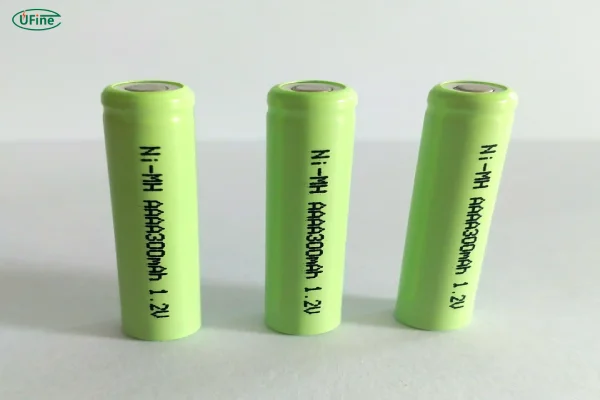
Understanding Ni-MH AAA Batteries: 13 Key Facts
Part 4. What is the maximum voltage of AAA batteries?
While the nominal voltage gives us a general idea of the battery’s performance, maximum voltage is an equally important concept to understand. The maximum voltage refers to the highest voltage a battery can provide when it’s fully charged, or at its peak capacity.
For alkaline AAA batteries, the maximum voltage is typically around 1.65V. This is the point when the battery is fully charged and in optimal condition. As the battery begins to discharge, the voltage gradually drops towards the nominal voltage of 1.5V and then continues to decline further.
On the other hand, rechargeable AAA batteries (like NiMH) start at a maximum voltage of 1.2V but maintain this steady voltage until the battery is nearly empty. This steady discharge is one of the reasons why rechargeable batteries are favored in many high-drain devices—they provide more consistent power over time.
Part 5. How does voltage affect battery performance?
Now that we’ve covered nominal and maximum voltage, let’s talk about how voltage actually impacts battery performance. Voltage directly influences how much power a battery can deliver to your device, which in turn affects how well your device performs.
-
Higher Voltage = More Power: A higher voltage means a battery can provide more electrical power, which is essential for devices that require significant energy, such as power-hungry flashlights or high-end cameras. The extra voltage gives the device the strength it needs to operate at its best.
-
Lower Voltage = Reduced Performance: On the flip side, if the voltage drops too low, your device may not function properly. You might experience dim lights in your flashlight or slower speeds in your remote control. When the voltage of an AAA battery drops below around 1.0V, the battery is considered depleted and unable to power most devices effectively.
It’s crucial to keep in mind that voltage is only one part of the equation. Capacity (measured in mAh) and current draw also play significant roles in battery performance. However, voltage is often the first indicator that your battery is running low, and it’s the key to determining how much power is left in the tank.
Part 6. How to check the voltage of AAA batteries?
If you suspect your AAA battery is losing its charge or you’re just curious about its status, you can easily check its voltage using a multimeter. Here’s how:
-
Set the Multimeter to DC Voltage: Make sure your multimeter is set to measure DC voltage, as AAA batteries are direct current (DC) sources.
-
Connect the Probes: Place the red (positive) probe on the battery’s positive terminal, and the black (negative) probe on the negative terminal.
-
Read the Display: Your multimeter will show the current voltage of the battery. A fresh alkaline AAA battery should read close to 1.5V, while a depleted battery will show significantly lower.
Checking the voltage regularly can help you manage battery life more effectively, ensuring that your devices always have the power they need.
Part 7. The voltage of AAA batteries compared to AA batteries
You might be wondering—what’s the difference between AAA and AA batteries in terms of voltage? The good news is, they are essentially the same when it comes to voltage. Both AAA and AA batteries usually provide 1.5V (alkaline) or 1.2V (NiMH), meaning they have the same electrical potential to power devices.
The key difference lies in their size and capacity. AA batteries are larger and can hold more energy, meaning they can provide power for a longer period. In contrast, AAA batteries are smaller, and therefore, their capacity is lower. This makes AA batteries a better choice for devices that require more power or longer usage, while AAA batteries are typically used in smaller, low-drain devices.
All About AA Rechargeable Batteries
Part 8. What is the voltage of AAA batteries when dead?
Once an AAA battery starts to run low, its voltage begins to drop. When the voltage of an alkaline AAA battery falls below 1.0V, it is considered dead. At this point, the battery can no longer supply enough power to operate most devices.
You might notice that your device begins to behave oddly, such as flickering lights or sluggish performance, once the battery voltage drops to this level. If your AAA battery has dropped below 1.0V, it’s time to replace it with a fresh one.
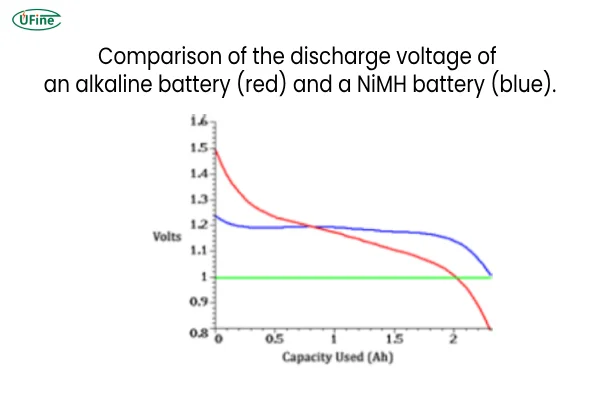
Comparison of the discharge voltage of an alkaline battery (red) and a NiMH battery (blue). The green line is the voltage at which the battery is considered dead.
Part 9. Are the voltages of all types of AAA batteries the same?
Not all AAA batteries are created equal. While most standard alkaline AAA batteries provide 1.5V, there are different types of AAA batteries, each with slightly different voltage characteristics:
- Alkaline AAA: 1.5V nominal voltage, commonly used in most devices.
- NiMH Rechargeable AAA: 1.2V nominal voltage, providing consistent performance for high-drain devices.
- Lithium AAA: 1.65V maximum voltage, offering higher energy density and longer shelf life.
Each type of AAA battery is suited to different applications, so it’s essential to choose the right one based on your device’s requirements.
Part 10. What kind of battery can replace AAA battery?
Sometimes, you might be in a pinch and need an alternative to AAA batteries. Here are some options:
- AA Batteries: In some cases, you can use AA batteries in place of AAA batteries, but you’ll need an adapter to make them fit.
- Rechargeable AAA Batteries: If you’re looking for something more eco-friendly, consider using rechargeable NiMH AAA batteries, which can be used multiple times.
- Other Sizes: If your device requires AAA for size but you need more power, C or D batteries (with proper adapters) can be used, but keep in mind that these are much larger.
Part 11. FAQs
1. Why does my AAA battery show 1.5V but still not work?
Because voltage alone does not reflect capacity. A battery may show 1.5V without load but drop sharply under load, meaning it can no longer supply enough current.
2. Can low AAA battery voltage damage a device?
In most cases, no. Devices simply stop working when voltage is too low. However, unstable voltage can cause malfunction in sensitive electronics.
3. Why do alkaline AAA batteries start at higher than 1.5V?
Fresh alkaline batteries often show 1.55–1.65V due to chemical reaction conditions right after manufacturing and storage.
4. Is AAA battery voltage the same in cold weather?
No. Low temperatures reduce chemical activity, which lowers voltage output and usable capacity.
Related Tags:

More Articles

LiFePO4 Voltage Chart Guide: Everything You Need to Know
Check the LiFePO4 voltage chart for 3.2V, 12V, 24V and 51.2V batteries. Compare SOC, charging voltage, cutoff limits and internal resistance.
Lithium Ion Cell Sizes: A Comprehensive Guide
Compare lithium ion cell sizes with a chart of dimensions, capacity ranges, cell types, applications, and key factors for selecting the right battery.
6 Volt Tractor Battery vs 12 Volt: Which One Fits Your Farm Equipment Best?
Compare 6V and 12V tractor batteries. Learn which voltage fits vintage or modern tractors, which specifications matter, and how to convert safely.
The Ultimate Guide to a Molten Salt Battery
Learn how a molten salt battery works, its main types, advantages, disadvantages, operating temperature, safety, and grid energy storage uses.
2000mAh Battery Runtime: How Long Will It Last in Real Devices?
Learn how to calculate 2000mAh battery runtime and backup time. See real device examples, power-loss factors, and battery replacement checks.