
- Key Takeaways
- Part 1. Understanding LFP cathode material
- Part 2. How LFP cathode materials affect battery performance
- Part 3. LFP battery raw materials and sources
- Part 4. Advantages of LFP cathode materials
- Part 5. How LFP batteries compare to other chemistries
- Part 6. Preparation process of LFP cathode material
- Part 7. The production process of lithium carbonate
- Part 8. Practical tips for using LFP batteries
- Part 9. FAQ
Key Takeaways
- LFP (Lithium Iron Phosphate) cathodes are essential for safe, durable, and cost-effective lithium-ion batteries.
- You’ll discover how raw materials—lithium, iron, and phosphate—affect battery performance, energy density, and low-temperature behavior.
- LFP batteries outperform other chemistries in safety, longevity, environmental friendliness, and cost.
- Understanding preparation processes and market trends helps you choose the right materials for EVs, energy storage, or DIY projects.
You maybe interested to know that LFP batteries are rapidly growing in **EVs, energy storage systems, and light electric vehicles**. Leading manufacturers like CATL and BYD have shifted significant production to LFP because of its stability and cost advantage.
According to BloombergNEF, global LFP battery production has surged, and more EV models are adopting it over traditional NCM chemistries. This makes understanding the material composition and sourcing critical if you are in battery R&D, supply chain, or procurement.
Part 1. Understanding LFP cathode material
The LFP cathode is the positive electrode in a lithium-ion battery, controlling how lithium ions move during charge and discharge cycles. Its main components are:
- Lithium (Li⁺): Essential for energy storage.
- Iron (Fe²⁺/Fe³⁺): Replaces cobalt, lowering costs and enhancing thermal stability.
- Phosphate (PO₄³⁻): Creates a stable olivine crystal structure that improves safety and cycle life.
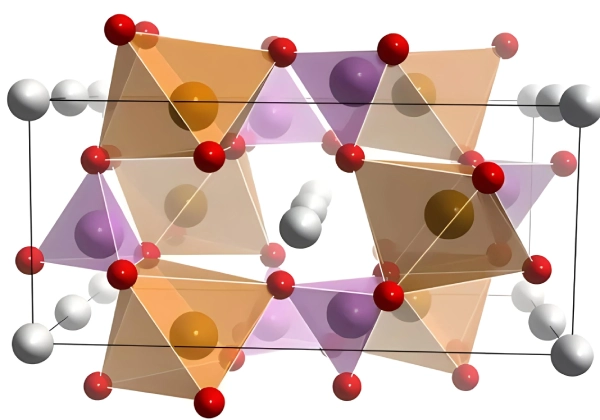
Its ordered olivine structure (LiMPO₄) provides a flat voltage curve, which means the battery maintains stable output during operation. Compared to other cathode chemistries, you’ll notice that LFP is less prone to overheating and degradation.
Part 2. How LFP cathode materials affect battery performance
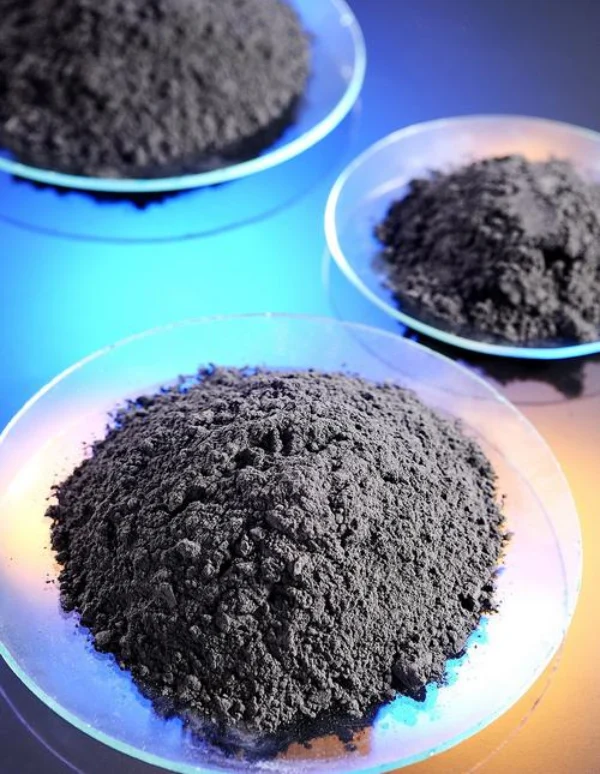
The cathode material you choose directly impacts cycle life, energy density, power output, and performance under low temperatures. Let’s break it down:
- Cycle Life: A stable cathode structure reduces material loss during charging cycles, which means your battery lasts longer. Impurities or defects can lead to micro-short circuits, shortening lifespan.
- Energy Density: While LFP has a slightly lower energy density than NCM or LCO batteries, proper material design—particle size, carbon coating, and tap density—can optimize performance.
- Power Density: The ability to handle rapid charging and discharging depends on the cathode’s crystal stability and ion transport pathways.
- Low-Temperature Performance: LFP tends to underperform in cold conditions due to limited electronic conductivity and increased electrolyte viscosity. However, carbon coating and nano-sizing can help mitigate this.
Part 3. LFP battery raw materials and sources
LFP batteries rely on three primary raw materials: lithium, iron, and phosphate. Understanding their sources helps you appreciate why LFP is considered both cost-effective and sustainable.
| Material | Source Countries | Notes |
|---|---|---|
| Lithium | Australia, Chile, China | Extracted from ore or brine, converted to lithium carbonate, essential for ion movement |
| Iron | China, Brazil, Australia | Abundant and low-cost, forms the base of the cathode |
| Phosphate | Morocco, China, US | Provides structural stability to the olivine lattice |
Other components like carbon (for conductivity) and aluminum (battery casing) are also used. By knowing the origin and availability, you can see why LFP batteries are less dependent on geopolitically sensitive materials like cobalt.
Part 4. Advantages of LFP cathode materials
Compared with other lithium battery cathode materials, the olivine structure of lithium iron phosphate has the advantages of safety, environmental protection, cheap, long cycle life, and good high-temperature performance. Therefore, it is one of the most promising cathode materials for lithium-ion batteries.
| Advantage | Why It Matters |
|---|---|
| Safety | Strong P–O bonds prevent thermal runaway, even under overcharge or high temperatures |
| Long Cycle Life | Over 2000 cycles, compared to ~1000 for NCM or 500 for LiCoO2 batteries |
| Environmental Friendliness | Free from heavy metals, non-toxic, recyclable |
| Cost Efficiency | Abundant raw materials reduce overall battery costs |
1 Safety
Lithium iron phosphate crystals have a solid P-O bond, which is difficult to decompose. The structure will not collapse and heat in lithium-ion battery overcharge and high temperatures or generate substantial oxides. Therefore, even if the battery is overcharged, it is also relatively safe.
2 Long cycle life
The cycle life of the lead-acid battery is about 300 times. The service life is between 1~1.5 years. The cycle life of the LiFePO4 battery is more than 2000 times. Theoretically, the service life can reach 7~8 years.
3 High temperature resistance
LiFePO4 battery can reach 350℃-500℃. At the same time, lithium manganese and cobalt are only about 200 ℃.
4 Environmentally friendly
LiFePO4 battery is generally considered free of heavy and rare metals, non-toxic, non-polluting, and green.
Lithium iron phosphate’s charging and discharging mechanism as cathode material differsnt from other traditional materials. The electrochemical reaction of lithium iron phosphate is the two phases of iron phosphate, and the charging and discharging reactions are as follows.
Charge reaction.
LiFePO4 -xLi+ -xe-→xFePO4 +(1-x)LiFePO4
Discharge reaction.
FePO4+xLi+ +xe-→xLiFePO4+(1-x)FePO4
Li+ detaches from LiFePO4, on charging, and Fe2+ loses an electron to become Fe3+.
When discharged, Li+ is embedded in iron phosphate to become LiFePO4.
The Li+ change occurs at the LiFePO4/FePO4 interface. Therefore, its charge/discharge curve is very flat. The potential is also more stable. Suitable for electrode materials.
5 Cost advantage
LFP positive electrode raw materials are widely available and cheap. This makes lithium iron phosphate batteries cost competitive, especially in the electric vehicle industry, where prices have dropped to a low level. Compared with other types of lithium-ion batteries, it has a cost advantage.
Part 5. How LFP batteries compare to other chemistries
It’s helpful to see the difference between LFP and other lithium-ion cathodes. Here’s a quick comparison:
| Feature | LFP (LiFePO4) | NCM/NCA (LiNiCoMn / LiNiCoAl) | LiCoO2 |
|---|---|---|---|
| Safety | High | Medium | Medium |
| Cycle Life | 2000+ | 1000–1500 | 500–1000 |
| Energy Density | Medium | High | High |
| Cost | Low | High | High |
| Environmental Impact | Green | Moderate | High |
As you can see, if safety, cost, and sustainability are your priorities, LFP is a solid choice. On the other hand, if maximum energy density is your goal, other chemistries might suit better.
Part 6. Preparation process of LFP cathode material
The common preparation processes of LFP positive electrode materials include solid phase synthesis, liquid phase synthesis, spark plasma sintering technology, spray thermal decomposition technology and pulsed laser deposition.
Common routes include hydrothermal, iron red and iron phosphate.
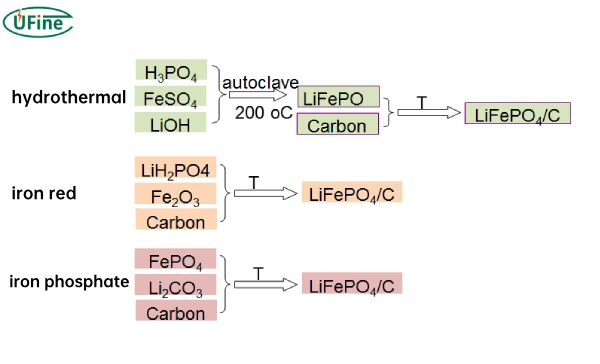
The iron phosphate process is favored by many material manufacturers because of its advantages such as less raw materials, no need to use solvents, water system mixing, no ammonia emission and low process cost. The main production processes include mixing, spray drying, sintering, crushing, mixing, baking and packaging.
If you want a clearer view of how raw materials are transformed into finished batteries, you can also explore our detailed battery production process, which explains each manufacturing step from material preparation to final assembly.
Part 7. The production process of lithium carbonate
1 Lithium carbonate
Lithium carbonate is one of the important raw materials for the preparation of lithium iron phosphate anode materials. The production process of lithium carbonate mainly includes the steps of ore dressing, leaching and extraction, carbonate precipitation and lithium carbonate purification.
First, lithium salt is extracted from lithium ore. Then, the lithium salt is converted into lithium carbonate by chemical reaction. Finally, the purification process is carried out to obtain high-purity lithium carbonate.
The purity and crystallinity of lithium carbonate have an important impact on the performance of anode materials. Therefore, in the production process, we need to strictly control the process parameters to ensure that the quality of lithium carbonate meets the requirements.
2 Phosphoric acid
Phosphoric acid is another important raw material for the preparation of LiFePO4 cathode materials. The production process of phosphoric acid mainly includes the beneficiation of phosphate ore, leaching and extraction, phosphate precipitation, and phosphoric acid purification steps.
First, the phosphorus salt is extracted from the phosphate ore. Then, the phosphorus salt is converted into phosphoric acid by chemical reaction. Finally, the purification process is carried out to obtain high purity phosphoric acid.
The purity and crystallinity of phosphoric acid also have an important impact on the performance of cathode materials. Therefore, in the production process, it is also necessary to strictly control the process parameters to ensure that the quality of phosphoric acid meets the requirements.
3 Iron
Iron is the third important raw material for the preparation of lithium iron phosphate anode materials. The production process of iron mainly includes steps such as ore dressing, leaching and extraction, oxidation-reduction, and iron powder preparation.
First, iron salts are extracted from iron ore. Then, the iron salt is converted into iron powder by a redox reaction. Finally, the refining process is carried out to obtain high-purity iron powder.
The purity and particle size of iron powder also have an important impact on the performance of cathode materials. Therefore, it is also necessary to strictly control the process parameters in the production process to ensure that the quality of iron powder meets the requirements.
Part 8. Practical tips for using LFP batteries
If you plan to use or buy LFP batteries, here’s what you should keep in mind:
- Quality Matters: Look for high-purity lithium carbonate, phosphate, and iron, as well as proper particle size and carbon coating.
- Temperature Awareness: Low temperatures can affect performance, so plan your battery storage or EV use accordingly.
- Sustainability Consideration: LFP batteries are more eco-friendly than cobalt-based batteries, making them ideal for long-term projects.
These points make LFP a practical and future-proof option for both professionals and enthusiasts.
Part 9. FAQ
How does particle size affect LFP cathode performance?
Smaller particles improve lithium ion diffusion, enhancing power density and low-temperature performance, but may increase manufacturing complexity.
What role does carbon coating play in LFP batteries?
Carbon coating increases electronic conductivity, improves cycle life, and mitigates capacity loss during high-rate charge/discharge.
Are LFP batteries recyclable?
Yes, they are easier to recycle than cobalt-based batteries because they contain no toxic or scarce metals, supporting sustainable energy use.
Can LFP batteries be used in home energy storage systems?
Absolutely. Their long cycle life, stable performance, and safety make LFP ideal for solar or grid storage applications.
What factors influence LFP battery cost?
Material availability, production process, and cathode quality primarily determine cost, with LFP generally being cheaper than NCM or LiCoO2 batteries.
Are there any limitations of LFP batteries?
Yes, they have lower energy density than some lithium-ion chemistries and perform less efficiently at very low temperatures.
Related Tags:

More Articles

JST vs Molex: The Right Battery Connector Choice
JST or Molex for your battery? Learn how connector selection affects current, voltage drop, reliability, and device performance.
Custom Battery Pricing: Costs Manufacturers Don’t Mention
A low battery quote may not be the final cost. Discover common hidden expenses that affect custom lithium battery projects.
Battery Wire Length: Hidden Cause of Power Loss
A longer battery wire can cause voltage drop, power loss, and unstable operation. Learn how wire length affects battery performance.
How Device Sleep Modes Affect Battery Life
Think sleep mode extends battery life? Learn why devices still drain power and how firmware, hardware, and batteries affect runtime.
LiPo Battery and PCB Design: Clearance, Insulation, and Placement
Learn how to optimize LiPo battery PCB clearance, insulation, placement, wiring, and thermal design—and avoid common integration mistakes.


