
- Part 1. How much does an 18650 battery cost?
- Part 2. What effect 18650 li-ion battery price
- Part 3. 18650 li-ion battery types
- Part 4. Flat top vs button top 18650
- Part 5. 18650 vs 2170 vs 4680
- Part 6. Why are Chinese 18650 manufacturers more cost-effective?
- Part 7. Typical factory pricing range
- Part 8. Tips for buying 18650 batteries in bulk
- Part 9. Why some 18650 batteries are extremely cheap
- Part 10. Top 18650 li-ion batteries
- Part 11. FAQs
If you’re searching for the latest 18650 battery price, you’re likely comparing suppliers, planning a product, or sourcing cells for battery pack production. The 18650 lithium-ion battery remains one of the most widely used cylindrical cells due to its balance of cost, performance, and availability.
The price of an 18650 battery can range from around $1 to over $10 per cell depending on capacity, discharge rate, brand, certifications, and order volume. Understanding what drives the 18650 battery cost will help you make better purchasing decisions and avoid low-quality or fake cells.
Key Takeaways
- 18650 battery price typically ranges from $1–$10 per cell
- Capacity, discharge rate, and brand are the main price drivers
- Bulk orders significantly reduce the 18650 cell price
- Chinese manufacturers offer the most cost-effective OEM solutions
- Flat top vs button top design also affects compatibility and pricing
- Always verify certifications like UN38.3, CE, and RoHS before buying
Part 1. How much does an 18650 battery cost?
The average 18650 battery price depends on its specifications and quality level. Below is a general market reference:
| Type | Typical Price (USD) |
|---|---|
| Low-end generic 18650 | $1 – $2 |
| Standard 2000–2600mAh | $2 – $4 |
| High capacity 3000–3500mAh | $3 – $7 |
| Premium branded cells (Panasonic, Samsung, LG) | $5 – $10+ |
If you are buying for commercial use, the lithium ion battery 18650 price is usually lower when ordered directly from manufacturers instead of retail channels.
Before buying high-capacity cells, it’s worth learning about the realistic 18650 maximum capacity available on today’s market.
Part 2. What effect 18650 li-ion battery price
Here are the following factors that can affect the 18650 li-ion battery price.
1. Material Cost
The change in material cost efficiently changes the price of batteries. These batteries are made up of the basic manufacturing raw metal lithium mixed with secondary metals like nickel, graphite, cobalt, etc., increasing the overall estimated battery expense.
2. Manufacturing Process
18650 comes in different sizes and materials, so the manufacturing process and cost will be divergent. The procedure includes electrode material, assembling, filling, packing, machinery usage, quality production, and labor. All the factors collectively contribute to increasing the price.
3. Levels of Production
How many batteries are being manufactured at the same time affects the cost. Production at a larger scale, e.g., economic fabrication, costs less to industries. Making fewer units costs more as there is almost equal usage of machinery; therefore, mass production provides more leverage to manufacturers.
4. Scientific Research
Big and profound industries hire highly qualified engineers to improve and innovate battery performance. The highly paid researchers charge according to their expertise and skills. These investments are necessary, but they raise the price of 18650 cells.
5. Quality Maintenance
After months or years, the price of materials increases to maintain battery quality, and companies start using high-cost substances, eventually affecting the 18650 Li-Ion Battery Price.
6. Additional Features
Protection is the most considerable factor in formulating batteries, especially unprotected 18650 Li-Ion Batteries. Qualities like internal resistance, explosion-proof design, overcharging, high-power charging poles, and overcurrent protectors tend to be pricing factors for batteries.
Part 3. 18650 li-ion battery types
Based on the composition, these 18650 batteries are classified into two types. These may include
1. Protected 18650 battery
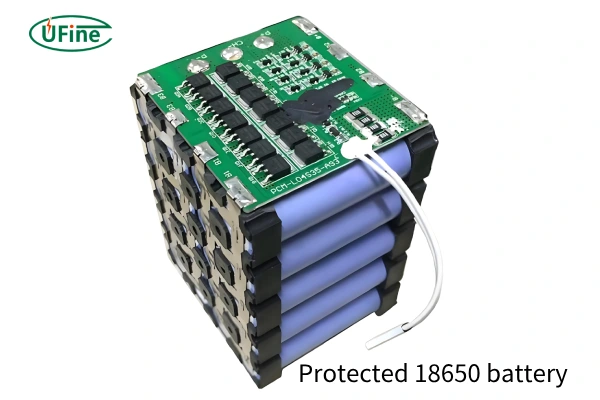
Protected 18650 Li-Ion Batteries have an additional circuit to avoid any blast or overheating of the charge – it avoids overcharging. Such batteries are very potent to use; if you forget to switch off the plug, the protected layer will not allow extra voltages to cross the cells.
2. Unprotected 18650 battery
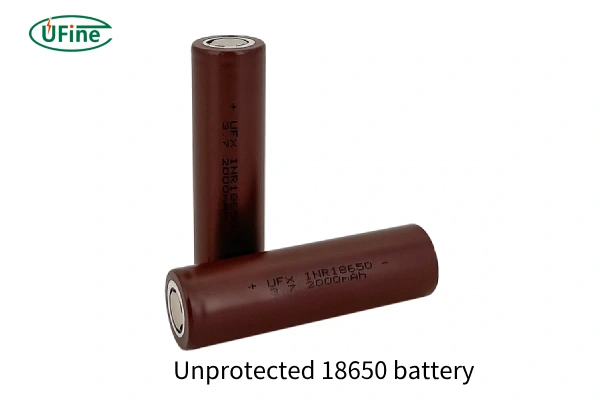
Unprotected 18650 Li-Ion Batteries have no extra protection features. It allows the current to pass through the cells, eventually causing the circuit overflow. If the cell gets more power, there is a chance of a blast; therefore, you need to check on the batteries while charging.
If you’re comparing battery costs, understanding the differences between protected vs unprotected batteries can help explain why some 18650 cells are more expensive than others.
Part 4. Flat top vs button top 18650
When sourcing 18650 batteries, you will often need to choose between flat top and button top designs.
| Type | Description | Typical Use |
|---|---|---|
| Flat top | Flat terminal design | Battery packs, OEM assembly |
| Button top | Raised positive terminal | Flashlights, consumer devices |
Flat top cells are generally cheaper and more commonly used in industrial battery pack production. Button top versions may cost slightly more due to additional manufacturing steps.
Part 5. 18650 vs 2170 vs 4680
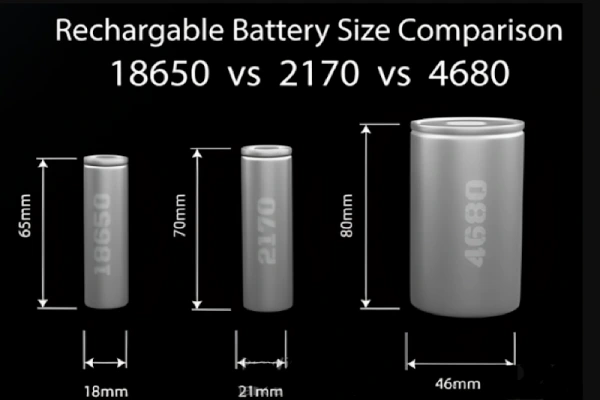
The following comparison table between the 18650 Li-Ion Battery and other types of batteries is given below.
| Comparing Elements | 18650 Li-ion Battery | 14500 Li-ion Battery | 16340 Li-ion Battery | 21700 Li-ion Battery | 26650 Li-ion Battery |
|---|---|---|---|---|---|
| Diameter | Longer and wider | 18 mm in diameter | 13.5 mm | 34 mm x 16 mm | Wider and longer |
| Length | 65 mm long | 55.00 mm | 34 mm x 16 mm | 70 mm | 70 mm |
| Volts | 3.6/3.7 volt | 3.6/3.7V | 3.6/3.7V | 3.6/3.7V | 3.7V |
| Capacity ratings | 2,300 to 3,600 mAh | Under 1,000 mAh | 700 to 800 mAh | 4,000 to 5,000 mAh | 10,000 mAh |
| Energy Density | 250 Wh/kg | 500~800 mAh | 200-300 Wh/kg | 300 Wh/kg | 211 Wh/kg |
Part 6. Why are Chinese 18650 manufacturers more cost-effective?
Chinese manufacturers dominate the global 18650 supply chain because of several structural advantages:
First, large-scale production significantly reduces per-unit manufacturing cost. Factories produce millions of cells monthly, allowing economies of scale.
Second, vertical integration reduces material costs. Many manufacturers control electrode production, cell assembly, and packaging internally.
Third, direct OEM supply eliminates retail markups. When you buy directly from a factory, you avoid distributor and brand premiums.
Finally, flexible customization allows you to optimize cost based on your application. You can adjust capacity, discharge rate, and casing design to match your budget.
For bulk buyers, this is the most efficient way to reduce overall 18650 battery price.
Part 7. Typical factory pricing range
If you are buying directly from manufacturers, here is a realistic wholesale reference:
| Order Quantity | Estimated Price per Cell |
|---|---|
| 100 pcs | $2.5 – $5 |
| 1,000 pcs | $1.8 – $3.5 |
| 10,000 pcs | $1.2 – $2.8 |
| 100,000 pcs+ | Custom pricing |
The lithium battery 18650 price drops significantly as order volume increases, especially for OEM projects.
Part 8. Tips for buying 18650 batteries in bulk
If you’re planning to buy 18650 batteries for production or resale, you should follow these key guidelines:
First, always request samples before placing a large order. This helps you verify real capacity and internal resistance.
Second, confirm certifications and test reports. Do not rely only on supplier claims.
Third, clarify whether cells are grade A or grade B. Grade A cells have higher consistency and longer cycle life.
Fourth, check production lead time and MOQ. Some factories require higher minimum order quantities for custom specifications.
Finally, make sure you understand shipping regulations, especially for lithium-ion batteries classified under UN38.3.
Part 9. Why some 18650 batteries are extremely cheap
If you see unusually low 18650 battery prices, you should be cautious. Many cheap cells on the market:
- Overstate capacity (e.g., 5000mAh fake claims)
- Use recycled or low-grade cells
- Lack proper safety testing
- Have unstable performance
A genuine 18650 cell typically has a realistic capacity range of 1800mAh to 3500mAh depending on chemistry.
Part 10. Top 18650 li-ion batteries
When you go to buy 18650 Batteries, you must check the recommended ones with renowned features. So, for your convenience, we provide you with top-notch batteries, as shown below.
1. Ufine 18650
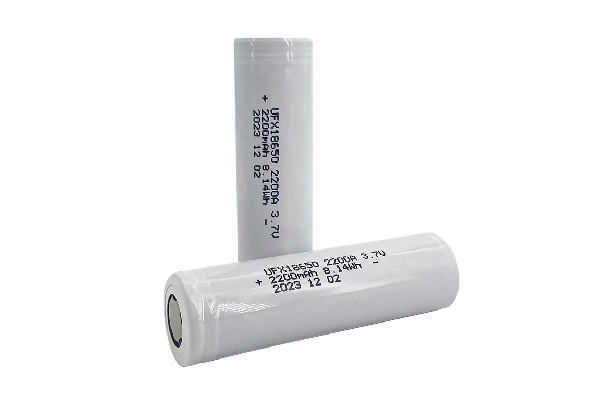
- Highly protected and affordable battery
- With a battery power of 2200mAh and rechargeable
- 3.7 battery voltage
- All-rounder and recommended.
2. Molicel P26A
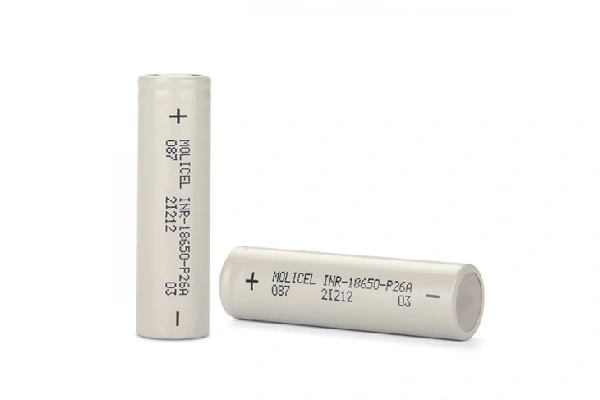
- A protected battery along with a 2600mAh power source
- Top-rated and exclusive in the market
- Rechargeable and cost-friendly
- With a battery power of 34A
3. Samsung 20S
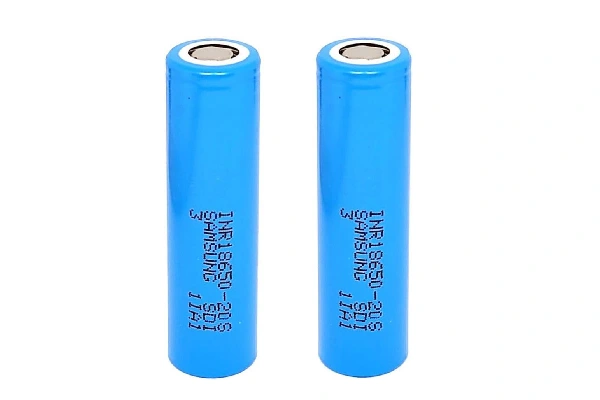
- Highly protected battery with 2000mAh power source
- Recommended and rechargeable battery
- Budget-friendly and long-lasting
- With a battery power of 30A
4. Sony | Murata VTC6
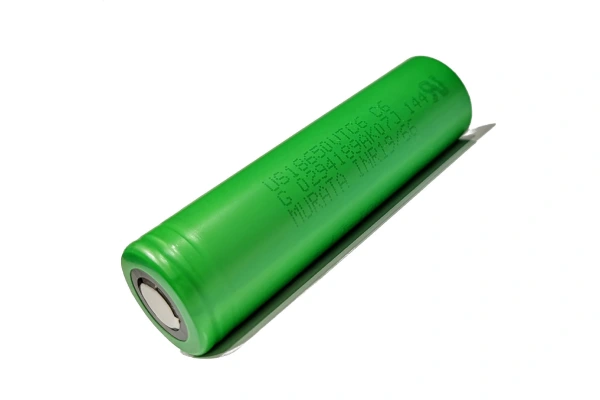
- Protected and long-lasting battery
- With a battery power of 3000mAh
- Fair prices with 15A power
5. Epoch 30P
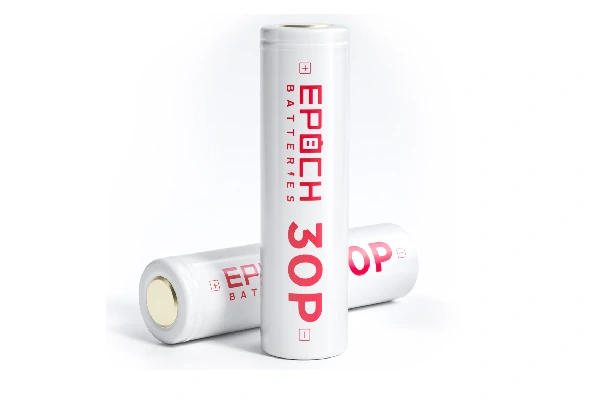
- Protected and recommended
- For all types of devices
- Powerful battery with 3000mAh capacity
- The battery power of 15A
Part 11. FAQs
Are flat top 18650 batteries cheaper than button top batteries?
In most cases, yes. Flat top 18650 batteries are generally less expensive because they require fewer manufacturing steps and are commonly used in battery pack assembly.
What certifications should I look for when buying 18650 batteries?
Common certifications include UN38.3, CE, RoHS, and IEC62133. These certifications help verify product safety, transportation compliance, and quality standards.
Can I customize 18650 batteries for my project?
Many manufacturers offer OEM and ODM services, allowing you to customize capacity, discharge rate, connectors, wires, labels, and packaging according to your application requirements.
How can I verify the quality of an 18650 battery supplier?
Request samples, review certification documents, check production capabilities, ask for cycle life test reports, and evaluate customer reviews before placing large orders.
Are high-discharge 18650 batteries more expensive?
Yes. High-discharge cells require advanced materials and manufacturing processes, making them more expensive than standard 18650 batteries with lower current ratings.
Related Tags:

More Articles

JST vs Molex: The Right Battery Connector Choice
JST or Molex for your battery? Learn how connector selection affects current, voltage drop, reliability, and device performance.
Custom Battery Pricing: Costs Manufacturers Don’t Mention
A low battery quote may not be the final cost. Discover common hidden expenses that affect custom lithium battery projects.
Battery Wire Length: Hidden Cause of Power Loss
A longer battery wire can cause voltage drop, power loss, and unstable operation. Learn how wire length affects battery performance.
How Device Sleep Modes Affect Battery Life
Think sleep mode extends battery life? Learn why devices still drain power and how firmware, hardware, and batteries affect runtime.
LiPo Battery and PCB Design: Clearance, Insulation, and Placement
Learn how to optimize LiPo battery PCB clearance, insulation, placement, wiring, and thermal design—and avoid common integration mistakes.


