
- Key Takeaways
- Part 1. What is a lead carbon battery?
- Part 2. What is a zinc carbon battery?
- Part 3. Zinc carbon battery market insight
- Part 4. Lead carbon vs zinc-carbon: In-depth comparison
- Part 5. Lead carbon vs other battery types
- Part 6. Lead carbon batteries vs. Zinc-carbon: Which battery should you choose?
- Part 7. FAQs about lead carbon batteries vs. zinc-carbon
The demand for reliable energy storage is growing fast. Users often ask: what is a zinc carbon battery, and is it still relevant today? Or, is a lead carbon battery better for modern systems?
This guide gives a clear, engineering-focused comparison between lead carbon batteries and zinc-carbon batteries, covering performance, safety, cost, and real-world use cases.
Key Takeaways
- Lead carbon battery technology is an upgraded form of lead-acid, optimized for cycle life and fast charging.
- Zinc carbon battery is a low-cost primary battery designed for low-drain devices.
- For energy storage, UPS, or solar systems, lead carbon is clearly superior.
- For disposable, low-power use, zinc-carbon remains cost-effective.
- Safety risks are low for both types in normal use, but improper disposal can cause environmental harm.
Part 1. What is a lead carbon battery?
A lead carbon battery is an advanced version of a lead-acid battery. It adds carbon materials to the negative electrode. This improves charge acceptance and reduces sulfation.
👉 Learn more: lead carbon battery technology explained
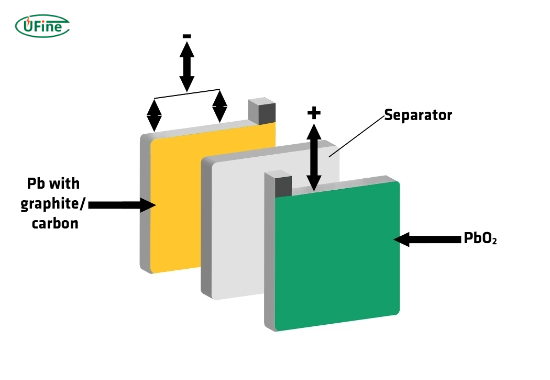
Key Technical Advantages
- Long cycle life: Often 2,000–3,000+ cycles
- Fast charge acceptance: Better than traditional lead-acid
- Partial State of Charge (PSOC) performance: Ideal for solar and hybrid systems
- Improved efficiency under fluctuating loads
- Better low-temperature stability
Typical Applications
- Solar and wind energy storage
- Off-grid and hybrid systems
- UPS and telecom backup
- Microgrid and smart grid storage
Part 2. What is a zinc carbon battery?
A zinc carbon battery is one of the oldest and simplest battery types. It is a primary (non-rechargeable) battery using zinc as the anode and manganese dioxide as the cathode.
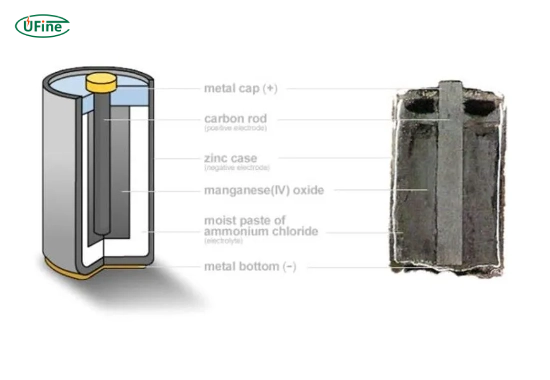
Key Characteristics
- Very low cost
- Widely available worldwide
- Low energy density
- Short lifespan (non-rechargeable)
- Limited current output
Typical Applications
- Remote controls
- Wall clocks
- Flashlights
- Toys and low-power electronics
Part 3. Zinc carbon battery market insight
The zinc carbon battery market is still active, especially in developing regions. Demand remains stable for:
- Low-cost consumer electronics
- Backup household devices
- Regions with limited access to rechargeable infrastructure
However, it is gradually being replaced by alkaline and lithium batteries in higher-performance applications.
Part 4. Lead carbon vs zinc-carbon: In-depth comparison
1. Performance and Lifespan
| Feature | Lead Carbon Battery | Zinc Carbon Battery |
|---|---|---|
| Type | Rechargeable | Primary (non-rechargeable) |
| Cycle Life | 2000–3000+ | Single-use |
| Energy Efficiency | High | Low |
| Charge Speed | Fast | Not applicable |
👉 Conclusion: Lead carbon is designed for repeated cycling. Zinc carbon is disposable.
2. Application Suitability
| Scenario | Best Choice |
|---|---|
| Solar energy storage | Lead carbon |
| UPS / backup power | Lead carbon |
| EV auxiliary systems | Lead carbon |
| Remote controls / clocks | Zinc carbon |
👉 For modern energy systems, zinc carbon is not suitable.
3. Cost Comparison
- Zinc carbon batteries: Very low upfront cost (<$5 per pack)
- Lead carbon batteries: Higher initial cost ($200+)
However:
- Lead carbon = lower cost per cycle
- Zinc carbon = higher long-term replacement cost
4. Safety: Are Carbon Zinc Batteries Dangerous?
A common question is: are carbon zinc batteries dangerous?
Short answer: No, under normal use.
- Zinc carbon batteries are generally safe for household use
- Risks appear when:
- Batteries leak after long storage
- Improper disposal leads to soil contamination
Lead carbon batteries:
- Safe in controlled systems
- Contain lead, so recycling is critical
👉 For disposal guidelines, refer to the EPA battery recycling recommendations.
5. Environmental Impact
| Factor | Lead Carbon | Zinc Carbon |
|---|---|---|
| Recyclability | High (established systems) | Moderate |
| Risk if mismanaged | Lead pollution | Zinc leakage |
| Sustainability | Better for long-term use | Disposable waste |
👉 Lead carbon is more sustainable when properly recycled.
Part 5. Lead carbon vs other battery types
If you are comparing broader battery types, consider:
- Lead carbon vs lithium-ion → lithium has higher energy density
- Lead carbon vs lead-acid → lead carbon has better cycle life
- Zinc carbon vs alkaline → alkaline performs better in most cases
👉 Related guide: battery types and selection insights
Part 6. Lead carbon batteries vs. Zinc-carbon: Which battery should you choose?
Choose Lead Carbon Battery if:
- You need energy storage or backup power
- The system cycles frequently
- You want long service life and reliability
Choose Zinc Carbon Battery if:
- You need a cheap, disposable solution
- The device uses very low power
- Replacement frequency is not a concern
Part 7. FAQs about lead carbon batteries vs. zinc-carbon
What is a zinc carbon battery used for today?
It is mainly used in low-drain devices like remotes, clocks, and basic flashlights.
Are carbon zinc batteries dangerous to store?
No. They are safe if stored properly. Avoid high heat and long-term storage after expiration.
What is the difference between lead carbon battery and lead zinc battery?
“Lead zinc battery” is not a standard term. Most references actually mean lead carbon battery or lead-acid variants.
Why is lead carbon better for solar systems?
Because it handles partial charge cycles and frequent charging much better than traditional batteries.
Can zinc carbon batteries be replaced with rechargeable options?
Yes. In most cases, alkaline or rechargeable batteries provide better performance and longer life.
Related Tags:

More Articles

JST vs Molex: The Right Battery Connector Choice
JST or Molex for your battery? Learn how connector selection affects current, voltage drop, reliability, and device performance.
Custom Battery Pricing: Costs Manufacturers Don’t Mention
A low battery quote may not be the final cost. Discover common hidden expenses that affect custom lithium battery projects.
Battery Wire Length: Hidden Cause of Power Loss
A longer battery wire can cause voltage drop, power loss, and unstable operation. Learn how wire length affects battery performance.
How Device Sleep Modes Affect Battery Life
Think sleep mode extends battery life? Learn why devices still drain power and how firmware, hardware, and batteries affect runtime.
LiPo Battery and PCB Design: Clearance, Insulation, and Placement
Learn how to optimize LiPo battery PCB clearance, insulation, placement, wiring, and thermal design—and avoid common integration mistakes.


