
- Key Takeaways
- Part 1. What is a car battery?
- Part 2. Average car battery life
- Part 3. Factors that affect car battery lifespan
- Part 4. Signs your car battery is dying
- Part 5. How to check car battery life?
- Part 6. How to check car battery health at home?
- Part 7. Common causes of short car battery life
- Part 8. How to extend car battery lifespan?
- Part 9. Lead-acid vs lithium car batteries
- Part 10. When should you replace a car battery?
- Part 11. FAQs about how to check car battery life
Knowing how to check car battery life can help you avoid unexpected breakdowns, hard starts, and electrical problems. A healthy battery ensures reliable engine starting and stable power for lights, sensors, infotainment systems, and onboard electronics.
Most standard car batteries last between 3 and 5 years, but driving habits, climate, charging conditions, and maintenance all affect battery lifespan. By learning how to check car battery health early, you can identify weak batteries before they fail completely.
Whether you drive a gasoline vehicle, hybrid, RV, or electric vehicle, regular battery inspection is an important part of preventive maintenance.
Key Takeaways
- The average car battery life is typically 3–5 years for lead-acid batteries.
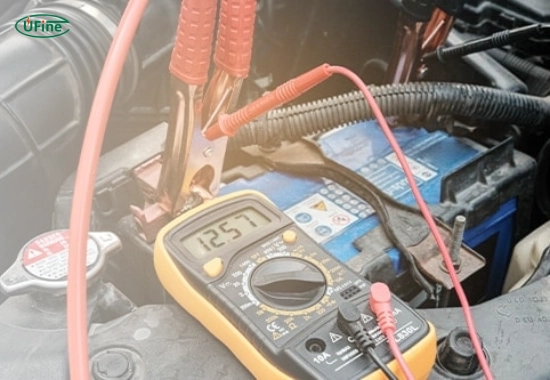
- A healthy car battery should read around 12.6V when fully charged.
- Slow engine cranking, dim headlights, and dashboard warnings are common signs of battery failure.
- You can check car battery condition using a multimeter, load tester, or battery conductance tester.
- Heat, short trips, and poor charging habits can shorten car battery lifespan.
- Regular cleaning and voltage testing help extend battery life.
- Lithium automotive batteries usually last longer than traditional lead-acid batteries.
Part 1. What is a car battery?
A car battery stores electrical energy and supplies power to start the engine. It also stabilizes voltage and powers electronics when the engine is off.
Most vehicles use one of these battery types:
Lead-Acid Car Batteries
Lead-acid batteries remain the most common automotive battery type because they are affordable and reliable for engine starting.
Advantages:
- Lower upfront cost
- Strong cold cranking performance
- Widely available
Disadvantages:
- Shorter lifespan
- Heavier weight
- Sensitive to deep discharge
Lithium Car Batteries
Lithium-ion and LiFePO4 batteries are becoming more common in performance vehicles, RVs, marine systems, and EV applications.
Advantages:
- Longer cycle life
- Faster charging
- Lower weight
- Better energy efficiency
Disadvantages:
- Higher initial cost
- Requires compatible charging systems
If you want to understand lithium battery technology further, see Ufine Battery lithium battery guide.
Part 2. Average car battery life
The average car battery life depends on battery chemistry, operating temperature, and charging conditions.
Car Battery Lifespan Chart
| Battery Type | Average Lifespan | Typical Applications |
|---|---|---|
| Flooded Lead-Acid | 3–5 years | Standard gasoline vehicles |
| AGM Battery | 4–6 years | Start-stop systems, premium vehicles |
| Gel Battery | 4–6 years | Deep-cycle applications |
| Lithium-Ion / LiFePO4 | 8–12 years | EVs, RVs, high-performance systems |
Professional battery testing procedures and maintenance recommendations are commonly based on standards from Battery Council International (BCI).
Part 3. Factors that affect car battery lifespan
-
Climate
- Heat is one of the biggest causes of battery degradation. High temperatures accelerate electrolyte evaporation and internal corrosion.
- Cold weather reduces battery capacity and makes engine starting harder.
-
Driving Habits
- Frequent short trips prevent the alternator from fully recharging the battery. This leads to sulfation and reduced battery health.
-
Electrical Loads
- Dash cams, audio systems, GPS devices, and aftermarket electronics can drain the battery faster.
-
Charging System Condition
- A failing alternator or voltage regulator can undercharge or overcharge the battery, reducing battery life significantly.
Part 4. Signs your car battery is dying
Recognizing early warning signs helps prevent roadside failures.
-
Slow Engine Cranking
- If the engine starts slowly or struggles to turn over, the battery may have low capacity.
-
Dim Headlights
- Weak batteries often cause headlights and dashboard lights to dim, especially during startup.
-
Clicking Sound When Starting
- Rapid clicking usually means the battery voltage is too low to engage the starter motor properly.
-
Swollen Battery Case
- Heat exposure or overcharging can cause the battery case to swell.
-
Corroded Battery Terminals
- White or blue corrosion around the terminals may interrupt electrical flow and charging efficiency.
-
Battery Warning Light
A battery or charging warning light may indicate:
- Weak battery
- Alternator problems
- Charging system faults
Part 5. How to check car battery life?
There are several reliable ways to check car battery condition and battery health.
Method 1: Check Car Battery Voltage With a Multimeter
This is the easiest and most common method.
Step 1: Turn Off the Vehicle – Let the car sit for at least one hour after driving.
Step 2: Set the Multimeter – Set the digital multimeter to DC voltage mode.
Step 3: Connect the Probes – Red probe to positive terminal (+), Black probe to negative terminal (-).
Step 4: Read the Voltage
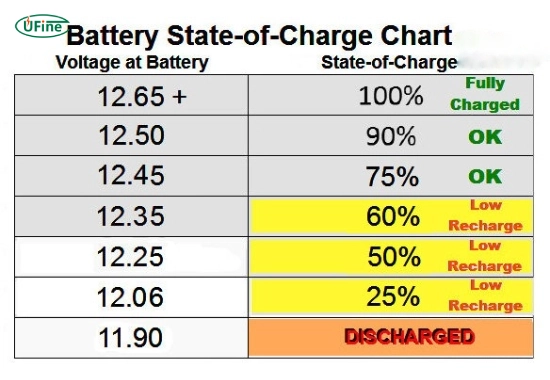
Car Battery Voltage Chart
| Battery Voltage | Battery Condition |
|---|---|
| 12.6V–12.8V | Fully charged |
| 12.4V | Normal |
| 12.2V | Partially discharged |
| Below 12.0V | Weak battery |
| Below 11.8V | Possible battery failure |
A fully charged automotive battery should normally measure about 12.6V. If voltage stays low after charging, the battery may need replacement.
Method 2: Perform a Car Battery Load Test
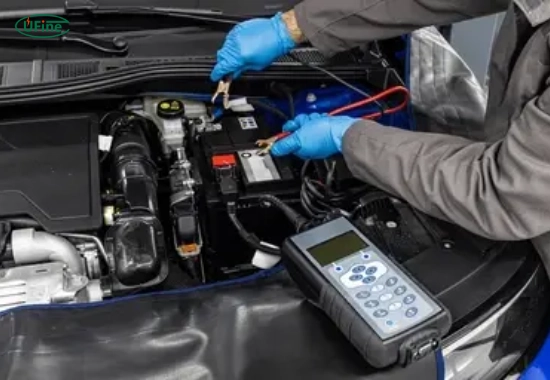
A load test checks how the battery performs under real starting conditions.
How to Test Car Battery Health With a Load Tester:
- Fully charge the battery first.
- Connect the load tester.
- Apply a load equal to half the Cold Cranking Amps (CCA) rating.
- Hold the load for 10–15 seconds.
Cold cranking amp (CCA) definitions and automotive battery performance standards are widely referenced by SAE International.
Result Interpretation:
- Voltage above 9.6V → battery condition is acceptable
- Voltage below 9.6V → battery may be weak or failing
This is one of the best ways to check auto battery life accurately.
Method 3: Use a Battery Conductance Tester
Modern battery analyzers measure internal resistance and conductance.
Advantages:
- Fast testing
- No heavy discharge required
- Accurate battery health estimation
Many automotive repair shops use conductance testing because it is safer and more efficient.
Method 4: Visual Battery Inspection
Visual inspection is simple but effective.
Check for:
- Corrosion
- Loose terminals
- Cracks
- Fluid leaks
- Swelling
- Burnt smell
These symptoms often indicate poor battery condition or charging issues.
Part 6. How to check car battery health at home?
If you want to check battery life without professional tools, follow this quick checklist:
| Inspection Item | Healthy Condition |
|---|---|
| Voltage | Around 12.6V |
| Engine Start | Quick and smooth |
| Headlights | Bright and stable |
| Battery Case | No swelling |
| Terminals | Clean and tight |
| Battery Age | Under 5 years |
If multiple warning signs appear together, battery replacement is recommended.
Part 7. Common causes of short car battery life
-
Excessive Heat
- Heat accelerates chemical degradation inside the battery.
-
Deep Discharge
- Leaving lights or accessories on can deeply discharge the battery.
-
Infrequent Driving
- Vehicles parked for long periods may experience self-discharge.
-
Charging Problems
- Alternator failures can damage even new batteries.
-
Vibration
- Loose mounting brackets increase vibration damage.
Part 8. How to extend car battery lifespan?
Proper maintenance can significantly improve battery life.
-
-
Clean Battery Terminals
- Use baking soda and water to remove corrosion buildup.
-
Drive Longer Distances
- Longer drives allow the alternator to fully recharge the battery.
-
Avoid Deep Discharges
- Turn off headlights and accessories when the engine is not running.
-
For vehicles used in RV, marine, solar, or backup power systems, deep-cycle batteries are often a better choice because they are designed for repeated charging and discharging. Learn more about deep cycle lithium batteries and their applications.
-
Secure the Battery Properly
- A firmly mounted battery experiences less vibration damage.
-
Test Battery Voltage Regularly
- Checking voltage every few months helps detect problems early.
-
Protect Against Extreme Temperatures
- Garage parking and battery insulation can reduce heat and cold damage.
Part 9. Lead-acid vs lithium car batteries
| Feature | Lead-Acid | Lithium Battery |
|---|---|---|
| Weight | Heavy | Lightweight |
| Lifespan | 3–5 years | 8–12 years |
| Charging Speed | Moderate | Fast |
| Maintenance | Higher | Lower |
| Cost | Lower upfront | Higher upfront |
| Energy Efficiency | Lower | Higher |
Lithium batteries offer longer service life and better energy efficiency, but lead-acid batteries remain common due to lower cost.
Lead-acid batteries are still widely used because of their lower upfront cost, while lithium batteries offer longer lifespan, faster charging, and lower weight. If you want to compare the two technologies in detail, see our guide on LiFePO4 vs lead acid batteries.
Part 10. When should you replace a car battery?
You should consider replacement if:
- Battery age exceeds 4–5 years
- Voltage remains low after charging
- Engine starts slowly
- Frequent jump-starts are needed
- Battery fails load testing
Preventive replacement is usually cheaper than emergency roadside repairs.
For custom automotive, RV, marine, and energy storage applications, Ufine also provides customized lithium battery solutions for OEM and industrial projects.
Part 11. FAQs about how to check car battery life
How long does a car battery usually last?
The average car battery life is around 3–5 years for standard lead-acid batteries. AGM batteries may last slightly longer, while lithium batteries can exceed 8 years.
How do I check car battery health with a multimeter?
Set the multimeter to DC voltage and connect it to the battery terminals. A healthy battery should read about 12.6V when fully charged.
What voltage is too low for a car battery?
A reading below 12.0V usually indicates a weak battery. Below 11.8V may suggest severe discharge or battery failure.
Can a car battery test good but still fail?
Yes. Some batteries show normal voltage but fail under load. This is why load testing is important for accurate battery health checks.
What shortens car battery lifespan the most?
Extreme heat, short trips, deep discharge, and charging system problems are the most common causes of reduced battery life.
Related Tags:

More Articles
Dead Battery or Device Failure? How to Find the Cause
Think your device is broken? Learn how to tell if the problem comes from battery aging or hardware failure before replacing your electronics.
Why iPhone Duo Uses Two Batteries: The Engineering Behind Foldable Phone Power
Why do foldable phones need two batteries? Explore the engineering challenges behind iPhone Duo’s dual-battery architecture and future battery trends.
Solid-State Batteries: 3 Myths You Need to Know
Solid-state batteries promise safer EVs and longer range, but the reality is more complex. Discover the challenges behind this next-gen technology.
Battery Capacity vs Discharge Rate: The Choice Engineers Face
Higher capacity or higher discharge rate? Learn how to choose the right LiPo battery for longer runtime, stable power output, and better device performance.
Battery Cable Size Guide: Choose the Right Wire Fast
Not sure what battery cable size you need? Learn how to select the right wire gauge, terminal size, and cable for safer, more efficient battery systems.


