
- Part 1. What does battery voltage mean?
- Part 2. How battery voltage works
- Part 3. The relationship between voltage, current, and power
- Part 4. What determines battery voltage?
- Part 5. Common battery voltages and applications
- Part 6. Lithium battery voltage by chemistry
- Part 7. Why battery voltage changes during charging and discharging
- Part 8. Voltage sag: why voltage drops under heavy load
- Part 9. How battery voltage affects device and tool performance
- Part 10. Battery voltage vs capacity
- Part 11. Is higher battery voltage always better?
- Part 12. How to measure battery voltage correctly
- Part 13. FAQs
You probably don’t think much about battery voltage until something starts going wrong.
Maybe your cordless drill suddenly feels weak halfway through a job. Your drone loses power faster in cold weather. Your car struggles to start in winter. Or your lithium battery still shows “30% remaining,” yet the device unexpectedly shuts off.
In all of these situations, voltage is usually the real story behind the scenes.
Battery voltage is far more than a number printed on a label. It influences how much power your device can deliver, how efficiently energy moves through a circuit, how fast a battery ages, and even how safe the system remains under stress. Once you understand how battery voltage works, you can make better decisions about battery selection, charging, maintenance, and overall system performance.
In this guide, you’ll learn what battery voltage really means, why different batteries operate at different voltages, how voltage affects current and power output, and why voltage behavior changes during real-world use.
Key takeaways
- Battery voltage refers to the electrical potential difference between a battery’s positive and negative terminals.
- Higher voltage generally allows devices to deliver more power with lower current draw.
- Battery voltage changes naturally during charging, discharging, temperature shifts, and aging.
- Different battery chemistries have different nominal voltages because of their electrochemical materials.
- Voltage sag under heavy load is normal, but excessive voltage drop may indicate aging or poor battery design.
- Battery voltage and battery capacity are related but fundamentally different measurements.
- Choosing the correct voltage is more important than simply choosing the highest voltage.
Part 1. What does battery voltage mean?

At its core, battery voltage is the force that pushes electrical current through a circuit.
You can think of voltage as water pressure inside a pipe. The higher the pressure, the easier it is for water to move. In a battery, voltage creates the electrical pressure that drives electrons from the negative terminal to the positive terminal through your device.
Without voltage, there is no current flow and no usable power.
This is why two batteries with similar sizes can behave completely differently. A tiny 3V coin cell can power a watch for years, while a large 48V lithium battery pack can move an electric scooter uphill. The difference is not just battery size — it’s how voltage interacts with current, resistance, and overall power demand.
Battery voltage is measured in volts (V), and every electronic device is designed around a specific voltage range. If the voltage drops too low, the device may slow down, shut off, or malfunction. If the voltage rises too high, components can overheat or fail entirely.
That balance is incredibly important in modern electronics, especially in lithium battery systems where voltage management directly affects performance and safety.
Part 2. How battery voltage works
Inside every battery, chemical reactions create a difference in electrical potential between two electrodes. That difference becomes usable voltage.
When you connect a battery to a circuit, electrons begin flowing through the device to balance the electrical difference. The amount of voltage determines how strongly those electrons are pushed through the system.
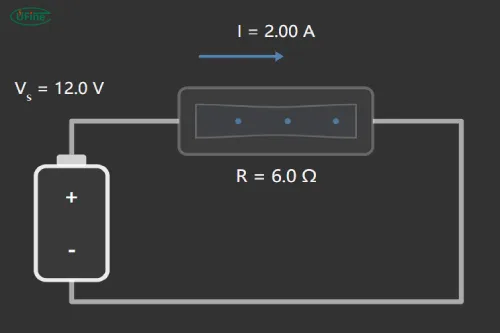
The relationship between voltage, current, and resistance is described by Ohm’s Law:
V=IR
I=Vs/R=12.0 V/6.0 Ω=2.00 A
Where:
- V = voltage
- I = current
- R = resistance
This relationship explains why changing battery voltage can affect current flow. If resistance stays the same, increasing voltage generally increases current.
That’s why higher-voltage systems are often used in power-hungry applications like electric vehicles, industrial tools, drones, and energy storage systems.
However, voltage alone does not determine performance. The battery’s chemistry, internal resistance, thermal behavior, and discharge capability also matter.
For example, two lithium batteries may both be labeled 12V, yet one performs significantly better under load because it maintains voltage more consistently during discharge.
Part 3. The relationship between voltage, current, and power
One of the biggest misconceptions about batteries is that “higher voltage means longer runtime.” That is not always true.
Voltage mainly affects how power is delivered.
Power is calculated using the following formula:
P=VI
A higher-voltage battery can deliver the same amount of power while drawing less current. This becomes extremely important in high-performance systems because lower current reduces heat generation and energy loss.
You can see this clearly in electric vehicles. Modern EV platforms are increasingly moving from 400V systems to 800V architectures because higher voltage improves charging efficiency and reduces heat buildup in cables and components.
The same principle applies to cordless power tools.
A 20V drill often feels stronger than a 12V model because the motor can maintain higher power output under heavy loads. When drilling through dense material, the higher-voltage system experiences less voltage drop and maintains torque more effectively.
In real-world usage, this translates into smoother acceleration, stronger startup power, and more stable performance during demanding tasks.
Part 4. What determines battery voltage?
Battery voltage is not random. It depends on several interconnected physical and chemical factors.
- Chemistry
- Number of cells
- Temperature
- State of charge
- Battery age/internal resistance
- Battery Age
The most important factor is battery chemistry. Different materials naturally produce different electrochemical potentials. That’s why alkaline batteries typically provide 1.5V per cell, while lithium-ion cells usually operate around 3.6V to 3.7V.
The number of cells also matters. Batteries connected in series add their voltages together. A typical 12V lead-acid battery contains six 2V cells connected in series. Likewise, many lithium battery packs combine multiple cells to achieve 12V, 24V, 48V, or higher system voltages.
Temperature plays a surprisingly large role as well.
Cold weather slows chemical reactions inside the battery, reducing effective voltage and power output. This is why vehicles often struggle to start during winter mornings. Lithium batteries can also experience noticeable voltage sag in freezing conditions, especially under high current loads.
Battery performance is closely tied to environmental conditions, especially when you operate in extreme heat or cold. If you want to go deeper into this topic, you can also check our guide on battery temperature effects to understand how temperature influences lifespan and voltage behavior.
Battery age is another major factor.
As batteries age, their internal resistance gradually increases. This makes it harder for the battery to maintain stable voltage under load. You may notice older tools suddenly feeling weak even when the battery indicator still shows remaining charge.
That behavior is often caused by voltage collapse rather than lack of capacity alone.
Part 5. Common battery voltages and applications
Different batteries are designed for different voltage requirements. Some prioritize portability, while others prioritize power delivery, safety, or long cycle life.
The table below shows some of the most common battery voltages used today.
| Battery Type | Nominal Voltage | Common Applications |
|---|---|---|
| Alkaline AA/AAA | 1.5V | Remote controls, flashlights |
| NiMH Rechargeable | 1.2V | Cameras, toys |
| Lithium-ion Cell | 3.6V–3.7V | Phones, laptops |
| LiFePO4 (LFP) | 3.2V | Solar storage, RV systems |
| Lead-acid Cell | 2V | Automotive batteries |
| 9V Battery | 9V | Smoke detectors |
| 12V Battery Pack | 12V | Power tools, scooters |
| EV Battery Pack | 400V–800V | Electric vehicles |
What’s interesting is that voltage trends often reflect broader technology changes.
For decades, low-voltage systems dominated consumer electronics because devices required relatively little power. But as motors, fast charging, robotics, and electric transportation became more common, higher-voltage architectures started gaining popularity due to their efficiency advantages.
Part 6. Lithium battery voltage by chemistry
Not all lithium batteries operate at the same voltage.
This is something many users overlook, especially when replacing battery packs or designing energy storage systems.
Different cathode materials create different nominal voltages, charging voltages, and discharge characteristics.
| Lithium Chemistry | Nominal Voltage | Fully Charged Voltage | Main Advantage |
|---|---|---|---|
| NMC | 3.6V–3.7V | 4.2V | High energy density |
| LFP (LiFePO4) | 3.2V | 3.65V | Excellent safety |
| LTO | 2.4V | 2.8V | Extremely long cycle life |
| LiCoO2 | 3.7V | 4.2V | Consumer electronics |
For example, LFP batteries operate at lower voltage than NMC batteries, but they offer better thermal stability and longer cycle life. This is one reason why many solar storage systems and commercial energy applications prefer LFP chemistry despite its lower energy density.
Meanwhile, NMC batteries dominate applications where compact size and high energy output matter most, such as EVs and portable electronics.
Different battery chemistries also respond very differently to voltage behavior, especially under load and temperature changes. For example, high-safety and fast-charging chemistries like LFP and LTO behave in completely different ways, which we explain in detail in our article on LFP vs LTO batteries
Part 7. Why battery voltage changes during charging and discharging
Many people assume battery voltage stays constant during use, but real batteries are dynamic systems.
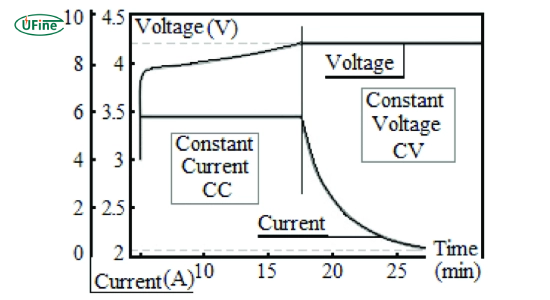
As a lithium-ion battery discharges, its voltage gradually falls. A fully charged lithium cell may start at 4.2V, then settle near 3.7V during normal operation before eventually dropping close to its cutoff voltage around 3.0V.
This changing voltage curve explains why some devices behave differently at lower charge levels.
For instance, smartphones often reduce processor performance at low battery percentages to avoid sudden shutdowns caused by voltage instability. Electric scooters may also limit acceleration when battery voltage drops too low.
Charging introduces another voltage pattern.
During charging, voltage rises steadily until reaching the battery’s maximum charging voltage. After that point, charging current gradually decreases to prevent overheating or overcharging.
Battery management systems (BMS) carefully monitor this process because excessive voltage can permanently damage lithium cells or create thermal safety risks.
Part 8. Voltage sag: why voltage drops under heavy load
One of the most misunderstood battery behaviors is voltage sag.
Voltage sag occurs when battery voltage temporarily drops during high current demand. This happens because internal resistance inside the battery consumes part of the available energy.
You can observe this in many real-world situations:
- A drone battery voltage suddenly dips during rapid acceleration
- A cordless saw loses cutting strength under heavy pressure
- An EV experiences reduced performance at low charge levels
- A phone battery drops from 20% to 5% almost instantly in cold weather
In many cases, the battery itself still contains usable energy. The problem is that voltage temporarily falls below the device’s operating threshold.
High-quality lithium batteries usually experience less voltage sag because they use lower-resistance cells and better thermal management systems.
This is one reason premium battery packs often feel noticeably stronger under load, even when their rated voltage appears similar on paper.
Part 9. How battery voltage affects device and tool performance
Battery voltage directly influences how devices behave under real operating conditions.
In power tools, higher voltage often improves torque and startup power. That’s why contractors working with thick wood, masonry, or metal usually prefer higher-voltage platforms for demanding applications.
In electric vehicles, higher voltage improves drivetrain efficiency and enables faster charging speeds. An 800V EV system can deliver high power with lower current, reducing cable heat and charging losses.
In portable electronics, voltage stability matters more than raw voltage itself. A smartphone battery that maintains consistent voltage under load will feel smoother and more responsive during gaming, video editing, or multitasking.
Battery age also affects performance more than many users realize.
Over time, internal resistance increases and voltage stability declines. Even if a battery still holds reasonable capacity, unstable voltage delivery can cause reduced power output, random shutdowns, or sluggish behavior.
This is why old cordless tool batteries often “feel weak” before they actually stop working.
Part 10. Battery voltage vs capacity
Battery voltage and battery capacity are closely related, but they are not the same thing.
Voltage describes electrical pressure, while capacity measures how much energy the battery can store.
A battery with higher voltage can deliver more power at a given current, but that does not automatically mean longer runtime.
Capacity is usually measured in amp-hours (Ah) or milliamp-hours (mAh). Runtime depends on both voltage and capacity together.
For example, two batteries may both store similar total energy, yet one uses higher voltage and lower current while the other uses lower voltage and higher current.
This distinction becomes important when comparing battery systems for tools, solar storage, robotics, or electric transportation.
Many consumers focus only on voltage because it sounds more powerful. In reality, overall battery performance depends on the balance between voltage, capacity, discharge capability, thermal management, and system efficiency.
Part 11. Is higher battery voltage always better?
Not necessarily.
Higher voltage offers several advantages, including lower current draw, reduced heat generation, and improved efficiency in high-power systems. That’s why industries like electric transportation and renewable energy increasingly adopt higher-voltage architectures.
However, higher voltage also introduces trade-offs.
The system becomes more complex, insulation requirements increase, and safety management becomes more critical. Excessive voltage can damage electronics that are not designed for it.
There’s also a practical engineering balance involved.
For example, a lightweight portable device may prioritize compactness and safety over raw power. Meanwhile, industrial machinery may prioritize efficiency and power delivery above all else.
The “best” battery voltage ultimately depends on the application itself.
Part 12. How to measure battery voltage correctly
Measuring battery voltage is relatively simple, but accurate interpretation requires context.
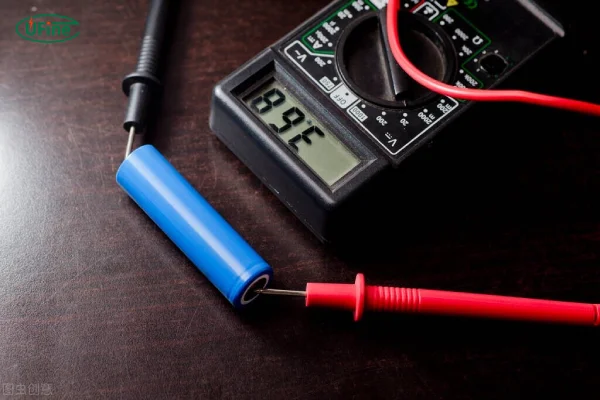
A digital multimeter is the most common tool for checking battery voltage. By placing the probes on the positive and negative terminals, you can quickly measure open-circuit voltage.
However, open-circuit voltage does not always reveal real performance under load.
A battery may show normal voltage while idle yet experience severe voltage sag during operation. This is why professional battery testing often includes load testing, internal resistance analysis, and temperature monitoring.
For lithium battery packs, modern battery management systems continuously monitor voltage, current, temperature, and balancing conditions to improve safety and performance.
In advanced applications like EVs and energy storage systems, voltage monitoring is one of the most critical parts of long-term battery health management.
Part 13. FAQs
Why does battery voltage drop overnight?
A small voltage drop overnight is normal because batteries naturally self-discharge over time. However, a rapid drop may indicate parasitic power drain, internal battery damage, aging cells, or poor temperature conditions.
Does fast charging affect battery voltage?
Fast charging temporarily raises battery voltage more aggressively to deliver energy quickly. Excessive heat during fast charging can accelerate battery aging if thermal management is poor.
What happens if battery voltage is too low?
Low battery voltage can cause devices to shut down unexpectedly, reduce motor performance, trigger protection circuits, or damage lithium cells if over-discharged for long periods.
Why do electric vehicles use such high battery voltages?
Higher-voltage EV systems improve efficiency by reducing current flow and heat generation. They also support faster charging and better power delivery during acceleration.
Does colder weather permanently reduce battery voltage?
Usually no. Cold weather temporarily lowers battery voltage because chemical reactions slow down. Once the battery warms up, voltage often returns closer to normal levels.
Related Tags:

More Articles

JST vs Molex: The Right Battery Connector Choice
JST or Molex for your battery? Learn how connector selection affects current, voltage drop, reliability, and device performance.
Custom Battery Pricing: Costs Manufacturers Don’t Mention
A low battery quote may not be the final cost. Discover common hidden expenses that affect custom lithium battery projects.
Battery Wire Length: Hidden Cause of Power Loss
A longer battery wire can cause voltage drop, power loss, and unstable operation. Learn how wire length affects battery performance.
How Device Sleep Modes Affect Battery Life
Think sleep mode extends battery life? Learn why devices still drain power and how firmware, hardware, and batteries affect runtime.
LiPo Battery and PCB Design: Clearance, Insulation, and Placement
Learn how to optimize LiPo battery PCB clearance, insulation, placement, wiring, and thermal design—and avoid common integration mistakes.


