
Small lithium-ion batteries power nearly every modern portable device—from smartphones and laptops to drones, wearables, and power tools. As demand for compact energy storage continues to grow, global li ion manufacturers and lithium ion battery makers are competing to deliver safer, smaller, and more efficient solutions.
In this guide, we review the top small power battery factory companies based on technology, reliability, production scale, and real-world applications.
Part 1. How we evaluated these small battery companies
To ensure a fair and transparent comparison of each small battery company, we evaluated manufacturers using the following criteria:
- Energy density & performance (Wh/kg, cycle life, stability)
- Product safety standards (UL, CE, ISO certifications)
- Manufacturing scale & consistency
- R&D capability & innovation investment
- Real-world applications (consumer electronics, EVs, tools, etc.)
- Market reputation among global li ion battery manufacturers
We combined technical documentation, industry reports, and long-term market performance to assess each company objectively.
Part 2. Quick comparison table: top li-Ion battery manufacturers
| Product | Best For | Key Features | Price Range | Pros | Cons |
|---|---|---|---|---|---|
| CATL | EVs & energy storage | High-density NMC & LFP cells | Mid–High | Massive scale, strong R&D | Limited consumer focus |
| BYD | EV + battery packs | Blade battery technology | Mid | Safe LFP chemistry | Less flexible customization |
| Panasonic | Consumer electronics & EV | Long cycle life cells | High | Stable performance | Higher cost |
| LG Energy Solution | OEM electronics & EV | Lightweight pouch cells | High | Global supply chain | Premium pricing |
| Samsung SDI | High-performance devices | High-energy cylindrical cells | High | Strong safety tech | Limited low-cost options |
| EVE Energy | Industrial devices | Reliable prismatic cells | Mid | Cost-effective | Less global presence |
| Lishen | General lithium batteries | Cylindrical & pouch cells | Low–Mid | Affordable production | Lower brand recognition |
| ATL | Consumer electronics | Compact high-density cells | Mid–High | Strong OEM partnerships | Mostly B2B |
| Cameron Sino | Replacement batteries | Wide compatibility models | Low–Mid | Huge product range | Limited innovation |
| Ufine Battery | Custom small batteries | Flexible OEM/ODM solutions | Mid | Customization strength | Smaller global footprint |
Part 3. 10 small li-ion battery manufacturers
1 CATL (Contemporary Amperex Technology Co., Ltd.)
CATL dominates the global lithium-ion battery landscape in both production scale and technological influence. While it is primarily known as an EV and energy storage giant, its innovations directly shape downstream ecosystems, including compact industrial and consumer battery architectures used by many secondary small power battery factory suppliers.
CATL’s core technological strength lies in its multi-chemistry platform strategy. It has achieved large-scale commercialization of high-nickel NCM batteries for high energy density applications while simultaneously pushing cost-optimized LFP systems to industry-leading levels of safety and affordability. Its Cell-to-Pack (CTP) and emerging Cell-to-Chassis (CTC) architectures eliminate traditional module structures, improving volumetric efficiency and reducing system cost.
In recent years, CATL has also accelerated development of sodium-ion batteries, positioning itself beyond lithium dependency and toward next-generation grid-scale chemistry diversification.
From a manufacturing perspective, CATL operates one of the most vertically integrated and automated production ecosystems in the world, controlling upstream material processing, cell manufacturing, and pack integration.
However, CATL is not a typical small battery company. Its business model is optimized for large-scale OEM contracts in EVs and grid storage, meaning customization for small-format batteries (such as 18650 or compact LiPo designs) is limited and generally not its strategic focus.
Core Technology & Focus
CATL specializes in:
- High-nickel NCM (811 and derivatives)
- Advanced LFP (Lithium Iron Phosphate)
- Sodium-ion battery commercialization (emerging alternative chemistry)
- Cell-to-pack (CTP) structural integration
Manufacturing Strength
CATL operates one of the most advanced automated battery production systems globally, with vertically integrated supply chains spanning cathode materials, cell production, and system integration.
Strengths
- Industry-leading scale and cost efficiency
- Extremely strong R&D pipeline (solid-state, sodium-ion)
- High safety LFP systems widely used in EVs
- Strong OEM partnerships (Tesla, BMW, etc.)
Limitations
- Limited customization for small consumer battery formats
- Focused primarily on EV and grid-scale systems rather than niche small batteries
Industry Position
CATL defines global lithium-ion standards and indirectly shapes technologies used by many lithium ion battery makers worldwide.
2 BYD (Build Your Dreams)
BYD represents one of the most vertically integrated models in the global battery industry, operating across EV manufacturing, battery cell production, and full vehicle system integration. Unlike most li ion battery manufacturers, BYD does not treat batteries as a standalone product but as a core structural and functional component of its electric mobility ecosystem.
Its most significant innovation is the Blade Battery, based on a long-cell LFP architecture. This design dramatically improves thermal stability and mechanical safety by reducing the risk of internal short circuits and thermal runaway. The structural design also allows the battery pack to function as a load-bearing element in EV chassis systems.
BYD’s chemistry strategy is heavily LFP-focused, prioritizing safety, longevity, and cost efficiency over maximum energy density. This makes its batteries particularly suitable for fleet vehicles, buses, and large-scale commercial applications where durability is more critical than compact size.
Although BYD has strong manufacturing capabilities, it is not deeply active in highly customized small lithium-ion formats. Its production system is optimized for standardized EV-scale modules rather than flexible small-device battery engineering.
Core Technology & Focus
- Blade Battery (long-cell LFP architecture)
- High structural safety design
- Integrated EV + battery system engineering
Manufacturing Strength
BYD produces both EV packs and smaller lithium battery modules, leveraging automotive-scale quality control systems.
Strengths
- Industry-leading safety performance (thermal stability advantage)
- Full in-house production chain reduces cost volatility
- Strong LFP innovation for EV and storage applications
Limitations
- Less flexible in small customized lithium-ion battery formats
- Innovation is more EV-oriented than consumer electronics
Industry Position
BYD is a key small power battery factory ecosystem player, especially strong in safe, cost-efficient lithium storage systems.
3 Panasonic Energy
Panasonic remains one of the most historically influential lithium ion battery makers, particularly in cylindrical cell development. Its long-standing partnership with Tesla has positioned it as a benchmark supplier in high-consistency EV battery production.
The company’s strength lies in its precision-engineered cylindrical cell platforms, including 18650 and 21700 formats, with ongoing development toward next-generation high-capacity cells. Panasonic prioritizes long cycle life, stability, and thermal consistency rather than aggressive cost reduction or rapid chemistry diversification.
Its NCA (Nickel Cobalt Aluminum) chemistry remains one of the most energy-dense and stable systems in mass production, especially in long-range EV applications.
Compared to Chinese manufacturers, Panasonic operates with a more conservative innovation cycle but maintains extremely high manufacturing consistency standards, making it a preferred supplier for applications requiring predictable long-term performance.
However, Panasonic is not positioned as a flexible small power battery factory provider, as its production is highly standardized and optimized for large OEM contracts.
Core Technology & Focus
- High-energy density cylindrical cells (18650, 2170, 4680 development collaboration)
- Long-cycle-life chemistries optimized for EV applications
- Mature nickel-based battery systems
Manufacturing Strength
Panasonic operates extremely stable, high-precision production lines with a strong focus on consistency and long-term reliability.
Strengths
- Industry benchmark for battery durability
- Very stable performance across long cycles
- Strong historical partnership with Tesla (Gigafactory Nevada)
Limitations
- Higher cost compared to Chinese manufacturers
- Slower expansion in ultra-small battery customization markets
Industry Position
Panasonic remains a benchmark li ion battery manufacturer for reliability and engineering consistency.
4 LG Energy Solution (LGES)
LGES is one of the most balanced global players across EV, consumer electronics, and energy storage markets. Among all major li ion manufacturers, LGES is particularly strong in pouch (polymer) cell engineering, which enables high energy density in compact and lightweight formats.
The company’s NCMA chemistry system (nickel-cobalt-manganese-aluminum) improves both thermal stability and energy density, making it suitable for modern EV platforms and high-performance portable devices.
LGES maintains a highly globalized manufacturing footprint, supplying batteries to automotive OEMs, electronics manufacturers, and energy storage integrators worldwide. Its pouch cell technology is especially relevant to compact applications where weight and form factor flexibility are critical.
From a small-format perspective, LGES is one of the most capable Tier-1 suppliers producing batteries that align with the requirements of a modern small battery company ecosystem, particularly in wearable devices, mobile electronics, and thin-format industrial applications.
Core Technology & Focus
- High-energy-density pouch cells
- NCM chemistry optimization for lightweight design
- Advanced thermal and safety control systems
Manufacturing Strength
LGES has a highly globalized production footprint, supplying major OEMs across automotive and electronics sectors.
Strengths
- Excellent energy density in compact formats
- Strong global supply chain integration
- Highly adaptable pouch cell design for small devices
Limitations
- Premium pricing structure
- High dependency on OEM contracts
Industry Position
LGES is one of the most important lithium ion battery makers for compact, lightweight, high-performance applications.
5 Samsung SDI
Samsung SDI operates at the premium end of the lithium-ion battery market, focusing on high energy density, safety engineering, and advanced material science integration.
Its product portfolio includes high-nickel NCM cylindrical and prismatic cells designed for EVs, power tools, and premium consumer electronics. Unlike mass-cost-optimized manufacturers, Samsung SDI prioritizes energy density consistency, thermal stability, and long-cycle performance.
A key differentiator is its semiconductor-grade manufacturing philosophy, which applies extremely strict quality control standards to battery cell production. This results in very high reliability but also higher production costs.
Samsung SDI is widely used in applications where safety and performance are non-negotiable, including premium EV platforms and high-end industrial devices.
However, its focus remains on high-end segments, and it is less active in low-cost or highly customized small battery markets.
Core Technology & Focus
- High-nickel NCM battery systems
- Cylindrical + prismatic cell platforms
- Advanced safety and thermal runaway prevention design
Manufacturing Strength
Samsung SDI integrates semiconductor-level precision manufacturing principles into battery production, leading to high consistency and safety.
Strengths
- Strong energy density performance
- Excellent safety engineering systems
- Premium-grade battery reliability
Limitations
- High cost structure
- Limited low-cost or entry-level battery offerings
Industry Position
Samsung SDI is a top-tier small battery company for high-performance and safety-critical applications.
6 EVE Energy
EVE Energy has rapidly evolved into one of China’s most competitive mid-to-high tier li ion battery manufacturers, particularly strong in cylindrical and LFP-based storage systems.
The company operates across multiple segments including EV batteries, consumer electronics, and industrial energy storage. Its manufacturing strategy emphasizes scalable automation and cost-performance optimization, enabling it to compete effectively in both domestic and global markets.
EVE’s cylindrical cells (including 18650 and 21700 formats) are widely used in power tools, e-bikes, and general industrial applications. Its LFP products are increasingly adopted in energy storage systems due to their safety and long cycle life advantages.
While EVE is expanding internationally, its brand recognition is still developing compared to Tier-1 Japanese and Korean suppliers.
Core Technology & Focus
- Cylindrical lithium-ion cells (18650, 21700 formats)
- LFP and NCM battery systems
- Industrial-grade energy storage solutions
Manufacturing Strength
EVE has rapidly scaled production capacity with strong automation and cost optimization strategies.
Strengths
- Competitive pricing with stable performance
- Strong industrial battery supply chain
- Expanding global OEM partnerships
Limitations
- Slightly weaker brand recognition globally
- Less premium positioning than Tier-1 Japanese/Korean brands
Industry Position
EVE is becoming a strong mid-tier global li ion battery manufacturer for industrial and consumer applications.
7 Ufine Battery
Ufine Battery focuses on highly customized lithium-ion and lithium polymer battery solutions for niche applications, positioning itself within the flexible OEM/ODM segment of the industry.
Its production capabilities include ultra-thin batteries, irregular-shaped cells, high-temperature and low-temperature resistant chemistries, and application-specific pack design.
Unlike large-scale EV manufacturers, Ufine’s strength is adaptability rather than mass production scale. It serves industries requiring tailored energy solutions such as medical devices, IoT systems, industrial sensors, and compact electronics.
Within the global ecosystem of small battery company suppliers, Ufine represents the customization-driven manufacturing segment, bridging the gap between standard cell production and highly specialized application engineering.
Core Technology & Focus
- Custom Li-ion and Li-polymer battery packs
- High/low temperature battery solutions
- Thin, irregular, and application-specific battery design
Manufacturing Strength
Ufine operates as an OEM/ODM-focused manufacturer, supporting flexible design requirements for small devices and industrial products.
Strengths
- Strong customization capability
- Flexible production for niche applications
- Wide chemistry and form factor options
Limitations
- Smaller global brand recognition
- Limited mass-market dominance compared to Tier-1 manufacturers
Industry Position
Ufine represents the flexible segment of the small power battery factory ecosystem, serving customized demand rather than mass-scale EV production.
8 Lishen Battery (Tianjin Lishen)
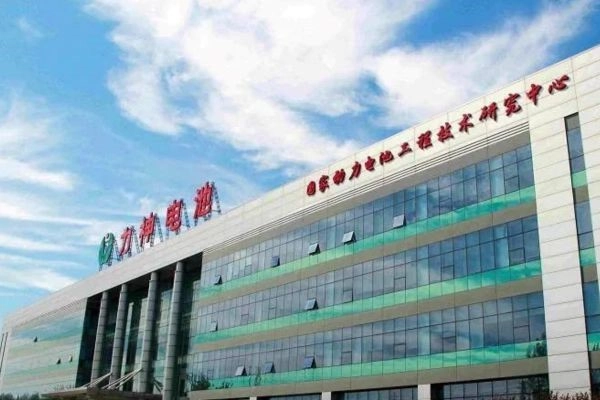
The company produces a wide range of cylindrical, prismatic, and pouch cells used in consumer electronics, industrial systems, and basic EV applications. Its strength lies in manufacturing stability and large-scale OEM supply capability rather than high-end innovation.
Lishen operates as a classic small power battery factory supplier in many segments, offering cost-effective and widely compatible lithium-ion solutions.
However, compared to newer competitors, its technological advancement and global influence have been relatively moderate in recent years.
Lishen is one of China’s earliest lithium battery manufacturers and has long experience in cylindrical, prismatic, and pouch cell production.
Core Technology & Focus
- General-purpose lithium-ion cells
- Energy storage battery systems
- Standardized OEM battery production
Manufacturing Strength
Lishen operates large-scale manufacturing facilities capable of supporting both consumer electronics and industrial applications.
Strengths
- Long industry history and manufacturing experience
- Wide product coverage across battery types
- Competitive cost structure
Limitations
- Less innovation compared to newer competitors
- Limited presence in premium EV segment
Industry Position
Lishen remains a reliable small power battery factory for standardized lithium-ion production.
9 ATL (Amperex Technology Limited)

ATL is one of the most important suppliers in the global small-format lithium-ion ecosystem. Unlike EV-focused manufacturers, ATL specializes in ultra-compact lithium polymer and high-energy-density small cells.
Its batteries are widely used in smartphones, tablets, wireless earbuds, wearables, and other space-constrained electronic devices. ATL’s engineering focus is miniaturization, thin-form design, and high volumetric energy density.
The company operates almost entirely as a B2B supplier, working closely with major consumer electronics brands through customized OEM designs.
ATL plays a central role in defining what modern small lithium ion battery makers must achieve in terms of size reduction, energy density, and safety in compact enclosures.
Core Technology & Focus
- Ultra-thin lithium polymer batteries
- High-density compact cells
- Customized OEM battery solutions
Manufacturing Strength
ATL specializes in precision manufacturing of small batteries used in smartphones, tablets, wearables, and wireless devices.
Strengths
- Industry leader in compact battery design
- Strong OEM relationships (Apple ecosystem suppliers historically)
- Excellent miniaturization capability
Limitations
- Almost entirely B2B (no consumer brand presence)
- Limited large-format battery production
Industry Position
ATL is one of the most important small battery company players in consumer electronics supply chains.
10 Cameron Sino Technology
Cameron Sino focuses on replacement and aftermarket lithium-ion batteries rather than OEM production.
Core Technology & Focus
- Replacement battery packs for electronics
- Cross-brand compatibility solutions
- Standardized lithium-ion modules
Manufacturing Strength
The company maintains a large catalog of replacement batteries covering tools, cameras, laptops, and industrial devices.
Strengths
- Extremely wide product compatibility range
- Strong aftermarket presence
- Cost-effective replacement solutions
Limitations
- Limited innovation in cell chemistry
- Not a core upstream battery cell producer
Industry Position
Cameron Sino plays a niche but important role in the secondary li ion manufacturers ecosystem.
Cameron Sino operates primarily in the aftermarket and replacement battery segment rather than upstream cell manufacturing.
The company specializes in producing compatible replacement lithium-ion battery packs for consumer electronics, power tools, cameras, and portable industrial devices.
Its value proposition lies in broad compatibility coverage across thousands of device models, making it a significant player in the secondary battery supply ecosystem.
However, Cameron Sino does not contribute significantly to battery chemistry innovation or upstream cell technology development, positioning it more as a system-level assembler than a core li ion battery manufacturer.
Part 4. FAQs
1. What is the difference between a lithium-ion manufacturer and a battery pack assembler?
A lithium-ion manufacturer produces the actual electrochemical cells, while a battery pack assembler integrates those cells into finished products with protection circuits, housing, and thermal management systems. Many small-scale suppliers operate only at the assembly level.
2. Why do some small battery companies not produce their own cells?
Cell manufacturing requires extremely high capital investment, cleanroom environments, and chemical processing infrastructure. Many small battery company suppliers rely on upstream li ion manufacturers and focus instead on design, assembly, or customization.
3. What determines the lifespan of a lithium-ion battery from different manufacturers?
Battery lifespan is primarily influenced by chemistry (LFP vs NCM), cycle depth, thermal management, and manufacturing precision. Even among top lithium ion battery makers, cycle life can vary significantly based on application design.
4. Are all lithium-ion batteries interchangeable between manufacturers?
No. Even if two batteries share the same size (e.g., 18650), differences in voltage curves, discharge rates, and BMS requirements can make them incompatible without system redesign.
Related Tags:

More Articles
Best 24V Lithium Battery: Top 10 Compared
Discover the top 24V lithium batteries. We compare capacity, price, cycle life, safety features, and the best options for different applications.
Top LFP Cell Manufacturers in China You Should Know
Looking for reliable LiFePO4 cells? Explore China's top LFP battery manufacturers, key technologies, production capabilities, and supplier selection tips.
Check If Your Charger Works: Simple Test Guide
Think your battery charger's broken? Quick tests can show you for sure. See if it’s the charger or the battery that's causing issues. Read more.
Best Camera Batteries: 7 Brands Compared & Tested
Looking for the best camera battery? Compare 7 top brands, including OEM and third-party options, to find the right battery for your camera.
What You Need to Know About Portable Fan Batteries
Discover the best portable electric fan battery, its types, lifespan, and maintenance tips. Learn how to choose the right one and keep it running longer.


