
- Key takeaways
- Part 1. What a battery manufacturer factory audit should cover
- Part 2. How to verify the battery manufacturer's qualifications
- Part 3. What to inspect in raw material and supplier management
- Part 4. How to evaluate battery production processes
- Part 5. How to assess battery testing and quality control
- Part 6. How to verify battery safety and regulatory compliance
- Part 7. How to check traceability and defect management
- Part 8. How to evaluate production capacity and delivery reliability
- Part 9. How to assess custom battery engineering capability
- Part 10. Common red flags during a battery factory audit
- Part 11. How to turn audit findings into a supplier decision
- Part 12. FAQs
In March 2026, the U.S. National Institute of Standards and Technology (NIST) published an analysis estimating approximately 198,000 lithium-ion battery fires in structures since 2011. The study also estimated that consumer lithium-ion battery fires were increasing by around 10% annually, while acknowledging limitations in the available data. These figures do not mean that manufacturing defects caused those fires, but they highlight why battery safety, quality control, and supply chain oversight deserve serious attention.
Choosing a battery manufacturer involves more than comparing prices, capacity, and delivery times. You also need to know whether the battery factory can consistently produce products that meet your specifications, control manufacturing risks, and provide reliable quality records.
For consumer electronics using lithium polymer (LiPo) batteries, a factory audit helps you evaluate production processes, material management, testing capabilities, traceability, and engineering support before committing to a supplier.
This guide explains what to inspect, which documents to request, and how to recognize warning signs during a battery manufacturer factory audit.
Key takeaways
- Verify the actual manufacturing site and its production capabilities.
- Inspect material controls, production procedures, and quality testing.
- Confirm that certificates and test reports match the battery model and configuration.
- Test traceability by following a finished battery back to its production records.
- Evaluate defect handling, engineering change control, and delivery capacity.
- Record audit findings and require evidence of corrective actions.
Part 1. What a battery manufacturer factory audit should cover
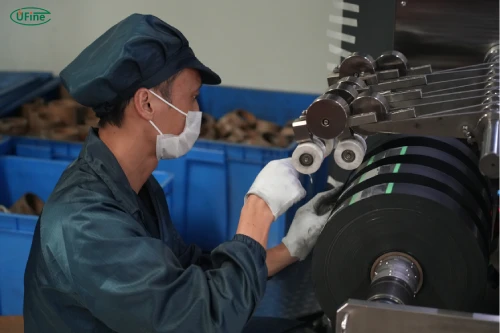
A factory audit evaluates whether a supplier’s actual operations match its claims and your requirements. It should cover six main areas: company qualifications, incoming materials, production, testing, traceability, and delivery capability.
Before visiting, define the audit scope. A supplier producing standard cylindrical cells may not have the same processes as a factory assembling custom LiPo battery packs. Your checklist should reflect the product you intend to purchase, its application, expected order volume, and applicable safety requirements.
An on-site audit is useful when you need to observe production directly. A remote audit can help with initial screening, but it may not provide equivalent evidence of actual factory conditions. High-risk findings may require a follow-up visit.
Part 2. How to verify the battery manufacturer’s qualifications
Start by confirming the company’s legal identity, manufacturing address, and relationship between its sales office and production facility. Ask whether it manufactures batteries in-house, assembles cells sourced from other suppliers, or outsources significant production steps.
Request relevant quality management certificates, including ISO 9001 where applicable. Check the certificate’s validity, scope, issuing body, and covered site. A valid quality management certificate is useful evidence of a management system, but it does not automatically prove that every battery meets your technical requirements.
Also request product-specific documentation, such as technical datasheets, applicable safety test reports, and transport documentation. Confirm that the model number, cell configuration, protection circuit, and manufacturing site match the product being quoted.
Part 3. What to inspect in raw material and supplier management

Battery quality starts with incoming materials. Ask the factory how it approves suppliers, inspects incoming components, and prevents unapproved substitutions.
For LiPo batteries and assembled packs, relevant materials may include electrodes, separators, electrolytes, pouch materials, tabs, wires, connectors, and battery management system components, depending on the manufacturing scope.
During the audit, check whether the factory has:
- Documented incoming inspection criteria and acceptance records.
- Approved supplier lists and procedures for supplier evaluation.
- Lot identification and controlled material storage.
- Clear segregation of rejected or suspect materials.
- Procedures for approving changes to suppliers or material specifications.
Ask to see actual records rather than relying only on written procedures. For example, select a material lot and verify that its inspection result and release status can be retrieved.
Part 4. How to evaluate battery production processes
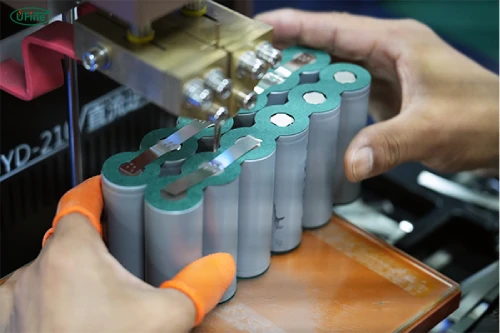
Observe the production line and compare actual practices with documented work instructions. Depending on the factory’s scope and process, LiPo manufacturing may involve electrode preparation, stacking or winding, pouch forming, electrolyte filling, sealing, formation, aging, and final assembly.
Not every battery factory performs every step in-house. Establish which processes are performed at the audited site and which are outsourced.
Check whether critical process parameters are documented, equipment is maintained, operators are trained, and required instruments are calibrated. Look for controls that prevent contamination, incorrect component installation, sealing defects, and product mix-ups.
Also ask how the factory handles engineering changes. Changes to materials, equipment, process settings, or battery configuration should be reviewed, approved, documented, and validated as appropriate before implementation.
Part 5. How to assess battery testing and quality control
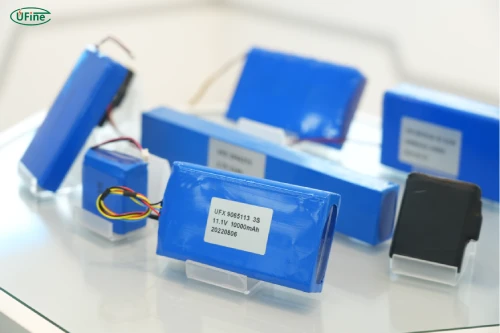
A capable battery manufacturer should have a clear testing plan covering incoming materials, in-process production, and finished products.
The exact tests depend on the battery design and customer requirements. For LiPo products, they may include voltage, capacity, internal resistance, dimensions, appearance, insulation, and sealing inspections. Additional reliability or safety tests may be needed during product qualification.
| Audit area | Evidence to request |
|---|---|
| Incoming materials | Supplier records, incoming inspection reports, material specifications |
| Production process | Work instructions, process control records, operator training records |
| Battery testing | Test procedures, equipment calibration records, sample test reports |
| Quality management | Inspection records, nonconformance reports, corrective action records |
| Traceability | Batch numbers, production records, finished-product inspection records |
| Safety and compliance | Applicable certificates, UN 38.3 test summary, safety test reports |
Ask how test limits are established and what happens when a result falls outside specification. Check whether failed products are isolated and whether test equipment is suitable for the measurements being performed.
Distinguish routine production checks from design qualification and safety testing. A battery passing a basic voltage check does not establish its full capacity, long-term reliability, or compliance with every applicable safety requirement.
Part 6. How to verify battery safety and regulatory compliance
Battery compliance depends on the product, destination market, application, and transportation method. Ask the manufacturer to identify the standards and regulations applicable to your specific battery rather than accepting a generic statement that its products are “certified.”
For lithium batteries shipped by air, sea, or road, relevant transport requirements may include UN 38.3 testing. The U.S. Pipeline and Hazardous Materials Safety Administration explains that lithium cells and batteries offered for transport must meet the applicable UN Manual of Tests and Criteria requirements, and manufacturers must make test summaries available upon request. See the official PHMSA lithium battery transport guidance.
During the audit, verify that reports match the battery model and configuration being purchased. Also review protection-circuit requirements, labels, packaging controls, and procedures for handling safety incidents. A test report for a different cell or pack configuration should not be treated as proof that your product has passed the same tests.
Part 7. How to check traceability and defect management
Traceability allows the manufacturer to identify which materials and processes were involved in producing a specific battery. It becomes especially important when a defect is discovered after shipment.
Use a finished battery as a sample and ask the factory to trace it backward through its production date or batch number, relevant material lots, inspection records, and test results. Then check whether the factory can identify other products potentially affected by the same issue.
Review its procedures for nonconforming products, root-cause analysis, corrective actions, and customer complaints. Ask for a documented example of a previous quality issue, with confidential information removed, and examine how the factory prevented recurrence.
A supplier that can identify a problem but cannot demonstrate how it was contained and corrected may still present a significant quality risk.
Part 8. How to evaluate production capacity and delivery reliability
A battery factory’s stated capacity should be supported by its actual equipment, staffing, production shifts, and recent output. Ask how it manages peak demand and whether the equipment used for your product is shared with other production lines.
Review production planning, typical lead times, delivery performance, and procedures for managing material shortages or equipment downtime. If your project will scale from prototypes to mass production, ask how the factory maintains consistency as volumes increase.
Do not rely on capacity figures alone. A factory may have substantial theoretical output but limited capacity for your specific battery dimensions, testing requirements, or customization needs.
Part 9. How to assess custom battery engineering capability
For consumer electronics, the ability to customize a battery can be as important as production capacity. Evaluate whether the manufacturer can accommodate your required voltage, capacity, dimensions, discharge rate, wire length, connector type, and protection circuitry.
Ask how requirements are converted into engineering drawings, approved samples, production specifications, and inspection criteria. Confirm that changes made after sample approval require appropriate review and authorization.
A capable engineering team should also explain design limitations, identify potential risks, and coordinate with production and quality teams. This is particularly important when a battery must fit a compact enclosure or support demanding power requirements.
Part 10. Common red flags during a battery factory audit
Watch for warning signs that cannot be resolved through documentation alone.
- The supplier cannot demonstrate that the stated facility performs the claimed manufacturing work.
- Certificates or test reports do not match the product or production site.
- Material lots and finished batteries cannot be traced.
- Operators rely on undocumented procedures for critical processes.
- Calibration records are missing for equipment used in required inspections.
- Rejected materials are mixed with approved stock.
- The factory cannot explain how it investigates recurring defects.
- Capacity claims are inconsistent with available equipment or production records.
One finding does not automatically disqualify a supplier. Assess its severity, the potential impact on battery safety and quality, and whether effective corrective action can be verified.
Part 11. How to turn audit findings into a supplier decision
An audit is useful only if its findings lead to clear decisions and follow-up actions. Record each finding, the supporting evidence, its risk level, and the action required.
| Finding level | Typical example | Recommended action |
|---|---|---|
| Critical | Missing essential safety controls, falsified records, or serious traceability gaps | Reject or suspend approval until the issue is resolved and verified |
| Major | Repeated quality failures, inadequate process controls, or incomplete corrective actions | Require a corrective action plan and follow-up verification |
| Minor | Incomplete documentation or isolated procedural deviations with limited impact | Set a correction deadline and verify completion |
These categories are a practical framework, not a universal classification standard. Define the criteria before the audit and adapt them to your product risk and quality requirements.
Before approving a supplier, verify that corrective actions have been completed. Where appropriate, combine the factory audit with sample evaluation, pilot production, and ongoing monitoring of defects and delivery performance.
Low prices or fast lead times should not outweigh unresolved safety concerns or fundamental traceability failures.
Part 12. FAQs
1. What documents should you request before visiting a battery manufacturer?
Request company and factory information, relevant quality certificates, product specifications, process flowcharts, inspection procedures, test reports, traceability records, and examples of corrective action reports. The exact list depends on your product and audit scope.
2. Can a remote factory audit replace an on-site audit?
A remote audit can support preliminary screening and document reviews. However, an on-site audit generally provides better opportunities to observe actual production, material storage, equipment, and operator practices.
3. How do you verify whether a battery supplier is the actual manufacturer?
Confirm the production address, inspect manufacturing equipment and processes, review production records, and trace a sample product through its manufacturing documentation. Also establish which processes are outsourced.
4. What is the difference between a factory audit and a product certification review?
A factory audit evaluates manufacturing controls, quality systems, and operational capability. A product certification review examines relevant evidence that a particular product or configuration meets specified requirements. They serve different purposes.
5. Should small-volume buyers audit a battery manufacturer?
Yes, although the depth of the audit can reflect the order size and product risk. Small-volume buyers can begin with document reviews, sample testing, and a remote assessment before considering an on-site visit.
Related Tags:

More Articles

How to Measure Standby Power Consumption in Battery-Powered Devices
Learn how to measure standby power, detect hidden current drain, and calculate battery life with practical testing methods for battery-powered devices.
How to Route Battery Wires in a Compact Electronic Enclosure
Routing battery wires in tight spaces? Learn how to prevent pinched cables, voltage drop, insulation damage, and costly electronic failures.
How to Match Battery Discharge Current to Motor Startup Demand
Does your motor struggle to start? Learn how to calculate startup current, prevent voltage drop, and choose a battery that delivers reliable power.
Battery Gets Hot While Fast Charging? Here’s What to Do
Does your LiPo battery get hot during fast charging? Discover the main causes, warning signs, and practical ways to reduce overheating.
Dead Battery or Device Failure? How to Find the Cause
Think your device is broken? Learn how to tell if the problem comes from battery aging or hardware failure before replacing your electronics.


