
- Key Takeaways
- Part 1. What is an external battery?
- Part 2. What is a power bank?
- Part 3. External battery vs power bank: Core differences
- Part 4. Why people confuse "external battery" and "power bank"?
- Part 5. How to choose: External battery or power bank?
- Part 6. FAQs about external battery & power bank
When choosing a portable charging solution, many users ask: what is an external battery, and how is it different from a power bank? Although the terms are often used interchangeably, they are not exactly the same in engineering and application contexts.
This guide explains the real differences, use cases, and selection logic, so you can choose the right external battery or power bank for your needs.
Key Takeaways
- An external battery is a broader category. It includes any portable energy storage device used to power electronics.
- A power bank is a consumer-focused type of external battery, mainly designed for USB-powered devices.
- External batteries support higher voltage outputs (e.g., 12V, 19V) and can power laptops or industrial devices.
- Power banks prioritize portability, USB output, and convenience for phones and tablets.
- For engineering or B2B applications, external battery packs offer more flexibility and customization.
Part 1. What is an external battery?
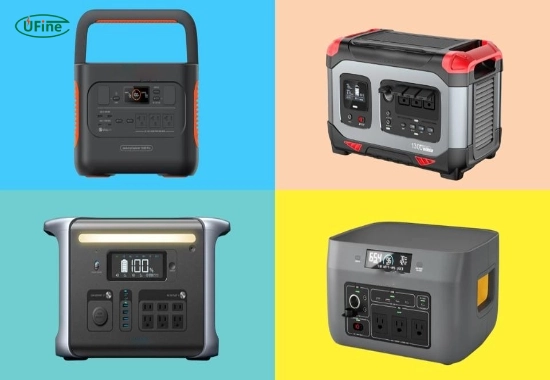
An external battery is a portable energy storage system used to supply power to external devices when grid power is unavailable.
👉 See detailed explanation: what is an external battery
Key Characteristics
- Wide voltage range: 5V (USB), 12V, 24V, or customized outputs
- Flexible interfaces: USB, DC, XT60, Type-C PD
- High capacity: Typically 5,000 mAh to 100,000 mAh+
- Application diversity: Consumer electronics, industrial equipment, medical devices, robotics
Battery Chemistries Used
- Lithium-ion (Li-ion): High energy density, mainstream choice
- Lithium polymer (LiPo): Slim design, lightweight
- LiFePO4: Safer, longer cycle life, used in industrial systems
👉 For safety standards, refer to NFPA battery safety guidelines
Part 2. What is a power bank?
A power bank is a specific type of external battery (battery bank) designed for charging small electronic devices via USB.

Key Characteristics
- Standard output: 5V USB, with optional fast charging (PD/QC)
- Typical capacity: 2,000 mAh – 30,000 mAh
- Compact and lightweight design
- User-friendly features: LED indicators, smart charging
Typical Use Cases
- Smartphones
- Tablets
- Earbuds and wearables
- Travel and daily carry
Part 3. External battery vs power bank: Core differences
From an engineering perspective, the difference lies in scope, output capability, and application scenarios.
Comparison Table
| Feature | External Battery | Power Bank |
|---|---|---|
| Definition | General portable energy system | Consumer USB charging device |
| Output Voltage | 5V, 12V, 24V or custom | Mostly 5V (USB), some PD |
| Device Support | Phones, laptops, industrial devices | Phones, tablets, small electronics |
| Capacity | 5,000–100,000+ mAh | 2,000–30,000 mAh |
| Ports | USB, DC, custom connectors | USB-A, USB-C |
| Flexibility | High (customizable) | Limited |
| Target Users | B2B, engineering, advanced users | General consumers |
Part 4. Why people confuse “external battery” and “power bank”?
- Overlapping Use Cases
- Many power banks are technically external batteries, so the terms get mixed.
- Marketing Language
- Retail products often use “external battery” and “power bank” interchangeably to improve search visibility.
- Technology Convergence
- Modern power banks now support:
- USB-C PD (up to 100W)
- Laptop charging
- Multi-port output
This reduces the gap, but design intent still differs.
Part 5. How to choose: External battery or power bank?
Choose An External Battery If You
- Need to power laptops, routers, or 12V devices
- Require custom voltage or connectors
- Work in industrial, medical, or outdoor environments
- Need high capacity or long runtime
👉 Related solution: custom lithium battery packs
Choose A Power Bank If You
- Only charge phones, tablets, or USB devices
- Need lightweight and portable
- Travel frequently
- Prefer plug-and-play simplicity
Practical Selection Factors (Engineering View)
1. Capacity (mAh / Wh)
- Smartphone users: 10,000–20,000 mAh
- Laptop users: 20,000 mAh+ with PD
- Industrial: Based on Wh calculation (Voltage × Capacity)
2. Output Protocol
- USB-A: Basic charging
- USB-C PD: Fast charging / laptops
- DC output: Required for many external battery packs
3. Efficiency & Conversion Loss
Actual usable energy is typically 60–80% due to voltage conversion.
4. Safety Features
Look for:
- Overcharge protection
- Short circuit protection
- Temperature control
Standards reference: IEC battery standards
Common Misconceptions
- “All power banks are the same” → Output power and protocols vary significantly
- “Power banks cannot charge laptops” → Modern USB-C PD models can
- “External batteries are bulky” → Many are now compact and modular
- “Higher mAh always means better” → Efficiency and voltage matter more in real use
Part 6. FAQs about external battery & power bank
What is an external battery used for?
An external battery is used to power devices when no wall outlet is available. It supports a wide range of electronics, from smartphones to industrial equipment.
Is a power bank the same as a battery bank?
Yes, a power bank is often called a battery bank, but it usually refers to USB-based portable chargers for consumer devices.
Can a power bank charge a laptop?
Yes, if it supports USB-C Power Delivery (PD) with sufficient wattage (typically 45W–100W).
How do I choose the right capacity?
Estimate your device battery size and multiply by 1.5–2× to account for energy loss.
Are external batteries safe for long-term use?
Yes, if they include proper BMS (Battery Management System) and meet safety standards like IEC or UL.
Related Tags:

More Articles

Bloated LiPo Battery: Will It Explode?
Will a bloated LiPo battery explode? Discover the causes, risks, safety steps, and expert tips to avoid disaster and protect your gear. Must-read safety guide!
Guide to Connect Two Batteries in Parallel
Understand two batteries in parallel connections, including wiring diagrams, capacity changes, lithium battery requirements, and common mistakes to avoid.
Comparative Analysis: 14500 Battery Vs. 18650 Battery
Compare 14500 vs 18650 batteries by size, voltage, capacity, runtime, discharge current, charging, safety, and applications to choose the right cell.
12V Lithium-Ion What Voltage at Fully Charged and Why Your Battery Might Not Reach It
Check the 12V lithium battery voltage chart for 3S Li-ion and 4S LiFePO4. Learn full charge, resting voltage, charger limits, and fault checks.
LiFePO4 Voltage Chart Guide: Everything You Need to Know
Check the LiFePO4 voltage chart for 3.2V, 12V, 24V and 51.2V batteries. Compare SOC, charging voltage, cutoff limits and internal resistance.


