- Key Takeaways
- Part 1. What is lfp battery degradation?
- Part 2. What causes lfp battery degradation?
- Part 3. How to read an lfp battery degradation curve
- Part 4. Can lfp battery degradation be reversed?
- Part 5. How to recover apparent capacity loss in an lfp battery
- Part 6. Tesla lfp battery degradation and bms calibration
- Part 7. How to slow lfp battery degradation
- Part 8. How to test lfp battery degradation and decide when to replace it
- Part 9. Lfp battery degradation FAQs
Lithium iron phosphate (LFP) batteries are known for long cycle life and strong thermal stability, but they still lose capacity over time due to cycling and calendar aging. While true chemical degradation is irreversible, some apparent performance loss may be recovered through cell balancing, BMS recalibration, temperature normalization, or component repair.
This guide explains the main causes of LFP degradation, how to interpret a degradation curve, what issues may be recoverable, and how to slow future aging.
Key Takeaways
- True LFP battery degradation is normally irreversible.
- Heat, prolonged high SOC, deep cycling, and excessive current accelerate aging.
- Cell balancing and BMS calibration may recover apparent capacity, not chemically lost capacity.
- An LFP degradation curve shows gradual aging and possible accelerated decline near end of life.
Part 1. What is lfp battery degradation?
LFP battery degradation is the gradual loss of usable capacity, power capability, and efficiency caused by physical and chemical changes inside the battery.
A degraded battery may continue operating, but it stores less energy, produces more heat, or experiences greater voltage drop under load.
| Sign of LFP Battery Degradation | What the User May Notice |
|---|---|
| Capacity loss | Shorter runtime or reduced EV driving range |
| Higher internal resistance | More heat and greater voltage sag under load |
| Lower power capability | Earlier power limitation or shutdown |
| Cell imbalance | Premature charge or discharge cutoff |
| Reduced charging acceptance | Slower charging near a high state of charge |
Battery state of health is commonly estimated by comparing measured usable capacity with the battery’s original usable capacity:
State of Health (%) = Measured Usable Capacity ÷ Original Usable Capacity × 100
The comparison should use similar temperature, current, voltage limits, and rest periods. Otherwise, temporary operating conditions may be mistaken for permanent LFP degradation.
Part 2. What causes lfp battery degradation?
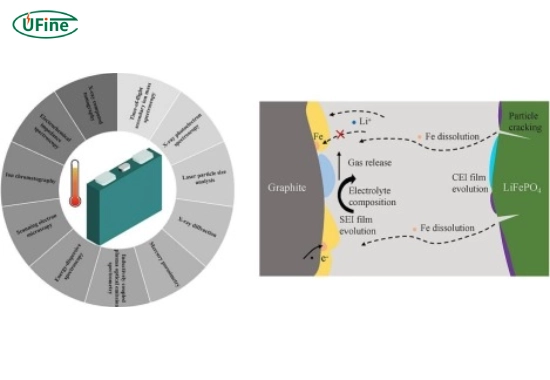
LFP battery degradation develops through multiple aging mechanisms. Although the lithium iron phosphate cathode is relatively stable, the graphite anode, electrolyte, separator, and other cell components still change over time.
Cycle aging
Charging and discharging repeatedly move lithium ions between the cathode and anode. Over time, this process causes electrode stress, consumes active lithium, and increases internal resistance.
Wide depth-of-discharge ranges and high accumulated energy throughput generally increase cycling stress. The guide to lithium battery lifespan and cycle life explains how operating conditions affect long-term capacity retention.
Calendar aging and SEI growth
LFP batteries age even when they are not being cycled. During storage, side reactions cause the solid electrolyte interphase, or SEI, to grow on the graphite anode.
Continued SEI growth consumes cyclable lithium and increases resistance. Calendar aging becomes faster when a battery remains at a high temperature and high state of charge for long periods.
Temperature stress
High temperature accelerates electrolyte decomposition and other side reactions. Low temperature temporarily reduces ion mobility, available capacity, and power output.
Charging a very cold battery at excessive current can also cause lithium plating on the anode, resulting in permanent capacity loss and potential safety risks.
Voltage and state-of-charge extremes
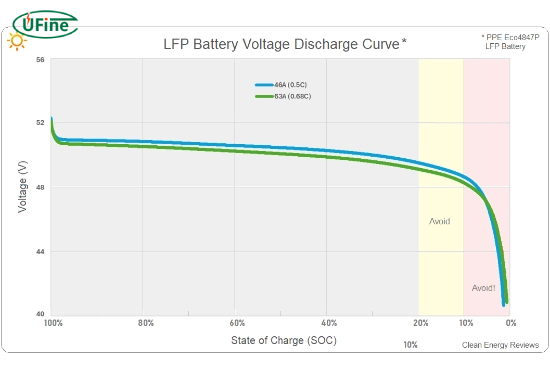
Repeated overcharging or deep overdischarging can damage an LFP cell. A compatible BMS should prevent the cell from operating outside the limits specified by its manufacturer.
Because voltage limits vary by cell and pack design, use the product datasheet rather than relying only on generic values. The LiFePO4 voltage and state-of-charge guide explains how LFP voltage changes across the operating range.
High charging and discharging rates
High current increases heat generation, polarization, and electrode stress. Its effect depends on the cell design, temperature, cooling system, and permitted current rating.
Before defining a charging or load profile, review how the battery C-rate affects current, heat, and cycle life.
Part 3. How to read an lfp battery degradation curve
An LFP battery degradation curve plots remaining capacity or state of health against time, cycle count, or accumulated energy throughput.
It is different from a charge-discharge voltage curve. A degradation curve describes long-term aging, while a lithium battery charging and discharging curve shows voltage behavior during one operating cycle.
| LFP Degradation Curve Stage | Curve Behavior | Meaning |
|---|---|---|
| Early stabilization | Small initial capacity change | Cell interfaces stabilize and early cell differences become visible. |
| Gradual degradation | Slow capacity decline | Calendar aging and cycling losses accumulate. |
| Degradation knee | Capacity begins falling faster | One or more aging mechanisms have reached a critical level. |
| End-of-life region | Rapid decline or unacceptable power loss | The battery may no longer meet application requirements. |
The curve shape varies with temperature, depth of discharge, charging rate, SOC window, cell design, and test method. A commercial-cell study covering LFP, NCA, and NMC batteries found that temperature, discharge rate, and depth of discharge can substantially change long-term capacity retention. See the multi-year commercial lithium-ion cell degradation study for the test conditions.
The transition from gradual aging to faster nonlinear decline is often called the degradation knee. A detailed review of knee points in lithium-ion battery aging explains the mechanisms that can produce this change.
Note: A single decrease in displayed runtime or driving range does not establish an LFP degradation curve. Reliable analysis requires repeated measurements under consistent conditions.
Part 4. Can lfp battery degradation be reversed?
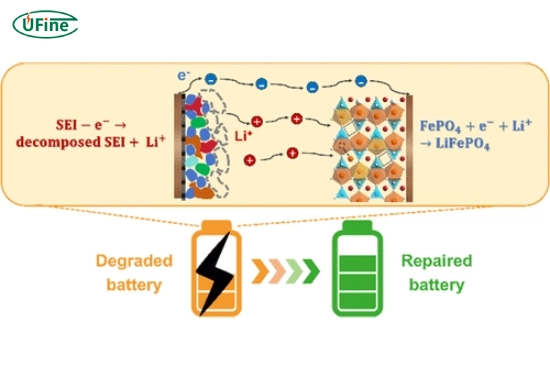
No. True chemical and structural LFP battery degradation normally cannot be reversed.
Permanent degradation includes:
- Loss of cyclable lithium through side reactions
- Excessive SEI growth and rising internal resistance
- Electrode cracking, lithium plating, or structural damage
- Electrolyte, separator, or current collector damage
These changes alter materials inside the sealed cell. Balancing, calibration, and software updates cannot rebuild damaged electrodes, replace degraded electrolyte, or recover lithium consumed by side reactions.
Methods that do not reverse LFP degradation
| Claimed Method | Actual Effect |
|---|---|
| Deep cycling | May recalibrate some systems but adds cycling stress. |
| Freezing the battery | Reduces available power and may create charging hazards. |
| Pulse charging | Changes the charging profile but does not rebuild aged electrodes. |
| Software updates | May improve SOC estimation but cannot restore lost lithium. |
| Opening the cell or adding electrolyte | Unsafe and impractical for sealed commercial cells. |
Note: Do not attempt to revive a swollen, leaking, punctured, overheated, or otherwise damaged LFP battery.
Part 5. How to recover apparent capacity loss in an lfp battery
Some performance loss comes from pack imbalance, low temperature, inaccurate measurements, or control-system faults rather than permanent cell degradation.
| Recoverable LFP Battery Issue | Typical Evidence | Possible Action |
|---|---|---|
| Cell imbalance | One cell reaches its voltage limit before the others | Use an approved BMS balancing process. |
| BMS SOC estimation drift | Displayed SOC changes abruptly or does not match measured energy | Follow the manufacturer’s calibration procedure. |
| Temporary low-temperature loss | Capacity and power improve after warming | Precondition the battery before operation or charging. |
| Sensor or BMS fault | Incorrect temperature, voltage, or current readings | Diagnose and replace the faulty component. |
| Incorrect cutoff settings | The BMS stops operation before cells reach their permitted limits | Verify pack settings against the cell specification. |
Cell balancing and BMS recalibration
A series-connected pack is limited by the first cell that reaches its voltage cutoff. Balancing may restore usable pack capacity when cells are uneven, while BMS recalibration may correct inaccurate SOC or runtime estimates. Neither process increases the true capacity of an aged cell.
Component or module repair
Faulty sensors, BMS hardware, or damaged modules may be replaceable in serviceable industrial packs. Replacement parts must be matched for chemistry, voltage, capacity, resistance, and age.
High-voltage EV and energy-storage packs should only be diagnosed and serviced by trained technicians.
Part 6. Tesla lfp battery degradation and bms calibration
A decrease in the displayed range of a Tesla LFP vehicle does not necessarily equal the same percentage of permanent battery degradation.
The displayed result may also be affected by:
- Battery temperature and temporarily unavailable energy
- BMS state-of-charge estimation
- Software calculations or vehicle configuration
- Cell balance and recent operating conditions
Confirm whether the Tesla uses an LFP battery
Tesla owners can check the high-voltage battery type under Controls > Software > Additional Vehicle Information.
Tesla states that vehicles equipped with LFP batteries may have different recommended charging limits. Owners should follow the daily and trip limits displayed on the vehicle touchscreen or in the Tesla app rather than applying one charging rule to every Tesla model.
See Tesla’s official LFP battery identification and charging guidance.
Use the official Tesla Battery Health Test
Where available, Tesla’s Battery Health screen evaluates energy retention using BMS data. The optional Battery Health Test produces a percentage comparing current battery energy retention with its condition when new.
The test is not available on every vehicle and should be performed only according to Tesla’s instructions. See the official Tesla high-voltage Battery Health Test procedure.
Note: Do not perform an unofficial deep-discharge test to recalibrate a Tesla LFP battery. Follow the charging limit and diagnostic instructions shown for the specific vehicle.
Schedule professional diagnosis if the vehicle develops battery alerts, unusual charging behavior, sudden energy loss, repeated power limitation, or thermal-system warnings.
Part 7. How to slow lfp battery degradation
LFP battery degradation cannot be eliminated, but suitable operating and storage practices can reduce avoidable aging.
Control battery temperature
Keep the battery within its specified temperature range. Avoid prolonged heat exposure and do not charge below the manufacturer’s minimum charging temperature.
Avoid prolonged extreme SOC
Do not leave the battery deeply discharged. During long-term storage, follow the manufacturer’s recommended SOC range and inspection schedule, especially in warm environments.
Use an appropriate charging rate
Use a charger that matches the battery chemistry, voltage, current limit, and BMS. Lower charging current generally produces less heat, but the correct rate depends on the cell specification.
Reduce unnecessary deep cycling
Partial cycling normally causes less stress than repeatedly using the entire available capacity. The practical SOC window should still match the application’s runtime requirements.
Use reliable BMS protection
The BMS should monitor cell voltage, pack current, temperature, state of charge, and cell balance while preventing operation outside safe limits.
Keep current within rated limits
Keep continuous and peak current within the manufacturer-rated values, particularly in warm environments or poorly cooled enclosures.
Part 8. How to test lfp battery degradation and decide when to replace it
LFP battery health should be evaluated using capacity, internal resistance, cell balance, temperature behavior, and physical condition rather than one displayed percentage.
Measure usable battery capacity
- Stabilize the battery at the specified test temperature.
- Charge it using the approved profile and allow the required rest period.
- Discharge it at a controlled current to the specified cutoff voltage.
- Compare the delivered amp-hours or watt-hours with the original capacity under equivalent conditions.
LFP Battery Degradation (%) = 100 − State of Health (%)
Check internal resistance and voltage sag
Rising internal resistance may cause more heat and a larger voltage drop under load. Compare results over time using the same instrument, SOC, temperature, and test procedure.
Compare individual cell voltages
In a series pack, check cell-voltage differences near the charge and discharge limits. A cell that repeatedly reaches cutoff first may be imbalanced or more degraded than the other cells.
Replace a degraded LFP battery when necessary
Replace the battery or arrange professional service when:
- Swelling, leakage, puncture, abnormal heat, odor, or other physical damage appears.
- Capacity no longer supports the required runtime.
- Voltage sag or rising resistance causes repeated shutdowns.
- One cell repeatedly deviates from the rest of the pack.
- Persistent BMS, isolation, or thermal faults remain after diagnosis.
A fixed 70% or 80% capacity threshold is not suitable for every battery. EVs, medical equipment, backup systems, and noncritical devices may require different end-of-life limits.
Part 9. Lfp battery degradation FAQs
What is LFP battery degradation?
LFP battery degradation is the loss of capacity or power caused by aging, cycling, heat, and internal chemical changes.
Can LFP battery degradation be reversed?
No. Chemical degradation is normally permanent, but balancing or calibration may recover apparent capacity loss.
What does an LFP battery degradation curve show?
It shows how battery capacity or state of health changes with time, cycling, or energy throughput.
What LFP battery problems can be recovered?
Cell imbalance, inaccurate SOC estimates, sensor faults, and temporary cold-temperature losses may be recoverable.
Is Tesla LFP range loss always battery degradation?
No. Temperature, BMS estimation, cell balance, and software calculations can also affect displayed range.
How can you slow LFP battery degradation?
Control temperature, avoid prolonged extreme SOC, use suitable current rates, and follow the battery’s specified limits.
Related Tags:

More Articles
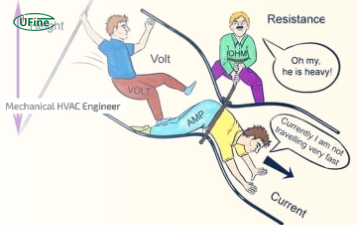
What’s the Difference Between Volts and Amps? A Beginner’s Guide
Learn the difference between volts and amps, how voltage and amperage work together, and how to calculate watts and current with simple examples.
Double A vs Triple A Battery: Understanding Size, Capacity, and Compatibility
Compare AA vs AAA batteries by size, voltage, capacity, runtime, chemistry, and compatibility. Learn which battery fits your device and lasts longer.
The Ultimate Guide to Battery Terminal Adapters
Compare battery terminal adapters for top post, side post, stud, marine, and U1 batteries. Learn how to choose, install, and maintain them safely.
What Can a 12V 50Ah Lithium Battery Power? Real-World Applications Explained
Learn what a 12V 50Ah lithium battery can power, realistic runtimes, inverter limits, charging methods, and uses for RVs, camping, solar, and backup.
18500 Battery Fundamentals: Specifications, Performance, and Applications
Learn 18500 battery size, voltage, capacity, charging, runtime, applications, safety, and differences from 18650, 18350, AA, and LiPo cells.