- Key Takeaways
- Part 1. What are double a and triple a batteries?
- Part 2. Aa vs aaa battery size, voltage, and capacity comparison
- Part 3. Which lasts longer: Aa or aaa batteries?
- Part 4. Can triple a batteries replace double a batteries?
- Part 5. Aa vs aaa battery types: Alkaline, lithium, and nimh
- Part 6. How to choose aa vs aaa batteries for different devices
- Part 7. Aa and aaa battery storage, disposal, and air travel
- Part 8. FAQs about aa vs aaa batteries
AA and AAA batteries often provide the same voltage, but they differ in size, capacity, weight, and runtime. An AA battery is larger and usually stores more energy, while an AAA battery is designed for smaller, lighter devices.
This AA vs AAA battery guide explains their main differences, whether they are interchangeable, how long they last, and how to choose the right battery for your device.
Key Takeaways
- AA is bigger than AAA: AA batteries measure about 14.5 × 50.5 mm, while AAA batteries measure about 10.5 × 44.5 mm.
- They usually have the same voltage: Alkaline AA and AAA batteries provide 1.5V. Rechargeable NiMH versions normally provide 1.2V.
- AA batteries usually last longer: Their larger casing holds more active material and provides higher capacity.
- AA and AAA batteries are not directly interchangeable: Their dimensions and available energy are different.
- Chemistry affects performance: Alkaline, lithium, and NiMH batteries differ in runtime, discharge capability, shelf life, and rechargeability.
- Device requirements come first: Always match the battery size, voltage, chemistry, and polarity specified by the device manufacturer.
Part 1. What are double a and triple a batteries?
A Double A battery is the common name for an AA-size cylindrical cell. A Triple A battery is the common name for the smaller AAA format.
The letters AA and AAA describe battery size, not battery chemistry. Both formats are available as alkaline, zinc-carbon, primary lithium, and rechargeable NiMH batteries.
| Battery Type | Common IEC Designations | Typical Devices |
|---|---|---|
| AA battery | LR6, R6, HR6, FR6 | Toys, flashlights, game controllers, wireless mice, clocks |
| AAA battery | LR03, R03, HR03, FR03 | Remote controls, thermometers, compact keyboards, scales, small flashlights |
For a broader comparison of common cylindrical formats, see our AA, AAA, and cylindrical battery size guide.
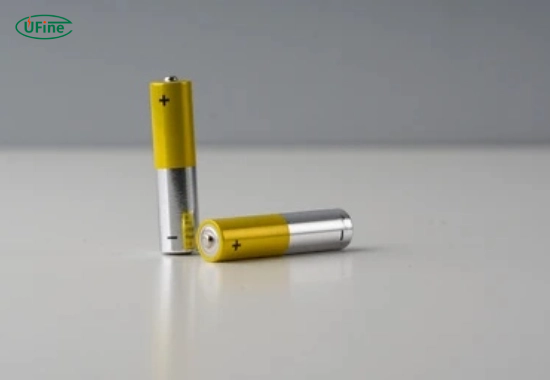
What is a Double A battery?
An AA battery is larger and better suited to devices that need longer runtime or higher current. It is commonly used in electronic toys, radios, flashlights, medical instruments, and wireless accessories.
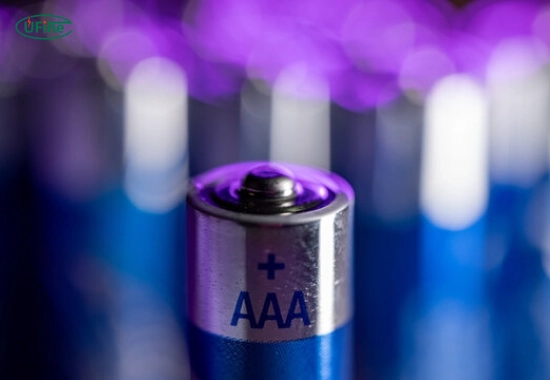
What is a Triple A battery?
An AAA battery is smaller and lighter. It is commonly used when compact product design is more important than maximum runtime.
Part 2. Aa vs aaa battery size, voltage, and capacity comparison
The main difference between AA and AAA batteries is physical size. Their nominal voltage can be the same, but the larger AA battery usually stores more energy.
| Feature | AA Battery | AAA Battery |
|---|---|---|
| Common name | Double A battery | Triple A battery |
| Alkaline designation | LR6 | LR03 |
| Maximum length | About 50.5 mm | About 44.5 mm |
| Maximum diameter | About 14.5 mm | About 10.5 mm |
| Alkaline voltage | 1.5V nominal | 1.5V nominal |
| NiMH voltage | 1.2V nominal | 1.2V nominal |
| Typical alkaline capacity | About 1,800–3,000mAh | About 800–1,200mAh |
| Typical alkaline weight | About 23g | About 11–12g |
| Best suited for | Longer runtime and medium-drain devices | Compact and low-drain devices |
The listed capacity values are approximate. Actual usable capacity depends on battery chemistry, discharge current, temperature, storage history, and the device’s cutoff voltage.
AA and AAA battery dimensions and primary-cell performance requirements are covered by the IEC 60086-2-1 primary battery standard.
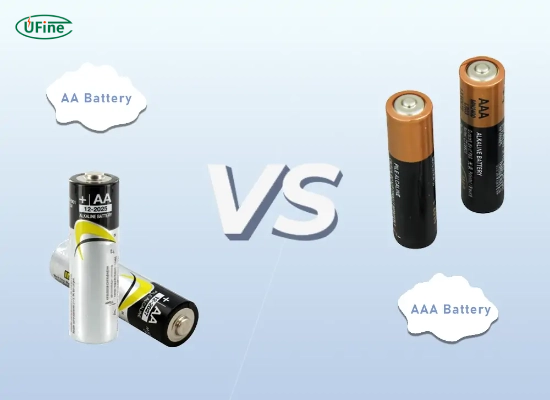
Is Triple A or Double A bigger?
A Double A battery is bigger. It is about 4 mm wider and 6 mm longer than a Triple A battery.
The larger internal volume allows an AA battery to hold more active material. This is why AA batteries usually provide more capacity and longer runtime.
How many volts are in a Double A battery?
A standard alkaline AA battery provides 1.5V nominal. A rechargeable NiMH AA battery normally provides 1.2V nominal.
How many volts are in a Triple A battery?
A standard alkaline AAA battery also provides 1.5V nominal. A rechargeable NiMH AAA battery normally provides 1.2V nominal.
Size does not determine battery voltage. Voltage is mainly determined by battery chemistry. This is why an AA battery and an AAA battery can have the same voltage but different capacities.
Do not replace AA or AAA batteries with an unregulated 3.7V lithium cell. The higher voltage may damage a device designed for 1.5V input. Learn more in our guide to the differences between 1.5V and 3.7V lithium batteries.
Part 3. Which lasts longer: Aa or aaa batteries?
An AA battery usually lasts longer than an AAA battery when both use the same chemistry and power the same load. AA batteries often provide about twice the usable capacity of comparable AAA batteries.
However, battery size alone cannot predict exact runtime. Device current, operating temperature, battery chemistry, discharge pattern, and cutoff voltage also affect battery life.
How long do AA and AAA batteries last?
AA or AAA batteries may last for months in remote controls and clocks. The same batteries may last only several hours in bright flashlights, motorized toys, or other high-drain devices.
A basic runtime estimate is:
Estimated runtime = usable battery capacity ÷ average device current
For example, a 2,000mAh AA battery powering a 100mA load has an ideal estimate of 20 hours. A 900mAh AAA battery under the same load has an ideal estimate of nine hours.
Real runtime is usually lower because battery voltage and usable capacity fall during discharge.
Which are the longest-lasting AA and AAA batteries?
| Battery Chemistry | Best Application | Runtime Characteristics |
|---|---|---|
| Alkaline | Remotes, clocks, sensors | Good value in low-to-medium-drain devices |
| Primary lithium | Outdoor sensors, emergency devices | Long shelf life, low weight, and good cold performance |
| Rechargeable NiMH | Toys, controllers, cameras, flashlights | Good repeated-use and high-drain performance |
The longest-lasting option depends on the device. Primary lithium may provide the longest service life in low-temperature or standby applications. Rechargeable NiMH is often more practical for devices that consume batteries frequently.
Part 4. Can triple a batteries replace double a batteries?
Triple A batteries cannot directly replace Double A batteries. Although alkaline AA and AAA batteries both provide 1.5V nominal, they have different dimensions and capacities.
An AA battery is too large for an AAA compartment. An AAA battery is too short and narrow for an AA compartment.
An AAA-to-AA adapter may allow an AAA battery to make contact inside some AA compartments. However, the adapter only changes the physical fit. It does not increase AAA battery capacity, runtime, or discharge capability.
Adapters may be acceptable for temporary use in low-drain products, but they are not ideal for motors, high-output flashlights, toys, or devices that require long runtime.
Avoid improvised metal spacers or conductive objects. They can create poor contact, reverse polarity, or a short circuit.
Part 5. Aa vs aaa battery types: Alkaline, lithium, and nimh
Both AA and AAA batteries are available in several chemistries. The best choice depends on whether the device needs low cost, long storage life, high discharge performance, or rechargeability.
| Battery Type | Nominal Voltage | Rechargeable | Main Advantages | Best Uses |
|---|---|---|---|---|
| Alkaline | 1.5V | No | Affordable and widely available | Remotes, clocks, keyboards, sensors |
| Zinc-carbon | 1.5V | No | Low initial cost | Very low-drain devices |
| Primary lithium | 1.5V | No | Low weight, long shelf life, good cold performance | Outdoor and emergency devices |
| NiMH | 1.2V | Yes | Reusable and suitable for frequent discharge | Toys, cameras, controllers, flashlights |
| Regulated lithium-ion | Usually regulated to 1.5V | Model-dependent | Stable output and rechargeable options | Compatible electronic devices |
Alkaline AA vs AAA batteries
Alkaline batteries are suitable for low-to-medium-drain products. They are inexpensive, easy to replace, and available worldwide.
AA alkaline batteries generally last longer than AAA alkaline batteries under the same operating conditions.
Lithium AA vs AAA batteries
Primary lithium AA and AAA batteries are lighter than alkaline batteries and perform well at low temperatures. They are useful for outdoor sensors, emergency equipment, and devices stored for long periods.
Do not confuse 1.5V primary lithium batteries with 3.7V rechargeable lithium-ion cells. They use different voltage systems and are not directly interchangeable.
Rechargeable NiMH AA vs AAA batteries
NiMH batteries are suitable for products that require frequent battery replacement. Typical capacities are about 1,900–2,800mAh for AA and 600–1,000mAh for AAA.
Because NiMH batteries provide 1.2V instead of 1.5V, check that the device supports rechargeable cells. For more details, read these AA NiMH rechargeable battery facts.
Use a charger designed for the battery chemistry. Never charge standard alkaline, zinc-carbon, or primary lithium batteries.
Part 6. How to choose aa vs aaa batteries for different devices
The device’s battery compartment determines whether you need an AA or AAA battery. After confirming the correct size, compare voltage, chemistry, runtime, and operating conditions.
- Check the battery size: Look for AA, AAA, LR6, LR03, HR6, or HR03 on the device label or battery compartment.
- Match the required voltage: Confirm whether the device accepts 1.5V primary cells, 1.2V NiMH cells, or both.
- Consider the power demand: Motors, bright LEDs, and wireless transmitters may need higher discharge capability.
- Choose disposable or rechargeable: Alkaline is practical for occasional use, while NiMH is better for frequent use.
- Check the operating environment: Temperature and storage time can affect battery performance.
| Application | Common Battery Choice | Selection Reason |
|---|---|---|
| TV remote control | AA or AAA alkaline | Low current and infrequent operation |
| Wireless mouse or keyboard | AA or AAA alkaline/NiMH | Depends on compartment size and usage frequency |
| Electronic toy | AA alkaline or NiMH | Higher capacity for motors and repeated operation |
| Digital thermometer | AAA alkaline | Compact size and low power demand |
| High-output flashlight | AA lithium or NiMH when approved | Better runtime or discharge performance |
| Outdoor sensor | AA or AAA primary lithium when approved | Long shelf life and better cold performance |
For devices that require substantially higher voltage or power, AA batteries may not be the right format. Our 18650 battery vs AA battery comparison explains the differences in voltage, energy, size, and discharge performance.
Part 7. Aa and aaa battery storage, disposal, and air travel
How should AA and AAA batteries be stored?
- Store batteries in a cool, dry place away from direct sunlight.
- Keep loose batteries in their original packaging or a battery case.
- Prevent battery terminals from touching keys, coins, or other metal objects.
- Do not mix old and new batteries in the same device.
- Do not mix different chemistries or charge levels.
- Remove depleted batteries promptly to reduce leakage risk.
How should AA and AAA batteries be disposed of?
Battery disposal rules depend on chemistry and local regulations. Rechargeable and lithium batteries should be taken to an approved battery recycling or household hazardous waste collection point.
Local rules for single-use alkaline batteries vary. Check the battery label and follow the EPA guidance for used household batteries or your local waste authority.
Can you bring Double A batteries on a plane?
Standard alkaline and NiMH AA or AAA batteries are generally allowed in carry-on and checked baggage when protected from damage and short circuits.
Spare lithium AA or AAA batteries normally need to remain in carry-on baggage. Keep them in their original packaging or isolate the terminals. Check the latest FAA battery rules for airline passengers and your airline’s requirements before travel.
Part 8. FAQs about aa vs aaa batteries
Is Triple A or Double A bigger?
Double A is bigger. AA batteries measure about 14.5 × 50.5 mm, while AAA batteries measure about 10.5 × 44.5 mm.
How many volts is a Double A battery?
An alkaline AA battery provides 1.5V nominal. A rechargeable NiMH AA battery provides 1.2V nominal.
How many volts is a Triple A battery?
An alkaline AAA battery provides 1.5V nominal. A rechargeable NiMH AAA battery provides 1.2V nominal.
Can Triple A batteries replace Double A batteries?
Not directly. An adapter can change the physical fit, but an AAA battery still provides less capacity and runtime than an AA battery.
Which lasts longer, AA or AAA batteries?
AA batteries usually last longer because their larger size provides more energy capacity.
Related Tags:

More Articles

JST vs Molex: The Right Battery Connector Choice
JST or Molex for your battery? Learn how connector selection affects current, voltage drop, reliability, and device performance.
Custom Battery Pricing: Costs Manufacturers Don’t Mention
A low battery quote may not be the final cost. Discover common hidden expenses that affect custom lithium battery projects.
Battery Wire Length: Hidden Cause of Power Loss
A longer battery wire can cause voltage drop, power loss, and unstable operation. Learn how wire length affects battery performance.
How Device Sleep Modes Affect Battery Life
Think sleep mode extends battery life? Learn why devices still drain power and how firmware, hardware, and batteries affect runtime.
LiPo Battery and PCB Design: Clearance, Insulation, and Placement
Learn how to optimize LiPo battery PCB clearance, insulation, placement, wiring, and thermal design—and avoid common integration mistakes.