
- Key Takeaways
- Part 1. What is battery degradation?
- Part 2. What causes irreversible battery degradation in lfp batteries?
- Part 3. Why battery degradation cannot usually be reversed?
- Part 4. Can you repair battery health?
- Part 5. How to improve a degraded battery?
- Part 6. Dangerous myths about reversing battery degradation
- Part 7. Best practices to slow battery degradation
- Part 8. Real-world lfp battery degradation examples
- Part 9. When should you replace a degraded battery?
- Part 10. How to test battery health at home?
- Part 11. Lfp vs other lithium chemistries: degradation comparison
- Part 12. Battery degradation and battery health FAQs
Lithium Iron Phosphate (LFP) batteries are widely used in EVs, solar storage, industrial systems, and portable electronics because of their long cycle life and safety.
But even LFP batteries degrade over time.
Battery degradation reduces capacity, power output, and efficiency. Many users ask:
What is battery degradation? / Can battery degradation be reversed? / Can you repair battery health? / Is a degraded battery permanently damaged?
The answer is simple: most LFP battery degradation cannot be fully reversed, but proper charging, temperature control, and battery management can slow aging and recover some lost performance.
This guide explains why LFP batteries degrade and how to extend battery lifespan.
Key Takeaways
- Battery degradation is the permanent loss of battery capacity and performance over time.
- LFP batteries degrade through cycle aging, calendar aging, temperature stress, and voltage extremes.
- Most chemical degradation is irreversible.
- Battery management improvements may recover 5–15% apparent capacity loss.
- Proper charging habits and thermal control significantly slow degradation.
- If your battery health is significantly degraded, replacement may be more cost-effective than repair.
- LFP batteries typically last longer than many lithium chemistries when properly maintained.
Part 1. What is battery degradation?
Battery degradation refers to the gradual decline in battery performance caused by chemical and structural changes inside battery cells.
As degradation progresses, users may notice:
- Reduced runtime
- Lower available capacity
- Increased internal resistance
- Longer charging times
- Voltage drops under load
- Reduced power output
For example: A new 100Ah LFP battery delivering only 82Ah after years of operation has experienced battery degradation.
Degradation affects:
| Application | Common Signs of Battery Degradation |
|---|---|
| Electric vehicles | Reduced driving range |
| Solar storage systems | Less stored energy overnight |
| Industrial equipment | Lower runtime and voltage sag |
| Medical devices | Reduced backup duration |
| Portable electronics | Faster battery drain |
Unlike temporary battery calibration issues, true degraded battery performance comes from permanent internal changes.
Part 2. What causes irreversible battery degradation in lfp batteries?
LFP battery degradation develops from several mechanisms working together.
1. Cycle Aging
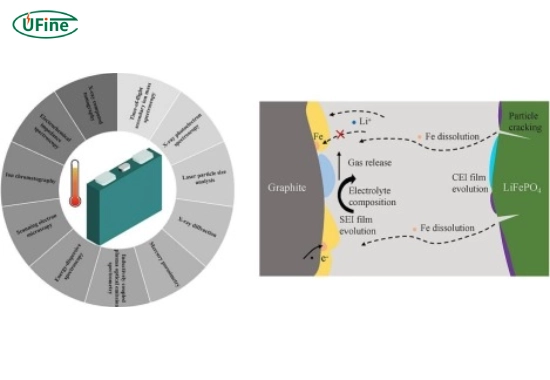
Every charge and discharge cycle creates mechanical stress. Lithium ions repeatedly move between LFP cathode and graphite anode. Over thousands of cycles, graphite particles crack, active lithium inventory decreases, and internal resistance rises. The battery slowly stores less energy. High-depth discharge cycles accelerate degradation faster than moderate cycling.
2. Calendar Aging
Even unused batteries age. Chemical side reactions continue during storage.
Common calendar aging effects:
- Electrolyte decomposition
- SEI layer growth
- Lithium consumption
- Increased resistance
Typical LFP calendar aging:
40°C+8–10%| Storage Temperature | Estimated Annual Capacity Loss |
|---|---|
| 25°C | 2–3% |
| 35°C | 5–7% |
Heat is one of the largest drivers of battery degradation.
3. Voltage Extremes
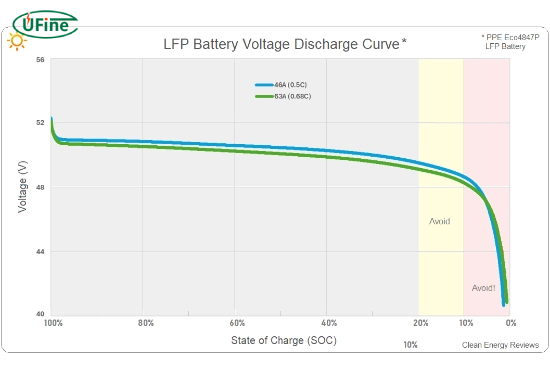
Operating outside recommended voltage windows accelerates damage. Overcharging above approximately 3.65V per LFP cell increases lithium plating risk, accelerates electrolyte decomposition, and raises internal stress. Deep discharge below approximately 2.5V per cell may cause copper current collector dissolution, conductivity decline, and permanent damage.
4. Temperature Abuse
Temperature strongly affects battery lifespan. High temperatures (>35°C) cause faster electrolyte breakdown, accelerated SEI growth, and faster lithium inventory loss. Low temperatures (<0°C) reduce lithium mobility, increase resistance, and create greater charging stress. Fast charging cold batteries can permanently damage cells.
5. High Charging Rates
Frequent high-C charging increases heat generation, electrode stress, and lithium plating risk. Industrial fleets using aggressive fast charging often experience faster battery degradation than systems optimized for slower charging profiles.
Part 3. Why battery degradation cannot usually be reversed?
Many users search: “Can battery degradation be reversed?”
In most cases, no. Battery degradation involves permanent physical and chemical changes.
Anode Damage
Repeated lithium insertion and extraction causes graphite cracking, particle fragmentation, and surface area reduction. Damaged electrode structures cannot rebuild themselves.
SEI Layer Growth
The Solid Electrolyte Interphase (SEI) forms naturally on lithium batteries. Initially helpful, excessive SEI growth consumes active lithium, increases resistance, and reduces capacity. Once lithium becomes trapped inside side reactions, it cannot be fully recovered.
Electrolyte Decomposition
LFP batteries rely on liquid electrolytes for ion transport. Over time, solvents degrade, conductivity falls, and gas generation occurs. Because commercial LFP packs are sealed systems, electrolyte restoration is not practical.
Cathode Aging
LFP chemistry is extremely stable compared with many lithium-ion alternatives. However, over long operating periods, crystal structure changes occur, minor iron dissolution may happen, and ion transport efficiency declines. These changes accumulate permanently.
Battery degradation is similar to tire wear. Maintenance helps extend life, but worn material cannot completely return to factory condition.
Part 4. Can you repair battery health?
Users often ask: “Can you repair battery health?” The answer depends on the root cause.
Cases That May Improve
Some battery problems are not true degradation.
Possible recoverable issues:
| Issue | Potential Improvement |
|---|---|
| Cell imbalance | Yes |
| Incorrect BMS calibration | Yes |
| SOC estimation errors | Yes |
| Thermal management problems | Yes |
| Minor performance drift | Partial |
Cases That Usually Cannot Be Repaired
- Electrode cracking
- Lithium inventory loss
- Electrolyte decomposition
- Severe swelling
- Internal short circuits
- Structural cell damage
If your system displays “Your battery health is significantly degraded,” it often means available capacity has dropped below expected thresholds. Software updates may improve estimation accuracy, but they do not reverse chemical aging.
Part 5. How to improve a degraded battery?
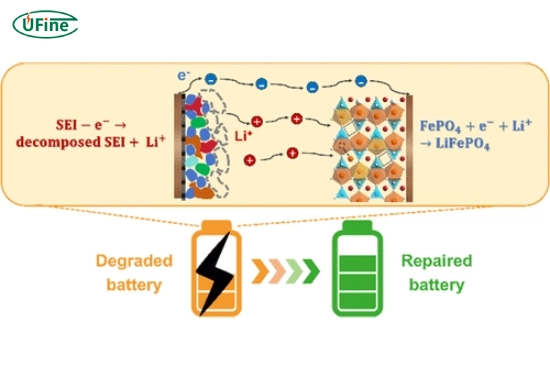
Although battery degradation cannot truly be reversed, performance optimization may recover apparent losses.
1. Cell Balancing
Battery packs operate only as well as their weakest cell. Cell imbalance causes premature cutoff, reduced usable capacity, and SOC inaccuracies. Balancing cells may recover usable capacity. Some systems regain 5–7% effective capacity after balancing.
2. BMS Recalibration
Battery Management Systems estimate remaining charge. Over time estimation drift develops. Periodic recalibration can improve SOC accuracy, runtime estimation, and available energy visibility. Industrial systems often schedule recalibration every 6–12 months.
3. Thermal Optimization
Maintaining battery temperature around 20–25°C improves lifespan. Recommended approaches include ventilation systems, active cooling, thermal insulation, and climate-controlled enclosures. Solar storage systems especially benefit from temperature control.
4. Replace Damaged Cells
For modular industrial packs, replacing failed cells may restore pack performance. However, avoid mixing heavily aged cells with new cells whenever possible. Cell mismatch accelerates imbalance.
Part 6. Dangerous myths about reversing battery degradation
Myth 1: Deep cycling repairs degraded batteries
Reality: Deep discharge increases stress and accelerates aging.
Myth 2: Freezing batteries restores capacity
Reality: Extremely cold temperatures can worsen battery condition.
Myth 3: Pulsed charging reverses degradation
Reality: Pulsed charging may reduce heat but does not rebuild damaged electrodes.
Myth 4: Software updates restore lost lithium
Reality: Software improves battery estimation, not chemistry.
Myth 5: Additives can repair internal battery damage
Reality: Commercial additives cannot rebuild cracked electrodes or restore consumed lithium.
Part 7. Best practices to slow battery degradation
Preventing degradation is far easier than recovering performance.
Charging Guidelines
Recommended daily operating window: SOC range 20–90%. Avoid frequent 100% storage, minimize unnecessary fast charging, and use manufacturer-approved chargers. For industrial battery systems, controlled charging profiles improve longevity.
Storage Recommendations
Long-term storage best practices: Store around 40–60% SOC, maintain 15–25°C environment, avoid direct sunlight, and recharge periodically.
Environmental Protection
For EV and solar applications, install cooling systems, avoid high-temperature enclosures, and reduce exposure to extreme weather. Thermal management remains one of the highest ROI methods for slowing battery degradation.
Part 8. Real-world lfp battery degradation examples
Energy Storage System Example
Issue: Capacity loss accelerated due to prolonged operation above 40°C.
Optimization: Added cooling airflow, improved charge limits, balanced battery modules.
Result: Reduced annual degradation rate and improved usable capacity.
Electric Fleet Example
Issue: Frequent fast charging caused accelerated aging.
Optimization: More overnight charging, better thermal controls, reduced high-rate charging events.
Result: Lower long-term degradation rate.
Part 9. When should you replace a degraded battery?
Replacement becomes the better option when:
Replace the Battery If:
- Capacity falls below 70–80%
- Significant voltage sag develops
- Swelling appears
- Electrolyte leakage occurs
- Internal resistance rises sharply
Repair May Make Sense If:
- Single modular cells failed
- BMS requires replacement
- Pack balancing issues exist
Industrial users should compare repair cost vs replacement cost vs expected remaining life. For critical systems, replacement often reduces long-term operational risk.
Part 10. How to test battery health at home?
Capacity Test
Fully charge battery, apply controlled discharge load, record delivered amp-hours, compare against rated capacity.
Battery degradation (%) = ((Original Capacity − Measured Capacity) ÷ Original Capacity) × 100
Internal Resistance Test
Healthy batteries usually maintain lower internal resistance. Increasing resistance often indicates degradation progression. Professional battery analyzers provide the most accurate results.
Part 11. Lfp vs other lithium chemistries: degradation comparison
| Battery Type | Typical Cycle Life | Thermal Stability | Degradation Resistance |
|---|---|---|---|
| LFP | 3,000–7,000+ | Excellent | Excellent |
| NMC | 1,000–2,500 | Moderate | Moderate |
| NCA | 1,000–2,000 | Moderate | Moderate |
| LCO | 500–1,000 | Lower | Lower |
LFP remains one of the strongest choices for applications requiring long operational life.
For battery pack engineering guidance, see our internal resources:
For battery safety standards and testing references: Battery University technical battery resources
Part 12. Battery degradation and battery health FAQs
What is battery degradation?
Battery degradation is the permanent reduction in battery capacity, power capability, and efficiency caused by aging and internal chemical changes.
Can battery degradation be reversed?
True battery degradation cannot usually be reversed. However, balancing, calibration, and thermal improvements may recover some usable performance.
Why does my device say “your battery health is significantly degraded”?
This warning typically means battery capacity has dropped below expected operating levels, reducing runtime and performance.
Can you repair battery health on LFP batteries?
Minor issues like imbalance or BMS calibration errors can improve. Permanent chemical degradation generally cannot be repaired.
Does partial charging reduce battery degradation?
Yes. Keeping LFP batteries within moderate charge ranges often slows aging and extends service life.
Related Tags:

More Articles
Understanding Lipo Batteries: Capacity, Lifespan & Energy Density
Learn everything about Lipo batteries—capacity, energy density, cycle life, and more. Optimize performance and avoid common pitfalls with this in-depth guide.
A Step-by-Step Guide to Choose 24V Lithium Ion Battery
24V lithium ion battery explained in detail: voltage, lifespan, BMS, and real performance differences you must understand before buying.
How to DIY LiFePO4 Car Battery?
Want to make your own lithium car battery? Discover the tools, cells, wiring, and expert tips needed to build a reliable DIY LiFePO4 battery.
Difference Between Cold Cranking Amps and Reserve Capacity in Batteries
Learn what CCA and RC mean, how they are measured, and how to choose the right battery for reliable starting and continuous power.
Learn how to safely charge a dead battery. Step-by-step methods for cars, motorcycles, and devices, plus tips to extend battery life and avoid damage.


