
- Key Takeaways
- Part 1. What is a 3.7V 2000mAh lithium-ion battery?
- Part 2. 3.7V 2000mAh battery specifications
- Part 3. Types of 3.7V 2000mAh lithium batteries
- Part 4. How long does a 3.7V 2000mAh battery last?
- Battery Run Time
- Part 5. 3.7V 2000mAh li ion battery price
- Part 6. Is a 3.7V 2000mAh battery enough for your device?
- Capacity Needs Estimator
- Part 7. 3.7V 2000mAh vs 3000mAh battery: what’s the real difference?
- Part 8. Charging a 3.7V 2000mAh lithium battery
- Part 9. Why does a 2000mAh battery drain so fast?
- Part 10. Connector and wire types for 3.7V 2000mAh batteries
- Part 11. Safety and protection considerations
- Part 12. Choosing a 3.7V 2000mAh battery manufacturer
- Part 13. FAQs
Key Takeaways
- A 3.7V 2000mAh battery is a single-cell lithium-ion battery with a nominal voltage of 3.7 volts.
- It typically delivers 7.4Wh of energy, suitable for low-to-medium power devices.
- Common formats include Li-ion polymer (LiPo) and cylindrical Li-ion cells.
- Proper charging and protection circuits are essential for safety and long cycle life.
- These batteries can be customized in size, connectors, and protection for OEM use.
Part 1. What is a 3.7V 2000mAh lithium-ion battery?
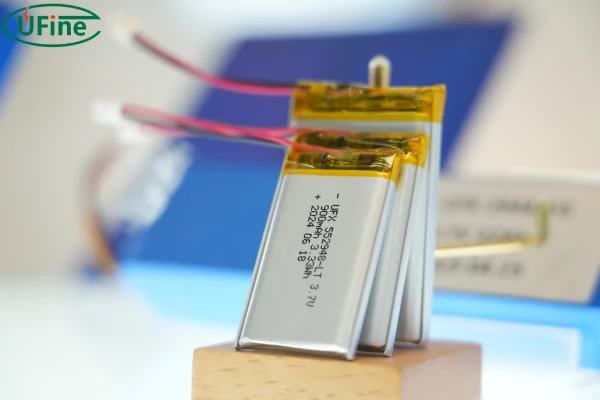
A 3.7V 2000mAh lithium-ion battery is a rechargeable battery made from lithium-based chemistry, designed as a single cell with a nominal voltage of 3.7V and a capacity of 2000 milliamp-hours (mAh).
In practical terms:
- 3.7V refers to the average operating voltage of the cell
- 2000mAh indicates how much charge the battery can store
This type of 2000mAh lithium-ion battery is commonly used where stable voltage, lightweight design, and long cycle life are required.
Part 2. 3.7V 2000mAh battery specifications
Understanding the technical specifications is critical when selecting the right battery for your device. Below are the typical parameters of a 3.7V 2000mAh lithium battery.
| Parameter | Typical Value |
|---|---|
| Nominal Voltage | 3.7V |
| Capacity | 2000mAh |
| Energy | 7.4Wh |
| Charging Voltage | 4.2V |
| Discharge Cut-off Voltage | 2.5–3.0V |
| Chemistry | Li-ion / LiPo |
| Cycle Life | 300–500 cycles |
| Max Discharge Current | Depends on cell & PCM |
| Protection Circuit | Optional (PCM/BMS) |
These specifications may vary slightly depending on cell design, chemistry, and manufacturer.
Part 3. Types of 3.7V 2000mAh lithium batteries
There are several types of 3.7V Li Ion batteries, each with its own unique features and uses. Understanding these types can help you choose the right battery for your needs. Here’s a closer look at the main types:
1 3.7V Lithium Polymer Battery
The 3.7V lithium polymer battery, often called a LiPo battery, is quite popular.
It’s known for being thin and flexible, making it ideal for devices where space is a premium. You’ll often find these batteries in smartphones, tablets, and other portable gadgets.
They’re lightweight, which is great for keeping devices easy to carry, and they offer a high energy density, which means they can store a lot of power in a small package.
2 3.7V Li Ion 18650 Battery
Next up is the 3.7V Li Ion 18650 battery. This one is cylindrical and is widely used in devices that require a bit more power, like laptops, flashlights, and even electric vehicles.
The name 18650 comes from its dimensions – it’s 18mm in diameter and 65mm in length.
These batteries are known for their high capacity and long lifespan, which makes them a favorite for many high-drain devices.
Part 4. How long does a 3.7V 2000mAh battery last?
The runtime of a 2000mAh battery depends on the power consumption of your device.
Simple Runtime Calculation
If your device draws:
- 500mA, runtime ≈ 4 hours
- 250mA, runtime ≈ 8 hours
In terms of lifespan, a 3.7V 2000mAh lithium-ion battery typically lasts 300 to 500 full charge cycles, which translates to 2–3 years under normal usage.
To extend battery life:
- Avoid deep discharges
- Keep the battery away from high temperatures
- Use proper charging equipment
Not sure how long a 3.7V 2000mAh battery will actually power your device? Use our battery runtime calculator below to estimate real-world working time based on your current consumption.
Part 5. 3.7V 2000mAh li ion battery price
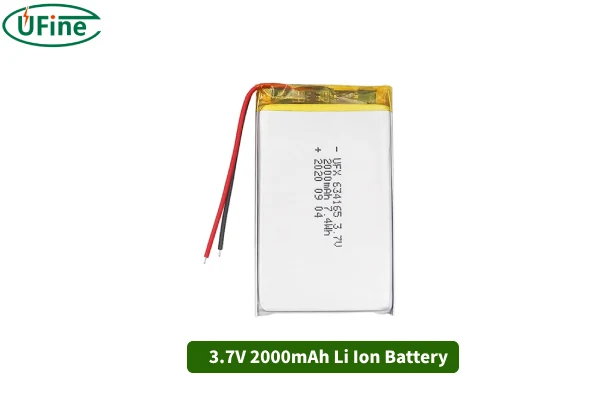
When it comes to price, the 3.7V 2000mAh Li Ion battery can vary quite a bit. Several factors influence the cost, such as the brand, quality, and where you purchase it. On average, you can expect to pay anywhere from $5 to $15 per battery. However, if you’re looking to buy in bulk, you can often get a better deal, bringing the price per unit down.
It’s always a good idea to shop around and compare prices from different suppliers to ensure you’re getting the best value for your money.
Ufine Battery can tailor your 3.7V lithium battery’s capacity, voltage, dimensions, and shape to fit your exact needs — perfect for prototypes or large-scale production.
Get Your Custom BatteryPart 6. Is a 3.7V 2000mAh battery enough for your device?
This is one of the most common user concerns and has real search demand.
The key factor is current consumption, not voltage.
Estimated Runtime Examples
| Device Current Draw | Estimated Runtime |
|---|---|
| 200mA | ~10 hours |
| 500mA | ~4 hours |
| 1A | ~2 hours |
| 2A | ~1 hour |
If your device requires continuous high current, a standard 3.7V 2000mAh battery may drain quickly, even if the capacity rating looks sufficient.
Part 7. 3.7V 2000mAh vs 3000mAh battery: what’s the real difference?
Many users search this comparison before buying or replacing a battery.
| Feature | 2000mAh | 3000mAh |
|---|---|---|
| Capacity | Lower | Higher |
| Size | Smaller | Larger |
| Weight | Lighter | Heavier |
| Runtime | Shorter | Longer |
| Cost | Lower | Higher |
If space allows and charging current is compatible, upgrading capacity usually increases runtime—but not always discharge performance.
Part 8. Charging a 3.7V 2000mAh lithium battery
Proper charging is essential for safety and performance.
Recommended Charging Method
- CC/CV charging profile
- Constant current first, then constant voltage at 4.2V
- Charging current usually ranges from 0.5C to 1C
Common Charger Types
- USB lithium battery chargers
- Wall chargers with lithium-ion protection
- Smart chargers with overcharge and temperature protection
Always use a charger designed specifically for 3.7V lithium-ion batteries to prevent overheating or damage.
Part 9. Why does a 2000mAh battery drain so fast?
This is a frequent and frustrating user complaint.
Common reasons include:
- High discharge current exceeding design limits
- Aging battery cells
- Low-quality or missing protection circuit
- Inadequate wire gauge causing voltage drop
- Cold or high-temperature environments
In many cases, the issue is current capability, not capacity rating.
Part 10. Connector and wire types for 3.7V 2000mAh batteries
Connector and wire selection directly affects compatibility, safety, and performance—yet many articles ignore this topic.
Common Battery Connector Types
- JST-PH (2.0mm) – Small electronics, IoT devices
- JST-XH (2.54mm) – Balance and power connections
- Molex connectors – Industrial and custom devices
- DC plugs – Portable equipment and adapters
- Bare wires – Direct soldering or custom integration
Common Wire Types and Gauges
| Wire Type | Typical Use |
|---|---|
| UL1007 | General-purpose electronics |
| UL1015 | Higher temperature resistance |
| Silicone wire | High-current, flexible applications |
Wire gauge (AWG) selection depends on discharge current:
- Low current: AWG 26–28
- Medium current: AWG 22–24
- High current: AWG 18–20
Incorrect wire selection can cause voltage drop, overheating, or performance loss.
Part 11. Safety and protection considerations
Most 3.7V 2000mAh lithium batteries can be equipped with a protection circuit module (PCM) to enhance safety.
Protection features may include:
- Overcharge protection
- Over-discharge protection
- Overcurrent protection
- Short-circuit protection
For commercial products, using a protected battery is strongly recommended.
Part 12. Choosing a 3.7V 2000mAh battery manufacturer
When sourcing a 3.7V 2000mAh lithium-ion battery, especially for OEM or bulk orders, manufacturer capability matters.
A reliable manufacturer should offer:
- Custom battery sizes and shapes
- Connector and wire customization
- PCM / BMS integration
- Stable quality control and certifications
- OEM and bulk supply support
Ufine Battery is a professional lithium battery manufacturer specializing in custom lithium-ion and lithium polymer batteries. They provide tailored 3.7V 2000mAh battery solutions for consumer electronics, industrial devices, and OEM projects.
Part 13. FAQs
Is a 3.7V 2000mAh battery the same as a 4.2V battery?
No. A 3.7V battery refers to the nominal voltage, while 4.2V is the maximum charging voltage. A fully charged 3.7V lithium-ion battery will reach about 4.2V but should never be labeled or used as a 4.2V battery in applications.
Can I connect multiple 3.7V 2000mAh batteries together?
Yes, but it depends on the configuration. Parallel connection increases capacity (mAh stays additive). Series connection increases voltage (not recommended without proper BMS design). Improper connections can cause safety risks and imbalance issues.
Can a 3.7V 2000mAh battery power motors or high-drain devices?
It depends on the maximum discharge current of the battery.
Standard 2000mAh lithium batteries are not designed for high-drain motors unless specifically rated for high current with suitable PCM and wiring.
What happens if I use the wrong connector on a 3.7V lithium battery?
Using the wrong connector can cause:
- Polarity reversal
- Poor contact
- Overheating
- Unstable power supply
Connector mismatch is a common cause of device failure in battery replacements.
Is a protection circuit mandatory for a 3.7V 2000mAh battery?
For consumer and commercial products, yes.
While some devices have built-in protection, adding a PCM to the battery itself significantly improves safety and reduces failure risks.
How do I know if a 2000mAh battery is real or overrated?
Signs of an overrated battery include:
- Unusually short runtime
- Excessive voltage drop under load
- Inconsistent capacity between batches
Reputable manufacturers usually provide capacity test data and cell traceability.
Related Tags:

More Articles
Dead Battery or Device Failure? How to Find the Cause
Think your device is broken? Learn how to tell if the problem comes from battery aging or hardware failure before replacing your electronics.
Why iPhone Duo Uses Two Batteries: The Engineering Behind Foldable Phone Power
Why do foldable phones need two batteries? Explore the engineering challenges behind iPhone Duo’s dual-battery architecture and future battery trends.
Solid-State Batteries: 3 Myths You Need to Know
Solid-state batteries promise safer EVs and longer range, but the reality is more complex. Discover the challenges behind this next-gen technology.
Battery Capacity vs Discharge Rate: The Choice Engineers Face
Higher capacity or higher discharge rate? Learn how to choose the right LiPo battery for longer runtime, stable power output, and better device performance.
Battery Cable Size Guide: Choose the Right Wire Fast
Not sure what battery cable size you need? Learn how to select the right wire gauge, terminal size, and cable for safer, more efficient battery systems.


