
- Key Takeaways
- Part 1. Understanding battery voltage basics
- Part 2. What is a 3.7v lithium-ion battery?
- Part 3. What is a 3.8v lithium battery?
- Part 4. 3.7v vs 3.8v battery: Key differences
- Part 5. 3.7v vs 3.8v battery performance in real applications
- Part 6. How to choose: 3.7v or 3.8v battery?
- Part 7. FAQs about 3.7v vs 3.8v lithium batteries
Battery voltage directly affects performance, runtime, and system design. The difference between a 3.7V Li-ion battery and a 3.8V lithium battery may look small, but it matters in real applications—especially in smartphones, drones, and custom battery packs.
This guide explains the technical differences, real-world impact, and how to choose the right battery for your project.
Key Takeaways
- A 3.8V battery has a higher maximum charge voltage (4.35V–4.4V), enabling higher energy density than a 3.7V battery.
- A 3.7V battery (nominal) typically charges to 4.2V and offers better cycle life and stability.
- The difference between 3.7 V vs 3.8 V battery mainly comes from cell chemistry and charge voltage, not just labeling.
- 3.8V lithium batteries are not always backward-compatible with 3.7V systems due to charging limits and protection circuits.
- Choosing the right voltage depends on device design, charger support, and lifespan requirements.
Part 1. Understanding battery voltage basics
What does “3.7V” or “3.8V” mean?
The labeled voltage is the nominal voltage—an average value during discharge. Actual voltage changes with state of charge:
| Battery Type | Fully Charged | Nominal Voltage | Cut-off Voltage |
|---|---|---|---|
| 3.7V battery | 4.2V | 3.7V | ~3.0V |
| 3.8V battery | 4.35V–4.4V | 3.8V | ~3.0V |
👉 Learn more: Battery Nominal Voltage: What You Need to Know
Key insight:
The higher nominal value of a 3.8 volt battery comes from allowing a higher charge voltage, not a completely different operating range.
Part 2. What is a 3.7v lithium-ion battery?
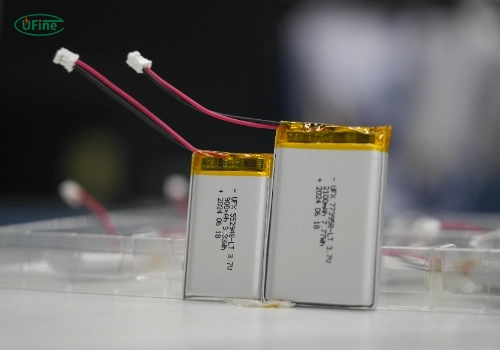
The 3.7V Li-ion battery is the industry standard for portable electronics.
Key specifications
- Nominal voltage: 3.7V
- Max charge voltage: 4.2V
- Typical chemistries: LiCoO₂, NMC, LiMn₂O₄
Typical applications
- Smartphones and tablets
- Power banks
- Bluetooth devices
- Digital cameras
Advantages
- Mature and stable technology
- Wide compatibility
- Lower cost and longer cycle life
Part 3. What is a 3.8v lithium battery?
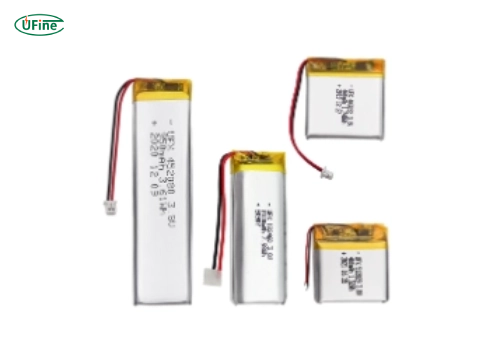
A 3.8V lithium battery is an upgraded Li-ion cell designed for higher energy density.
Key specifications
- Nominal voltage: 3.8V
- Max charge voltage: 4.35V–4.4V
- Uses optimized cathode materials or electrolyte additives
Typical applications
- High-end smartphones
- Drones and UAVs
- Slim or high-capacity devices
- Custom battery packs
Advantages
- Higher energy density (more Wh in same size)
- Longer runtime in compact designs
- Better performance for high-load devices
Part 4. 3.7v vs 3.8v battery: Key differences
1 Voltage and charging profile
- 3.7V battery: charges to 4.2V
- 3.8V battery: charges to 4.35V or 4.4V
This higher voltage directly increases stored energy.
2 Energy density
A 3.8V lithium battery can deliver:
- ~5–10% more energy (typical range)
- Longer runtime OR smaller battery size
This is why modern smartphones increasingly use 3.8V cells.
3 Cycle life and degradation
- 3.7V battery: better long-term stability
- 3.8V battery: faster degradation due to higher voltage stress
👉 Higher voltage accelerates electrolyte breakdown and cathode wear.
For engineering design, this is a key trade-off.
4 Compatibility
This is the most common mistake in real projects.
- Some devices designed for 3.7 V battery may tolerate 3.8V
- But charging circuits may limit voltage to 4.2V, causing undercharging
- Or worse, lack protection for 4.35V, creating safety risks
👉 Always verify:
- Charger IC voltage limit
- BMS/protection board thresholds
- Device input tolerance
5 Charging requirements
- 3.7V battery → standard Li-ion charger (4.2V CV)
- 3.8V battery → high-voltage charger (4.35V/4.4V CV)
Using the wrong charger leads to:
- Undercharging (lower capacity)
- Reduced efficiency
- Potential safety issues
6 Safety and thermal behavior
Higher voltage = higher stress.
For 3.8V batteries, systems often require:
- More precise BMS
- Better thermal design
- Accurate voltage cutoff control
Reference standard: IEC battery safety standards
Part 5. 3.7v vs 3.8v battery performance in real applications
Smartphones
- 3.7V → stable, widely compatible
- 3.8V → longer runtime, thinner design
Drones (UAVs)
- 3.7V → entry-level drones
- 3.8V → longer flight time, higher discharge efficiency
Electric Vehicles (Cell Level)
- Both used depending on chemistry
- Pack design matters more than nominal voltage
Part 6. How to choose: 3.7v or 3.8v battery?
Use this quick decision guide:
| Requirement | Recommended Option |
|---|---|
| Maximum runtime in limited space | 3.8V battery |
| Long cycle life | 3.7V battery |
| Existing 4.2V charger system | 3.7V battery |
| High-performance device | 3.8V battery |
| Cost-sensitive project | 3.7V battery |
Engineering checklist
- Confirm charger voltage (4.2V vs 4.35V)
- Verify protection circuit thresholds
- Check thermal design margin
- Evaluate lifecycle vs performance trade-off
👉 For custom solutions: Ufine Battery custom lithium battery services
Part 7. FAQs about 3.7v vs 3.8v lithium batteries
Can I replace a 3.7V battery with a 3.8V battery?
Sometimes, but not always. Check if the system supports 4.35V charging and has proper protection circuits. Otherwise, it may be unsafe or underperform.
Does a 3.8V battery last longer than a 3.7V battery?
In runtime, yes—because of higher energy density. In lifespan, no—3.7V batteries usually last more cycles.
Why do modern smartphones use 3.8V batteries?
They allow higher capacity in smaller space, which is critical for slim devices.
Can I charge a 3.8V lithium battery with a 4.2V charger?
No. It will undercharge the battery, reducing usable capacity and efficiency.
What is the real difference between 3.7 V vs 3.8 V battery?
The main difference is maximum charge voltage (4.2V vs 4.35V/4.4V), which affects energy density, lifespan, and system design.
Related Tags:

More Articles
12V Lithium-Ion What Voltage at Fully Charged and Why Your Battery Might Not Reach It
Check the 12V lithium battery voltage chart for 3S Li-ion and 4S LiFePO4. Learn full charge, resting voltage, charger limits, and fault checks.
LiFePO4 Voltage Chart Guide: Everything You Need to Know
Check the LiFePO4 voltage chart for 3.2V, 12V, 24V and 51.2V batteries. Compare SOC, charging voltage, cutoff limits and internal resistance.
Lithium Ion Cell Sizes: A Comprehensive Guide
Compare lithium ion cell sizes with a chart of dimensions, capacity ranges, cell types, applications, and key factors for selecting the right battery.
6 Volt Tractor Battery vs 12 Volt: Which One Fits Your Farm Equipment Best?
Compare 6V and 12V tractor batteries. Learn which voltage fits vintage or modern tractors, which specifications matter, and how to convert safely.
The Ultimate Guide to a Molten Salt Battery
Learn how a molten salt battery works, its main types, advantages, disadvantages, operating temperature, safety, and grid energy storage uses.


