- Part 1. Learn 12V 100Ah lithium ion battery
- Part 2. Average price range
- Part 3. Comprehensive price analysis
- Part 4. Brand comparison and performance benchmarks
- Part 5. Technical considerations for buyers
- Part 6. Where to buy (online vs. local stores)
- Part 7. Are cheap 12V 100Ah lithium batteries worth it?
- Part 8. Hidden costs to consider
- Part 9. How to get the best deal
- Part 10. Warranty & customer support comparison
- Part 12. FAQ
Key takeaways
- A 12V 100Ah lithium battery price typically ranges from $200 to $800, but the cost difference is driven by internal engineering, not capacity
- Up to 70% of price comes from battery cells, not branding or casing
- Two batteries with the same 100Ah rating can deliver very different real usable energy and lifespan
- Lithium batteries provide ~2× usable energy compared to lead acid systems of the same rating
- Cheap batteries reduce cost by using lower-grade cells, weaker BMS, and reduced cycle life
- The real decision factor is not price alone, but total cost of ownership + system compatibility + reliability
Part 1. Learn 12V 100Ah lithium ion battery
1.1 Fundamental Electrical Characteristics
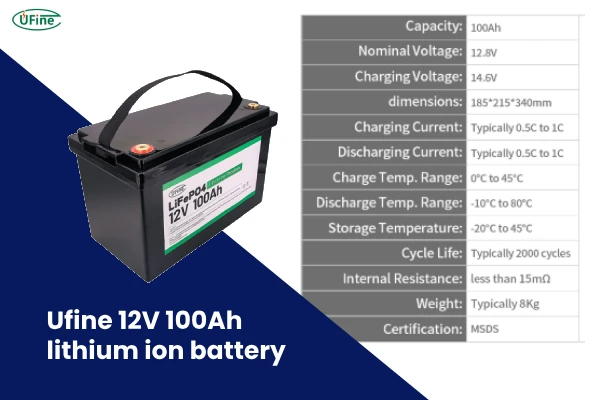
A true 12V lithium battery actually operates within a voltage range of 10V to 14.6V, with a nominal voltage of 12.8V. This differs significantly from lead-acid batteries in several key aspects:
Voltage Curve Comparison:
- Lithium-ion: Maintains steady voltage (12.8V nominal) through 90% of discharge cycle
- Lead-acid: Voltage drops linearly from 12.7V to 10.5V during discharge
Capacity Specifications:
- Rated capacity (100Ah) is typically measured at 0.2C discharge rate (20A current)
- Actual available capacity can vary by ±5% depending on temperature and discharge rate
1.2 Battery Chemistry Options
The market offers several lithium-ion variants, each with distinct characteristics:
| Chemistry | Energy Density | Cycle Life | Thermal Stability | Cost Factor |
|---|---|---|---|---|
| LiFePO4 | 90-120 Wh/kg | 3,000-7,000 | Excellent | $$ |
| NMC | 150-220 Wh/kg | 1,000-2,000 | Good | $$$ |
| LTO | 60-80 Wh/kg | 15,000-20,000 | Superior | $$$$ |
LiFePO4 (Lithium Iron Phosphate) has emerged as the dominant chemistry for 12V 100Ah applications due to its optimal balance of safety, longevity, and performance.
Simply put, this is a rechargeable battery with a nominal voltage of 12 volts and a storage capacity of 100 amp-hours (Ah). That means it can deliver 1 amp of current for 100 hours—or 10 amps for 10 hours.
Most 12V 100Ah lithium batteries use LiFePO4 (Lithium Iron Phosphate) chemistry. Compared to other types of lithium-ion like NMC or LCO, LiFePO4 is safer, more stable, and much longer-lasting.
So how does it compare with old-school lead-acid batteries?
- Lifespan: Lead-acid gives you 300–500 cycles, while LiFePO4 offers 2,000 to 5,000+ cycles.
- Weight: Lithium batteries are about 50% lighter.
- Efficiency: Lithium batteries can discharge nearly 100% of their capacity, unlike lead-acid which should only discharge around 50% to avoid damage.
| Type | Price | Usable energy | Cycle life | Long-term cost |
|---|---|---|---|---|
| Lead acid | $150–$250 | ~600Wh | 300–500 cycles | High replacement cost |
| Lithium (LiFePO4) | $300–$800 | ~1200Wh | 3000–6000 cycles | Lower total cost |
In short: lithium wins on almost every front. But of course, it comes at a price—let’s talk about that next.
Part 2. Average price range
The price of a 12V 100Ah lithium ion battery varies depending on brand, features, and quality. Here’s a general breakdown:
- Budget Range ($300–$500): Usually Chinese brands like Chins or Ampere Time. Basic but functional BMS, decent quality.
- Mid-Range ($500–$800): More reputable names like Renogy and Lion Energy. Better build, longer warranties.
- Premium Range ($800–$1,500): High-end brands like Battle Born and Victron. Marine-grade, long cycle life, excellent customer support.
So, what causes this price gap? Let’s take a deeper look at the factors driving these numbers.
Part 3. Comprehensive price analysis
3.1 Current Pricing Tiers
The 12V 100Ah lithium battery market segments into three distinct price categories:
1. Economy Tier (300−300−500)
- Examples: Ampere Time, CHINS, Weize
- Typical Specifications:
- 2,000-3,000 cycle life at 80% DoD
- Basic BMS with overcharge/discharge protection
- 2-3 year warranty
2. Mid-Range Tier (500−500−900)
- Examples: Renogy, Lion Energy, SOK
- Enhanced Features:
- 4,000-5,000 cycle life
- Advanced BMS with Bluetooth monitoring
- 5-7 year warranty
3. Premium Tier (900−900−1,500)
- Examples: Battle Born, Victron, RELiON
- Premium Features:
- 5,000-7,000 cycle life
- Marine-grade construction
- 8-10 year warranty
3.2 Price Determinants
Several critical factors account for the significant price variations:
1. Cell Quality:
- Grade A cells (top 5% performance) vs. Grade B cells
- Cell matching consistency (affects balance and longevity)
2. BMS Sophistication:
- Basic BMS: 10−10−20 component cost
- Advanced BMS: 50−50−100 with features like:
- Active balancing
- Temperature compensation
- Communication protocols (CANbus, Bluetooth)
3. Certification Costs:
- UL1973 certification adds 50−50−100 per unit
- UN38.3 transportation certification
- Marine certifications (ABYC, CE)
Part 4. Brand comparison and performance benchmarks
4.1 Top Commercial Brands Analysis
Battle Born Batteries
- Price: 950−950−1,100
- Key Advantages:
- US-based support
- Marine-certified construction
- 10-year warranty
- Disadvantages:
- Premium pricing
- Heavier than some competitors
Renogy Smart Lithium
- Price: 650−650−800
- Smart Features:
- Bluetooth monitoring
- Self-heating capability (for cold climates)
- Best For:
- Solar energy systems
- Four-season RV use
4.2 Custom Solutions from Ufine Battery
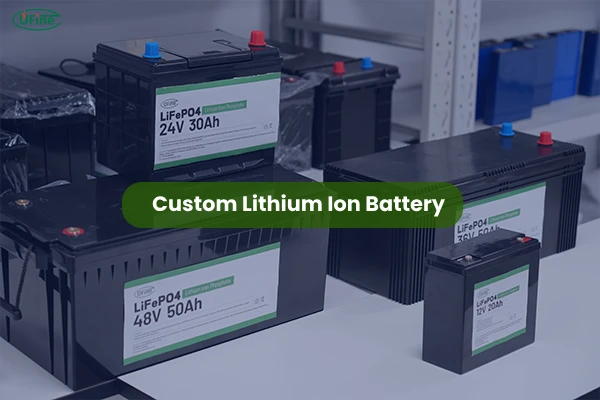
For applications requiring specialized power solutions, Ufine Battery offers unparalleled customization capabilities:
Customization Options:
- Size Adaptations: From compact 100Ah packs to large-scale bank configurations
- Voltage Flexibility: 12V, 24V, 36V, 48V systems
- Performance Enhancements:
- High-rate discharge (up to 5C continuous)
- Ultra-thin designs (as slim as 3mm)
- Extreme temperature operation (-40°C to +85°C)
Why Choose Custom?
- Optimal Space Utilization: Batteries designed to fit exact dimensions
- Application-Specific Performance: Tailored discharge characteristics
- Long-Term Cost Efficiency: Precisely matched to usage patterns
Contact Ufine Battery‘s engineering team today for a free system consultation and quote.
Part 5. Technical considerations for buyers
5.1 Understanding True Capacity
The advertised 100Ah capacity requires careful interpretation:
Peukert’s Effect in Lithium Batteries:
- Unlike lead-acid, lithium maintains >95% capacity at 1C discharge
- Actual capacity varies by temperature:
- 100% at 25°C
- 85% at 0°C
- 65% at -20°C
Cycle Life vs. Depth of Discharge:
| DoD | Cycle Life |
|---|---|
| 100% | 2,000 cycles |
| 80% | 3,500 cycles |
| 50% | 7,000+ cycles |
5.2 Installation Considerations
Wiring Requirements:
- Minimum 4AWG for 100Ah systems
- Recommended torque specifications:
- M6 terminals: 5-6 Nm
- M8 terminals: 8-10 Nm
Thermal Management:
- Optimal operating range: 0°C to 45°C
- Required ventilation space: ≥50mm all sides
Part 6. Where to buy (online vs. local stores)
- Amazon & eBay: Great for deals and user reviews. Plus, return policies protect your purchase.
- Specialty Retailers: Websites like Battle Born or Current Connected focus on lithium batteries and provide expert advice.
- Local Dealers: Helpful if you want to see the product in person. But prices may be higher, and stock is limited.
Part 7. Are cheap 12V 100Ah lithium batteries worth it?
It depends. For basic uses like backup power or occasional RV trips, a budget battery can work. But be careful. Cheaper units often have:
- Lower-quality BMS
- Fewer safety features
- Inflated capacity claims
If reliability matters, it’s better to spend a bit more upfront. Still, Ufine Battery offers high-quality but affordable options—especially if you’re buying in bulk.
Part 8. Hidden costs to consider
When comparing prices, don’t forget about:
- Shipping Fees: Batteries are heavy, and shipping costs can add up.
- Chargers: You’ll need a charger made specifically for lithium batteries.
- Install Gear: Wires, mounts, and battery monitors might be extra.
These extras can easily add $50–$200 to the total cost.
Part 9. How to get the best deal
Here are some savvy tips:
- Seasonal Sales: Look for deals during Black Friday, Prime Day, or New Year sales.
- Bulk Discounts: Buying 2–4 batteries often unlocks lower prices.
- Refurbished Units: Some brands sell tested, used batteries at a steep discount. Just make sure they come with a warranty.
And remember—if you’re buying for a project or business, Ufine Battery offers custom quotes and bulk pricing.
Part 10. Warranty & customer support comparison
Warranties range from 3 to 10 years. But it’s not just about the length. Look at:
- How easy it is to make a claim
- Whether they cover shipping or repairs
- Reviews from real users
Premium brands like Battle Born are known for excellent support. But even affordable manufacturers like Ufine provide solid customer service and technical support, which can save you headaches later on.
Part 12. FAQ
Is 100Ah enough for solar storage?
Yes! One 12V 100Ah battery can store 1.2kWh of energy. Great for small to mid-sized setups.
How long will it last on a full charge?
It depends on your power usage. For example, a 100W appliance would run for about 12 hours.
Can I connect multiple 12V 100Ah batteries?
Absolutely. Connect in parallel for more capacity or series for higher voltage (24V, 48V setups).
Do I need a special charger?
Yes. Use a charger designed for lithium-ion or LiFePO4 batteries to avoid damage.
Related Tags:

More Articles
Best 24V Lithium Battery: Top 10 Compared
Discover the top 24V lithium batteries. We compare capacity, price, cycle life, safety features, and the best options for different applications.
Top LFP Cell Manufacturers in China You Should Know
Looking for reliable LiFePO4 cells? Explore China's top LFP battery manufacturers, key technologies, production capabilities, and supplier selection tips.
Check If Your Charger Works: Simple Test Guide
Think your battery charger's broken? Quick tests can show you for sure. See if it’s the charger or the battery that's causing issues. Read more.
Best Camera Batteries: 7 Brands Compared & Tested
Looking for the best camera battery? Compare 7 top brands, including OEM and third-party options, to find the right battery for your camera.
What You Need to Know About Portable Fan Batteries
Discover the best portable electric fan battery, its types, lifespan, and maintenance tips. Learn how to choose the right one and keep it running longer.