503759-2S 7.4V 1200mAh Rechargeable Battery Pack


- 16 Years Experience
- 200+ Certifications
- 1000+ Customers
- 7X24 Customer Support
-
Product Details
-
Specs
-
Content
-
FAQs

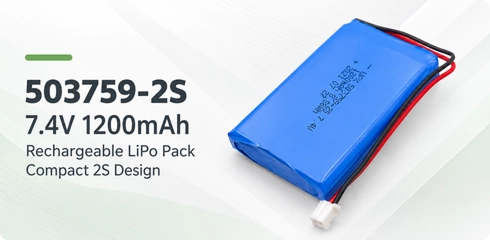
The Ufine 503759-2S is a 7.4V 1200mAh rechargeable lithium polymer battery pack. Its 2S1P design provides 8.88Wh of nominal energy. The pack includes a protection board and has a maximum body size of 10 × 37 × 62mm. It is an option for portable electronics designed for a 2S battery supply.
503759-2S Battery Performance
Match the pack to the device current and charging system. Use the detailed specification when setting design limits.
- Device Load
- Charging
- Cycle Life
- Temperature
Check Startup and Running Current
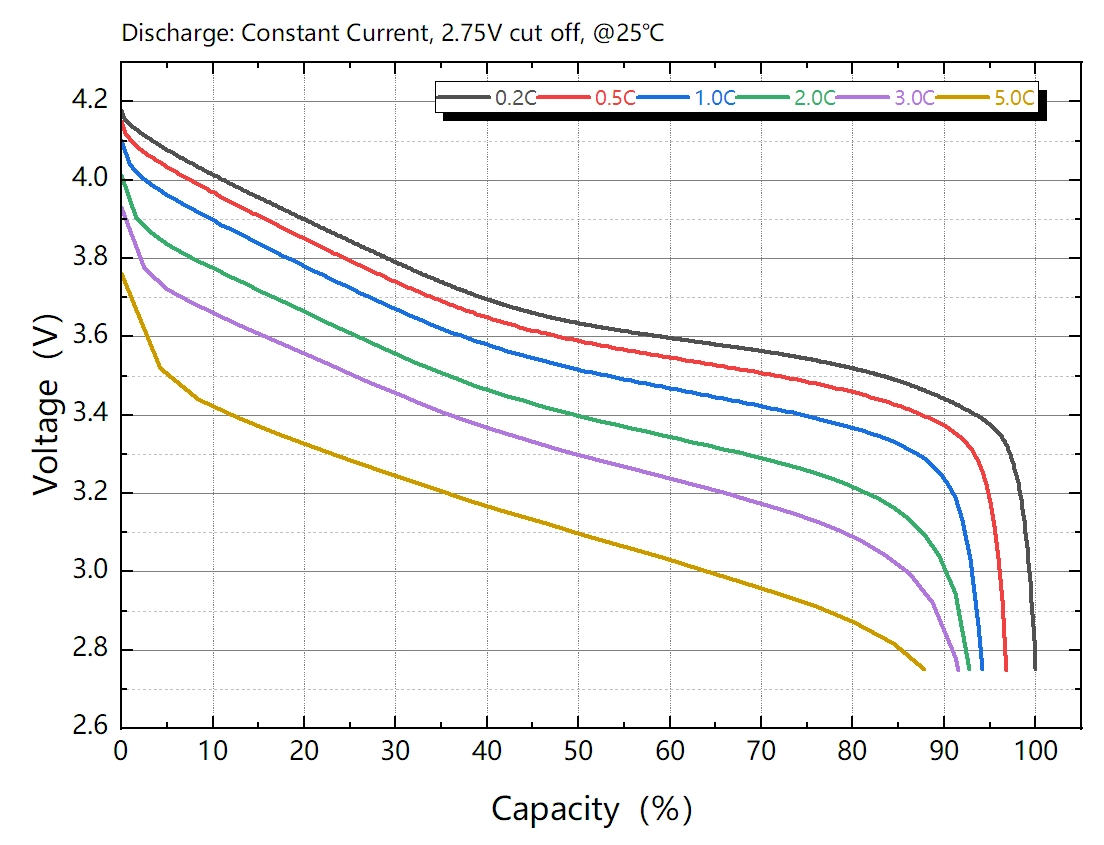
The 503759-2S has a listed maximum discharge current of 1200mA (1C). Measure current during startup, normal use, and standby. A short current peak can matter even when average power use is low.
- Standard discharge current: 240mA (0.2C)
- Maximum discharge current: 1200mA (1C)
- Listed discharge cut-off voltage: 5.5V
The protection trip level is a fault limit. It is not the normal working current rating.
Understand Battery Discharge Limits 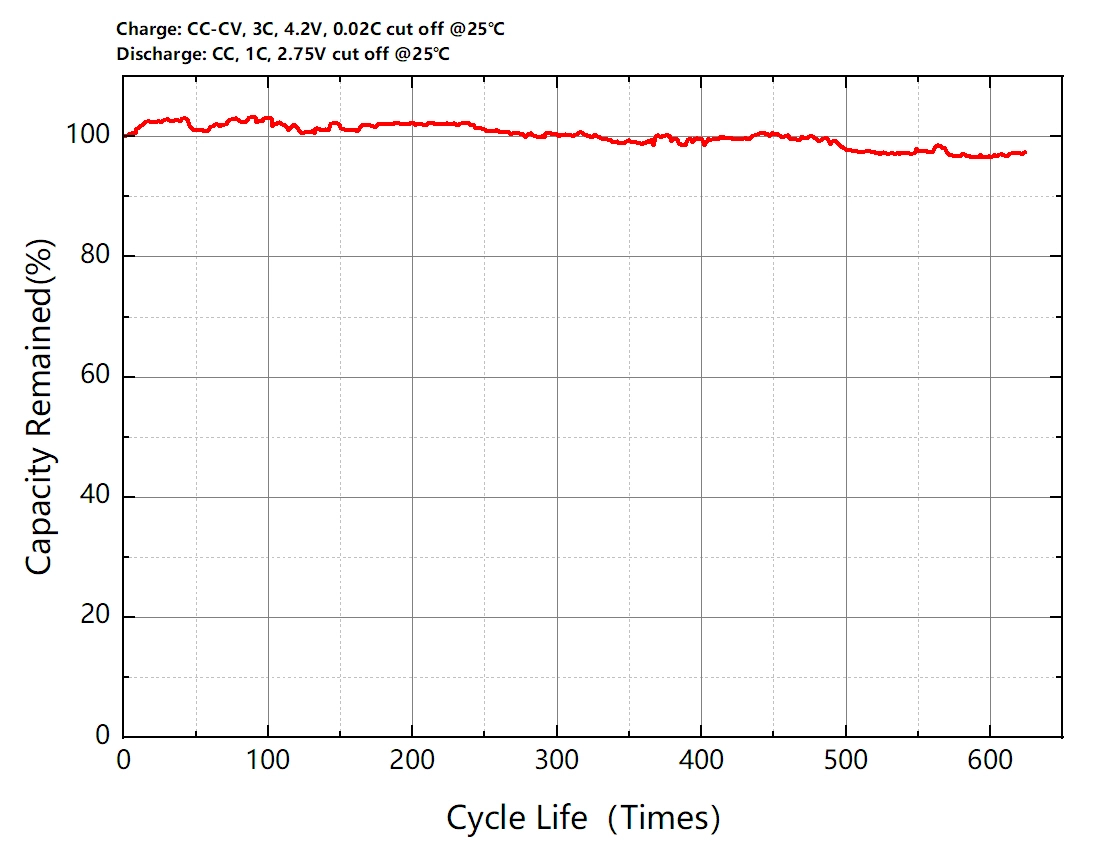
Use a Charger Made for a 2S Pack
The pack has a nominal voltage of 7.4V and a maximum charge voltage of 8.4V. Use a compatible 2S lithium-ion CC/CV charger. The protection board does not replace the charger.
- Standard charge current: 240mA
- Maximum charge current: 1200mA
- Charging temperature: 0°C to 45°C
Confirm the charging connection and any cell monitoring or balancing needs before approving the design.
Review Your 2S Charging Setup 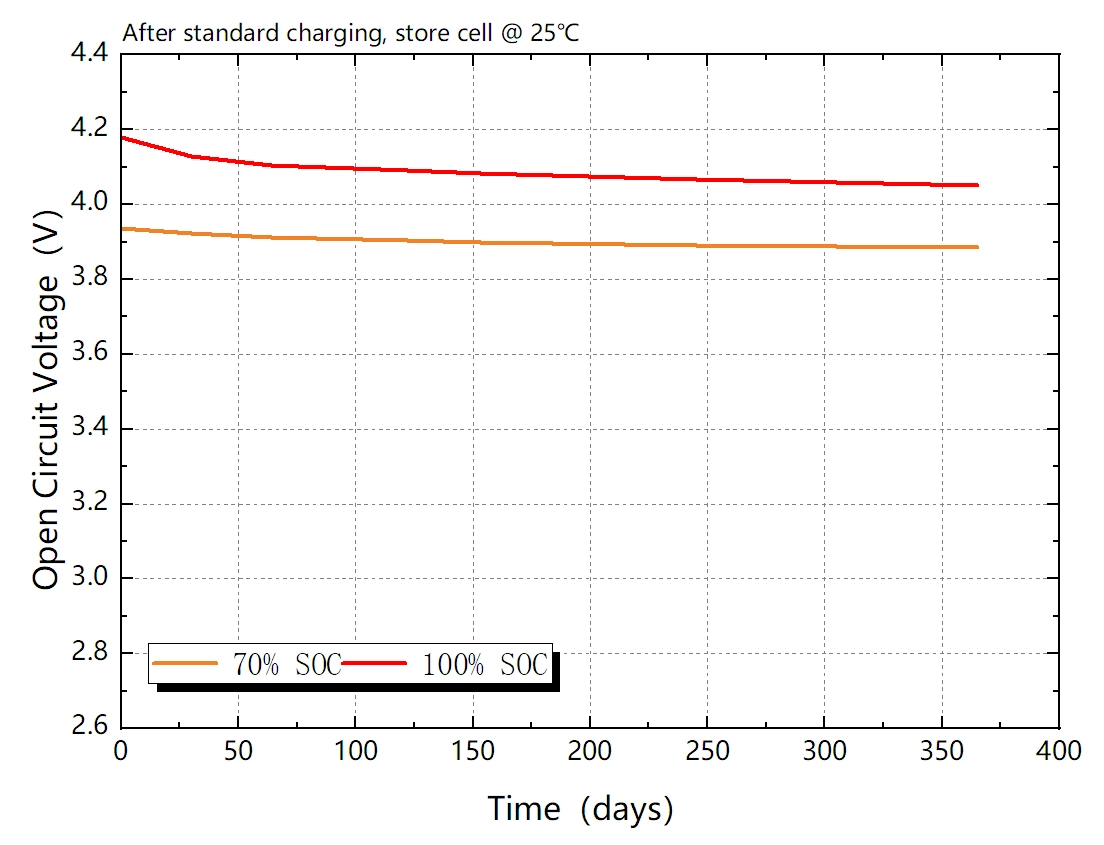
Compare Capacity Retention, Not Cycle Count Alone
The detailed specification lists these capacity retention values. Review the test method before using them to set a service life target.
- After 100 cycles: ≥92% capacity
- After 300 cycles: ≥88% capacity
- After 500 cycles: ≥80% capacity
Charge current, discharge current, temperature, and voltage limits affect the result. Confirm these conditions in the test report.
Read About Battery Cycle Life 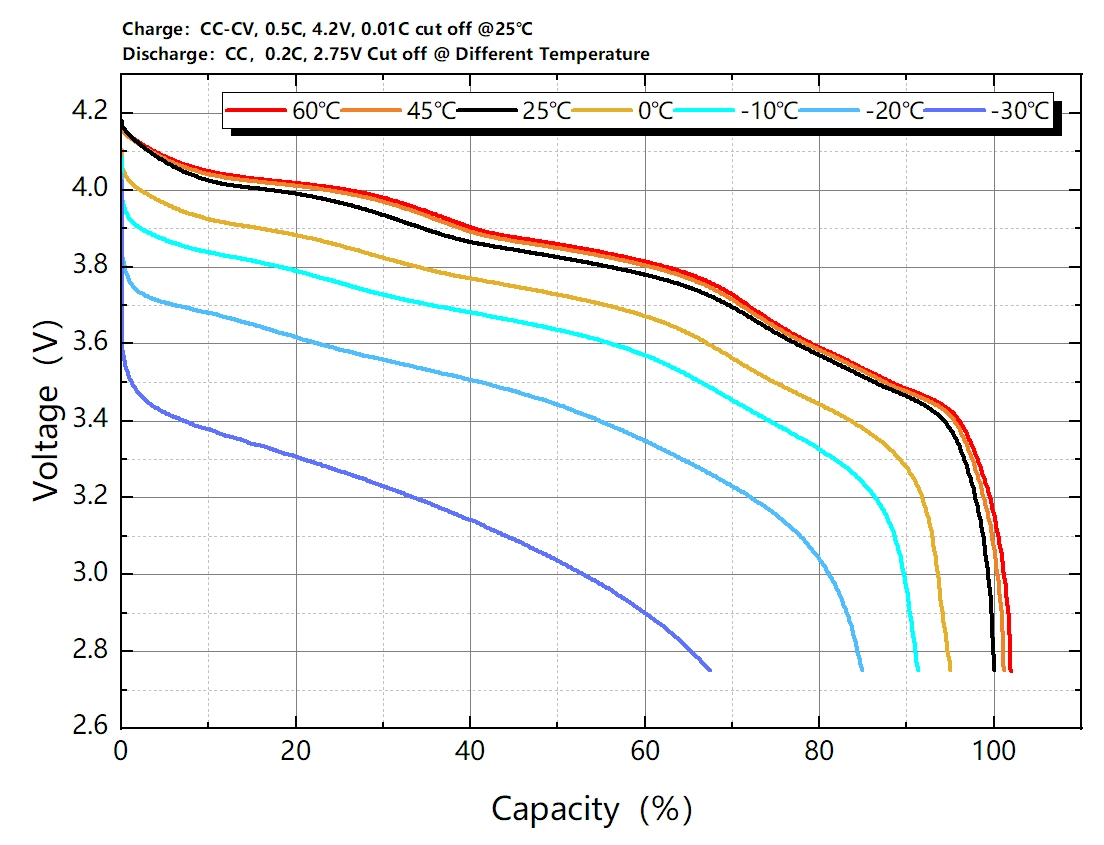
Use Separate Limits for Charging and Discharging
The 503759-2S has different temperature limits for charging and use. Check the battery temperature inside the closed device.
- Charging: 0°C to 45°C
- Discharging: −20°C to 60°C
- Storage limits depend on storage time. See Specs for the full ranges.
The standard pack has no NTC temperature sensor. Tell us if your charging system needs one.
Check Battery Temperature Limits Plan the Battery Space and Cable Route Together
A battery that fits the compartment still needs room for its leads and connector.
Start With the Finished Pack Drawing
The maximum pack body size is 10 × 37 × 62mm. Use this as the starting point for your layout. Add space for wiring, assembly clearance, and the connector.
- Body fit: Avoid pressure from the housing, screws, or nearby parts.
- Lead path: Keep wires clear of sharp edges and moving parts.
- Connector access: Leave room to connect the pack during assembly.
- Polarity: Check the pin layout against the device socket.
- Pack weight: Allow for approximately 46g in the device design.
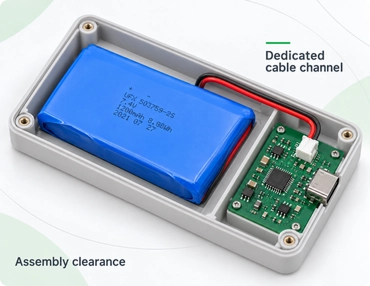
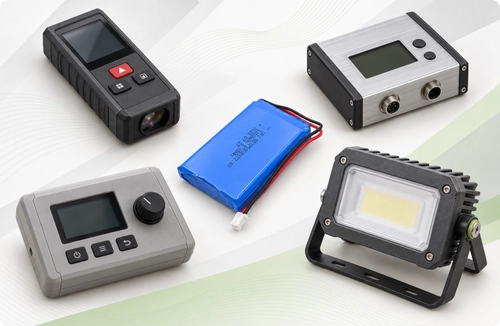
A 2S Power Option for Portable Equipment
Possible uses include handheld meters, portable data loggers, compact control units, and rechargeable LED lights. Each device must support the pack voltage range and stay within its current limits.
For a light, check current at full brightness. For a wireless tool, check demand during data transfer. Test startup and runtime in the finished device before choosing the pack.
Make Your Battery Choice Easier to Approve
Move from a product listing to a clear pack specification. Focus on the details your design and purchasing teams need.
Discuss Your Pack Requirements 


Available Variants: Other 7.4V Pack Formats
Need a shorter or narrower pack? These 7.4V options use less length and width, but their listed thickness is greater than the 503759-2S. Compare the full dimensions and capacity before requesting samples.
| Battery Type | Voltage | Model | Capacity | Max. Size (mm) |
|---|---|---|---|---|
| LiPo Battery Pack | 7.4V | 182346-2S | 1100mAh | 18 × 23 × 49 |
| LiPo Battery Pack | 7.4V | 182533-2S | 700mAh | 18 × 25 × 35 |
These are alternative pack formats, not confirmed direct replacements. Check the current rating, connector, polarity, protection, and charging setup for each model.
Request a 503759-2S Sample for Your Device
Send the key design details with your request. This helps us review the pack configuration and prepare a useful quote.
- Space: battery compartment size or drawing
- Load: normal current, peak current, and peak duration
- Connection: connector, polarity, and wire length
- Charging: charger details and temperature sensing needs
- Order: sample quantity and planned production volume
-
01Approve the pack drawing and connection details.
-
02Test charging, startup, and runtime in your device.
-
03Confirm the required reports and shipping documents.
-
04Agree on the final specification, quantity, and delivery plan.
Battery Specification
-
1. Mechanical Characteristics
Cell 503759-2S PCM Yes NTC No Weight appr. 46g Configuration 2S1P -
2. Electrical Specification
Capacity 1200mAh Nominal Voltage 7.4V Energy 8.88Wh Internal Resistance less than 180mΩ Max. Charge Voltage 8.4V Discharge Cut Off 5.5V Max. Charge Current 1200mA Max. Discharge Current 1200mA Standard Charge Current 240mA Standard Discharge Current 240mA Charging Temperature 0℃ to 45℃ Discharging Temperature -20℃ to 60℃ Storage Temp.Range 1 year at -20℃ to +30℃ 3 mos. at -20℃ to +45℃ 1 mo. at -20℃ to +60℃ Cycle life 100 cycles ≥92% 300 cycles ≥88% 500 cycles ≥80% -
3. Cell protection
Overcharge Detection 4.28V ±50mV (80 to 200msec delay, release 4.08V ±50mV) Overdischarge Detection 2.4V ±100mV (40 to 120msec. delay, release 3.0V ±100mV) Overcurrent Detection 2.5A to 4.5A (5 to 10msec. delay) Short protection Yes
The Ufine 503759-2S is a 7.4V 1200mAh rechargeable LiPo battery pack with 8.88Wh of nominal energy. It uses a 2S1P layout and includes a protection board. Its maximum body size is 10 × 37 × 62mm.
For this pack, a useful design review starts with one full device task. Check the power needed to start, run, and finish that task. Then review charging, installation, and storage.
Can the 503759-2S complete your device duty cycle?
A device may spend most of its time asleep, then draw more power to take a reading, send data, or turn on a light. Measure each mode to build a useful power estimate.
-
For a data logger, measure sleep time and power used for each reading.
-
For a wireless instrument, include the time needed to connect and send data.
-
For an LED light, check each brightness setting.
-
For all devices, record startup current and how long the peak lasts.
The listed maximum discharge current is 1200mA. A low average current does not mean every peak is within this limit. Share the measured load if your device has brief bursts of high demand.
Estimate runtime from the battery side of the circuit
Use battery-side current when making a simple capacity-based estimate. Current measured after a voltage converter may give a different result.
Ideal runtime (hours) ≈ 1200mAh ÷ average battery current (mA)
-
At 120mA average battery current: about 10 hours in theory.
-
At 240mA average battery current: about 5 hours in theory.
-
At 600mA average battery current: about 2 hours in theory.
These estimates assume the full rated capacity is available. Actual runtime depends on temperature, battery age, load, and the device shutdown voltage. Confirm the result in the finished product.
Check what happens as the pack voltage falls
The 7.4V rating is nominal. The pack reaches 8.4V at full charge, then its voltage falls during use. Your device must work across the planned battery voltage range.
-
Check that the device input can accept 8.4V at full charge.
-
Test display, light, and wireless functions near the end of a charge.
-
Check voltage drop during the highest load.
-
Set a device shutdown point that follows the approved pack specification.
The listed discharge cut-off is 5.5V. Review this value when setting the device power controls. Avoid relying on the protection board to end every normal use cycle.
Define the charging connection before choosing the plug
The 503759-2S needs a compatible 2S lithium-ion CC/CV charger with an 8.4V charge limit. The detailed specification lists a standard charge current of 240mA and a maximum of 1200mA.
-
Confirm whether charging takes place inside the device or in a separate charger.
-
Match the connector pin layout and polarity to the approved drawing.
-
Review any cell monitoring or balancing needs. PCM inclusion alone does not confirm balancing.
-
The standard pack has no NTC. Confirm whether the charger needs a temperature sensor.
Charge only within the listed 0°C to 45°C range. Check pack temperature with the device housing closed, especially when the device runs while charging.
Review LiPo Battery Connector TypesPlan for time on the shelf as well as time in use
Some products spend weeks in storage before the next charge. A device can still draw power while its screen is off. Measure this drain with the battery connected.
-
Check standby current and any power used by timers or wireless functions.
-
Confirm whether the power switch fully disconnects the load.
-
Set a battery check schedule for stored devices.
-
Keep connectors protected from short circuits during storage and handling.
The listed storage temperature ranges are −20°C to 30°C for one year, −20°C to 45°C for three months, and −20°C to 60°C for one month. These are temperature limits for each period. They do not promise a full charge after storage.
Use the sample to settle the final assembly details
A sample should match the planned wire route and connector. Test it in the real housing so you can find fit and connection issues before ordering production packs.
-
Check the 10 × 37 × 62mm maximum body size against the available space.
-
Allow separate room for the leads, connector, and assembly clearance.
-
Make sure the housing closes without pressing on the pack or trapping wires.
-
Record the sample version and the results of device testing.
MSDS is listed for this model. Tell us which other reports or shipping documents your project needs so their availability can be checked before the order.
Send your device load, battery space, charging details, and sample quantity. Include a connector photo or drawing if the pack must match an existing socket.
FAQs
-
Does the 503759-2S provide a fixed 7.4V output?
No. The 7.4V rating is nominal. The pack reaches 8.4V at full charge, and voltage falls during use. Check that your device supports the planned voltage range. -
How much energy does the 503759-2S store?
The pack has 8.88Wh of nominal energy, calculated from 7.4V × 1.2Ah. Its two cells are connected in series, so the pack capacity remains 1200mAh. -
Can this pack support brief current peaks above 1200mA?
The listed maximum discharge current is 1200mA. A separate pulse rating is not provided. Send the peak current, duration, and repeat rate for review. Do not treat the PCM trip level as an allowed operating current. -
How long could the pack run a device drawing 240mA?
At a constant 240mA battery-side load, the ideal estimate is 5 hours: 1200mAh ÷ 240mA. Actual runtime depends on usable capacity, temperature, battery age, and the device shutdown voltage. -
What charger settings should be used for the 503759-2S?
Use a compatible 2S lithium-ion CC/CV charger with an 8.4V charge limit. The detailed specification lists 240mA standard charge current and 1200mA maximum. Charge only from 0°C to 45°C. -
Does the built-in PCM include balancing and temperature sensing?
The pack includes PCM protection, but balancing is not confirmed in the supplied specification. NTC temperature sensing is not included in the standard version. Review both needs with your charging system. -
Is a 10 × 37 × 62mm compartment enough for this pack?
Those are the listed maximum pack body dimensions. Allow extra room for assembly clearance, wire routing, and the connector. Confirm the finished assembly drawing before fixing the housing design. -
Does the 500-cycle figure guarantee the same life in my device?
No. The detailed specification lists at least 80% capacity after 500 cycles, but the test conditions are not shown. Request the test method and check samples under your device load and charging pattern. -
Which documents should I request before ordering samples?
Request the pack specification, assembly drawing, and listed MSDS. If your project needs other test or transport reports, ask for model-specific availability. MSDS alone does not confirm those reports are available. -
What should I send to get a suitable sample and quote?
Send the battery space, normal and peak current, charger details, connector pin layout, and wire length. Include the sample quantity and planned order volume so the pack configuration and pricing can be reviewed.
Ready to Power Your Project?
We’ll help you design the perfect power source — tailored to your voltage, capacity, size, C-rate, and performance needs.
Contact Us NowWhat Our Customers Are Saying
We love hearing from you! Your experiences help us improve and inspire others. Check out what our happy customers have to say about our lithium batteries—share your thoughts with us too!











Latest Articles
About Lithium Battery Industry News

Can Power Bank Charge an Action Camera Battery?
Find out which power banks work with action cameras, whether you can record while charging, and what to use when your camera runs out of power.
2026-10-28 Ufine

Compare DJI Osmo batteries by model, capacity, runtime, and compatibility. Find the right battery before you buy and avoid costly mistakes.
2026-10-28 Ufine

Are GoPro Batteries Interchangeable? A Model-by-Model Guide
Compare GoPro batteries by model, price, capacity, and runtime. Find compatible options, avoid costly mistakes, and choose the best battery for you.
2026-10-28 Ufine