Hot Selling 18650 Battery Pack
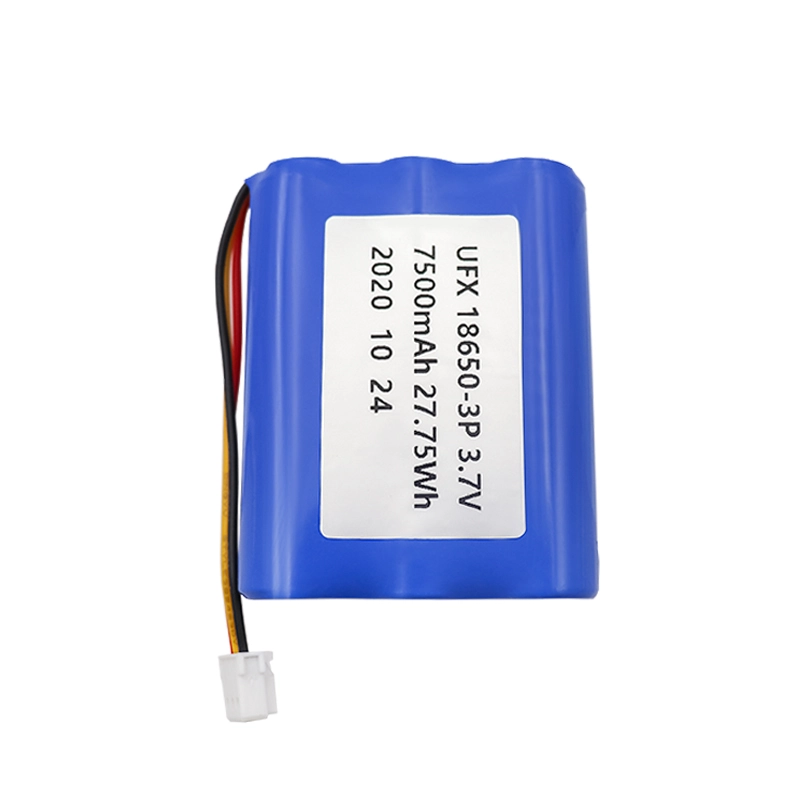
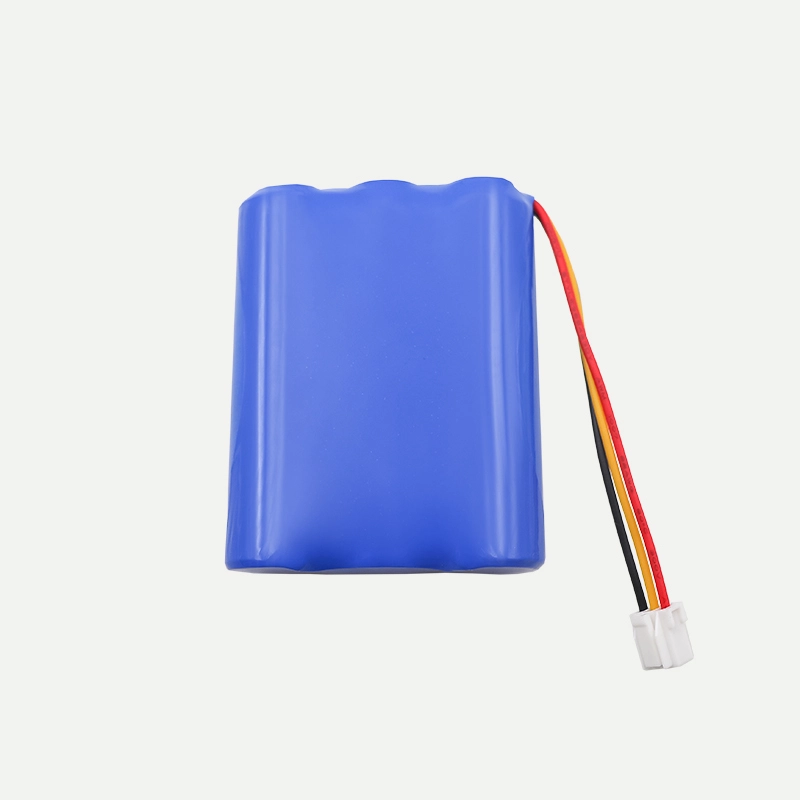
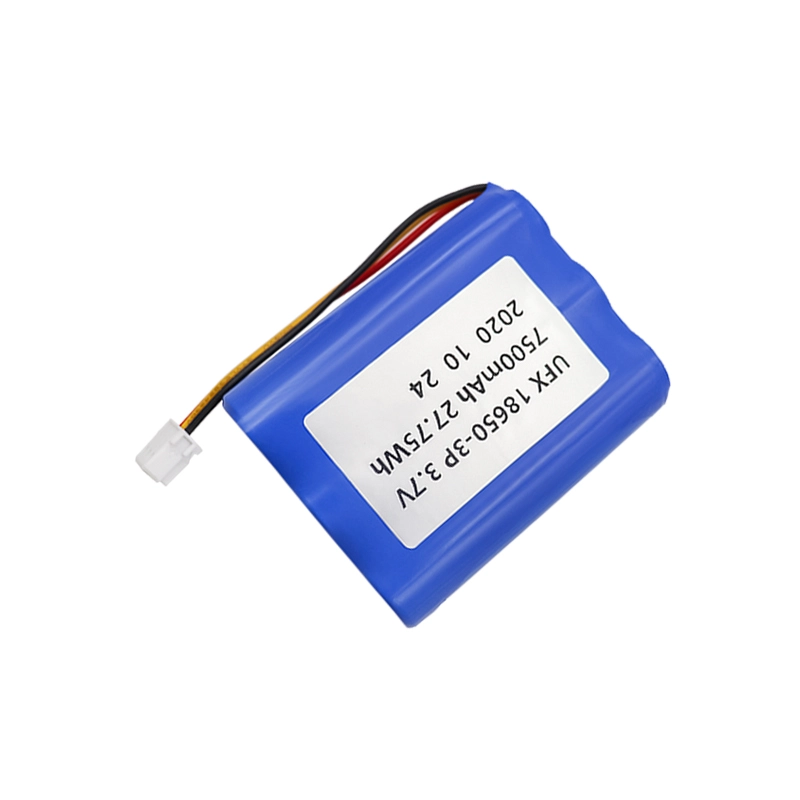
3.7 V 7500mAh Rechargeable18650 Battery Pack 18650-3P

- 16 Years Experience
- 200+ Certifications
- 1000+ Customers
- 7X24 Customer Support
-
Product Details
-
Specs
-
Content
-
FAQs

Dependable 18650-3P Battery Pack for All-Day Performance, Anywhere
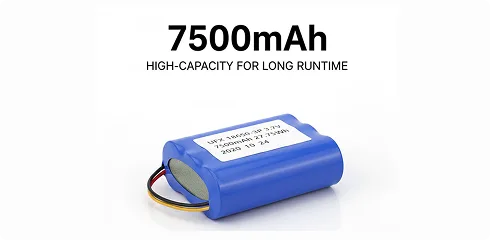
This 18650 battery pack uses a 3P configuration to deliver 7500mAh at 3.7V, providing extended power for industrial devices, portable electronics, and IoT equipment that need a reliable 3.7v battery pack.
Test Curves of 3.7v Battery
Take a closer look at the battery test curves—see the stability and performance you can trust for all your power needs!
- Cycle Life
- Self-Discharge
- Discharge Rate
- Temp Performance
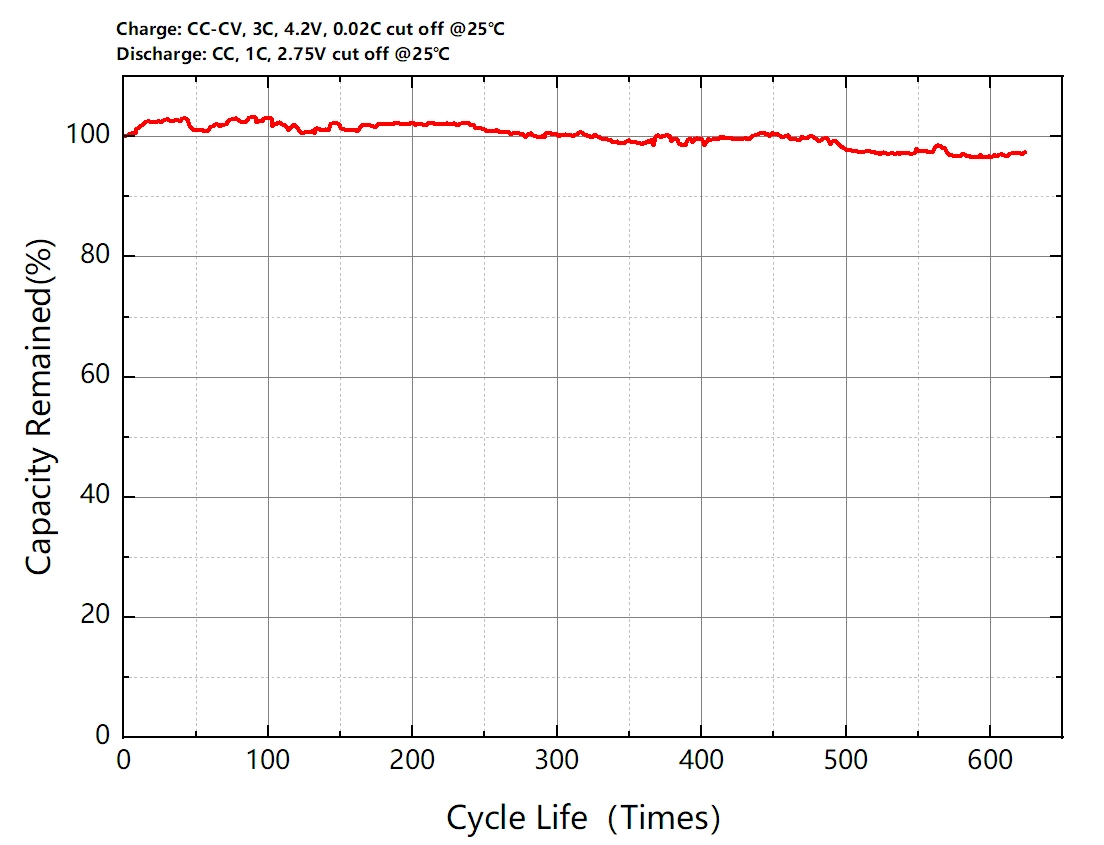
Long-Lasting Power
This battery is a long-lasting powerhouse, retaining over 95% of its initial capacity even after 600 charge-discharge cycles. This outstanding longevity ensures a reliable and consistent performance, making it the perfect choice for devices that require extended use and durability.
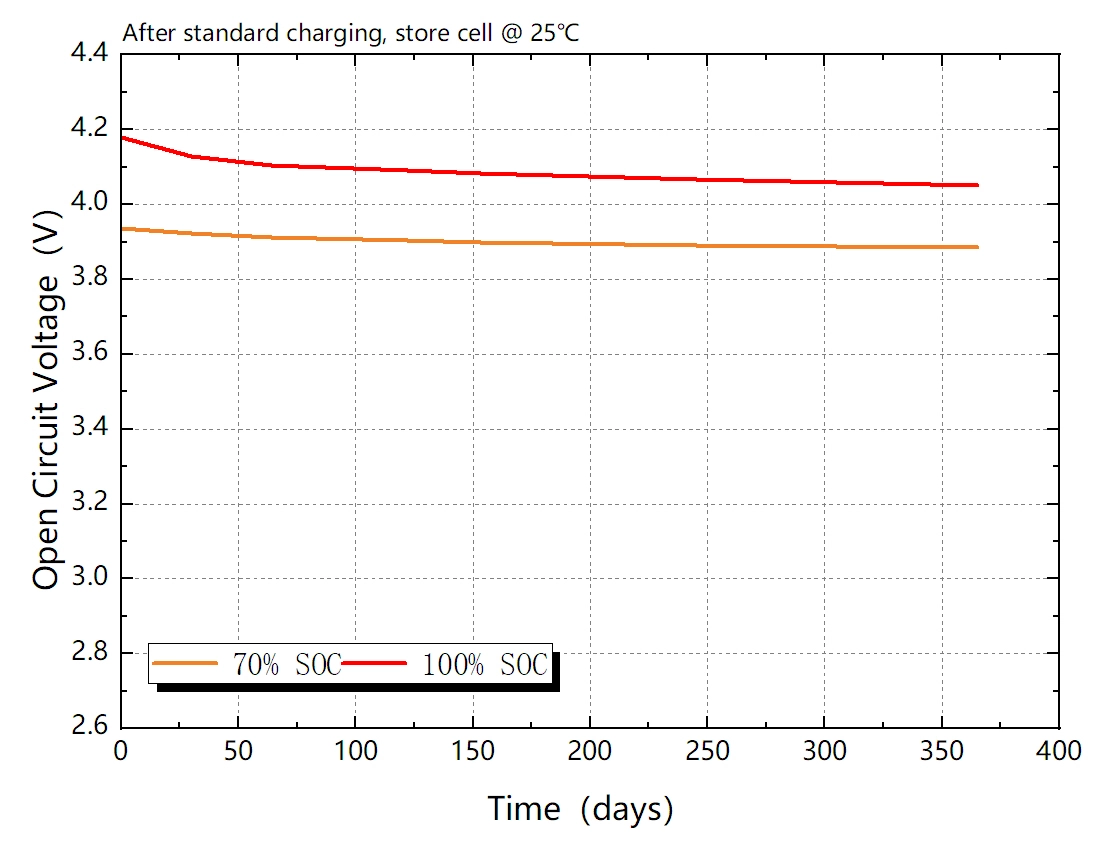
Incredible Charge Retention
With an incredibly low self-discharge rate, this battery holds its charge exceptionally well. After a full year of storage, its voltage only shows a minimal drop from 4.15V to 4.05V, keeping your device ready to go even after long periods of inactivity.
Learn More About Discharge Rate 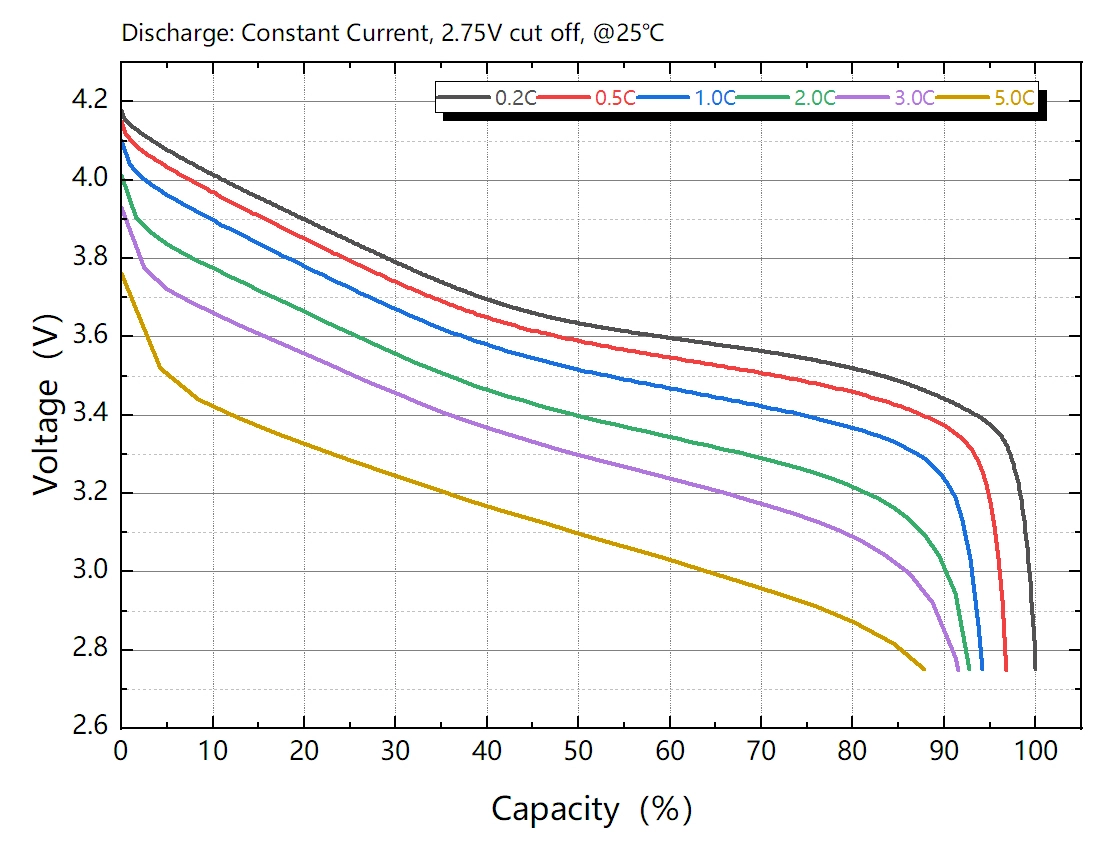
Discharge Characteristics
Experience stable and reliable power delivery. The battery maintains an operating voltage above 3.4V for over 80% of its discharge cycle, ensuring consistent performance. It also delivers high capacity, retaining over 90% even at a high 5.0C discharge rate.
Extreme Temperature Performance
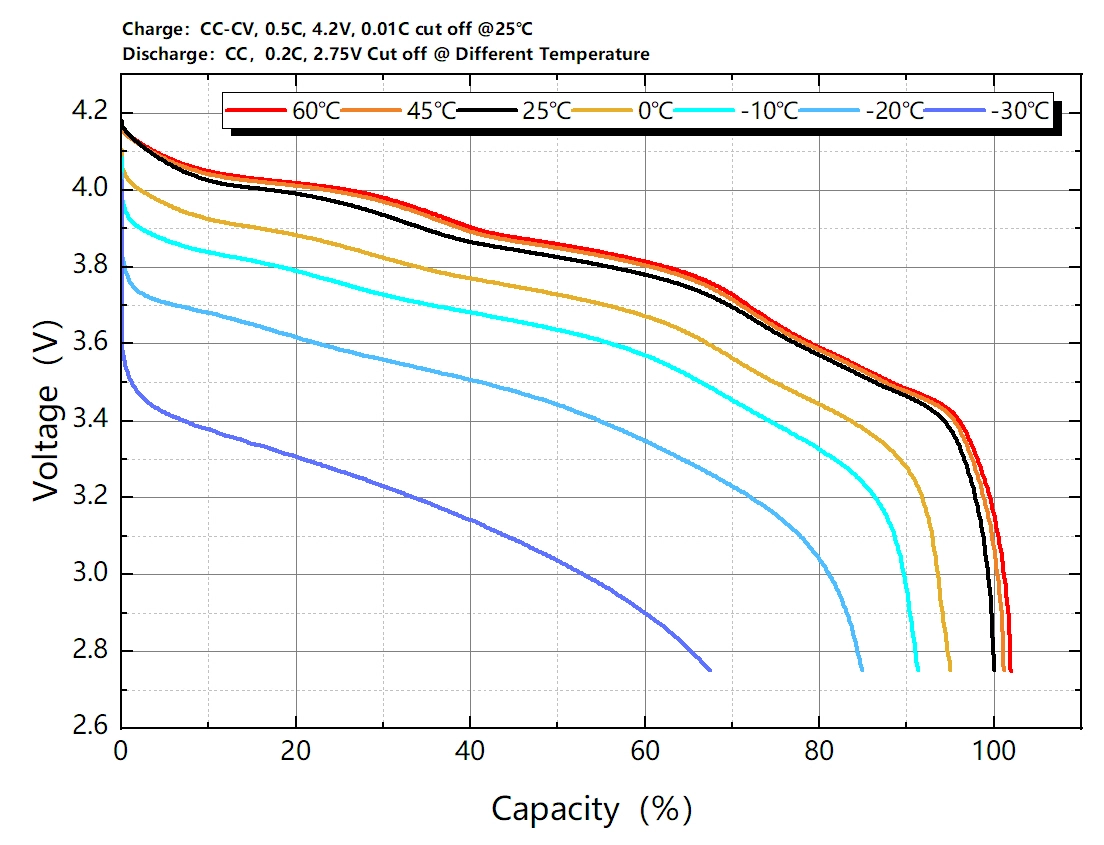
This battery is built for a wide range of climates. It offers consistent, high-capacity performance from 25°C to 60°C. Even in freezing conditions, it remains reliable, providing approximately 65% of its capacity at a frigid -30°C.
Stable, Low-Heat 3.7V Battery Pack You Can Rely On
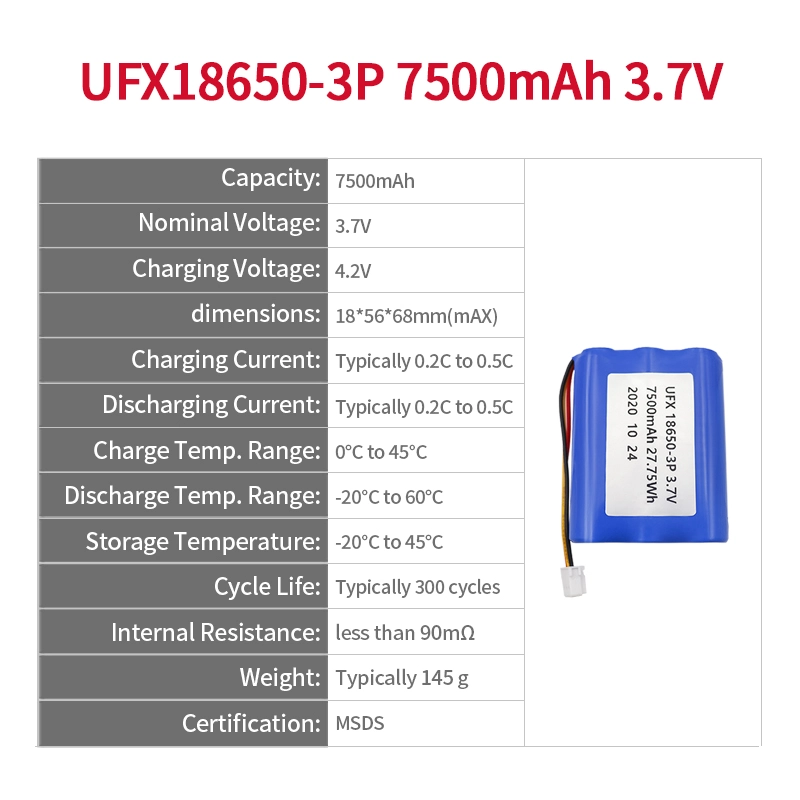
This 3.7v battery pack is engineered with high-quality 18650 cells, featuring internal resistance below 90mΩ for stable discharge, reduced heat generation, and improved operational safety. It supports flexible 0.2C–0.5C charge/discharge rates.
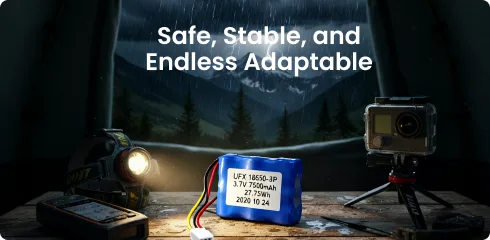
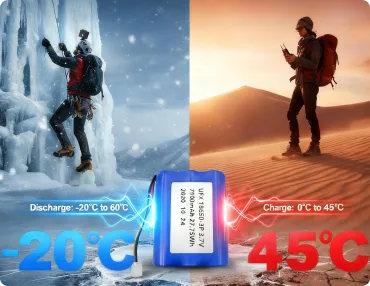
Keep Your Devices Running, Whatever the Weather
Designed for Wide Temperature Operation
Supports:
- Discharge: –20°C to 60°C
- Charge: 0°C to 45°C
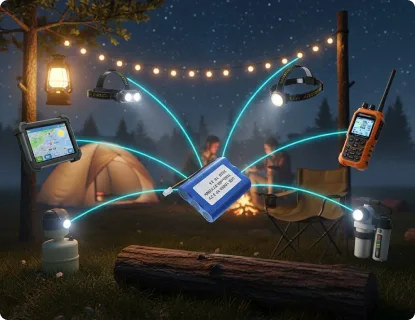
Wide Application Scenarios
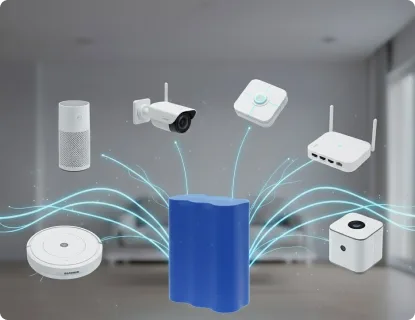
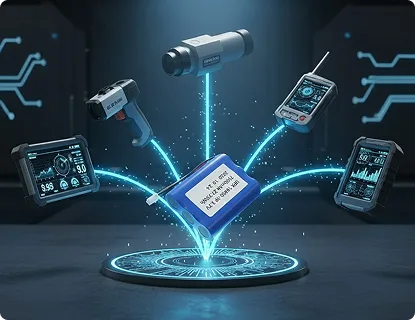
With stable performance, flexible C-rate support, and strong environmental adaptability, it can be integrated into multiple applications.
View More Battery Applications 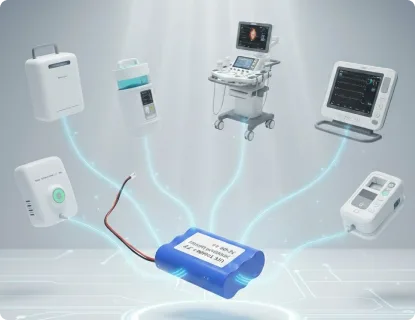
Why Choose Ufine Battery
Ufine Battery (Direct Factory)
- Direct manufacturer with full production control, ensuring consistent quality for every 18650 battery pack
- Volume-based pricing with competitive factory cost
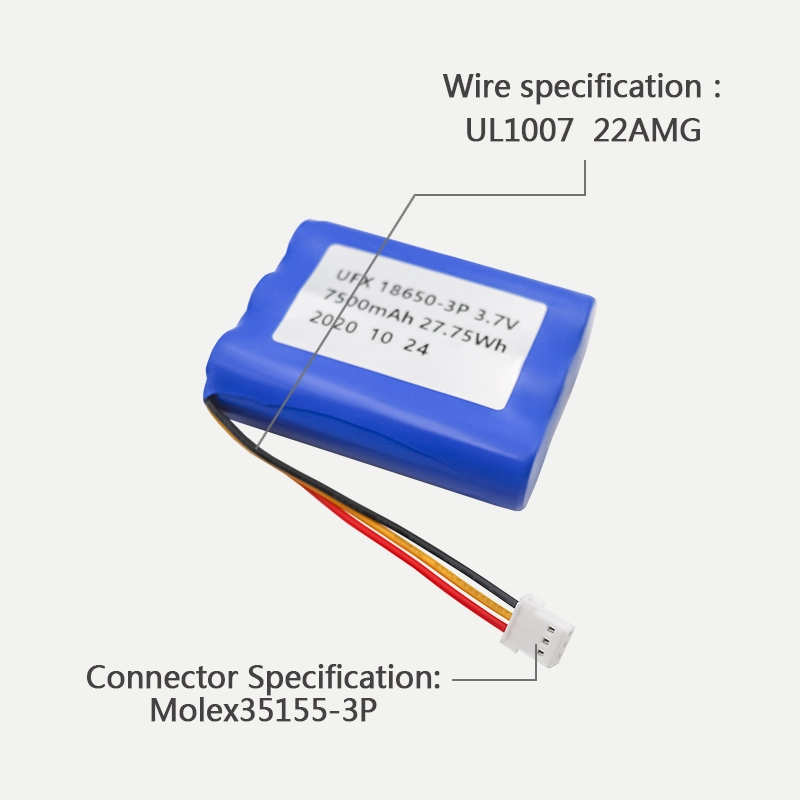
- Supports custom 3.7V battery pack size, PCM/BMS, connectors, cables, and configurations
- Flexible MOQ, suitable for prototypes and small pilot runs
- 17 years of lithium battery manufacturing experience; provides technical drawings, pack design, and engineering guidance
- Complete reports available: MSDS, UN38.3, CE, RoHS, etc.
- Stable production with predictable lead time, ideal for OEM/ODM projects
- Professional after-sales service with quick response for B2B clients
Ordinary Channels / Traders / Small Workshops
- Often resell from unknown factories; inconsistent quality and higher failure risk
- Middleman markups lead to unstable or higher pricing
- Limited or no customization; mostly standard products only
- High MOQ, difficult for new projects to start
- Little to no technical support; only sells finished goods
- Certifications often missing or incomplete, causing delays in shipping or customs
- Lead time uncertain; stock availability unstable
- Limited support; difficult to handle quality claims
Battery Specification
-
1. Mechanical Characteristics
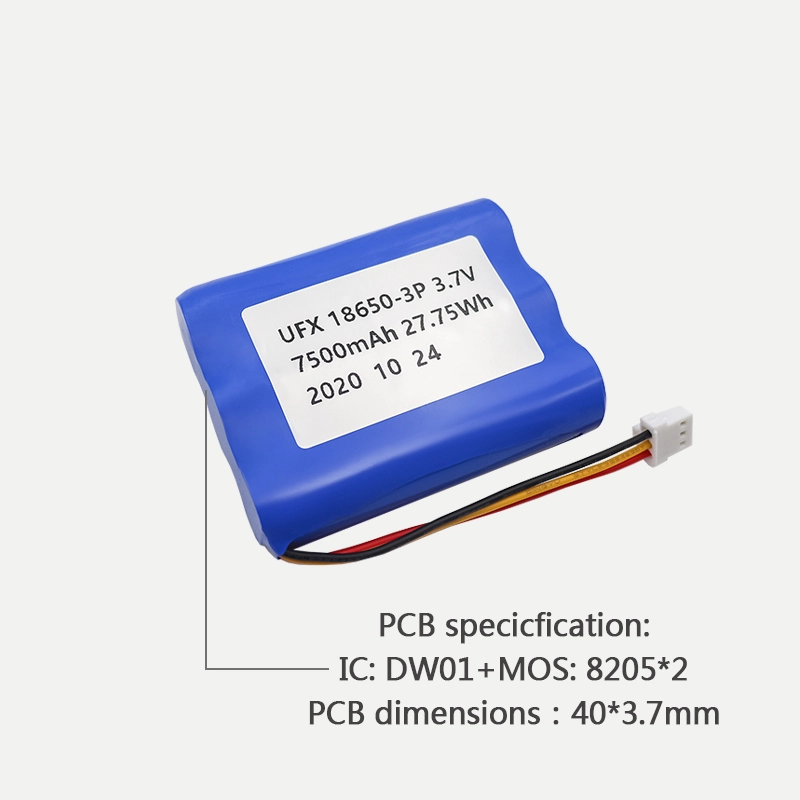
Cell 18650-3P PCM Yes NTC No Weight appr. 145g Configuration 1S3P -
2. Electrical Specification
Capacity 7500mAh Nominal Voltage 3.7V Energy 27.75Wh Internal Resistance less than 90mΩ Max. Charge Voltage 4.2V Discharge Cut Off 2.75V Max. Charge Current 7500mA Max. Discharge Current 7500mA Standard Charge Current 1500mA Standard Discharge Current 1500mA Charging Temperature 0℃ to 45℃ Discharging Temperature -20℃ to 60℃ Storage Temp.Range 1 year at -20℃ to +30℃ 3 mos. at -20℃ to +45℃ 1 mo. at -20℃ to +60℃ Cycle life 100 cycles ≥92% 300 cycles ≥88% 500 cycles ≥80% -
3. Cell protection
Overcharge Detection 4.28V ±50mV (80 to 200msec delay, release 4.08V ±50mV) Overdischarge Detection 2.4V ±100mV (40 to 120msec. delay, release 3.0V ±100mV) Overcurrent Detection 2.5A to 4.5A (5 to 10msec. delay) Short protection Yes
3.7V 7500mAh 18650 battery packs are widely used in portable devices, DIY projects, and modular electronics. In this guide, we’ll explain how this battery pack works, how much energy it can deliver, safe usage, and what to check before buying — plus tips for DIY applications.
Part 1. How much energy can this 3.7V 7500mAh battery pack deliver?
The energy of a battery pack is calculated as:
Energy (Wh) = Nominal Voltage (V) × Capacity (Ah)
For this 3.7V 7500mAh (7.5Ah) 18650-3P battery pack:
3.7V × 7.5Ah = 27.75Wh
This means the pack can theoretically deliver 27.75 watt-hours. In practice, usable energy may be slightly lower due to voltage drops, temperature effects, and device efficiency.
Tip: To estimate runtime → Runtime (h) = Battery Energy (Wh) ÷ Device Power (W)
Example: A 5W device powered by this pack would run for about 5.5 hours
Convert Wh to Watts using our online calculator↓↓ ↓ :Part 2. What kind of cells are inside this 3.7V battery pack?
This pack uses lithium-based cells, which may include:
-
18650 Li-ion Cylindrical Cells: Nominal voltage ~3.6–3.7V, capacity 2500–2600mAh per cell, ~300 cycles
-
LiPo (Lithium Polymer) Cells: Flexible form factor, lightweight, nominal voltage 3.7V
-
Other Li-ion Cylindrical Cells (e.g., 21700, 20700) for higher capacity or discharge rates
Configuration for this pack: 3 cells in parallel (3P) → keeps nominal voltage at 3.7V while increasing total capacity to 7500mAh. Parallel design allows higher current output and better thermal distribution than a single cell.
Engineering note: All parallel cells should be matched in voltage, capacity, and age to avoid imbalance and stress. Proper assembly is key for safety and longevity.
Part 3. What’s the difference between 3.7V 18650-3P and 7.4V packs?
| Feature | 7.4V Pack | 3.7V 18650-3P Pack |
|---|---|---|
| Voltage | 7.4V (typically 2S) | 3.7V |
| Configuration | 2 cells in series | 3 cells in parallel |
| Current Capacity | Lower per cell | Higher, better for moderate load devices |
| Applications | Devices requiring >7V | Devices designed for 3.7V input or modular packs |
In short, the 3.7V 3P pack emphasizes stable current delivery and longer runtime rather than higher voltage.
Part 4. Does this pack include protection?
Protection is optional depending on version. Typical protections include:
-
Overcharge protection: prevents voltage >4.2V per cell
-
Overdischarge protection: keeps cells above ~2.5–3V
-
Overcurrent / short-circuit protection
-
Temperature monitoring
For critical applications or OEM use, a protected pack with BMS is recommended.
Part 5. Can I DIY a series or parallel pack?
Yes, but safety is paramount. Key points:
-
Use identical cells (same brand, capacity, cycle count)
-
Ensure proper balancing to prevent overcharge/discharge of any single cell
-
Include PCM/BMS protection whenever possible
-
DIY packs are mainly suitable for prototyping or controlled applications
Incorrect assembly can lead to imbalance, overheating, or fire risk.
Part 6. How should I charge this battery pack safely?
- Nominal voltage: 3.7V
- Charge voltage: 4.2V per cell (CC/CV recommended)
- Typical charge/discharge current: 0.2C–0.5C
- Charge temperature: 0°C – 45°C, Discharge temperature: –20°C – 60°C
- Following these specs helps maximize cycle life and safety.
Part 7. What should I check before buying a 18650 battery pack?
Check these points for OEM, industrial, or commercial applications:
-
Capacity & Voltage: meets device requirements (3.7V / 7500mAh)
-
Cell Quality: brand, internal resistance, cycle life
-
Protection Requirements: PCM/BMS based on safety needs
-
Temperature Range: compatible with expected environment
-
Certifications: MSDS, UN38.3, CE, RoHS
Part 8. Common mistakes to avoid
⚠️ Mixing cells with different ages or capacities
⚠️ Using unprotected packs in critical applications
⚠️ Overcharging or exceeding recommended C-rate
⚠️ Ignoring temperature limits during charge/discharge
⚠️ Purchasing packs without documentation or certification
Avoiding these mistakes ensures safety, longevity, and reliable performance of your 3.7V 18650-3P battery pack.
FAQs
-
Can I use this 3.7V 7500mAh 18650 battery pack outdoors?
Yes, it operates from –20°C to 60°C. However, avoid water exposure or direct mechanical impact to ensure safety. -
How long will this battery pack last?
Typical cycle life is ~300 full charge/discharge cycles. Proper usage, charging, and storage can extend its lifespan. -
Can multiple 3.7V packs be connected in series?
Yes, but all packs must be identical and protected with a BMS to prevent imbalance and ensure safe operation. -
How should I store this 3.7V battery pack?
Store in a cool, dry place (–20°C to 45°C). For long-term storage, keep the pack at around 40–60% charge. -
Is this pack suitable for high-drain devices?
Yes, it supports up to 0.5C discharge. For very high-drain applications, ensure the total current does not exceed pack specifications. -
Can OEMs request custom connectors or wire lengths?
Yes. The pack can be customized for connectors, wiring, PCM/BMS options, and mechanical dimensions according to your design needs. -
How does this 3.7V 18650-3P pack compare to a single 18650 cell?
Parallel configuration increases total capacity, reduces per-cell stress, and improves thermal management, making it more suitable for industrial and portable applications.
Ready to Power Your Project?
We’ll help you design the perfect power source — tailored to your voltage, capacity, size, C-rate, and performance needs.
Contact Us NowWhat Our Customers Are Saying
We love hearing from you! Your experiences help us improve and inspire others. Check out what our happy customers have to say about our lithium batteries—share your thoughts with us too!









Latest Articles
About Lithium Battery Industry News

How to build a12V 10.5Ah Li-ion battery pack with 18650 cells
Learn how to build a high-capacity 12V 10.5Ah battery pack with Ufine 18650 cells. Explore cell selection, 3S3P configuration, BMS wiring, and performance tests.
2026-9-20 Ufine
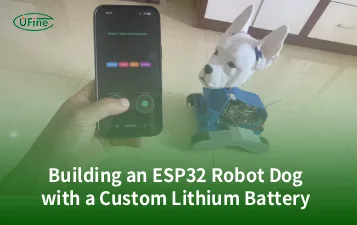
Building an ESP32 Robot Dog with a Custom Lithium Battery
See how a maker combines 3D printing, ESP32 control, and a custom lithium pack to create a powerful and reliable robotic companion.
2026-9-20 Ufine

JST vs Molex: The Right Battery Connector Choice
JST or Molex for your battery? Learn how connector selection affects current, voltage drop, reliability, and device performance.
2026-9-15 Ufine