Popular Choice
603040 3.7V 680mAh LiPo Battery for Compact Devices


- 16 Years Experience
- 200+ Certifications
- 1000+ Customers
- 7X24 Customer Support
-
Product Details
-
Specs
-
Content
-
FAQs

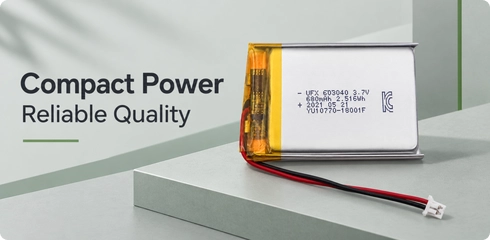
The 603040 is a rechargeable LiPo battery with 3.7V nominal voltage, 680mAh capacity, and 2.52Wh nominal energy. It is made for compact electronic devices where battery space is limited. The battery also has KC and UL/TÜV certification coverage.
603040 Battery Performance
Check the battery output, cycle life, storage, and temperature range before using it in your device.
- Battery Output
- Cycle Life
- Storage
- Temperature
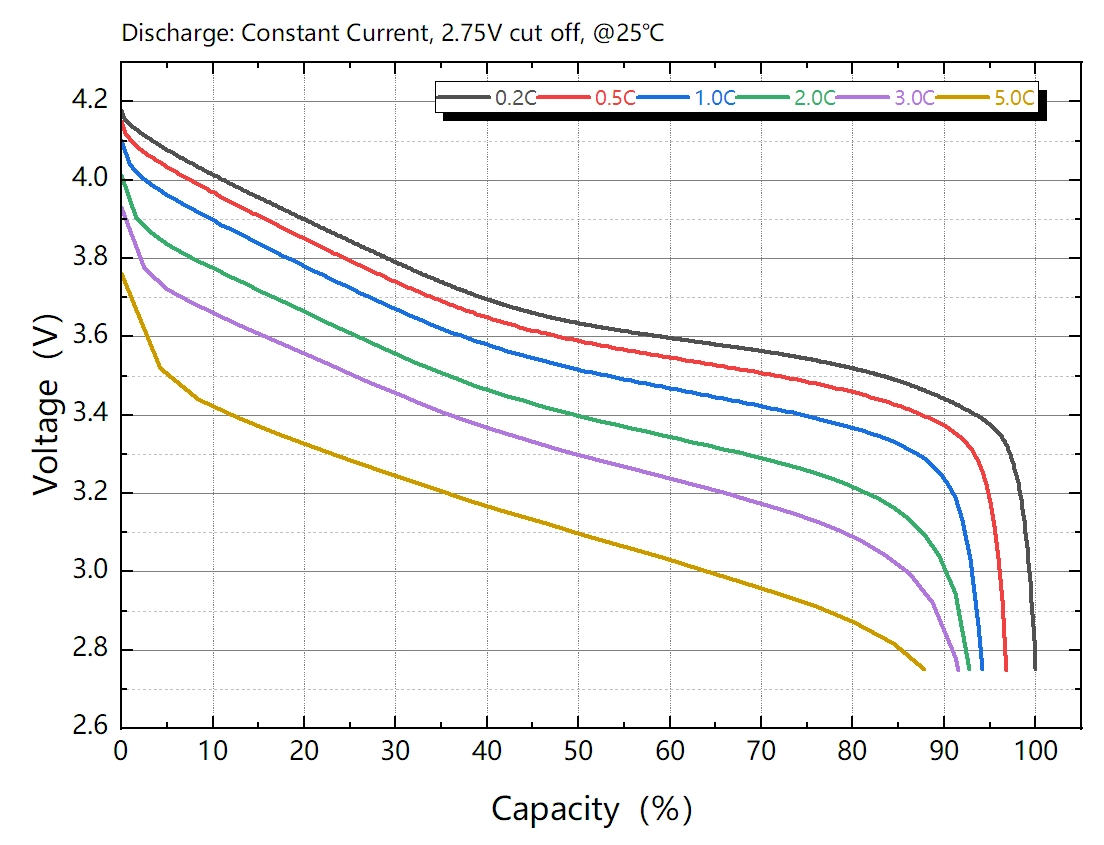
3.7V 680mAh Output
The 603040 provides 3.7V, 680mAh, and 2.52Wh. It is suited to rechargeable products with moderate power needs.
- Nominal voltage: 3.7V
- Rated capacity: 680mAh
- Nominal energy: 2.52Wh
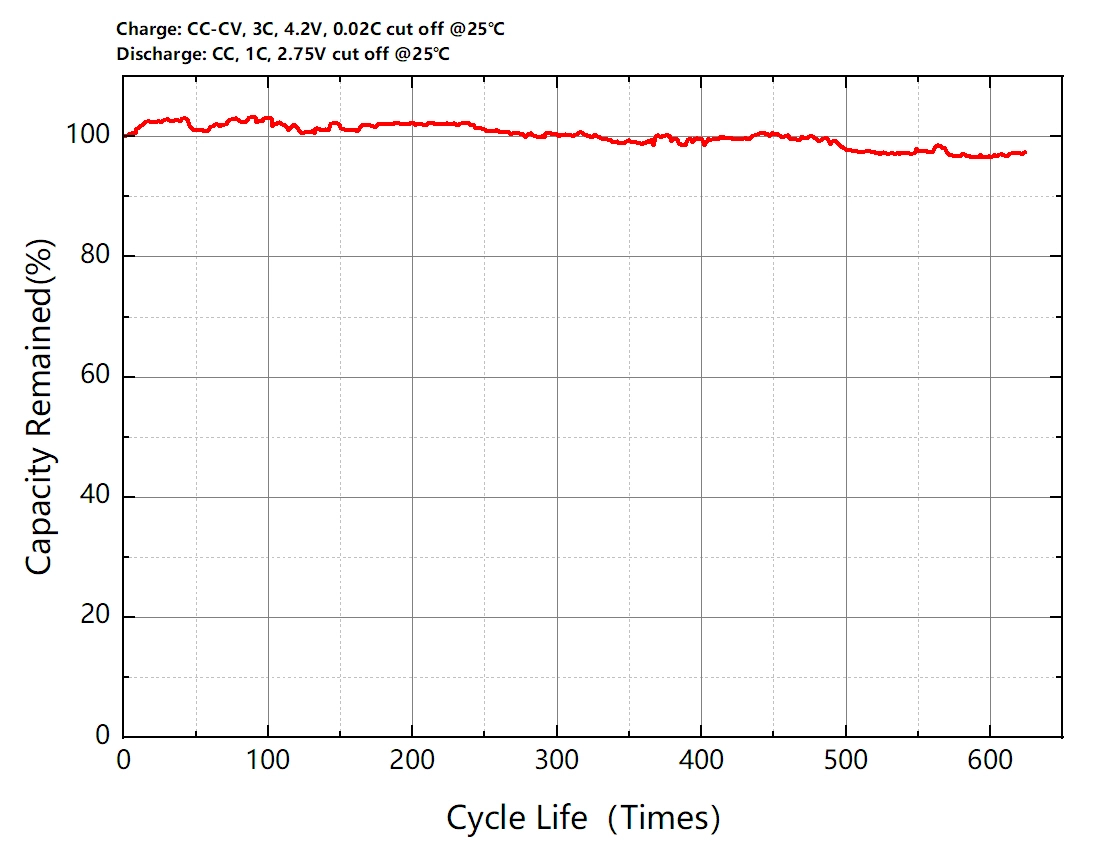
More Than 80% After 500 Cycles
The battery keeps more than 80% of its capacity after 500 cycles under the stated test conditions.
- Cycle test: 500 cycles
- Capacity retention: >80%
- Test condition: 0.5C charge and discharge at room temperature
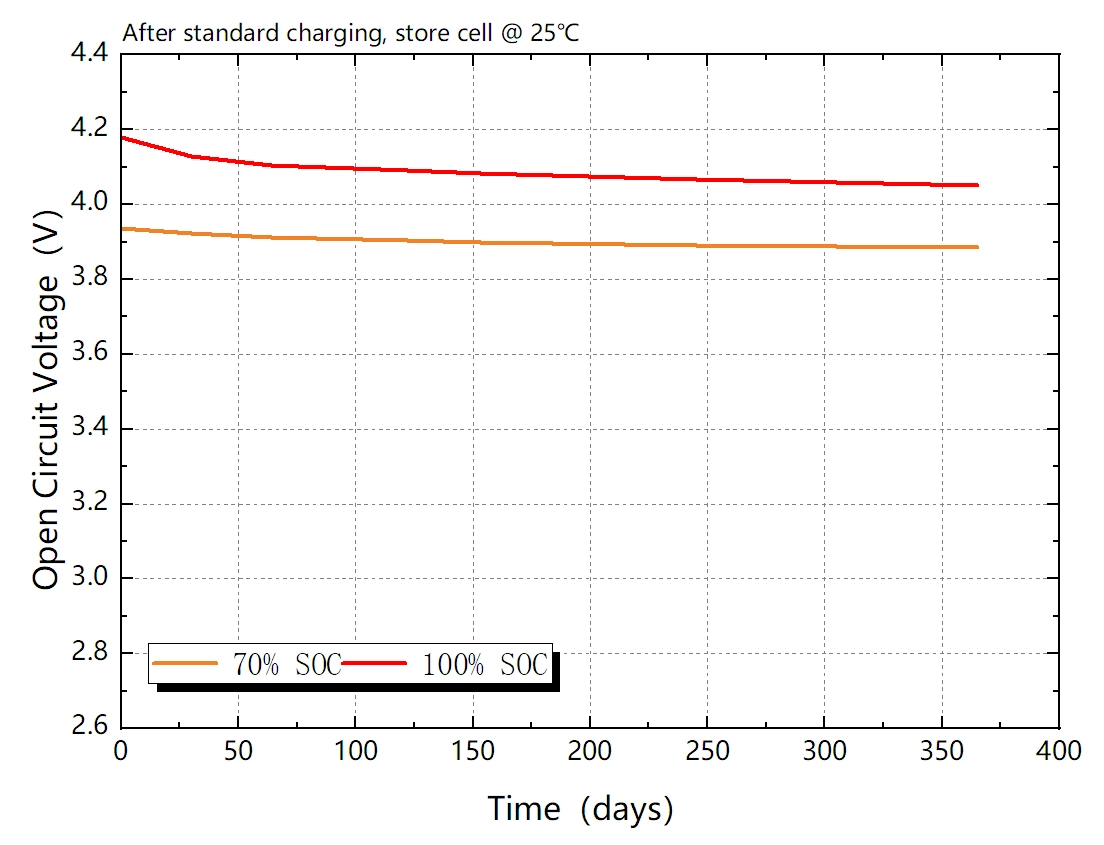
Battery Storage
Store the battery in a cool and dry place. High heat and long storage at a high charge level can speed up battery aging.
- Keep the battery away from heat
- Avoid wet storage areas
- Check the battery before use after long storage
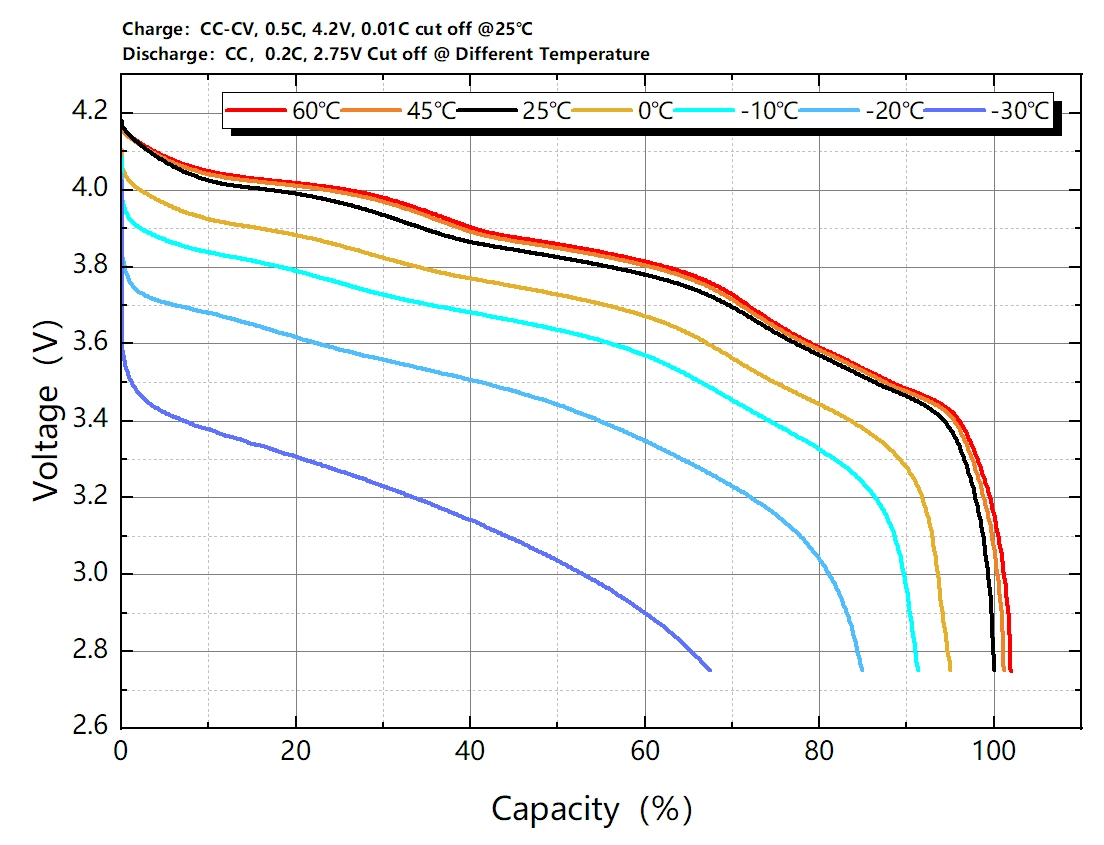
-20°C to 60°C Discharge
The stated discharge temperature range is -20°C to 60°C. Very low or high temperatures can affect battery capacity and runtime.
- Discharge range: -20°C to 60°C
- Low temperatures can reduce available capacity
- Special temperature needs should be checked separately
Made for Compact Device Integration
The 603040 gives designers a balance between battery capacity and device space.
680mAh in a Compact Battery Format
The 603040 is a practical choice for small rechargeable products. It provides more runtime than many lower-capacity batteries while keeping a compact format.
- Nominal voltage: 3.7V
- Rated capacity: 680mAh
- Nominal energy: 2.52Wh
- Battery type: Rechargeable LiPo battery
- Suitable for: Compact portable electronics
- OEM options: Connector, wire, protection, and installation details can be reviewed
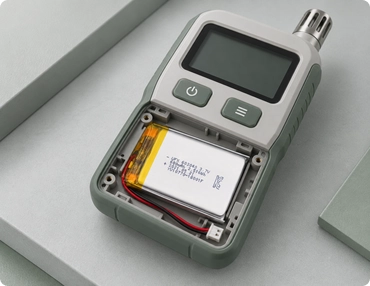
Where the 603040 Fits
The 603040 can be used in compact rechargeable electronics. Possible uses include IoT devices, sensors, portable instruments, handheld electronics, medical electronics, beauty devices, and smart hardware. The final battery choice should also match the device current, battery space, connector, and protection design.
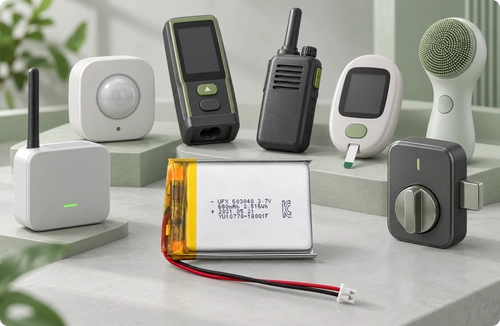
How We Check the 603040
We check key materials, production steps, electrical values, and finished batteries.
View Production Details 


Ufine 603040 vs Other Brand Options
Batteries with the same voltage or similar capacity may still be different. Check the test data, certification, protection, and OEM support before choosing a supplier.
Ufine 603040
- 3.7V nominal voltage and 680mAh rated capacity
- 2.52Wh nominal energy
- More than 80% capacity after 500 cycles under stated test conditions
- -20°C to 60°C stated discharge temperature range
- KC and UL/TÜV certification coverage
- Connector, wire, polarity, PCM, and optional NTC can be reviewed for OEM projects
- Incoming, process, electrical, and final inspection controls
Other Brand Options
- Check whether the rated capacity has test data
- Check the cycle test method and capacity retention
- Check the stated operating temperature range
- Check if KC, UL/TÜV, or other required approvals apply to the exact model
- Check the connector, wire, polarity, and protection design
- Check whether OEM changes are supported
- Check which inspection and shipping documents are available
Customize the 603040 for Your Device
We can review the connector, wire, protection, and installation details for your product.
- Connector: JST, Molex, and compatible options
- Wire: length, gauge, and polarity
- Protection: PCM configuration
- Temperature sensing: optional NTC
- Mechanical design: wire exit and installation layout
-
01Share the available battery space.
-
02Share the average and peak current.
-
03Confirm the connector, wire, and polarity.
-
04Confirm the protection and NTC needs.
-
05Approve the final battery specification.
Compare 3.7V LiPo Batteries by Size and Capacity
Compare other 3.7V LiPo batteries if the 603040 does not fit your space or runtime target. A similar capacity does not mean the batteries are direct replacements. Check the size, connector, current, and protection design first.
| Recommended Products | Voltage | Model | Capacity | Size (mm) |
|---|---|---|---|---|
| Slim LiPo Battery | 3.7V | 503443 | 750mAh | 5 × 34 × 45 |
| Compact LiPo Battery | 3.7V | 702535 | 600mAh | 7 × 25 × 37 |
| Ultra-Thin LiPo Battery | 3.7V | 403442 | 700mAh | 4 × 34 × 44 |
| Slim LiPo Battery | 3.7V | 503445 | 800mAh | 5 × 34 × 47 |
| Narrow LiPo Battery | 3.7V | 502545 | 600mAh | 5 × 25 × 47 |
| Long LiPo Battery | 3.7V | 503055 | 850mAh | 5 × 30 × 57 |
| Compact High-Capacity LiPo | 3.7V | 853334 | 1000mAh | 8.5 × 33 × 36 |
| Higher-Capacity LiPo | 3.7V | 603450 | 1100mAh | 6 × 34 × 52 |
| Narrow LiPo Battery | 3.7V | 782248 | 800mAh | 7.8 × 22 × 50 |
Battery Specification
-
1. Mechanical Characteristics
Cell 603040 PCM Yes NTC No Weight appr. 14g Configuration 1S1P -
2. Electrical Specification
Capacity 680mAh Nominal Voltage 3.7V Energy 2.516Wh Internal Resistance less than 180mΩ Max. Charge Voltage 4.2V Discharge Cut Off 2.75V Max. Charge Current 680mA Max. Discharge Current 680mA Standard Charge Current 340mA Standard Discharge Current 340mA Charging Temperature 0℃ to 45℃ Discharging Temperature -20℃ to 60℃ Storage Temp.Range 1 year at -20℃ to +30℃ 3 mos. at -20℃ to +45℃ 1 mo. at -20℃ to +60℃ Cycle life 100 cycles ≥92% 300 cycles ≥88% 500 cycles ≥80% -
3. Cell protection
Overcharge Detection 4.28V ±50mV (80 to 200msec delay, release 4.08V ±50mV) Overdischarge Detection 2.4V ±100mV (40 to 120msec. delay, release 3.0V ±100mV) Overcurrent Detection 2.5A to 4.5A (5 to 10msec. delay) Short protection Yes
The 603040 is a 3.7V 680mAh LiPo battery for compact rechargeable electronics. It provides 2.52Wh of nominal energy and can be adapted to different device designs.
Choosing the battery is only the first step. You also need to check battery space, device current, wiring, connector, charging system, and certification needs. The points below can help with the design process.
Part 1. Is the 603040 right for your battery space?
Start with the real battery compartment. Do not select a battery by capacity alone. The finished battery, wires, connector, and protection parts all need space.
-
Leave enough space around the pouch battery.
-
Check the wire exit direction before fixing the battery position.
-
Make sure the connector can be inserted and removed easily.
-
Keep sharp ribs, screws, and hard edges away from the battery pouch.
A small change in battery thickness or wire position can affect assembly. It is better to confirm the battery drawing before the device housing is fixed.
Part 2. How long can a 680mAh battery run your device?
Battery runtime mainly depends on the average current used by the device. A simple estimate is:
Runtime (hours) ≈ 680mAh ÷ average current (mA)
-
At 50mA: about 13.6 hours in theory.
-
At 100mA: about 6.8 hours in theory.
-
At 200mA: about 3.4 hours in theory.
Actual runtime is usually lower. Standby power, peak current, temperature, and system losses all affect the result.
Part 3. Check the real device current before selection
Average current is useful, but it does not show the full load. Many devices use different current levels during startup, communication, standby, or motor operation.
-
Average current: affects total runtime.
-
Peak current: affects voltage drop during short high-load events.
-
Standby current: matters for products that stay idle for long periods.
-
Duty cycle: shows how often the device enters each power mode.
For a new project, test the current profile on the real device. Then confirm that the battery can support the required load.
Part 4. Plan the connector, wire, and protection design
The battery connection should be planned early. Connector type, polarity, wire length, and wire direction can all affect final assembly.
-
Connector: choose a type that matches the device socket.
-
Polarity: confirm positive and negative positions before production.
-
Wire length: allow enough length without creating extra loops.
-
Wire gauge: choose it according to the required current.
-
Protection: confirm whether the project needs PCM and temperature sensing.
The charger should also match a 3.7V single-cell rechargeable LiPo battery. Final charging settings should follow the approved battery specification.
Explore Common Types of LiPo Battery ConnectorsPart 5. What do KC and UL/TÜV mean for the 603040?
The 603040 has KC and UL/TÜV certification coverage. These documents can help when the battery is used in projects with specific safety or market requirements.
-
KC: supports applicable battery requirements for the Korean market.
-
UL/TÜV: provides third-party battery safety evaluation.
Always check the exact certificate, model scope, and target-market rules before mass production. The battery certificate and the final device approval are not always the same thing.
Part 6. Test the 603040 inside the final device
A battery may work well on a bench but behave differently inside the finished product. Final testing should use the real enclosure and normal device functions.
-
Check actual runtime.
-
Check voltage during the highest load.
-
Check charging time and battery temperature.
-
Check standby power use.
-
Check the wire and connector after final assembly.
The stated discharge range is -20°C to 60°C. Very low or high temperatures can change available capacity and runtime.
Part 7. What should be confirmed before mass production?
Lock the battery specification before placing a production order. This helps avoid connector, wiring, and assembly changes later.
-
Battery model and approved drawing
-
Connector model and mating connector
-
Wire length, gauge, color, and polarity
-
PCM and optional NTC requirements
-
Wire exit direction and installation space
-
Label and marking requirements
-
KC, UL/TÜV, and other required project documents
If the standard 603040 does not match your device, the connector, wire, protection design, and other integration details can be reviewed for an OEM project.
FAQs
-
What are the main specifications of the 603040 battery?
The 603040 is a 3.7V 680mAh rechargeable LiPo battery with 2.52Wh nominal energy. It is designed for compact electronic devices with limited battery space. -
How long can a 680mAh 603040 battery run a device?
Runtime depends on average device current. In theory, 680mAh can provide about 6.8 hours at 100mA or 3.4 hours at 200mA. Actual runtime is usually lower because of system losses, peak loads, and temperature. -
Can the 603040 replace another 3.7V LiPo battery?
It may be suitable if the battery size, capacity, current needs, connector, polarity, protection design, and charging system match the device. The same voltage alone does not mean two batteries are direct replacements. -
What certifications does the 603040 battery have?
The 603040 has KC and UL/TÜV certification coverage. These documents can support projects with specific battery safety and market requirements. -
What is the cycle life of the 603040 LiPo battery?
The battery keeps more than 80% of its capacity after 500 cycles under the stated room-temperature test condition of 0.5C charge and discharge. -
What is the discharge temperature range of the 603040 battery?
The stated discharge temperature range is -20°C to 60°C. Very low or high temperatures can reduce available capacity and runtime. -
Can the connector, wire, PCM, or NTC of the 603040 battery be customized?
Yes. Connector type, wire length, wire gauge, polarity, PCM design, and optional NTC sensing can be reviewed based on the device requirements.
Ready to Power Your Project?
We’ll help you design the perfect power source — tailored to your voltage, capacity, size, C-rate, and performance needs.
Contact Us NowWhat Our Customers Are Saying
We love hearing from you! Your experiences help us improve and inspire others. Check out what our happy customers have to say about our lithium batteries—share your thoughts with us too!









Latest Articles
About Lithium Battery Industry News
Buck vs. Boost vs. Buck-Boost Converter: Which Is Best for Battery?
Not sure which converter your battery-powered device needs? Compare Buck, Boost, and Buck-Boost designs and discover what affects voltage stability and runtime.
2026-10-20 Ufine

How to Match 18650 Cells for a Reliable Battery Pack?
Building an 18650 battery pack? Learn how to compare cell capacity, voltage, and internal resistance to avoid mismatches and improve reliability.
2026-10-19 Ufine

Why Do 18650 Battery Packs Get Hot During Discharge?
Is your 18650 battery pack overheating under load? Learn what causes excess heat, how to spot dangerous symptoms, and what to do next.
2026-10-19 Ufine