- Part 1. Quick answer: How to protect mobility scooter batteries in winter
- Part 2. Why cold weather reduces battery range
- Part 3. Which mobility scooter batteries are most affected by winter?
- Part 4. Ideal winter operating temperatures
- Part 5. Winter charging guidelines
- Part 6. How to extend range in winter (Practical tips)
- Part 7. Winter storage instructions
- Part 8. Common winter battery problems & technical causes
- Part 9. Warning signs your battery is failing (Winter magnifies them)
- Part 10. Should you upgrade to lithium for winter?
- Part 11. Winter battery care checklist (Highly compressible section)
- Part 12. Final recommendation
- Part 13. Frequently asked winter questions
Part 1. Quick answer: How to protect mobility scooter batteries in winter
To protect mobility scooter batteries during winter, keep them warm (above 10°C), maintain a full charge, avoid deep discharges, store the scooter indoors, and charge immediately after every ride. Cold temperatures significantly reduce voltage, amp-hour capacity, and real-world range—especially in lead-acid and gel batteries.
Part 2. Why cold weather reduces battery range
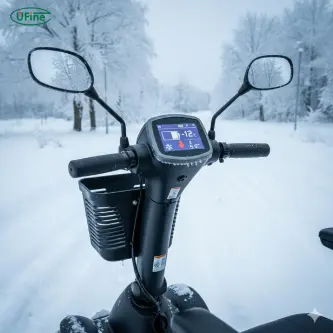
Key Point: Low temperatures slow internal chemical reactions.
- Lead-acid AGM/Gel batteries lose 20–50% range at 0–10°C
- Lithium mobility scooter batteries lose 10–25% at the same temperatures
- Internal resistance increases → lower operating voltage
- Capacity (Ah) drops → shorter usable runtime
- Lubrication stiffens → motor draws more current
Result: Even a healthy battery feels “weaker” in winter.
Part 3. Which mobility scooter batteries are most affected by winter?
1 Lead-Acid Mobility Scooter Batteries (AGM/Gel)
- Most common
- Heavily impacted by cold weather
- Require strict charging discipline
- Should never be stored cold for long periods
2 Li Mobility Scooter Battery (Li-ion/LiFePO4)
- Maintain higher capacity in cold
- Faster charging and better cycle life
- Require BMS low-temperature protection
- Should not be charged below 0°C
Best Choice for Winter: Lithium, but only with BMS protection.
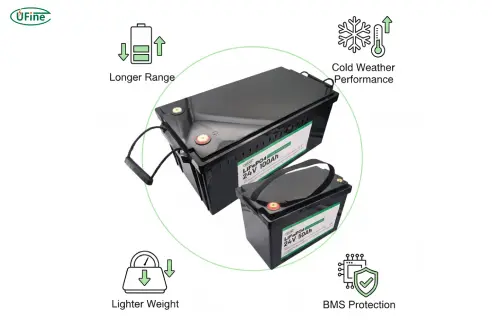
Part 4. Ideal winter operating temperatures
- Lithium mobility scooter batteries: 0°C–40°C
- AGM/Gel mobility scooter batteries: 5°C–35°C
Below 0°C:
- Lead-acid performance drops sharply
- Lithium must NOT be charged unless the BMS supports low-temp charging
Below –10°C:
- Mobility scooter range can drop up to 60%
AGM VS Lithium VS Lead-Acid Battery: Comprehensive Comparison
Part 5. Winter charging guidelines
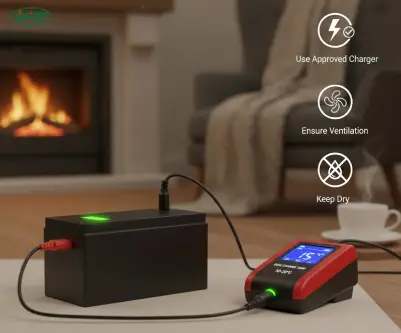
✔ Always Charge Indoors
Battery chemistry warms during charging; this restores some available capacity.
✔ Charge After Every Ride
Prevent sulfation (lead-acid) and voltage drop (lithium).
✔ Avoid Fast Charging in the Cold
Cold cells = more stress = shortened lifespan.
✔ Let the Battery Warm Before Charging
Best if battery temperature is 10–20°C before charging.
✔ Use the Correct Charger
AGM, Gel, and lithium require different charge profiles.
Part 6. How to extend range in winter (Practical tips)
- Store and charge the scooter indoors, not in a cold garage
- Pre-warm the battery for 15 minutes (ride gently at low speed)
- Avoid carrying unnecessary weight
- Keep tires fully inflated (cold air reduces PSI)
- Use Eco/Low Speed Mode to reduce current draw
- Plan shorter trips—don’t run down below 30%
- Install a thermal insulation cover (works surprisingly well)
Part 7. Winter storage instructions
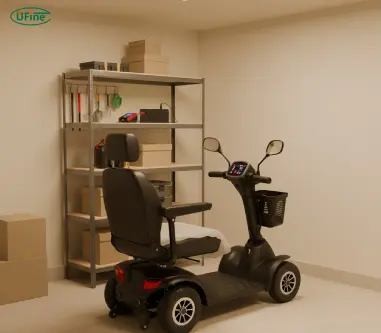
If storing for <1 week:
- Keep battery topped up
- Store indoors above 10°C
If storing for 1–3 months:
- Lead-acid: Charge every 2–4 weeks
- Lithium: Store at 50–70% charge, check every 2 months
Never store mobility scooter batteries:
- In freezing temperatures
- At 0% charge
- In humidity or condensation
- While connected to the scooter without reason
Part 8. Common winter battery problems & technical causes
| Winter Issue | Technical Reason |
|---|---|
| Range drops 20–50% | Reduced Ah & higher internal resistance |
| Battery dies suddenly | Voltage sag under cold load |
| Charger blinks / won’t start | Battery is too cold |
| Scooter loses power on hills | Motor draws more current in winter |
| Battery won’t reach full capacity | Lead-acid sulfation increases in cold weather |
Part 9. Warning signs your battery is failing (Winter magnifies them)
- Range drops >50% even at warm temps
- Mobility scooter slows down under light load
- Battery heats unusually during charging
- Voltage reading is unstable
- Runtime becomes unpredictable
If these symptoms persist even after warming the battery → battery replacement may be needed.
Part 10. Should you upgrade to lithium for winter?
Lithium mobility scooter batteries offer:
- 2× usable range
- 3× cycle life
- Better cold-weather performance
- Lighter weight
- Faster, safer charging
But:
- Must have a BMS with low-temperature cutoff
- Higher upfront cost
Best for winter climates: LiFePO4 lithium batteries with integrated BMS heating or low-temperature charge protection.
Part 11. Winter battery care checklist (Highly compressible section)
- Store indoors (10–25°C)
- Charge after every ride
- Avoid deep discharge (keep above 30%)
- Use correct charger
- Don’t charge lithium below 0°C
- Maintain tire pressure
- Don’t leave scooter in a cold car/garage
- Inspect battery terminals monthly
Part 12. Final recommendation
If you want reliable winter performance:
- Keep your mobility scooter batteries warm and fully charged.
- Avoid charging lithium batteries in sub-zero conditions.
- Store the scooter indoors.
- Consider upgrading to lithium if you frequently ride in winter climates.
Part 13. Frequently asked winter questions
Can mobility scooter batteries freeze?
Yes—AGM/Gel batteries can freeze if deeply discharged at –10°C. Lithium freezes at lower temperatures but must not be charged in that state.
Why does my scooter stop suddenly in cold weather?
Voltage sag increases under cold load.
Is it safe to leave my scooter outside in winter?
Not recommended. Cold + humidity accelerates battery degradation.
Related Tags:

More Articles

고방전 배터리는 높은 전류와 발열로 배터리수명이 줄어듭니다. 구조적 한계, 사용 패턴, 충전 습관 등 실제 수명 단축 요인을 체계적으로 분석했습니다.
Capacitor vs Battery: What is the Difference?
Capacitor vs battery explained in detail. Learn the difference between capacitor and battery in energy storage, charging speed, lifespan, and real applications.
18650 Battery vs AA: Which Is Better for Your Device?
Compare 18650 vs AA batteries in capacity, voltage, rechargeability, and applications. Learn which battery type fits high-drain or everyday devices.
What is the Difference Between Battery Cell, Battery Control Module, and Battery Pack?
Compare battery cells, modules, and packs. Learn functions, design differences, control modules, and selection tips for EV, ESS, and industrial use.
How to Prevent LiPo Battery Explosion?
Can LiPo batteries explode or catch fire? Learn key causes of LiPo battery fires and proven charging, storage, and handling tips to reduce explosion risk.