
- Key Takeaways
- Part 1. Battery capacity is not constant
- Part 2. Understanding C-tate (And why 0.5C matters)
- Part 3. Common battery charging and discharging rates
- Part 4. How discharge rate affects battery capacity
- Part 5. Battery performance: more than just capacity
- Part 6. Charging rate and battery health
- Part 7. Real-world trade-offs engineers deal with
- Part 8. How to optimize charging and discharging
- Part 9. How to know the battery charging and discharging rates?
- Part 10. Final thoughts
- Part 11. FAQs
If you’ve ever wondered why a “3000mAh” battery sometimes feels like it behaves more like a 2400mAh one, you’re not imagining things. The truth is a bit uncomfortable: battery capacity is not a fixed number. It changes depending on how you charge and discharge it.
In real-world applications—from drones to EVs to portable devices—the battery discharge rate quietly determines how much energy you actually get, how hot things run, and how long your battery lasts.
Key Takeaways
- Battery capacity depends on discharge rate—higher rates reduce usable capacity.
- A 0.5C charge rate is widely used because it balances heat, efficiency, and lifespan.
- High discharge rates increase internal losses and voltage drop, causing early cut-off.
- Fast charging doesn’t just “stress” batteries—it can trigger lithium plating and long-term degradation.
- In real applications, choosing the right battery is about trade-offs, not just capacity numbers.
Part 1. Battery capacity is not constant
Most datasheets list capacity under very specific conditions—usually at a low discharge rate like 0.2C and controlled temperature.
But here’s what often gets overlooked:
The faster you discharge a battery, the less capacity you actually get.
This is why two identical batteries can behave completely differently depending on the load. For example:
- A flashlight drawing low current may extract nearly full capacity
- A drone pulling high current may lose 20–30% of that capacity instantly
This effect is deeply tied to battery discharge rate, and it’s one of the biggest gaps between lab data and real-world performance.
Part 2. Understanding C-tate (And why 0.5C matters)
Instead of thinking in amps, engineers often use C-rate to describe charge and discharge speed.
A quick reference:
| C-Rate | Meaning | Time to Full Charge/Discharge |
|---|---|---|
| 0.5C | Half the capacity per hour | ~2 hours |
| 1C | Full capacity per hour | ~1 hour |
| 2C | Twice the capacity per hour | ~30 minutes |
So if you have a 2000mAh battery:
- 1C = 2A
- 0.5C = 1A
0.5C charge rate isn’t arbitrary—it’s an industry compromise.
At this rate:
- Heat generation stays manageable
- Chemical reactions remain stable
- Cycle life is preserved
Push beyond that, and things start to break down—sometimes literally.
If you’re still a bit unclear about how C-rate actually works in practice, this quick guide on what C means in batteries breaks it down with simple examples.
Part 3. Common battery charging and discharging rates
Different battery types and applications come with their own typical charging and discharging rates. These vary based on design, chemistry, and intended use.
Lithium-Ion Batteries
- Charging Rates: Typically range from 0.5C to 1C. Fast charging options may go up to 2C, but this can strain the battery.
- Discharging Rates: For regular electronics, 1C is standard. High-power applications like drones or EVs may demand 3C or higher.
Lead-Acid Batteries
- Charging Rates: These are slower, usually 0.1C to 0.3C, to prevent overheating and overcharging.
- Discharging Rates: Lead-acid batteries typically discharge at 0.1C to 0.2C, suitable for steady, long-term use.
Nickel-Based Batteries (NiMH and NiCd)
- Charging Rates: Generally 0.1C to 0.3C for safety, though fast-charging models can handle 1C.
- Discharging Rates: Around 0.2C to 0.5C for standard usage, with high-performance options tolerating higher rates.
High-Performance Batteries
For specialized uses like EVs or power tools, batteries may allow extreme rates, such as 5C or even 10C for discharge. However, these rates require robust thermal management systems to prevent overheating.
Part 4. How discharge rate affects battery capacity
Let’s look at what actually happens when you increase the discharge rate.
| Discharge Rate | Typical Usable Capacity |
|---|---|
| 0.2C | ~100% |
| 1C | ~95% |
| 2C | ~85–90% |
| 5C | ~70–80% |
So why does this happen?
It comes down to three interacting factors:
- Internal resistance: Higher current → larger voltage drop
- Cut-off voltage: Device shuts off earlier even if energy remains
- Electrochemical limits: Reactions can’t keep up with demand
This is also related to concepts like Peukert’s Law, which explains how higher discharge rates reduce effective capacity.
So when someone asks, “How does discharge rate affect battery capacity?”, the honest answer is:
It doesn’t just affect it—it defines how much of it you can actually use.
Part 5. Battery performance: more than just capacity
Capacity is only part of the story. Battery performance under load is equally critical.
At high discharge rates, you’ll often see:
- Noticeable voltage sag (devices shut off early)
- Reduced power output stability
- Rapid temperature rise
This is why high-performance applications (like drones or power tools) don’t just use “high-capacity” cells—they use low internal resistance cells.
To better understand why voltage drops under load, it helps to look at battery internal resistance, which plays a major role in real-world performance.
And in many cases, a lower-capacity battery with better discharge characteristics will outperform a higher-capacity one.
Part 6. Charging rate and battery health
Now let’s switch to charging.
Fast charging sounds great—but the real issue isn’t speed alone.
It’s what speed causes inside the battery:
- Lithium plating: Metallic lithium forms on the anode instead of intercalating properly
- SEI layer damage: Protective layer degrades over time
- Thermal stress: Elevated temperatures accelerate aging
So when we talk about battery health and charging, it’s not about avoiding fast charging entirely—it’s about controlling conditions.
Part 7. Real-world trade-offs engineers deal with
In actual battery design, nothing is optimized in isolation.
You’re always balancing:
- Power vs capacity
- Charging speed vs lifespan
- Size vs thermal management
For example:
- In EVs, high discharge rates enable acceleration—but reduce efficiency
- In energy storage, low discharge rates maximize total energy output
- In drones, performance often comes at the cost of cycle life
From a manufacturer’s perspective, one of the most common mistakes we see is this:
Users choose batteries based on nominal capacity, ignoring discharge conditions.
And that’s where expectations start to diverge from reality.
Part 8. How to optimize charging and discharging
If you’re trying to improve battery life and performance, you don’t need to over-engineer it. A few practical adjustments go a long way:
- Use moderate charge rates (around 0.5C when possible)
- Avoid continuous high discharge unless necessary
- Keep batteries within a stable temperature range
- Don’t push to full charge and full discharge constantly
These aren’t strict rules—but they reflect how batteries behave in the real world.
Part 9. How to know the battery charging and discharging rates?
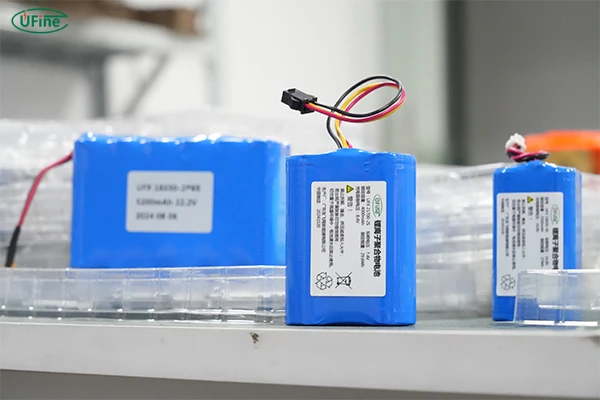
Understanding your battery’s charging and discharging rates is vital for optimizing performance and ensuring safety. Here’s how you can determine these rates:
1. Manufacturer Specifications
The simplest way is to check the battery’s datasheet or user manual. Manufacturers typically list the recommended C-rates for both charging and discharging, along with safety limits.
2. Battery Management System (BMS)
Modern batteries, especially in EVs or high-tech applications, come with a built-in BMS. This system monitors real-time data, including charging/discharging rates, voltage, and temperature. It ensures the battery operates within safe parameters.
3. Using a Multimeter
For smaller batteries, you can measure the current during charging or discharging using a multimeter. By dividing the measured current (in amps) by the battery’s capacity (in ampere-hours), you can calculate the C-rate.
For example, if a 2,000mAh battery is charging at 1,000mA:
C-rate = 1,000mA ÷ 2,000mAh = 0.5C
Part 10. Final thoughts
Battery charging and discharging rate isn’t just a technical detail—it’s one of the most important factors shaping real-world performance.
Once you understand that capacity depends on how you use the battery, everything else starts to make sense:
- Why ratings don’t match reality
- Why some batteries “feel stronger” than others
- Why charging habits matter more than you think
And perhaps most importantly:
The best battery isn’t the one with the highest capacity—it’s the one matched to your actual discharge conditions.
Part 11. FAQs
1. What is considered a high discharge rate for lithium batteries?
A high discharge rate typically starts at 1C or above. However, what counts as “high” depends on the battery design—power cells can handle higher rates, while energy cells cannot.
2. Does a higher discharge rate always reduce battery efficiency?
In most cases, yes. Higher discharge rates increase internal losses and heat, which lowers overall energy efficiency even if the battery is designed for high power output.
3. Can using a low discharge rate improve battery lifespan?
Yes. Lower discharge rates reduce stress on internal materials, leading to slower degradation and longer cycle life over time.
4. Why does my device shut off even when the battery isn’t empty?
This usually happens due to voltage drop under load. At high discharge rates, the voltage falls below the cut-off level before the battery is fully depleted.
5. Do all batteries respond the same way to discharge rate?
No. Lithium-ion, LiFePO4, and other chemistries behave differently. Even within lithium-ion, cell design (energy vs power cells) plays a major role.
6. Can battery management systems (BMS) reduce discharge rate impact?
Yes. A BMS can limit current, manage temperature, and prevent unsafe conditions, but it cannot completely eliminate the physical limits of the battery.
Related Tags:

More Articles

JST vs Molex: The Right Battery Connector Choice
JST or Molex for your battery? Learn how connector selection affects current, voltage drop, reliability, and device performance.
Custom Battery Pricing: Costs Manufacturers Don’t Mention
A low battery quote may not be the final cost. Discover common hidden expenses that affect custom lithium battery projects.
Battery Wire Length: Hidden Cause of Power Loss
A longer battery wire can cause voltage drop, power loss, and unstable operation. Learn how wire length affects battery performance.
How Device Sleep Modes Affect Battery Life
Think sleep mode extends battery life? Learn why devices still drain power and how firmware, hardware, and batteries affect runtime.
LiPo Battery and PCB Design: Clearance, Insulation, and Placement
Learn how to optimize LiPo battery PCB clearance, insulation, placement, wiring, and thermal design—and avoid common integration mistakes.


