
- Key Takeaways
- Part 1. What does "20S" mean in a battery pack?
- Part 2. What is an 18650 battery?
- Part 3. How does a series battery configuration work?
- Part 4. Series vs parallel battery configuration
- Part 5. Why is 20S important in battery pack design?
- Part 6. What is the actual voltage of a 20S battery?
- Part 7. Why does a 20S battery need a BMS?
- Part 8. Common applications of 20S 18650 battery packs
- Part 9. How to maintain a 20S lithium battery pack
- Part 10. Common mistakes when using a 20S battery
- Part 11. FAQs about 20S 18650 battery
If you are building, buying, or using a lithium battery pack, you will often see labels like 10S, 13S, 16S, or 20S. These terms describe how battery cells are connected inside the pack.
In a 20S battery, the “20S” means 20 lithium-ion cells connected in series. In most 18650 battery packs, each cell has a nominal voltage of 3.7V. When 20 cells are connected in series, the voltages add together to create a much higher pack voltage.
A 20S 18650 battery pack is commonly used in:
- Electric motorcycles
- E-bikes and scooters
- Solar energy storage
- Industrial equipment
- High-power inverters
- Robotics and AGV systems
Understanding the meaning of 20S battery voltage is important for choosing the right charger, inverter, motor controller, and BMS for your system.
Key Takeaways
- A 20S battery contains 20 cells connected in series.
- A standard 3.7V lithium-ion cell creates a 74V nominal battery pack in a 20S configuration.
- Fully charged 20S battery voltage is typically 84V.
- Series connection increases voltage, not capacity.
- A BMS for 20S battery pack is required for balancing and protection.
- 20S 18650 battery packs are widely used in EVs, energy storage, and industrial systems.
- Many 20S packs combine series and parallel connections, such as 20S2P or 20S5P.
Part 1. What does “20S” mean in a battery pack?
The letter “S” stands for series.
In a 20S configuration:
- 20 battery cells are connected positive-to-negative
- The voltage of each cell adds together
- The amp-hour (Ah) capacity remains the same
A typical lithium-ion 18650 cell has:
- Nominal voltage: 3.7V
- Fully charged voltage: 4.2V
- Cutoff voltage: around 3.0V
So, the total voltage of a 20S battery becomes:
Nominal voltage: 3.7V × 20 = 74V
Fully charged voltage: 4.2V × 20 = 84V
Minimum safe voltage (approx.): 3.0V × 20 = 60V
This is why many users search for terms like “20S battery voltage” or “20S lithium battery voltage chart.”
74V = 3.7V × 20
Part 2. What is an 18650 battery?
An 18650 battery is a cylindrical lithium-ion cell widely used in rechargeable battery packs.
The name “18650” describes the cell size:
- 18mm diameter
- 65mm length
These cells are popular because they offer:
- High energy density
- Long cycle life
- Stable discharge performance
- Good balance between size and capacity
Typical specifications include:
| Specification | Typical Value |
|---|---|
| Nominal Voltage | 3.6V–3.7V |
| Full Charge Voltage | 4.2V |
| Capacity | 2000mAh–3500mAh |
| Chemistry | NMC, INR, ICR, Li-ion |
18650 cells are commonly used to build custom lithium battery packs in series and parallel configurations.
You can also read: What Is an 18650 Battery?
Part 3. How does a series battery configuration work?
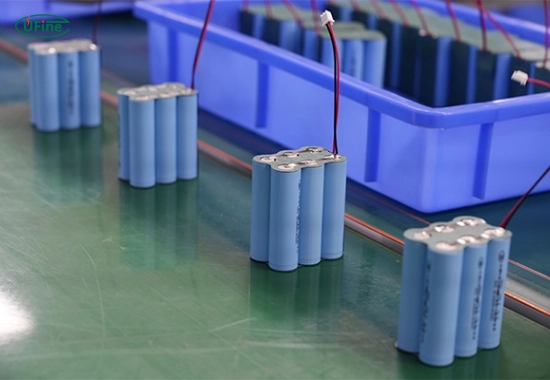
In a series connection:
- The positive terminal of one cell connects to the negative terminal of the next cell.
- Voltage increases.
- Capacity stays the same.
For example:
| Configuration | Voltage | Capacity |
|---|---|---|
| 1S1P | 3.7V | 3Ah |
| 10S1P | 37V | 3Ah |
| 20S1P | 74V | 3Ah |
A higher voltage system reduces current for the same power output. This improves efficiency and lowers heat generation in cables and connectors.
That is one reason why high-voltage battery systems are common in EVs and industrial equipment.
Part 4. Series vs parallel battery configuration
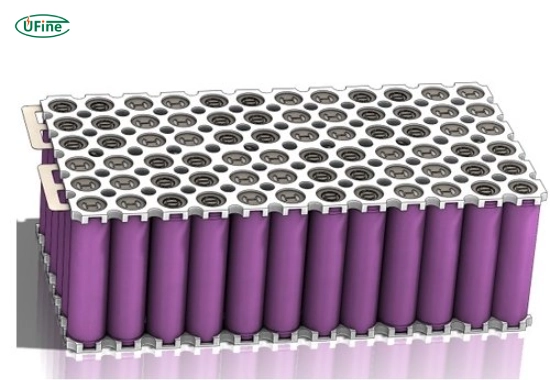
Battery packs often combine both series and parallel connections.
- Series (S) increases voltage
- Parallel (P) increases capacity and runtime
For example:
- 20S1P = 74V, single cell capacity
- 20S2P = 74V, double capacity
- 20S5P = 74V, five times capacity
Comparison Table
| Configuration | Voltage | Capacity | Main Use |
|---|---|---|---|
| Series (S) | Increases | Stays the same | High-voltage systems |
| Parallel (P) | Stays the same | Increases | Long runtime systems |
Related guide: Batteries in Series vs Parallel: Which Is Better?
Part 5. Why is 20S important in battery pack design?
The series count determines the operating voltage of the battery pack. This directly affects:
- Motor compatibility
- Controller requirements
- Charger selection
- Power output
- System efficiency
- Safety design
A 20S battery pack is often selected because it can deliver high power without requiring extremely high current.
For example:
- Lower current means less heat
- Smaller cable sizes may be used
- Energy transmission becomes more efficient
Many 72V electric vehicles actually use a 20S lithium battery configuration because the nominal voltage is about 74V and full charge reaches 84V.
Part 6. What is the actual voltage of a 20S battery?
The voltage of a 20S battery changes during charging and discharge.
Typical 20S Battery Voltage Range
| Battery State | Voltage |
|---|---|
| Fully Charged | 84V |
| Nominal Voltage | 74V |
| Storage Voltage | Around 76V |
| Low Voltage Cutoff | 60V–64V |
The exact values depend on:
- Cell chemistry
- BMS settings
- Discharge rate
- Manufacturer specifications
When designing a system, always ensure your charger and controller match the full voltage range of the battery pack.
Part 7. Why does a 20S battery need a BMS?
A BMS for 20S battery pack is critical for safety and performance.
A Battery Management System monitors each series group and protects the pack from dangerous conditions.
Main BMS functions include:
- Cell balancing
- Overcharge protection
- Over-discharge protection
- Overcurrent protection
- Short-circuit protection
- Temperature monitoring
Without a proper 20S BMS, one weak cell can become overcharged or over-discharged, leading to:
- Capacity loss
- Cell damage
- Swelling
- Thermal runaway
- Fire risk
For high-voltage lithium packs, a quality BMS is not optional.
For battery safety standards, refer to: UL Standards and IEC Battery Safety Standards
Part 8. Common applications of 20S 18650 battery packs
Because of their high voltage and strong power delivery, 20S lithium battery packs are used in many demanding applications.
Typical Uses
| Application | Why 20S Is Used |
|---|---|
| Electric motorcycles | High motor voltage |
| E-bikes | Better efficiency and acceleration |
| Solar storage systems | Compatible with inverter systems |
| Industrial robots | Stable high-voltage output |
| AGVs and forklifts | Long runtime and high power |
| Portable power stations | Efficient inverter operation |
Many custom battery manufacturers also build 20S packs using larger parallel groups for higher capacity systems.
You may also like: Custom Lithium Battery Pack Guide
Part 9. How to maintain a 20S lithium battery pack
Proper maintenance helps extend battery lifespan and improve safety.
Best Practices
- Avoid storing the battery fully charged for long periods
- Keep storage temperature between 15°C and 25°C
- Use the correct charger for 20S lithium batteries
- Do not over-discharge the pack
- Inspect connectors and wiring regularly
- Avoid water exposure and physical damage
For long-term storage, most lithium battery manufacturers recommend storing the battery at around 40%–60% charge.
Part 10. Common mistakes when using a 20S battery
Using the Wrong Charger
A 20S lithium-ion battery requires an 84V charger. Using the wrong charger may damage the pack or BMS.
Mixing Different 18650 Cells
Do not mix:
- Different capacities
- Different brands
- Different chemistries
- Old and new cells
This creates imbalance and reduces safety.
Ignoring Heat Management
High-power 20S battery packs can generate heat during fast charging and heavy discharge. Proper ventilation and thermal design are important.
Part 11. FAQs about 20S 18650 battery
What does 20S mean in a battery?
20S means 20 battery cells are connected in series. The voltages add together to create a higher-voltage battery pack.
What is the voltage of a 20S 3.7V battery pack?
A 20S 3.7V lithium battery has:
- 74V nominal voltage
- 84V fully charged voltage
- Around 60V minimum safe voltage
What charger is needed for a 20S lithium battery?
A 20S lithium-ion battery pack typically requires an 84V charger designed specifically for lithium batteries and compatible with the BMS.
What is a 20S BMS?
A 20S BMS is a Battery Management System designed to monitor and protect 20 series-connected cells in a lithium battery pack.
Can I build a 20S battery pack with 18650 cells?
Yes. Many custom lithium battery packs use 18650 cells in 20S configurations. However, all cells should match in chemistry, capacity, and condition for safety and performance.
Related Tags:

More Articles

Dead Battery or Device Failure? How to Find the Cause
Think your device is broken? Learn how to tell if the problem comes from battery aging or hardware failure before replacing your electronics.
Why iPhone Duo Uses Two Batteries: The Engineering Behind Foldable Phone Power
Why do foldable phones need two batteries? Explore the engineering challenges behind iPhone Duo’s dual-battery architecture and future battery trends.
Solid-State Batteries: 3 Myths You Need to Know
Solid-state batteries promise safer EVs and longer range, but the reality is more complex. Discover the challenges behind this next-gen technology.
Battery Capacity vs Discharge Rate: The Choice Engineers Face
Higher capacity or higher discharge rate? Learn how to choose the right LiPo battery for longer runtime, stable power output, and better device performance.
Battery Cable Size Guide: Choose the Right Wire Fast
Not sure what battery cable size you need? Learn how to select the right wire gauge, terminal size, and cable for safer, more efficient battery systems.


