
- Key takeaways
- Part 1. What is a battery terminal?
- Part 2. What causes a bad battery terminal?
- Part 3. Can battery terminals go bad?
- Part 4. How to know if battery terminals are bad?
- Part 5. Bad battery terminal symptoms vs battery failure
- Part 6. How to fix a bad battery terminal?
- Part 7. How to prevent battery terminal problems?
- Part 8. Battery terminal lifespan
- Part 9. Battery terminal problem application matrix
- Part 10. Bad battery terminal FAQs
Battery terminals connect the battery to the electrical system. A bad battery terminal can reduce power flow and cause charging issues, dim lights, slow starting, or system failure.
Corrosion, loose connections, vibration, acid leaks, and aging materials are the most common causes. Knowing how to identify battery terminal problems early helps improve battery performance, reduce downtime, and extend battery life.
Key takeaways
- Battery terminals transfer power from the battery to the electrical system.
- Corrosion is the most common cause of a bad battery terminal.
- Loose battery terminal symptoms include flickering lights, slow starting, and unstable power delivery.
- A faulty battery terminal can reduce charging efficiency and damage electrical components.
- Broken or heavily corroded terminals should be replaced rather than repaired.
- Regular cleaning and inspection significantly extend battery terminal lifespan.
Part 1. What is a battery terminal?
Battery terminals are conductive connectors attached to battery posts. They create the interface between the battery and the electrical load.
Most battery systems use:
- Positive terminal (+) – supplies current to the electrical system
- Negative terminal (-) – completes the electrical circuit
Terminal materials commonly include:
| Material | Advantages | Typical Applications |
|---|---|---|
| Lead | Low cost, common | Automotive batteries |
| Copper | Excellent conductivity | Industrial systems |
| Brass | Corrosion resistance | Marine and high-humidity environments |
| Tinned Copper | Better oxidation resistance | Lithium battery packs |
Without reliable terminals, even a healthy battery cannot deliver power effectively.
Related reading: Battery terminal guide

Part 2. What causes a bad battery terminal?
Several factors can create a faulty battery terminal.
Corrosion build-up
Corrosion is the leading cause of battery terminal failure.
Battery electrolyte contains sulfuric acid. Small amounts of gas can escape during charging and react with metal surfaces. This chemical reaction forms white, blue, or green deposits.
Corrosion increases electrical resistance and reduces current flow.
Common corrosion indicators:
- White powder around terminals
- Green or bluish deposits
- Rough metal surfaces
- Increased resistance during charging
Battery acid leaks make corrosion much worse.
Learn more about corrosion causes: Battery terminal corrosion guide
Loose battery connections
Loose connections are another major reason battery terminals go bad.
If clamps are not tightened correctly:
- Electrical resistance increases
- Heat builds up
- Voltage drops occur
- Arcing damages terminal surfaces
Loose battery terminal symptoms often include:
- Vehicle starts inconsistently
- Dashboard lights flicker
- Sudden power interruption
- Charging instability
- Intermittent electrical problems
Many users ask: “Can a broken battery terminal cause problems?”
Yes. Even a partially loose or cracked terminal can interrupt current flow enough to create serious performance issues.
Mechanical wear and vibration
Battery terminals experience constant thermal cycling and vibration.
Over time:
- Clamps stretch
- Metal fatigues
- Contact pressure weakens
- Surface oxidation increases
Industrial machinery, EV battery systems, marine batteries, and off-road vehicles experience higher vibration stress.
Battery acid leakage
Battery leakage accelerates terminal damage.
Acid leaks may result from:
- Overcharging
- Cracked battery housing
- Physical damage
- Aging batteries
- Manufacturing defects
Acid exposure quickly corrodes copper, brass, and lead components.
Poor terminal material quality
Low-cost terminals fail faster.
Poor material quality increases:
- Oxidation risk
- Conductivity losses
- Breakage probability
- Heat generation
For industrial battery packs and lithium battery systems, high-conductivity copper or tinned copper terminals often deliver better long-term reliability.
Moisture and environmental exposure
Humidity, road salt, chemicals, and temperature extremes accelerate terminal degradation.
Higher-risk environments include:
- Marine equipment
- Outdoor energy storage systems
- Construction machinery
- Forklifts
- Solar battery banks
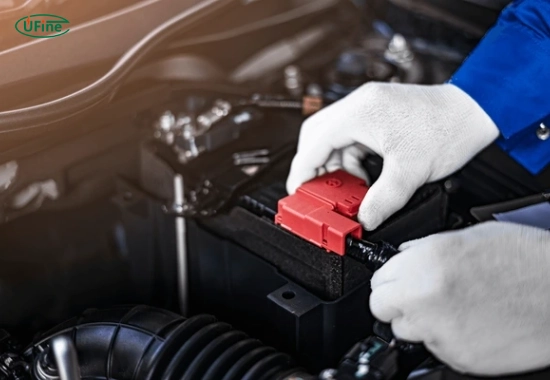
Part 3. Can battery terminals go bad?
Yes.
Battery terminals can absolutely wear out.
Many users assume battery failure always means the battery itself is damaged. In reality, a faulty battery terminal can create symptoms nearly identical to battery failure.
A terminal may become:
- Corroded
- Loose
- Cracked
- Bent
- Burned from arcing
- Oxidized
Before replacing a battery, inspect terminal condition first.
Part 4. How to know if battery terminals are bad?
Many users search: “How do I know if battery terminals are bad?”
Look for these warning signs.
1. Slow starting or hard starting
Poor electrical transfer limits starter current.
Symptoms:
- Slow cranking
- Clicking noise
- Delayed startup
- Intermittent starting failure
2. Flickering or dim lights
A bad battery terminal causes unstable voltage delivery.
You may notice:
- Flickering headlights
- Dashboard brightness changes
- Weak interior lighting
3. Visible corrosion
White, blue, or green deposits usually indicate conductivity problems.
Heavy buildup increases electrical resistance.
4. Battery warning light
Charging efficiency drops when terminals cannot transfer current properly.
Battery monitoring systems may trigger warning indicators.
5. Hot battery terminal
Excess resistance generates heat.
A terminal that feels unusually warm may indicate:
- Loose connection
- Internal resistance increase
- Electrical arcing
6. Broken terminal damage
Cracks, bends, or damaged clamps reduce contact quality.
A broken battery terminal can absolutely cause problems, including sudden power loss.
Part 5. Bad battery terminal symptoms vs battery failure
| Symptom | Bad Battery Terminal | Battery Failure |
|---|---|---|
| Slow engine crank | Yes | Yes |
| Flickering lights | Yes | Sometimes |
| Visible corrosion | Very common | Less common |
| Battery warning light | Yes | Yes |
| Battery swelling | Rare | Common |
| Hot terminal | Common | Less common |
| Sudden power interruption | Common | Sometimes |
This comparison helps identify whether the issue comes from the battery itself or terminal connections.
Part 6. How to fix a bad battery terminal?
If terminal damage is minor, repairs may restore performance.
Clean corrosion
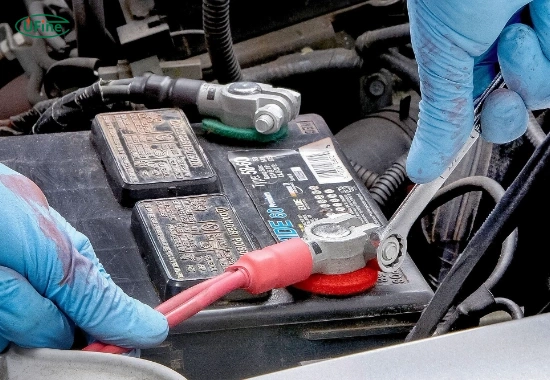
Disconnect battery cables. Remove visible buildup. Use baking soda and water to neutralize acid residue. Clean using a wire brush. Dry completely before reconnecting. Wear protective gloves and eye protection.
Tighten loose connections
Check terminal clamp tightness. Do not overtighten. Excessive force may crack battery posts.
Replace damaged terminals
Replace terminals if you see cracks, severe corrosion, melted areas, or loose clamp structure. Choose corrosion-resistant replacement materials.
Add protective coating
After cleaning, apply anti-corrosion spray, use dielectric grease, or install terminal protectors.
Part 7. How to prevent battery terminal problems?
Preventive maintenance costs less than repairs.
Inspect monthly
Check terminals for:
- Corrosion
- Looseness
- Cracks
- Heat damage
Keep connections clean
Dirt and oxidation increase resistance. Clean terminals regularly.
Avoid overcharging
Overcharging increases gas release and acid leakage. Smart battery chargers help reduce overcharge risk.
Reduce vibration exposure
Secure battery mounting systems properly. Movement accelerates terminal wear.
Choose higher-quality batteries
Better battery quality reduces leakage and terminal failure risk.
For lithium battery systems, custom battery pack design also influences long-term connection reliability.
Part 8. Battery terminal lifespan
Most battery terminals last 3–7 years.
Terminal lifespan depends on:
- Humidity exposure
- Charging practices
- Material quality
- Maintenance frequency
- Operating temperature
- Vibration level
Regular inspection often extends service life significantly.
Part 9. Battery terminal problem application matrix
| Application | Common Terminal Issue | Recommended Prevention |
|---|---|---|
| Automotive | Corrosion, looseness | Monthly inspection |
| Marine batteries | Salt exposure | Brass terminals, protective coating |
| Solar energy storage | Oxidation | Sealed battery enclosure |
| Forklifts | Vibration wear | Torque checks |
| Lithium battery packs | Connector fatigue | High-quality terminal materials |
| Industrial machinery | Heat cycling | Preventive maintenance schedule |
Part 10. Bad battery terminal FAQs
Can battery terminals go bad without corrosion?
Yes. Mechanical wear, vibration, loose clamps, cracking, and oxidation can damage terminals even without visible corrosion.
Can a broken battery terminal cause problems?
Yes. A broken battery terminal can create unstable voltage, startup issues, charging problems, and complete power interruption.
How do I know if battery terminals are bad?
Common signs include flickering lights, slow starting, hot terminals, visible damage, corrosion buildup, and unstable electrical performance.
What are loose battery terminal symptoms?
Loose battery terminal symptoms include intermittent power, dashboard warning lights, dim lights, hard starting, clicking sounds, and charging instability.
Can I drive with a faulty battery terminal?
It is not recommended. A faulty battery terminal can worsen over time and may eventually prevent the battery from supplying sufficient current.
Related Tags:

More Articles
How to Choose the Right 3S LiPo Battery 5000mAh for Your RC Hobby Projects?
Learn how to choose the best 3S LiPo battery 5000mAh for RC cars, drones, boats, and planes. Compare C ratings, runtime, connectors, charging, and safety tips.
Comparing Semi Truck Batteries vs. Truck Batteries
Compare semi truck batteries and truck batteries by size, CCA, lifespan, and battery type. Learn how to choose the right truck battery for your vehicle.
Top 10 Flat Lithium Ion Battery Options for Compact Devices
Explore top flat lithium ion battery options, key specifications, and selection factors for compact electronics, medical devices, and energy storage systems.
Top 10 High Capacity Batteries: Best Large Capacity Battery Options
Compare 10 high capacity batteries for portable devices, backup systems, and industrial use. Find the best large capacity battery.
Top 10 Deep Cycle Lithium Battery 2026
Not all lithium batteries are equal. We tested 10 options to reveal the best lithium deep cycle battery for RV, solar, and backup power systems.


