
- Key Takeaways
- Part 1. How much does a car battery weigh?
- Part 2. What's inside a car battery?
- Part 3. Car battery weight composition
- Part 4. Car Battery Weight Chart (kg & lbs)
- Part 5. Why does car battery weight vary so much?
- Part 6. Lead-acid vs lithium: a weight comparison that matters
- Part 7. Car battery weight by vehicle type
- Part 8. How does car battery weight affect a car's performance?
- Part 9. Is a heavier car battery better?
- Part 10. FAQs
The heavier the car battery weight, the greater the mileage will generally be. At the same time, car battery weight will also affect the car’s dynamic performance, suspension, and steering components. Therefore, car battery weight is one of the critical elements that must be balanced in electric vehicle manufacturing.
Key Takeaways
- A typical car battery weight in kg ranges from 12 kg to 25 kg (26–55 lbs)
- Lithium batteries are significantly lighter, often 5–15 kg, depending on capacity
- Larger vehicles like trucks and SUVs use heavier batteries, sometimes exceeding 40 kg
- Battery weight depends on materials, capacity (Ah), and design
- Knowing the battery weight kg helps with installation, performance, and shipping decisions
Part 1. How much does a car battery weigh?
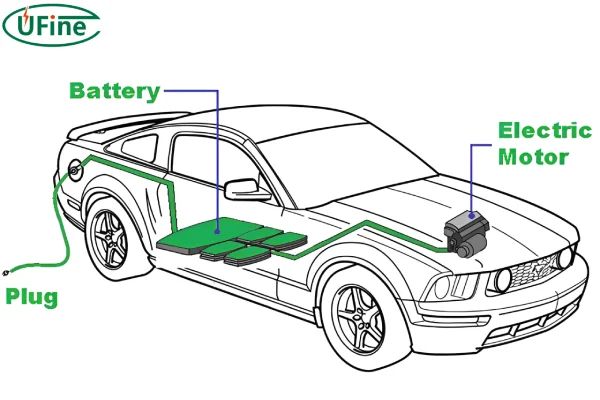
On average, a standard 12V car battery weighs between 12 kg and 25 kg. However, this range can shift depending on the type of battery and the vehicle you’re using.
For example, a compact sedan usually has a lighter battery, while a truck or commercial vehicle requires a heavier one with more capacity.
If you’re asking, “how much does a car battery weigh exactly?”, the most honest answer is:
It depends on what’s inside the battery and what your car needs.
Part 2. What’s inside a car battery?
Car batteries are fascinating. They might seem like simple black boxes under your car hood, but there’s a lot going on inside. Understanding their internal structure can help us see why they weigh what they do.
A typical car battery consists of several key components, each playing a vital role in its function and contributing to its overall weight.
- Lead Plates: These are the battery’s heavyweights, quite literally. Lead plates, also known as electrodes, are where the magic happens. They store and release energy, making them essential for the battery’s operation. The more lead plates a battery has, the heavier it will be. These plates are usually coated in lead dioxide, adding to their heft.
- Electrolyte: The electrolyte is a mixture of sulfuric acid and water. This liquid is crucial because it facilitates the chemical reactions needed to store and release energy. While the electrolyte isn’t as heavy as the lead plates, it still adds a significant amount of weight to the battery.
- Separators: To prevent the lead plates from touching and short-circuiting, batteries use separators. These are often made of fiberglass or other insulating materials. While they don’t add much weight, they’re essential for the battery’s safe operation.
- Casing: The casing holds everything together. It’s usually made of durable plastic or sometimes metal. The casing needs to be strong enough to protect the internal components but lightweight to avoid adding unnecessary weight.
So, what is the heaviest part? Definitely, the lead plates. They are the primary contributors to the car battery’s weight. The more plates a battery has, the heavier it becomes, which we’ll see when we look at different battery types.
Part 3. Car battery weight composition
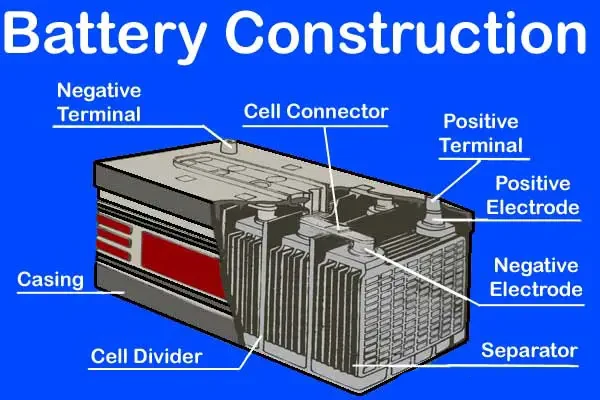
To really understand battery weight kg, it helps to look inside.
The cost of an automobile battery pack system includes three parts: cell, battery management system, and pack system, including functional components, wiring harnesses, structural parts, and other components. Take Tesla as an example. The battery cost of the earliest Tesla Model accounted for a quarter of the entire vehicle. This makes their electric vehicles expensive.
For lithium-ion power batteries, the basic unit is the cell. The structure of the cell includes:
- Positive electrode: lithium compound.
- Negative electrode: carbon material.
- Electrolyte: non-aqueous liquid electrolyte.
- BMS: Car batteries also include a battery management system (BMS), which monitors the status of the battery to ensure safe performance and the normal range of output power.
A typical car battery isn’t just one solid block—it’s made up of several components, each contributing to the total weight.
| Component | Approx. Weight Contribution |
|---|---|
| Lead plates | ~60% |
| Electrolyte | ~20% |
| Plastic casing | ~10% |
| Terminals & others | ~10% |
This is why car battery parts matter so much. The dominance of lead in traditional batteries explains their bulk, while lithium batteries replace much of that mass with lighter materials.
Part 4. Car Battery Weight Chart (kg & lbs)
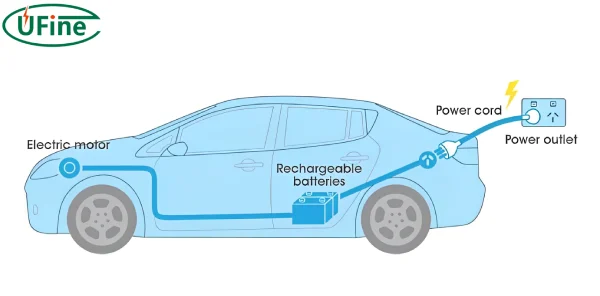
To give you a clearer picture, here’s a comparison of common battery types:
| Battery Type | Weight (kg) | Weight (lbs) |
|---|---|---|
| Lead-acid | 15–25 kg | 33–55 lbs |
| AGM | 18–30 kg | 40–66 lbs |
| Lithium-ion | 5–15 kg | 11–33 lbs |
This car battery weight chart highlights one important trend:
Lithium batteries can be up to 70% lighter than traditional lead-acid batteries.
And that difference isn’t just about convenience—it affects fuel efficiency, handling, and even installation effort.
Different car batteries also weigh differently.
- The weight of traditional lead-acid car batteries is usually between 11 kg and 22 kg.
- For electric vehicle batteries, the weight is even heavier. Most are between 250 kg and 450 kg. The exact weight will vary based on battery type and capacity.
- The weight of car batteries will also vary depending on the capacity. For example, a 45Ah battery weighs approximately 12.5 kg. The weight of a 110Ah battery is approximately 24.5Kg. It’s important to note that these figures may vary depending on the specific battery make and model.
Compared with the weight of the engine and gearbox of fuel vehicles, the batteries of electric vehicles are much heavier. Suppose we only use battery cell density to calculate car battery weight. In that case, we can see that car battery weight is a shortcoming of electric vehicles.
Taking an 80kwh battery as an example, the total weight of the battery cells of the ternary lithium battery is 400kg. The total weight of LiFePo4 cells can reach 485 kg.
This is just the weight of the cell. Add the weight of the battery structure outside the cell, such as the battery top/bottom case, insulation layer, CMC, cooling system, and other components. The car battery weight will be even heavier.
Part 5. Why does car battery weight vary so much?
At first glance, you might think all batteries are similar. In reality, their weight is shaped by several technical factors.
For starters, materials play a huge role. Lead-acid batteries use dense lead plates and liquid electrolyte, which adds significant mass. Lithium batteries, on the other hand, rely on lighter materials with higher energy density.
Then there’s capacity (Ah). A battery designed to store more energy naturally weighs more. That’s why trucks and SUVs often use heavier batteries than small cars.
Finally, design and structure matter. Reinforced casings, safety features, and internal layout all contribute to the final battery car weight.
Part 6. Lead-acid vs lithium: a weight comparison that matters
If you’re considering an upgrade, this is where things get interesting.
Traditional lead-acid batteries are reliable and affordable, but they’re heavy. Lithium batteries, while more expensive upfront, offer a completely different experience.
Here’s the key difference:
- Lead-acid batteries rely on thick lead plates → heavy but simple
- Lithium batteries store more energy in lighter materials → compact and efficient
As you can see, lithium-ion batteries are significantly lighter than lead-acid batteries. However, the choice of battery depends on various factors, including your vehicle’s requirements and your budget.
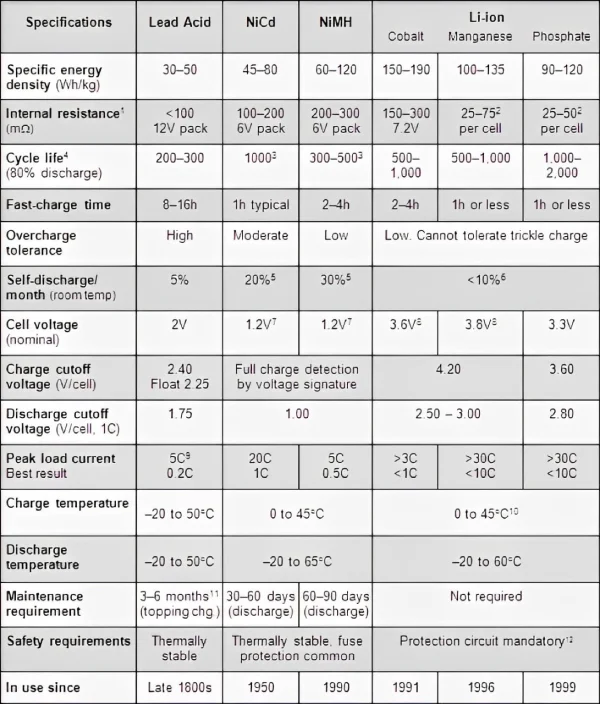
In real-world terms, switching to lithium can reduce your car battery weight kg by 50% or more.
That’s not just a spec sheet advantage—it means easier installation, less strain on your vehicle, and better overall efficiency.
If you want a deeper comparison, check out our lead acid vs lithium-ion batteries guide.
Part 7. Car battery weight by vehicle type
Not all vehicles use the same battery, and that directly impacts weight.
A small sedan might only need a battery around 12–18 kg, while an SUV could require something closer to 20–30 kg. Trucks and commercial vehicles often go even higher, sometimes reaching 40 kg or more.
Electric vehicles are in a completely different category. Their battery packs can weigh 300 kg to 700 kg, depending on the model.
So when you’re evaluating weight of car battery in kg, always consider the type of vehicle you’re working with.
Part 8. How does car battery weight affect a car’s performance?
The weight of a car battery doesn’t just sit there passively; it has a direct impact on your vehicle’s performance. Let’s explore how.
Fuel Efficiency
Heavier batteries can reduce fuel efficiency. The extra weight means your car’s engine has to work harder to move the vehicle, leading to increased fuel consumption. In a world where fuel efficiency is becoming increasingly important, a lighter battery can make a noticeable difference.
Handling
Weight distribution is crucial for a car’s handling. A heavier battery can alter the balance of your vehicle, particularly if it’s located in the front or back. This change in weight distribution can affect how your car handles, especially in tight corners or during quick maneuvers.
Acceleration
Extra weight can slow down acceleration. If your car is carrying a heavier battery, the engine needs to exert more power to achieve the same level of acceleration. This can be particularly noticeable in smaller cars or those with less powerful engines.
Battery Life
Heavier batteries with higher capacity might last longer. They can provide more consistent power over time and are less likely to discharge quickly. However, this comes at the cost of added weight. If you need a battery that can handle frequent short trips or lots of electronic accessories, a heavier battery with a higher capacity might be the better choice.
Part 9. Is a heavier car battery better?
Not necessarily—and this is where many people get it wrong.
A heavier battery doesn’t always mean better performance. In fact, modern automotive trends are moving toward lighter, more efficient batteries.
However, weight can still indicate durability in some cases, especially with traditional lead-acid designs.
Part 10. FAQs
1. Does car battery weight affect fuel efficiency?
Yes, but slightly. A heavier battery adds extra load, which can marginally reduce fuel efficiency. This becomes more noticeable in performance cars or long-distance driving.
2. How heavy is a hybrid car battery compared to a regular one?
Hybrid batteries are much heavier than standard 12V batteries, often ranging from 30 kg to over 100 kg, depending on the system design.
3. Can I replace my car battery with a lighter one?
You can, but only if the new battery meets your vehicle’s required voltage, capacity, and cold cranking amps (CCA). Weight reduction should not compromise performance.
4. Why do two batteries with the same voltage have different weights?
Voltage alone doesn’t determine weight. Differences in capacity (Ah), materials, and internal structure can lead to significant weight variations.
Related Tags:

More Articles

The Ultimate Guide to Small Size Battery
Learn small battery types, sizes, and applications. Compare lithium, alkaline, and coin cells. Find the best small size battery for your device or project.
Lithium Battery Comparison: Soft Pack Vs. Hard Pack
Compare soft pack vs hard pack lithium battery. Understand structure, safety, energy density, and applications to choose the right battery.
What Size are 18650 Batteries?
Learn exact 18650 battery dimensions (18mm × 65mm), tolerances, and pack configurations. Compare 18650 size with 21700 and others for better battery selection.
The Ultimate Guide to Battery Terminal Clamps
Learn battery terminal clamps, including types, materials, installation, and how to choose the right battery clamp for car and industrial use.
What Is a Lithium-Ion Battery Pack?
Learn what a lithium ion battery pack is, how it works, key components, configurations, and real-world applications for industrial and commercial use.


