
A 26650 battery stands out as prominent in cylindrical batteries. It can give enough power to portable devices to perform at their peak level. The battery has an impressive energy density, longevity, and high discharge rate, making this 26650 battery a popular choice for several applications. Due to the increased demand for 26650 batteries, various manufacturers offer innovative and quality batteries. If you are looking for a 26650 battery for a personal project or a business point of view, this article can help in every way. We have shortlisted the top 5 26650 battery manufacturers with their highlighting battery key features and complete company details.
Part 1. What is the 26650 battery?
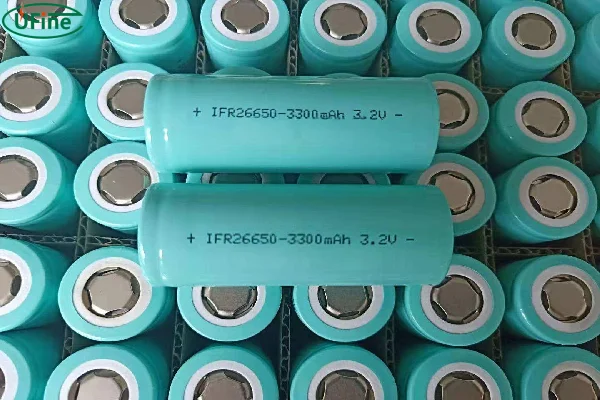
A 26650 battery is an advanced version of a well-known 18650 battery. The battery is slightly bulky in diameter because of its capacity and power delivery abilities, which are more than those of an 18650 cylindrical battery. By the name of the 26650 battery, you can understand and remember the battery size. It is 26mm in diameter and 65mm in length. It is a rechargeable lithium cell that has a 3.2V or 3.7v nominal voltage. The battery is known for its energy density and high power delivery.
The voltage of 26650 batteries is generally 3.2V or 3.7V. There are many types of 26650 batteries, and the most common voltage specifications are 3.2V and 3.7V.
3.2 V 26650 Battery
This type of 26650 battery usually uses lithium iron phosphate (LiFePO4) as the positive electrode material. LiFePO4 batteries have stable charge and discharge performance, high safety and long cycle life, and are suitable for a variety of application scenarios such as communication equipment, power tools, UPS power supplies, etc.
3.7 V 26650 Battery
This type of 26650 battery usually uses nickel cobalt manganese (NCM) or ternary materials as the positive electrode material. This battery has a higher energy density and is suitable for applications that require high energy density, such as flashlights.
LiFePO4 Lithium Battery Vs Ternary Lithium Battery, Which One Is Better?
Key Characteristics:
-
High energy density: Ability to deliver high energy in a compact size.
-
Lightweight: A lithium battery is lightweight for portable electronics
-
Long cycle life: The battery has a cycle life between 300 to 800.
-
Stable discharge rate: Maintains a stable discharge rate even at 30%.
-
Low self-discharge rate: A 26650 battery can hold the charge longer with no memory effect.
-
Fast charging: It can quickly charge and get ready for use.
Part 2. Importance of choosing the right 26650 Battery manufacturer
If you select the right 26650 battery manufacturers, it will benefit you in many ways. It guarantees features like high-performing, safe, stable, and low-priced batteries. In the manufacturing of a top-quality 26650 battery, many factors play a vital role. From the selection of A-grade raw materials to hi-tech production units and applying the latest techniques to experienced workers, everything needs special attention. Therefore, we have made some key points to check if the manufacturer is right for you.
-
Certifications: Make sure the battery is safe to use in devices.
-
Performance: The device can perform well on this battery
-
Customer support: assists in choosing, during, and after-sales.
-
Product warranties: Protection for manufacturing faults and giving mental peace.
-
Customization options: You can get a 26650 battery for unique projects and devices.
Part 3. Top 5 26650 battery manufacturers
Quick Picks: Best 26650 Batteries at a Glance
| Product | Best For | Key Features | Price Range | Pros | Cons |
|---|---|---|---|---|---|
| Ufine Battery 26650 | Custom battery projects & OEM applications | Custom capacity options, Li-ion/LiFePO4 solutions, safety certifications | Medium | Flexible customization, factory support, reliable quality control | Mainly suitable for bulk/custom projects rather than individual retail buyers |
| A123 Systems 26650 | High-performance industrial applications | LiFePO4 chemistry, high power output, excellent safety | High | Outstanding durability and thermal stability | Higher cost compared with standard cells |
| XTAR 26650 | Flashlights and consumer electronics | Rechargeable lithium batteries, stable output, low self-discharge | Medium | Good balance of performance and availability | Limited chemistry options |
| LiitoKala 26650 | Budget flashlight users | Affordable rechargeable batteries, decent capacity | Low | Cost-effective option | Performance consistency varies between models |
| ELB 26650 | Long-life battery applications | LiFePO4 cells, custom battery packs, safety features | Medium | Long cycle life and customization capability | Less common in retail markets |
1. Ufine Battery

Ufine Battery is a Chinese battery company founded in 2008. Its headquarters is in Shenzhen, China. The company has more than 1000 different types of batteries, including lithium ion, lithium polymer, lithium battery packs, ultra-thin and special batteries, and many more. Currently, Ufine has 30 R&D experts for innovation in its products, 200 production personnel, and a sales team of 35 professionals. At fine, you can get 26650 battery models with lower to higher capacities and premium quality. Besides this, Ufine also offers a battery customization solution through its online customer support services. Overall, you can get Ufine’s 26650 battery to fulfill all of your battery needs. Currently, it is delivering to 85 countries worldwide. Therefore, you will get a 26650 battery backed by certifications like ISO18001, UN38.3, CE, CB, and RoHS.
-
High discharge rate
-
Lightweight with high energy density
-
Maintains 80% capacity after 500 cycles
-
A-grade cells with a leak-proof design
-
Wide operating Temperature Range
-
Rigorous manufacturing techniques for reliability
-
Customizable options
-
Strong quality control and safety certifications
2. A123 Systems

A123 Systems is an American battery brand headquartered in Changzhou, China. The company was established in 2001 founded by Yet-Ming Chiang, Bart Riley, and Ric Fulop. There are three major manufacturing facilities, including Hangzhou China, Changzhou, China, and southeastern Michigan in the United States, with over 2500 employees all over the globe. The company uses nano lithium iron phosphate series 7 ternary material technology with 700 core patents for its products. You will get premium high-quality batteries from small cylindrical 26650 battery models to pouch and prismatic batteries. Overall, choosing A123 Systems for a 26650 battery will not disappoint you.
-
Lithium iron phosphate (LiFePO4) is best for longevity
-
Patented Nanophosphate lithium ion Chemistry
-
Excellent abuse tolerance
-
wide state of charge (SOC) range
-
High power with over 2,600W/kg
-
High power output suitable for industrial applications
3. XTAR
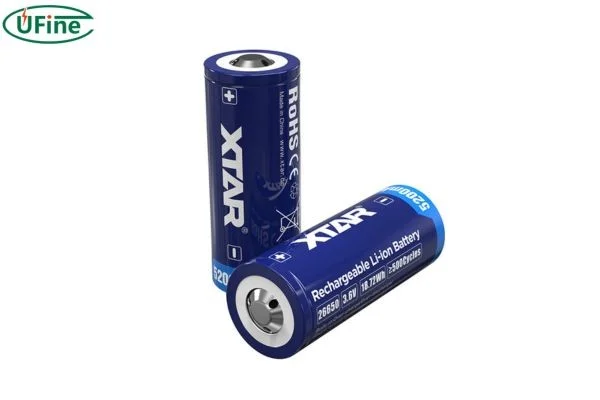
XTAR Electronics’ headquarters is in Shenzhen, China. It was founded in 2006 and soon emerged as the lead electronic technology company in China. XTAR has a modern, innovative production facility with a highly qualified production team. The company manufactures 180+ for its 1 million satisfied customers from over 130 countries worldwide. XTAR manufactures lithium batteries, smart chargers, and LED flashlights. The company also offers customized solutions for OEM and wholesale customers. Due to their high energy density and consistent performance, XTAR 26650 battery models are widely used in flashlights, vape devices, and high-drain applications.
-
500 charge cycle saves money and the environment
-
Low self-discharge rate for longer shelf life
-
Stable Voltage Output
-
Low internal resistance
-
Reliable performance under extreme conditions
-
Fast charging capabilities for quick power restoration
4. Liitokala
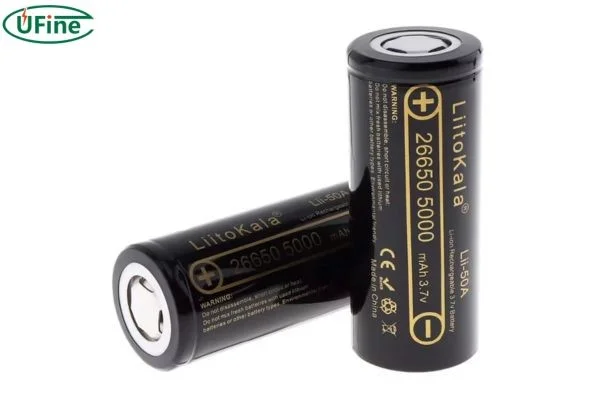
Liitokala was established in 2007 and has headquarters in Shenzhen, China. It is rapidly growing due to the best-selling rechargeable 18650 and 26650 battery models. The company is registered as LiitoKala Power Co., Ltd and specializes in manufacturing battery chargers, lithium batteries, lithium cells, and flashlights. Liitokala believes in innovation for development in the right direction, so it developed the culture of people-oriented advanced technology products. The company has hired an elite expert team to provide its products to over 100 enterprises and 5000 traders across the country. Therefore, Liitokala will provide you with one of the best 26650 batteries for your device with a good balance of price and power delivery.
-
Affordable pricing with high-performance
-
Can be charged at fast rate capabilities
-
The life cycle of 500 can give up to 3 years of life
-
Has a lower resistance of 20Ω
-
High discharge rate for power-demanding devices
-
Excellent thermal stability and safety features
5. ELB (Energy Leader Battery)

ELB is a Chinese battery manufacturer with headquarters in Shenzhen, China. The company was established in 2013 with a prime focus on researching and developing lithium battery technology. ELB is one of the well-known manufacturers and suppliers of battery cells, including popular 26650 battery models, battery packs, lithium batteries, and customized battery solutions. The company has 118 well-trained technical forces, high-tech equipment, and a large 20,000-square-meter production facility produced under strict international standards. In 2020, ELB started to supply its products at the international level.
-
Long cycle life with over 1000+ charge cycles
-
High-quality LiFePO4 battery chemistry for a long lifespan
-
Built-in protection circuits for enhanced safety
-
Proven wide operating temperature range
-
More battery certifications guarantee quality and safety
Part 4. How to choose the best 26650 rechargeable battery
Choosing the right 26650 lithium-ion battery depends on how you plan to use it. A battery that works well in a flashlight may not be the best option for an industrial battery pack.
Before purchasing a 26650 rechargeable battery, consider the following factors.
1 Battery Chemistry: Li-ion vs LiFePO4
The first decision is choosing the right battery chemistry.
3.7V Lithium-Ion 26650 Battery
Best for:
- Flashlights
- Portable electronics
- High-energy applications
Advantages:
- Higher energy density
- Higher voltage output
- Longer runtime in compact devices
Limitations:
- Requires proper charging protection
- Generally has a shorter cycle life than LiFePO4
3.2V LiFePO4 26650 Battery
Best for:
- Battery packs
- Industrial equipment
- Long-term energy storage
Advantages:
- Excellent safety performance
- Longer cycle life
- Better thermal stability
Limitations:
- Lower energy density
- Requires compatible charging systems
2 Capacity (mAh)
Capacity determines how long your device can operate before needing a recharge.
Common 26650 battery capacities include:
- 3000mAh–4000mAh: Standard applications
- 4000mAh–5000mAh: Extended runtime applications
A higher capacity battery provides longer runtime, but it may not always provide higher output power.
For example:
- A flashlight user may prefer higher discharge capability.
- A backup power system may prioritize cycle life and capacity.
3 Discharge Current
For high-drain devices, discharge capability is one of the most important specifications.
A flashlight with a powerful LED emitter requires a battery that can provide sufficient current without excessive voltage drop.
Look for:
- Continuous discharge rating (CDR)
- Internal resistance
- Stable voltage output
Using a battery with insufficient discharge capability may result in:
- Reduced brightness
- Shorter runtime
- Excessive heat generation
4 Protection Features
Safety should always be considered when choosing rechargeable lithium batteries.
Some 26650 batteries include:
- Overcharge protection
- Over-discharge protection
- Short-circuit protection
- Thermal protection
However, not all high-performance cells include built-in protection circuits. Users should always confirm compatibility with their device and charger.
5 Brand Reliability and Manufacturing Quality
Battery performance depends heavily on manufacturing consistency.
A reliable manufacturer usually provides:
- Battery test reports
- Safety certifications
- Quality control procedures
- Clear technical specifications
For businesses purchasing 26650 cells in bulk, manufacturing capability and customization support are also important factors.
Part 5. Final thoughts
Choosing the right 26650 battery manufacturer for your electronic device battery is essential to ensure safety, performance, and longevity. In this top 5 26650 battery manufacturers article, we have included the best top-selling brands, including Ufine Battery, ELB, XTAR, Liitokala, and A123 Systems. All of these manufacturers are leaders in the industry. These offer high-quality 26650 battery types with a range of features to suit various applications. However, if you need battery customization services, you can choose Ufine Battery as they understand, listen, and produce quality batteries up to your expectations within your budget limits.
Part 6. FAQs
1. Can I replace an 18650 battery with a 26650 battery?
Usually not directly. A 26650 battery has a larger diameter than an 18650 battery, so it may not physically fit into the same device. Even if the voltage is similar, compatibility depends on the battery holder, charger, and device design.
2. How long does a 26650 rechargeable battery last?
The lifespan depends on battery chemistry, usage conditions, charging habits, and operating temperature. Most quality 26650 lithium batteries can last hundreds of charge cycles, while LiFePO4 versions may achieve significantly longer cycle life.
3. What charger should I use for a 26650 lithium battery?
You should use a charger designed for rechargeable lithium batteries and compatible with the specific chemistry of your 26650 cell. A 3.7V lithium-ion battery and a 3.2V LiFePO4 battery require different charging profiles.
4. Can I use a 26650 battery in any flashlight?
No. A flashlight must support the physical size, voltage, and discharge requirements of the battery. Some flashlights are designed specifically for 18650 cells, while others support larger 26650 batteries.
5. Why does my 26650 battery lose capacity over time?
Battery capacity decreases naturally due to chemical aging, repeated charging cycles, high temperatures, and deep discharge. Proper charging and avoiding extreme operating conditions can help extend battery life.
Related Tags:

More Articles

Comparative Analysis: 14500 Battery Vs. 18650 Battery
Compare 14500 vs 18650 batteries by size, voltage, capacity, runtime, discharge current, charging, safety, and applications to choose the right cell.
12V Lithium-Ion What Voltage at Fully Charged and Why Your Battery Might Not Reach It
Check the 12V lithium battery voltage chart for 3S Li-ion and 4S LiFePO4. Learn full charge, resting voltage, charger limits, and fault checks.
LiFePO4 Voltage Chart Guide: Everything You Need to Know
Check the LiFePO4 voltage chart for 3.2V, 12V, 24V and 51.2V batteries. Compare SOC, charging voltage, cutoff limits and internal resistance.
Lithium Ion Cell Sizes: A Comprehensive Guide
Compare lithium ion cell sizes with a chart of dimensions, capacity ranges, cell types, applications, and key factors for selecting the right battery.
6 Volt Tractor Battery vs 12 Volt: Which One Fits Your Farm Equipment Best?
Compare 6V and 12V tractor batteries. Learn which voltage fits vintage or modern tractors, which specifications matter, and how to convert safely.


