
- Key Takeaways
- Part 1. What is a battery booster (Booster Battery)
- Part 2. How does a battery booster work?
- Part 3. Core components of a booster battery
- Part 4. Types of battery boosters
- Part 5. Applications of battery boosters
- Part 6. How to choose the right battery booster?
- Part 7. Battery booster maintenance and safety best practices
- Part 8. Battery booster FAQs
Battery boosters (also called jump starters or jump packs) deliver high peak current to start vehicles when the main battery is weak or dead. This guide explains what a battery booster is, how it works, and how to choose the right booster battery for real-world automotive and industrial use.
Key Takeaways
- Battery boosters provide short bursts of high current, not long-term charging.
- Lithium booster batteries offer higher power density, lighter weight, and faster recharge than lead-acid units.
- Correct sizing depends on engine type, cranking amps, and usage frequency.
- Modern boosters include BMS protection (reverse polarity, short circuit, thermal control).
- For fleet or industrial use, continuous-duty capability and durability matter more than compact size.
Part 1. What is a battery booster (Booster Battery)
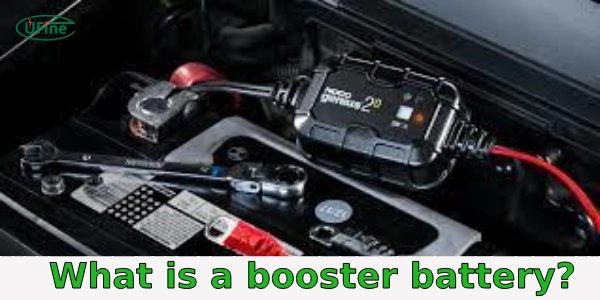
A battery booster is a portable power device designed to temporarily supply high current to a weak or dead battery, allowing an engine or electrical system to start.
Key Function
- Bypasses the weak battery’s current limitation
- Supplies instant cranking current to the starter motor
- Disengages once the engine starts
Typical Use Cases
- Passenger vehicles and commercial fleets
- Construction and industrial equipment
- Marine engines and RV systems
- Emergency roadside assistance
Part 2. How does a battery booster work?
A battery booster works by releasing stored energy at a very high discharge rate. Unlike chargers, which slowly restore capacity, boosters focus on instant power delivery.
Basic Working Process (Boosting a Car Battery with a Battery Pack)
- Connect clamps (positive to positive, negative to chassis ground)
- Activate booster (internal circuit enables discharge)
- Crank engine (starter motor receives high current)
- Disconnect after engine starts (alternator takes over)
Key Technical Characteristics
- Peak Current Output: Hundreds to thousands of amps (seconds only)
- Voltage Stabilization: Protects ECUs and sensitive electronics
- Short-Duration Design: Not intended for deep battery charging
👉 For deeper battery fundamentals, see: lithium-ion battery basics and battery pack design considerations
Part 3. Core components of a booster battery
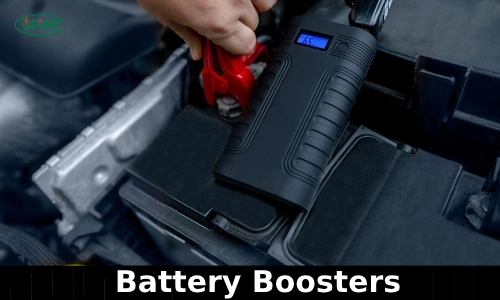
A typical booster battery integrates several high-performance components:
- Rechargeable Battery Pack (lithium-ion or lead-acid)
- Heavy-Duty Clamps & Cables (low resistance, high current flow)
- Battery Management System (BMS) (safety and control)
- Protective Housing (shock and heat resistance)
- Status Indicators (LED or digital display)
- Auxiliary Outputs (USB, 12V DC, inverter in some models)
Part 4. Types of battery boosters
- Portable Jump Starters
- Compact units for personal vehicles and emergency use. Easy to store and deploy.
- Lithium-Ion Booster Batteries
- High energy density
- Lightweight and fast charging
- Ideal for modern vehicles with sensitive electronics
- Lead-Acid Boosters
- Lower cost
- Proven reliability
- Heavier and slower to recharge
- Multi-Function Power Packs
- Include USB charging, lighting, air compressors, or inverters.
- Heavy-Duty / Wheeled Boosters
- Used in workshops and fleets for trucks, buses, and industrial machinery.
- Solar-Assisted Boosters
- Useful for off-grid or remote environments with limited charging access.
Part 5. Applications of battery boosters
| Application | Typical Requirement |
|---|---|
| Automotive emergency starting | Fast deployment, portable |
| Fleet & logistics | High reliability, repeated use |
| Construction equipment | High current output |
| Marine & RV | Corrosion resistance, stable voltage |
| Emergency preparedness | Long shelf life, multi-function |
Part 6. How to choose the right battery booster?
Selecting the right booster battery depends on technical and operational factors.
- Cranking Amps (Most Critical)
- Small gasoline engines: 400–600A
- Large gasoline / diesel: 1000A+
Always choose a booster rated above your engine requirement.
- Battery Chemistry
Type Pros Cons Lithium-ion Lightweight, high power Higher cost Lead-acid Affordable, robust Heavy, slower recharge - Usage Scenario
- Occasional use: Portable lithium booster
- Daily professional use: Heavy-duty or wheeled system
- Safety & Compliance
- Safety and compliance are critical when selecting a battery booster, especially for modern vehicles with sensitive electronics and for industrial environments with higher risk exposure.
- In addition to checking recognized standards such as SAE automotive standards and IEEE power electronics guidelines, you should evaluate the actual protection features and design quality of the booster battery.
- Reverse Polarity Protection: Prevents damage if clamps are connected incorrectly, which is a common field error.
- Overcurrent Protection: Limits excessive current during faults or improper use, protecting both the booster and vehicle wiring.
- Short-Circuit Protection: Automatically shuts down output to avoid sparks, overheating, or fire risk.
- Thermal Management: Ensures stable operation under high discharge loads and prevents overheating during repeated use.
- Battery Certification (for lithium boosters): Compliance with UN38.3 transport testing indicates safer cell design and shipping reliability.
For professional or fleet applications, also consider mechanical durability factors such as vibration resistance, enclosure strength, and environmental protection (e.g., IP ratings). These directly affect long-term reliability in real working conditions.
- Portability Vs Power Trade-Off
- Higher power usually means larger size and weight. Balance based on your use case.
Part 7. Battery booster maintenance and safety best practices
- Recharge every 2–3 months when not in use
- Store at 10°C–30°C in dry conditions
- Inspect clamps and cables before use
- Never exceed rated voltage or engine size
- Always follow manufacturer instructions
Part 8. Battery booster FAQs
Can a battery booster start a completely dead battery?
Yes. A booster can supply enough current to start the engine even if the battery is fully discharged, as long as the system is intact.
What is a battery booster vs a charger?
A battery booster provides instant high current for starting. A charger restores battery capacity slowly over time.
How many amps does a battery booster need?
Cars: 400–600A. Trucks/diesel: 1000A+. Choose higher than your requirement for reliability.
Are lithium battery boosters safe?
Yes. Modern lithium boosters include BMS protection, making them safe for vehicles with sensitive electronics.
How long does a battery booster hold charge?
Most lithium boosters hold charge for 6–12 months, but recharge every 2–3 months for reliability.
For OEM and industrial applications, battery boosters often require customized voltage, peak current output, and safety configurations.
Ufine Battery supports custom lithium booster battery design, including high-discharge cells, integrated BMS, and application-specific form factors.
Contact us for technical consultationRelated Tags:

More Articles

JST vs Molex: The Right Battery Connector Choice
JST or Molex for your battery? Learn how connector selection affects current, voltage drop, reliability, and device performance.
Custom Battery Pricing: Costs Manufacturers Don’t Mention
A low battery quote may not be the final cost. Discover common hidden expenses that affect custom lithium battery projects.
Battery Wire Length: Hidden Cause of Power Loss
A longer battery wire can cause voltage drop, power loss, and unstable operation. Learn how wire length affects battery performance.
How Device Sleep Modes Affect Battery Life
Think sleep mode extends battery life? Learn why devices still drain power and how firmware, hardware, and batteries affect runtime.
LiPo Battery and PCB Design: Clearance, Insulation, and Placement
Learn how to optimize LiPo battery PCB clearance, insulation, placement, wiring, and thermal design—and avoid common integration mistakes.


