
- Part 1. What’s the current LiFePO4 battery price?
- Part 2. LiFePO4 battery price per kWh
- Part 3. LiFePO4 battery price per kg
- Part 4. What affects lithium iron phosphate battery prices?
- Part 5. Why is LiFePO4 more expensive than AGM and lead-acid batteries?
- Part 6. Is LiFePO4 worth the price?
- Part 7. Common price range of LFP battery pack
- Part 8. Future price trends – will LiFePO4 prices drop?
- Part 9. FAQs
Key Takeaways
- You can expect LiFePO4 battery prices around $120–$280 per kWh in 2026, depending on application and brand.
- On a weight basis, raw cells are cheaper (~$15–$25/kg), but finished pack pricing is higher due to components like BMS and casing.
- LiFePO4 may cost more upfront than lead‑acid or AGM, but its cost per usable cycle is usually lower.
- Future trends point to gradually decreasing prices as manufacturing scales and supply chains improve.
Part 1. What’s the current LiFePO4 battery price?
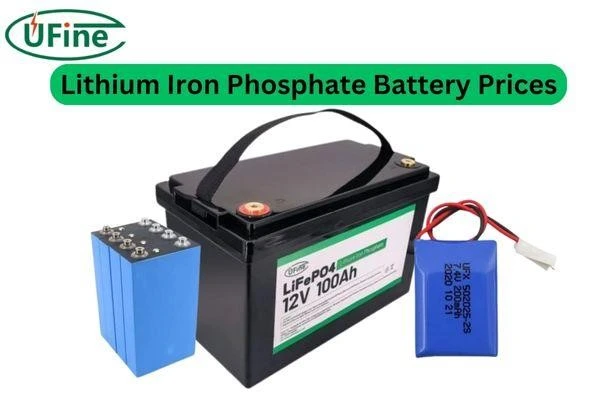
If you’re shopping for a LiFePO4 battery—whether for solar storage, EVs, or your RV—you probably want the simple answer first: how much it costs.
Here’s a snapshot for 2026:
- Price per kWh: $120–$280, depending on brand, capacity, and features.
- Price per kg: ~$15–$25 for cell-level materials, higher for finished packs with BMS and protective casing.
The reason for this range? Different brands offer different warranties, quality standards, and battery management systems (BMS). So while you might see a cheaper pack, a higher-end battery could last 2–5× longer, making it more cost-effective in the long run.
Part 2. LiFePO4 battery price per kWh
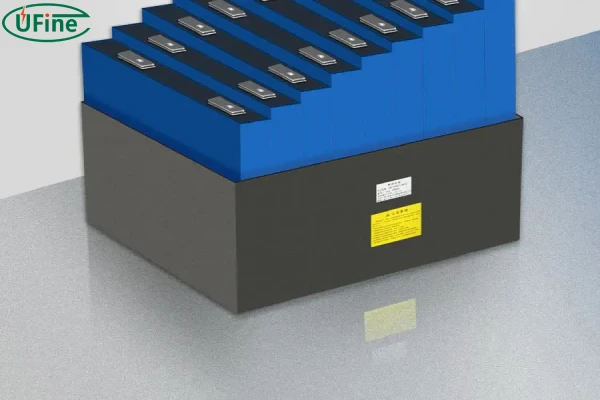
Price per kWh is the metric you’ll want to focus on—it shows how much energy you’re really paying for.
Here’s a clear overview for various types of LiFePO4 batteries:
| Battery Type / Use Case | Price per kWh |
|---|---|
| Bulk cells (B2B) | $120–$160 |
| DIY or unbranded packs | $150–$220 |
| Branded complete packs | $200–$280 |
Why the difference?
- Quality of materials and cells
- Battery Management System (BMS) sophistication
- Safety certifications (UL, IEC, etc.)
- Brand trust and warranty
This metric is crucial because a cheap battery upfront could end up costing more per kWh over its lifetime. You can think of this as buying a tool: paying a bit more now often saves you frustration and money later.
Usually, it always depends on the brand you want to choose. There are hundreds of brands in the market that offer LiFePO4 batteries at low prices. On the contrary, some popular, trusted brands sell batteries with the same capacities at the highest rates.
However, we have generated a list of some trusted brands that offer compatible lithium-iron-phosphate battery prices.
| Brand Name | AH Capacity | Voltage (V) | Price (USD) | Price per kWh (USD) |
|---|---|---|---|---|
| Eco-Worthy | 280×2 | 12 | $1000 | $139.508 |
| Power Queen | 100×4 | 12 | $942 | $183.592 |
| LiTime | 100×2 | 12 | $513 | $200.828 |
| WEIZE | 100×1 | 12 | $290 | $226.555 |
| Temank | 100×1 | 48 | $1400 | $273.436 |
Part 3. LiFePO4 battery price per kg
Some suppliers list price per kilogram, which can help if you’re sourcing raw cells or B2B.
| Component | Typical Price per kg |
|---|---|
| Raw LiFePO4 cells | $15–$25 |
| Finished battery pack | Higher (BMS, casing, connectors) |
Important note: Price per kg is rarely the whole story. Finished packs include electronics, safety systems, and housing that aren’t reflected in simple weight-based pricing. So while it looks cheap, your actual usable battery cost is higher once everything is included.
Part 4. What affects lithium iron phosphate battery prices?
Each factor contributes to determining the lithium iron phosphate battery price. We cannot make one factor responsible for the high LiFePO4 price tag. Let’s discuss some of the important factors one by one.
1 Raw Material
LiFePO4 battery combines lithium materials like lithium, cobalt, nickel, and graphite. The prices of materials like lithium cobalt oxide (LCO) are around $50 to $60 per kg, lithium iron phosphate (LFP) costs around $15 to $20 per kg, and lithium nickel manganese cobalt oxide (NMC) costs $25 to $35 per kg. Besides these, many other materials are utilized in manufacturing LiFePO4 batteries. Therefore, the price of lithium iron phosphate batteries always depends on the material cost.
2 Manufacturing Cost
Manufacturing cost is another deciding factor in the price of lithium iron phosphate batteries. It includes labor, energy, maintenance, and equipment costs. Everything in the manufacturing process adds to the lithium iron phosphate battery price.
3 Features and Technology
Nowadays, LiFePO4 batteries are becoming smarter and more efficient. Features like Bluetooth connectivity, LCDs, wifi integration, self-heating, and Battery Management System (BMS) can explain the increase in lithium iron phosphate battery price. Though these features are helpful during battery usage, the initial cost is higher compared to a simple LiFePO4 battery.
4 Supply Chain
Supplying batteries everywhere around the world can cost more than LiFePO4 batteries. Moreover, the margins of the seller and dealers over each battery unit make lithium iron phosphate battery prices rise.
5 Market Competitions and Trends
With each passing day, many brands produce the latest innovative battery models. They compete with each other. Therefore, many models are affordable, whereas lithium iron phosphate battery prices of top-selling models are high due to increased demand.
Part 5. Why is LiFePO4 more expensive than AGM and lead-acid batteries?
When we compare LiFePO4 to lead acid and AGM battery from the price perspective, LiFePO4 battery is 3 to 4 times more expensive.
AGM is an Absorbent Glass Mat technology that is a more advanced form of a lead acid battery.
It is a sealed battery designed to protect electrolytes from spilling, making a battery version of a lead-acid battery. Here are several reasons lithium iron phosphate battery prices are higher than those of AGM and lead acid batteries.
- Longer Lifespan: A LiFePO4 battery has a longer lifespan of around 4,000 cycles. On the other hand, lead acid and AGM have a 300 to 500-cycle life.
- Fast Charging: Lithium iron phosphate charges fast from 1C to 2C. While AGM and lead acid batteries need double the time to charge the battery.
- Depth of Discharge: AGM battery’s DoD is between 50% to 80%. Whereas LiFePO4 has a higher DoD of around 90%.
- Weight and Size: LiFePO4 battery is compact with high energy density. It is 60% to 70% lighter in weight than the AGM battery.
If you want a deeper comparison of different battery types, you can check out our guide on AGM vs Lithium vs Lead-Acid Batteries to see which suits your needs best.
Part 6. Is LiFePO4 worth the price?
Let’s be honest: LiFePO4 is usually 2–4× the upfront cost of lead‑acid or AGM. But that doesn’t mean it’s expensive in the long run.
Think of it like buying a quality tool: a bit more upfront, but you replace it less often and get better performance the whole time.
Pro tip: When comparing prices, calculate cost per cycle. It often shows why a pricier battery is actually the better deal long term.
A simple way to understand the value is cost per cycle, which tells you what each kWh really costs you over the battery’s lifetime:
| Battery Type | Price | Usable Cycles | Cost per Cycle |
|---|---|---|---|
| LiFePO4 | $600 | 4000 | $0.15 |
| AGM | $200 | 500 | $0.40 |
| Lead Acid | $180 | 400 | $0.45 |
See how LiFePO4 ends up cheaper per cycle? Even if it costs more upfront, you get more energy for every dollar spent.
Part 7. Common price range of LFP battery pack
Estimating the lithium iron phosphate battery price is much more difficult, as prices vary by brand and added features. However, we can discuss the common price tag you can expect from a specific LiFePO4 battery capacity.
1 12V Lithium Iron Phosphate Battery Price
The price range for a 12V LiFePO4 battery can vary depending on the capacity, brand, and location. Renogy is selling its 12V 200Ah battery for $949.99, and Litime is providing a LiFePO4 battery with the same capacity for $529.99. Generally, the lithium iron phosphate battery price stands between $600 to $800.
2 24V Lithium Iron Phosphate Battery Price
The price bracket of a 24V LiFePO4 battery is not different from that of a 12V battery. However, an increase or decrease in capacity can differentiate the price. It also ranges between $600 to $900, in 200AH capacity.
3 36V Lithium Iron Phosphate Battery Price
36V battery is hard to find as high energy flow is often needed in electric vehicles, solar systems, and off-grid stations.
Many renowned manufacturers sell 36V batteries, like Ufine Battery, which offers all battery customization services that meet your needs.
Similarly, Diypow sells a 36V 200Ah battery for $2150, whereas Tycorun’s is $4,399, and Lynx’s battery is $2400. Overall, the 36V 200AH lithium iron phosphate price ranges between $2,000 and $2,500.
4 48V Lithium Iron Phosphate Battery Price
A 48V LiFePO4 battery can cost between $2,000 to $3,000, with 200Ah capacity. It always depends on the brands, as PowMr sells for $2,296, and Relion sells the expensive one for $6,995.
Part 8. Future price trends – will LiFePO4 prices drop?
Yes, there’s reason to be optimistic.
Factors that could lower LiFePO4 battery prices:
- Economies of scale: More factories and gigafactories lower per-unit costs.
- Better supply chain management: Smoother logistics for lithium, iron, and phosphate reduce material costs.
- Technological improvements: Cell designs, automated manufacturing, and smarter BMS reduce labor and defect costs.
- Market competition: New entrants and rising demand can drive prices down.
Industry analysts predict a gradual decline in price per kWh over the next 5–10 years, which means LiFePO4 batteries will become increasingly affordable for residential, commercial, and industrial applications.
Part 9. FAQs
Can LiFePO4 batteries be used in extreme temperatures?
Yes. LiFePO4 batteries perform well in moderate cold and heat, but extremely low (<-20°C) or high (>60°C) temperatures can reduce efficiency and lifespan. Proper thermal management is recommended.
How does depth of discharge affect LiFePO4 battery life?
Using a smaller portion of the battery (lower depth of discharge) increases cycle life. LiFePO4 batteries can safely use up to 90% DoD, giving more usable energy per cycle.
What maintenance do LiFePO4 batteries require?
Minimal maintenance is needed. You should avoid deep discharges below recommended levels and store batteries in a cool, dry place. Occasional capacity checks can help monitor health.
Can I use a LiFePO4 battery in my existing lead-acid system?
Yes, but you may need a compatible charger and voltage management system, because LiFePO4 has different charge profiles and voltages compared to lead-acid.
Are recycled LiFePO4 batteries cost-effective?
Recycled or second-hand LiFePO4 batteries are cheaper upfront, but their remaining cycle life may be limited. Always verify capacity and health before purchasing.
Related Tags:

More Articles
Buck vs. Boost vs. Buck-Boost Converter: Which Is Best for Battery?
Not sure which converter your battery-powered device needs? Compare Buck, Boost, and Buck-Boost designs and discover what affects voltage stability and runtime.
How to Match 18650 Cells for a Reliable Battery Pack?
Building an 18650 battery pack? Learn how to compare cell capacity, voltage, and internal resistance to avoid mismatches and improve reliability.
Why Do 18650 Battery Packs Get Hot During Discharge?
Is your 18650 battery pack overheating under load? Learn what causes excess heat, how to spot dangerous symptoms, and what to do next.
18650 Battery BMS: How to Get the Specs Right
Learn how to choose a BMS for an 18650 battery pack. Compare voltage, current ratings, protection features, and balancing before you buy.
Why Does My Ring Camera Battery Drain So Fast or Stop Charging?
Is your Ring camera battery draining fast or not charging? Discover common causes, practical fixes, and when to replace the battery.


