
- Part 1. What is battery terminal corrosion?
- Part 2. Why is battery corrosion blue?
- Part 3. What causes battery terminal corrosion?
- Part 4. Can battery corrosion damage battery cables?
- Part 5. How to prevent battery terminal corrosion?
- Part 6. How to clean and fix corroded battery terminals?
- Part 7. When should you replace the battery?
- Part 8. FAQs
Ever had your car battery die on you, leaving you stranded in the middle of nowhere? Or maybe you’ve noticed your car struggling to start, with dim headlights and sluggish performance? These could be signs of a common problem: battery terminal corrosion.
While it may sound intimidating, battery terminal corrosion is actually a relatively straightforward issue to understand and fix. Think of it like a slow build-up of rust on metal, but in this case, it’s happening on the crucial connection points between your battery and the rest of your car’s electrical system.
How to Identify Lithium Battery Terminals?
This article will delve into the world of battery terminal corrosion, explaining what causes it, how to identify the signs, and most importantly, how to prevent and fix it. Let’s dive in!
Part 1. What is battery terminal corrosion?
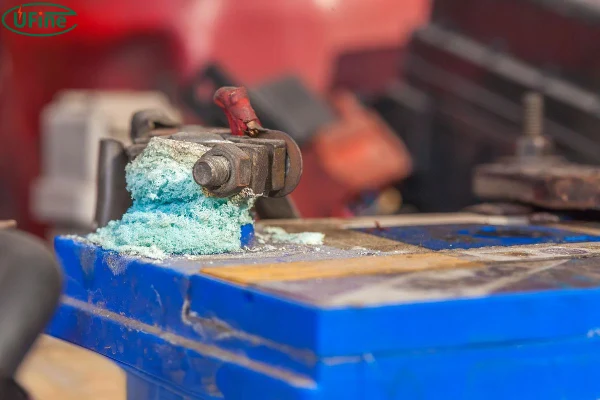
Battery terminal corrosion is a chemical reaction that occurs when the battery’s electrolyte, a mixture of acids and water, leaks out and reacts with the air. This reaction creates a white, green, or blue powdery substance that builds up on the battery terminals. This substance is actually a combination of lead sulfate, lead oxide, and lead carbonate.
While seemingly harmless, this corrosion can create a significant problem. It acts as an insulator, hindering the flow of electricity between the battery and the car’s electrical system. This can lead to a variety of issues, including:
- Difficult Starting: The car struggles to turn over, requiring multiple attempts to start.
- Dim Lights: Headlights and interior lights may appear dimmer than usual.
- Sluggish Performance: The car may lack power and acceleration.
- Electrical Problems: Other electrical components, such as the radio, power windows, and air conditioning, may malfunction.
1 Positive Battery Terminal Corroded
The positive battery terminal is the red cable connection, and it’s often the one that shows the most corrosion. Here’s why:
- Higher Voltage: The positive terminal carries a higher voltage, which can accelerate the corrosion process.
- Sulfation: Lead sulfate, a common component of battery corrosion, tends to form more readily on the positive terminal.
- Heat: The positive terminal can get hotter than the negative terminal, which can also contribute to corrosion.
2 Negative Battery Terminal Corroded
The negative battery terminal is the black cable connection. While it’s less prone to corrosion than the positive terminal, it can still be affected. Here’s what to look for:
- Green or Blue Corrosion: Corrosion on the negative terminal is often green or blue, indicating the presence of lead oxide or lead carbonate.
- Loose Connections: Corrosion on the negative terminal can make the cable connection loose, leading to poor electrical conductivity.
Part 2. Why is battery corrosion blue?
If you notice a blue or blue-green substance forming around your battery terminals, you are likely seeing a type of corrosion caused by a chemical reaction between metal components and acidic vapors.
In most cases, this blue corrosion is related to copper sulfate formation, which happens when copper-containing parts inside the terminal or cable react with sulfuric acid fumes escaping from the battery.
Unlike simple dust or dirt, this type of corrosion is a sign of chemical activity inside or around your battery system.
You might be surprised to learn that battery corrosion is not always the same color. When it appears blue or green, it usually means copper is involved in the reaction.
Here is a simplified breakdown:
- Battery electrolyte contains sulfuric acid (in lead-acid systems)
- Acid vapors escape through venting or micro-leaks
- Copper in terminals or cable ends reacts with sulfur compounds
- Copper sulfate forms, which appears blue or blue-green
Is blue corrosion different from white or green corrosion?
Yes, and this is an important detail many users overlook.
Different corrosion colors usually indicate different chemical reactions.
| Color | Likely material | What it usually means |
|---|---|---|
| White | Lead sulfate | Common in lead-acid battery terminals |
| Blue / blue-green | Copper sulfate | Copper reaction with acid vapors |
| Green | Copper oxidation | Long-term moisture + corrosion exposure |
Part 3. What causes battery terminal corrosion?
Battery terminal corrosion does not happen randomly. It is usually the result of a few specific conditions.
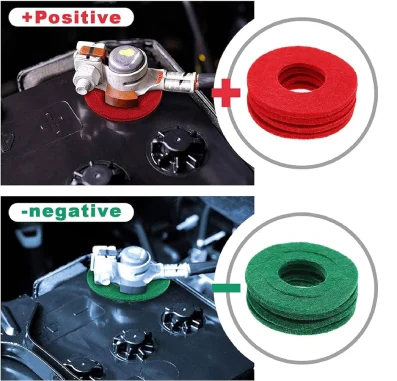
Several factors contribute to battery terminal corrosion:
- Electrolyte Leakage: As mentioned earlier, the battery’s electrolyte is a mixture of acids and water. Over time, this electrolyte can evaporate and leak out of the battery through the vent caps. This leakage is often accelerated by extreme temperatures, especially hot weather.
- Moisture: High humidity and condensation can also contribute to corrosion. The moisture in the air reacts with the battery terminals, leading to the formation of the corrosive substance.
- Environmental Factors: Salt air, pollutants, and even bird droppings can contribute to corrosion. These substances can react with the battery terminals, accelerating the corrosion process.
- Battery Age: Older batteries are more prone to leakage and corrosion. This is because the battery’s internal components degrade over time, making it more likely for the electrolyte to leak out.
| Cause | Explanation | Result |
|---|---|---|
| Acid leakage | Small electrolyte leaks or vapor release | Chemical buildup on terminals |
| Overcharging | Excess charging creates more gas release | Faster corrosion formation |
| Moisture exposure | Water increases chemical reaction speed | Accelerated oxidation |
| Aging battery | Internal degradation over time | More vapor leakage |
| Poor sealing | Weak battery casing or vent system | Continuous corrosion cycle |
If you are dealing with repeated corrosion, it often means the root issue is not just the terminal—it may be the battery condition or charging system.
Identifying the Signs of Battery Terminal Corrosion
Recognizing the signs of battery terminal corrosion is crucial for preventing further damage. Here’s what to look for:
- White, Green, or Blue Powder: A white, green, or blue powdery substance on the battery terminals is a clear indication of corrosion.
- Corrosion on the Battery Posts: The battery posts, the metal parts that connect to the cables, may also show signs of corrosion.
- Loose Connections: The cables may be loose or difficult to remove from the battery terminals due to corrosion.
- Clicking Noise: You may hear a clicking noise when you try to start the car, indicating that the battery is not making a good connection.
Part 4. Can battery corrosion damage battery cables?
Yes, it can.
When corrosion builds up on terminals, it increases electrical resistance. That means your battery has to work harder to deliver the same current.
Over time, you may notice:
- Slower engine start (in vehicles)
- Voltage drops under load
- Intermittent power loss
- Heat buildup in cables or connectors
In severe cases, corroded terminals can even affect the safety and efficiency of your entire electrical system.
If you want to understand how different connections affect performance, you can also read about battery connectors in our detailed guide.
Part 5. How to prevent battery terminal corrosion?
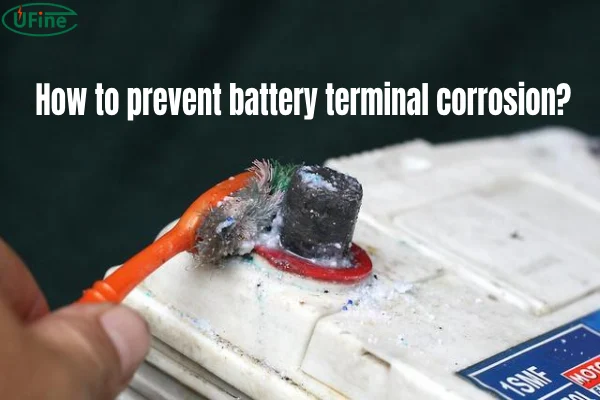
Preventing battery terminal corrosion is easier than fixing it. Here are some simple steps you can take:
- Keep the Battery Clean: Regularly clean the battery terminals and surrounding area with a wire brush or a toothbrush. This will remove any accumulated dirt, grime, and corrosive residue.
- Apply a Protective Coating: After cleaning, apply a thin layer of petroleum jelly or battery terminal protector to the terminals. This will create a barrier against moisture and prevent corrosion.
- Use Battery Terminal Covers: Battery terminal covers are available at most auto parts stores. These covers help to keep moisture and debris away from the terminals.
- Check the Battery Regularly: Inspect your battery regularly for signs of corrosion. Early detection can prevent more serious problems.
- Replace Old Batteries: If your battery is old or shows signs of leakage, consider replacing it. This will help to prevent corrosion and ensure that your car’s electrical system is functioning properly.
| Method | How it helps |
|---|---|
| Battery terminal paste (dielectric grease) | Blocks moisture and acid vapor |
| Regular inspection | Early detection of buildup |
| Proper charging system | Prevents overgassing |
| Clean environment | Reduces moisture exposure |
| High-quality battery | Better sealing reduces leakage risk |
Applying battery terminal paste is one of the most effective long-term solutions because it creates a protective barrier between metal and air.
Part 6. How to clean and fix corroded battery terminals?
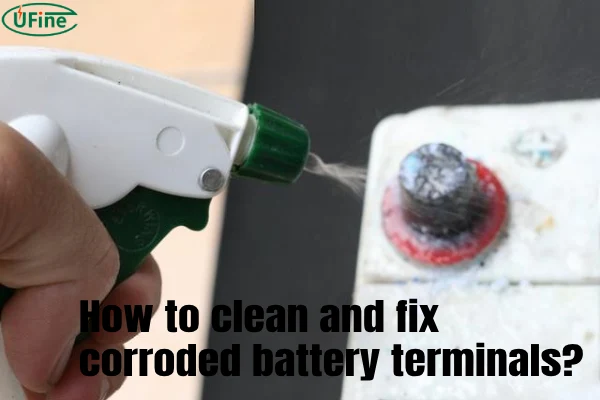
If you find corrosion on your battery terminals, don’t panic. You can usually fix it yourself with a few simple tools and supplies. Here’s how:
- Disconnect the Battery: Always disconnect the battery before working on it. Start by removing the negative cable (black cable) first, then the positive cable (red cable). This will prevent accidental sparks and potential electrical shocks.
- Clean the Terminals: Use a wire brush or a toothbrush to scrub away the corrosion from the battery terminals and posts. You can also use a baking soda and water paste to help loosen the corrosion.
- Clean the Cables: Clean the ends of the battery cables with a wire brush or a toothbrush. Make sure that the metal contacts are clean and free of corrosion.
- Apply a Protective Coating: After cleaning, apply a thin layer of petroleum jelly or battery terminal protector to the terminals and posts. This will help to prevent corrosion from returning.
- Reconnect the Battery: Reconnect the battery cables in the reverse order, starting with the positive cable (red cable) and then the negative cable (black cable).
Additional Tips for Preventing and Fixing Battery Terminal Corrosion
- Use a Battery Terminal Cleaner: Specialized battery terminal cleaners are available at most auto parts stores. These cleaners are designed to remove corrosion and leave a protective coating on the terminals.
- Consider a Battery Terminal Protector: Battery terminal protectors are small devices that fit over the battery terminals and help to prevent corrosion. They are a good investment if you live in a humid climate or experience frequent battery corrosion.
- Check the Battery’s Vent Caps: Make sure that the battery’s vent caps are clean and free of debris. This will help to prevent electrolyte leakage.
- Don’t Overtighten the Cables: Overtightening the battery cables can damage the terminals and make them more susceptible to corrosion. Tighten the cables securely, but don’t overtighten them.
Part 7. When should you replace the battery?
Cleaning corrosion is helpful, but it does not solve every problem.
You should consider replacing the battery if you notice:
- Repeated corrosion within a short time
- Swollen battery casing
- Frequent starting issues
- Visible electrolyte leakage
- Unstable voltage output
If corrosion keeps coming back, it often indicates internal battery degradation rather than just surface contamination.
Part 8. FAQs
1. Can blue corrosion appear without any visible battery damage?
Yes. Internal gas leakage can happen even when the battery casing looks normal, especially in early-stage degradation.
2. Does blue corrosion affect battery voltage output?
Yes. Corrosion increases electrical resistance, which can cause unstable or reduced voltage delivery under load.
3. Can corroded terminals cause intermittent electrical issues?
Yes. Loose or partially corroded connections can cause flickering lights, unstable electronics, or random power interruptions.
4. Can corrosion spread from terminals to other metal parts?
Yes. If left untreated, corrosive residue can spread to nearby brackets, clamps, and cable ends, accelerating oxidation.
5. Is it safe to touch blue corrosion with bare hands?
No. It may contain acidic or copper compounds that can irritate skin. Always use gloves when cleaning.
Related Tags:

More Articles

JST vs Molex: The Right Battery Connector Choice
JST or Molex for your battery? Learn how connector selection affects current, voltage drop, reliability, and device performance.
Custom Battery Pricing: Costs Manufacturers Don’t Mention
A low battery quote may not be the final cost. Discover common hidden expenses that affect custom lithium battery projects.
Battery Wire Length: Hidden Cause of Power Loss
A longer battery wire can cause voltage drop, power loss, and unstable operation. Learn how wire length affects battery performance.
How Device Sleep Modes Affect Battery Life
Think sleep mode extends battery life? Learn why devices still drain power and how firmware, hardware, and batteries affect runtime.
LiPo Battery and PCB Design: Clearance, Insulation, and Placement
Learn how to optimize LiPo battery PCB clearance, insulation, placement, wiring, and thermal design—and avoid common integration mistakes.


