- Part 1. Types of rechargeable batteries
- Part 2. How rechargeable battery charging works
- Part 3. What affects the charging of rechargeable batteries?
- Part 4. How long does it take to charge a rechargeable battery?
- Part 5. Chargers and charging cables
- Part 6. How to charge rechargeable batteries with USB?
- Part 7. How to charge a rechargeable battery box?
- Part 8. How to charge a rechargeable battery faster
- Part 9. Battery safety mechanisms and protection systems
- Part 10. When you should NOT charge rechargeable batteries
- Part 11. Common charging mistakes you should avoid
- Part 12. FAQs
Key takeaways
- Rechargeable batteries must be charged according to their chemistry (Li-ion, NiMH, LiPo, etc.)
- USB rechargeable batteries are convenient but slower and less flexible than dedicated chargers
- Correct charging parameters (voltage, current, temperature) directly affect battery life and safety
- Most modern batteries rely on a built-in Battery Management System (BMS) for protection
- Improper charging can reduce battery lifespan by 30%–50% and increase safety risks
Part 1. Types of rechargeable batteries
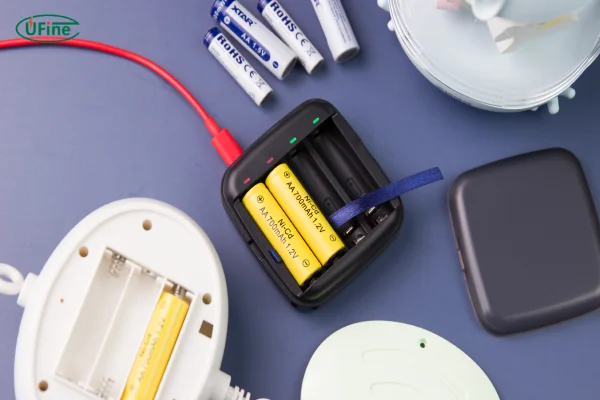
Rechargeable batteries aren’t one-size-fits-all. Different types are designed for specific applications, and knowing their unique features helps you charge them effectively.
Nickel-Cadmium (NiCd)
- Key Features: Known for durability and reliability, NiCd batteries can handle high discharge rates.
- Uses: Power tools, medical devices, emergency lighting.
- Charging Characteristics: Prone to the memory effect, which reduces capacity if not fully discharged before charging.
Nickel-Metal Hydride (NiMH)
- Key Features: An improvement over NiCd, NiMH batteries offer higher capacity and less environmental impact.
- Uses: Cameras, toys, portable radios.
- Charging Characteristics: Best charged at slower rates to avoid overheating and extend lifespan.
Lithium-Ion (Li-ion)
- Key Features: Lightweight, with high energy density and a long lifespan.
- Uses: Smartphones, laptops, electric vehicles.
- Charging Characteristics: Requires careful charging to avoid overheating or overcharging. Most modern chargers manage this automatically.
Lithium-Polymer (LiPo)
- Key Features: Flexible and lightweight, with a thinner profile than Li-ion.
- Uses: Drones, RC vehicles, ultrathin electronics.
- Charging Characteristics: Very sensitive to improper charging. Must use dedicated chargers to avoid damage.
Part 2. How rechargeable battery charging works
To understand how to charge rechargeable batteries correctly, it helps to know the basic charging principle.
Basic charging process
- Charger supplies controlled voltage and current
- Ions move inside the battery cells
- Battery reaches full charge at a specific cut-off voltage
- Charging stops or switches to trickle mode (depending on system)
Key charging parameters
| Parameter | Meaning | Typical value |
|---|---|---|
| Charging voltage | Maximum safe voltage per cell | 4.2V (Li-ion) |
| Charging current | Speed of charging process | 0.5C–1C |
| Cut-off voltage | Voltage where charging stops | 4.2V per cell |
| Safe temperature range | Operating safety window | 0°C–45°C |
These parameters are critical because exceeding them can cause overheating, capacity loss, or permanent battery damage.
Part 3. What affects the charging of rechargeable batteries?
Charging a battery isn’t as straightforward as plugging it in and waiting. Several factors influence how efficiently and safely a battery charges:
1. Temperature
Extreme temperatures can severely affect charging performance.
- Cold environments: Slow down chemical reactions, making charging inefficient.
- Hot environments: Can lead to overheating, reducing battery life and risking damage.
NiMH Battery vs Li-Ion Battery vs NiCad Battery: How are they different?
2. Charger Quality
Not all chargers are created equal. A high-quality charger ensures stable voltage and current delivery, while a low-quality one can cause overcharging, overheating, or damage to the battery.
3. Battery Age
As batteries age, their ability to hold a charge decreases. Older batteries often take longer to charge and discharge faster.
4. State of Charge
Charging from a completely depleted state often takes longer, while partially charged batteries require less time. Lithium-based batteries, in particular, perform best when kept between 20%-80% charge.
Part 4. How long does it take to charge a rechargeable battery?
The time needed to charge a battery depends on:
1. Battery Type
- NiCd: 2-6 hours for full charge.
- NiMH: 1-4 hours depending on capacity and charger.
- Li-ion: 1-3 hours, often faster with a compatible fast charger.
2. Battery Capacity
Measured in milliampere-hours (mAh), larger capacities require more time to charge.
3. Charger Output
High-powered chargers, especially those supporting USB-C Power Delivery, significantly reduce charging times.
Pro Tip: Always follow the manufacturer’s recommended charging times to avoid overcharging.
Part 5. Chargers and charging cables
Chargers and cables play a pivotal role in battery health and performance.
Impact of Chargers and Cables
- Low-quality chargers: May cause inconsistent power delivery, overheating, or even battery damage.
- Good-quality chargers: Provide stable and safe charging.
Types of Chargers
- Standard Chargers: Provide a slow, steady charge. Best for older NiCd or NiMH batteries.
- Smart Chargers: Automatically detect when the battery is full and stop charging, preventing overcharging.
- Fast Chargers: Deliver higher power for faster charging but must match the battery’s specifications.
Types of Charging Cables
- Micro-USB: Common for older USB-compatible batteries.
- USB-C: Preferred for modern devices; supports higher power and faster charging.
- Lightning Cables: Proprietary to Apple but not common for rechargeable batteries.
Part 6. How to charge rechargeable batteries with USB?
USB charging is one of the most searched topics, especially for portable devices.
USB rechargeable batteries usually include a built-in charging circuit and a USB port, allowing direct charging without an external charger.
1 How USB charging works
- Internal PCB controls voltage and current
- USB 5V input is converted into safe charging levels
- Battery charges internally without external balancing charger
2 Advantages and limitations
| Aspect | USB rechargeable batteries | Standard rechargeable batteries |
|---|---|---|
| Convenience | Very high | Medium |
| Charging speed | Slower | Faster |
| Safety control | Built-in but limited | Advanced external charger control |
| Flexibility | Low | High |
USB charging is convenient, but not always the fastest or most efficient option.
Part 7. How to charge a rechargeable battery box?
Battery boxes charge multiple batteries at once. Here’s how to use one:
- Insert Batteries: Place rechargeable batteries into the slots, aligning the positive and negative terminals.
- Connect the Charger: Attach the battery box to a power source.
- Monitor Indicators: Many boxes feature individual lights for each battery to show charging status.
- Remove Batteries: Unplug the charger and remove batteries once the indicators show they’re fully charged.
Part 8. How to charge a rechargeable battery faster
- Use a fast charger designed for your battery type.
- Keep the battery and charger in a cool environment to prevent overheating.
- Avoid charging from a fully depleted state; aim for mid-range charges.
- Use high-quality cables for consistent power delivery.
Part 9. Battery safety mechanisms and protection systems
Most modern rechargeable batteries include a Battery Management System (BMS) to ensure safe operation.
What a BMS protects against
- Overcharging
- Over-discharging
- Overcurrent
- Short circuits
- Overheating
Without these protections, rechargeable batteries would degrade quickly or become unsafe under stress conditions.
Part 10. When you should NOT charge rechargeable batteries
Avoid charging in the following situations:
- The battery casing is swollen or damaged
- The battery is leaking or deformed
- The ambient temperature is too high or too low
- The battery shows abnormal heating during charging
Charging under these conditions can be dangerous and may permanently damage the battery.
Part 11. Common charging mistakes you should avoid
Many battery issues come from improper charging habits:
- Using the wrong charger voltage
- Overcharging batteries overnight frequently
- Charging damaged or swollen batteries
- Exposing batteries to high heat during charging
- Mixing different battery types in one charger
These mistakes can significantly reduce battery lifespan and increase safety risks.
Part 12. FAQs
Can you charge a non-rechargeable battery?
No, attempting to charge a non-rechargeable battery is dangerous. It can lead to overheating, leakage, or even explosions, as these batteries are not designed to handle charging currents.
Can I recharge a battery without a charger?
Yes, but only certain batteries. USB-rechargeable batteries with built-in charging ports don’t require a traditional charger. For others, makeshift solutions are risky and not recommended.
Can rechargeable batteries lose capacity if they are charged too often?
Yes. While modern rechargeable batteries are designed for hundreds of charge cycles, frequent unnecessary charging can gradually contribute to capacity loss, especially when batteries are constantly kept at 100% charge.
Is it better to fully drain a rechargeable battery before charging?
Not usually. Lithium-ion and lithium polymer batteries perform best when recharged before reaching a very low state of charge. Deep discharging can accelerate battery aging.
Why does a rechargeable battery charge faster at first and slower near the end?
Most chargers use a multi-stage charging process. The battery accepts energy quickly during the constant-current phase and slows down during the constant-voltage phase to protect the cells from overcharging.
Why does my rechargeable battery show full charge but run out quickly?
This may indicate battery aging, increased internal resistance, cell imbalance, or previous exposure to excessive heat. A battery can display a full charge while storing significantly less energy than when new.
How can I tell if a rechargeable battery has reached the end of its life?
Common signs include noticeably shorter runtime, excessive heating during charging, swelling, slower charging performance, and significant capacity reduction compared with when the battery was new.
Related Tags:

More Articles
Buck vs. Boost vs. Buck-Boost Converter: Which Is Best for Battery?
Not sure which converter your battery-powered device needs? Compare Buck, Boost, and Buck-Boost designs and discover what affects voltage stability and runtime.
How to Match 18650 Cells for a Reliable Battery Pack?
Building an 18650 battery pack? Learn how to compare cell capacity, voltage, and internal resistance to avoid mismatches and improve reliability.
Why Do 18650 Battery Packs Get Hot During Discharge?
Is your 18650 battery pack overheating under load? Learn what causes excess heat, how to spot dangerous symptoms, and what to do next.
18650 Battery BMS: How to Get the Specs Right
Learn how to choose a BMS for an 18650 battery pack. Compare voltage, current ratings, protection features, and balancing before you buy.
Why Does My Ring Camera Battery Drain So Fast or Stop Charging?
Is your Ring camera battery draining fast or not charging? Discover common causes, practical fixes, and when to replace the battery.