
- Key takeaways
- Part 1. Types of lightweight batteries
- Part 2. Comparisons of lightweight batteries
- Part 3. Lightweight battery weight comparison by application
- Part 4. Lightweight 12V batteries for different uses
- Part 5. Performance impact of weight reduction
- Part 6. Weight vs cost vs lifespan trade-off
- Part 7. How to choose the right lightweight battery
- Part 8. When lightweight batteries make the biggest difference
- Part 9. FAQs
Lightweight batteries change how you use power. It’s not just about shaving a few pounds.
Imagine installing a battery in a small fishing boat. Lifting a 65-lb lead-acid battery into a tight compartment isn’t just inconvenient — it’s risky. Now compare that with a 20-lb lithium battery. The difference is immediate and practical.
The same applies to RV travelers, off-grid users, and motorcycle riders. When you’re moving equipment often, weight matters more than you think.
There’s also a performance benefit. Lighter batteries reduce overall vehicle weight, which can improve fuel efficiency and handling. This is one reason racing teams switched to lightweight lithium batteries years ago — and why everyday drivers are now following.
Key takeaways
- Lightweight batteries are typically lithium-based and significantly lighter than lead-acid batteries
- Weight reduction can improve vehicle performance, efficiency, and portability
- Different applications require different lightweight battery types
- Lithium iron phosphate (LiFePO4) batteries are usually the safest and most durable option
- Choosing the lightest battery isn’t always best — capacity and compatibility still matter
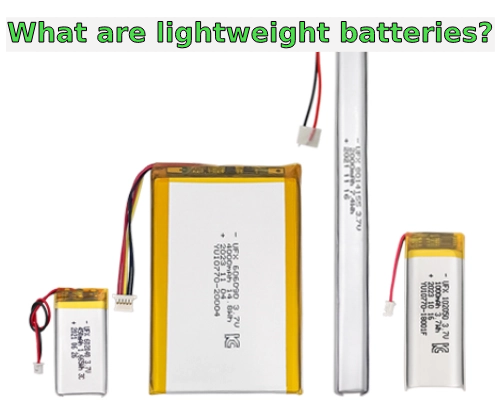
Part 1. Types of lightweight batteries
Not all lightweight batteries use the same chemistry. Understanding the differences helps you choose the right one.
The most common lightweight battery types include:
- Lithium iron phosphate (LiFePO4)
- Lithium-ion (NMC / NCA)
- AGM lightweight batteries
- Lithium starter batteries (motorcycle / performance)
LiFePO4 batteries are currently the most popular lightweight option. They offer excellent safety, long cycle life, and stable performance. Most lightweight marine and deep cycle batteries use this chemistry.
Lithium-ion NMC batteries are lighter and offer higher energy density. However, they are more commonly used in performance or specialized applications.
AGM batteries are technically still lead-acid, but some lightweight AGM designs exist. These are lighter than traditional flooded batteries but still heavier than lithium.
Each type has trade-offs. The lightest battery isn’t always the most durable or safest choice.
Part 2. Comparisons of lightweight batteries
To better understand how lightweight batteries differ, here’s a comparison of common battery types:
| Battery Type | Typical Weight (12V 100Ah) | Lifespan | Best Use |
|---|---|---|---|
| Lead-acid (Flooded) | 60–70 lbs | 300–500 cycles | Budget applications |
| AGM | 50–65 lbs | 400–700 cycles | Moderate performance |
| Lithium-ion (NMC) | 20–30 lbs | 1000–2000 cycles | High-performance use |
| LiFePO4 | 20–28 lbs | 3000–5000 cycles | RV, marine, solar |
This table highlights something important: lightweight batteries often last longer too. That means you’re not just saving weight — you’re also investing in durability.
To understand why different lithium batteries behave differently in weight, energy density, and safety, it’s helpful to compare their underlying chemistries, especially LFP vs NMC batteries, which are two of the most widely used lithium-ion types today.
Part 3. Lightweight battery weight comparison by application
Different applications benefit from lightweight batteries in different ways. A marine battery, for example, benefits from reduced hull weight, while a car battery improves handling and efficiency.
Here’s a practical comparison:
| Application | Traditional Battery Weight | Lightweight Alternative |
|---|---|---|
| Car battery | 40–50 lbs | 15–25 lbs |
| Marine battery | 60–70 lbs | 20–30 lbs |
| RV battery | 65–75 lbs | 25–30 lbs |
| Motorcycle battery | 8–15 lbs | 2–5 lbs |
When you see these numbers side-by-side, the benefits become obvious.
Part 4. Lightweight 12V batteries for different uses
Not every lightweight battery works for every situation. What works for a motorcycle might not work for a deep cycle application.
For cars, lightweight batteries are often used for performance upgrades. Reducing front-end weight can improve handling and acceleration.
For marine applications, lightweight batteries make installation easier and reduce overall boat weight. This can even improve fuel efficiency and stability.
For RV and solar systems, lightweight deep cycle batteries reduce strain on mounts and simplify maintenance.
If you travel frequently or move your battery setup often, these benefits become even more valuable over time.
Part 5. Performance impact of weight reduction
One of the most important but often overlooked aspects of lightweight batteries is how weight directly affects real-world performance.
1 Automotive performance impact
In cars, reducing battery weight contributes to:
- Improved acceleration (better power-to-weight ratio)
- Slight reduction in fuel consumption
- Reduced strain on suspension and braking systems
While a single battery may not transform a vehicle, it becomes meaningful in performance or modified vehicles.
2 Marine performance impact
In marine systems, weight reduction has a stronger effect:
- Reduced hull resistance
- Faster planing speed
- Improved fuel efficiency
- Better stability in small boats
Because water resistance is significantly higher than road resistance, every kilogram saved matters more.
3 RV and off-grid systems
In RVs and stationary solar systems:
- Performance gains are minimal
- The real benefit is structural and practical:
- easier installation
- more usable space
- higher energy storage per kg
Part 6. Weight vs cost vs lifespan trade-off
When choosing a lightweight battery, users are not only comparing weight—they are balancing three critical factors:
The three key variables:
- Weight (portability & efficiency)
- Cost (initial investment)
- Lifespan (long-term value)
1 Lithium batteries
- Lightest weight
- Highest upfront cost
- Longest lifespan (2000–5000 cycles)
Best for users who prioritize long-term value and performance.
2 AGM batteries
- Medium weight
- Lower cost
- Medium lifespan
Best for budget-conscious users who do not require extreme weight reduction.
3 Lead-acid batteries
- Heaviest
- Lowest cost
- Shortest lifespan
Best for temporary or low-budget applications.
The trade-off model
In real-world usage:
You cannot optimize weight, cost, and lifespan at the same time.
Typical relationship:
- Lighter = more expensive
- Longer lifespan = higher upfront cost
- Cheaper = heavier and shorter lifespan
When comparing lightweight batteries with traditional options like AGM or lead-acid, the performance gap becomes much clearer, especially in terms of weight, lifespan, and efficiency, as explained in this breakdown of AGM vs lithium vs lead acid batteries.
Part 7. How to choose the right lightweight battery
Choosing the lightest battery isn’t always the best decision. You should consider several factors before making a final choice.
Here are a few things to keep in mind:
- Capacity requirements (Ah rating)
- Voltage compatibility
- Size and fit
- Charging system compatibility
For example, a very lightweight battery might have lower capacity. That could reduce runtime for deep cycle applications.
On the other hand, a slightly heavier lithium battery may provide significantly longer lifespan and reliability.
It’s also important to check your charging system. Some older vehicles and chargers are designed for lead-acid batteries and may require adjustment when switching to lithium.
Part 8. When lightweight batteries make the biggest difference
There are certain situations where lightweight batteries provide the most value.
If you frequently remove your battery for storage or transport, lighter weight makes everything easier.
If you’re working in tight spaces, installation becomes far less frustrating.
If you’re optimizing performance — such as in racing, motorcycles, or boats — weight reduction directly improves results.
These aren’t just theoretical advantages. They’re practical improvements you’ll notice immediately.
Part 9. FAQs
1. How much lighter are lithium batteries compared to lead-acid?
Lithium batteries are typically 40% to 70% lighter than traditional lead-acid batteries. For example, a 12V 100Ah lead-acid battery may weigh around 65 pounds, while a comparable lithium battery often weighs 25 pounds or less.
2. Are lightweight batteries more durable?
In many cases, yes. Lithium batteries generally have longer cycle life and better resistance to vibration compared to lead-acid batteries. This makes them particularly useful in marine, off-road, and mobile applications.
3. Can I replace a lead-acid battery with a lightweight lithium battery directly?
Often yes, but it’s important to check charging compatibility and voltage requirements. Some older charging systems may need adjustments when switching to lithium batteries.
4. What is the lightest type of 12V battery available?
Lithium-based batteries, especially LiFePO4 and lithium-ion variants, are typically the lightest 12V batteries available. Motorcycle lithium batteries are often the lightest overall.
5. Do lightweight batteries charge faster?
Yes. Lithium batteries generally accept higher charging currents, which allows them to charge faster than lead-acid batteries under similar conditions.
Related Tags:

More Articles

Best 5 Riding Lawn Mower Battery Manufacturers
Looking for the best riding mower battery? Compare top battery brands by lifespan, maintenance, price, and performance.
All You Need to Know About CB Certification for Lithium Batteries
Learn what CB certification and the IECEE CB Scheme mean for lithium batteries. Explore requirements, testing, benefits, and global market access.
How to Choose the Right 3S LiPo Battery 5000mAh for Your RC Hobby Projects?
Learn how to choose the best 3S LiPo battery 5000mAh for RC cars, drones, boats, and planes. Compare C ratings, runtime, connectors, charging, and safety tips.
Comparing Semi Truck Batteries vs. Truck Batteries
Compare semi truck batteries and truck batteries by size, CCA, lifespan, and battery type. Learn how to choose the right truck battery for your vehicle.
Top 10 Flat Lithium Ion Battery Options for Compact Devices
Explore top flat lithium ion battery options, key specifications, and selection factors for compact electronics, medical devices, and energy storage systems.


