- Key Takeaways
- Part 1. What is a 14.4 volt battery?
- Part 2. Common 14.4V battery chemistries
- Part 3. 14.4V vs 12V vs 18V: What’s the real difference in daily use?
- Part 4. Inside a 14.4V battery pack
- Part 5. How many cells are in a 14.4 volt battery?
- Part 6. Common misconceptions about 14.4V batteries
- Part 7. What makes a 14.4V lithium-ion battery different?
- Part 8. Charging a 14.4V battery: What you should (and shouldn’t) do
- Part 9. How long does a 14.4V battery last?
- Part 10. How to choose the right capacity for a 14.4V battery
- Part 11. Where are 14.4 volt batteries commonly used?
- Part 12. Simple maintenance tips
- Part 13. FAQs
If you’ve ever used a cordless drill, a portable vacuum, or certain medical devices, chances are you’ve already relied on a 14.4 volt battery—even if you didn’t realize it at the time.
This voltage sits in a “sweet spot”: powerful enough for demanding applications, yet still compact and easy to manage. That’s exactly why the 14.4V battery has remained popular despite the rise of newer voltage classes.
In this guide, we’ll break things down in plain English. You’ll learn what a 14.4V battery actually is, how it’s built, how long it lasts, and—most importantly—how to choose the right one for your application without overthinking it.
Key Takeaways
- A 14.4V battery balances power, size, and weight better than many lower or higher voltage options.
- Most modern 14.4V packs are lithium-ion, but NiMH and LiFePO4 still make sense in specific cases.
- Cell configuration, charging method, and usage habits matter more than brand names.
- Choosing the wrong charger is one of the fastest ways to shorten battery life.
Part 1. What is a 14.4 volt battery?
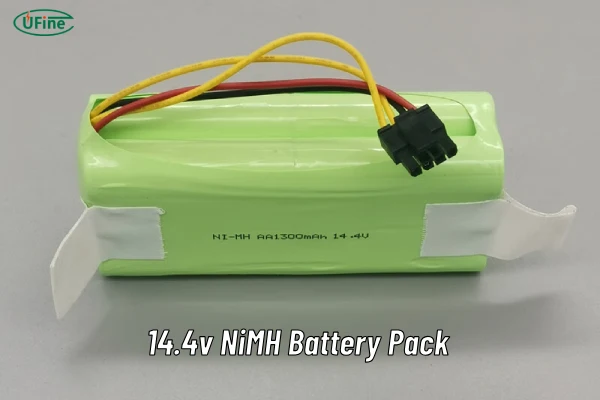
At its core, a 14.4 volt battery is a rechargeable battery pack designed to deliver a nominal voltage of 14.4V. “Nominal” simply means the average operating voltage—not the maximum when fully charged.
What makes 14.4V interesting is how it’s achieved. Instead of a single large cell, the battery is built from multiple smaller cells connected in series, working together to reach the target voltage.
From a user’s perspective, this voltage level offers a practical mix of torque, runtime, and portability. It’s strong enough for power-hungry tools, but not so high that it adds unnecessary bulk or safety complexity.
Why 14.4V Batteries Are Still Widely Used Today
It’s easy to assume that higher voltage always means better performance. In practice, that’s not always true.
Many motors, control boards, and power systems were originally optimized around 14.4V architectures. When everything in the system—motor efficiency, thermal design, and current draw—is tuned for this voltage, moving to 18V doesn’t automatically improve performance.
In medical equipment, industrial portable devices, and certain professional tools, stability and predictability matter more than raw power. The 14.4V platform offers exactly that: consistent output, manageable heat generation, and simpler safety design.
That’s why, even today, you’ll still find 14.4V batteries in applications where reliability is non-negotiable.
Part 2. Common 14.4V battery chemistries
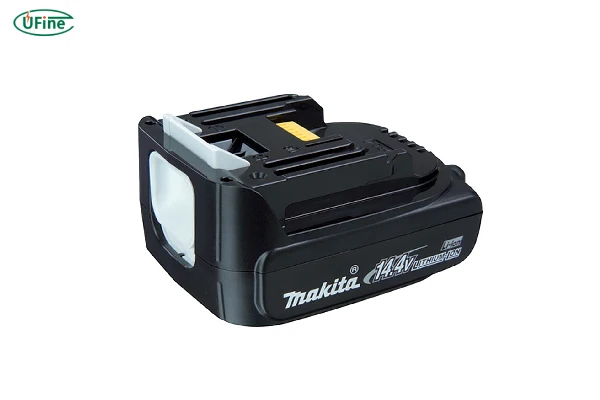
Not all 14.4V batteries behave the same. Chemistry plays a big role in weight, lifespan, safety, and charging behavior.
Here’s a quick comparison to help you orient yourself:
| Battery Type | Typical Strengths | Trade-Offs |
|---|---|---|
| Lithium-ion (Li-ion) | Lightweight, high energy density, fast charging | Sensitive to heat, needs protection circuits |
| Nickel-Metal Hydride (NiMH) | More eco-friendly than NiCd, stable output | Heavier, higher self-discharge |
| Nickel-Cadmium (NiCd) | Very durable, handles abuse well | Memory effect, toxic cadmium |
| Lithium Iron Phosphate (LiFePO4) | Extremely safe, very long cycle life | Lower energy density, heavier |
For most modern devices, 14.4V lithium-ion batteries dominate—and for good reason. Still, if safety, temperature stability, or long service life matters more than size, LiFePO4 can be a smarter choice.
NiMH Battery vs Li-Ion Battery vs NiCad Battery: How are they different?
Part 3. 14.4V vs 12V vs 18V: What’s the real difference in daily use?
On paper, voltage differences look small. In real use, they feel very different.
A 12V battery is lightweight and easy to control, but it reaches its limits quickly when torque or sustained load is required. It’s great for light household tasks, not so great for anything demanding.
An 18V battery, on the other hand, delivers noticeably higher torque. That extra power is useful—but it also means more weight, more heat, and often higher cost. For many users, especially in portable or handheld devices, that extra power simply isn’t necessary.
This is where the 14.4 volt battery stands out. It sits right in the middle: strong enough to handle serious work, yet compact enough to remain comfortable and efficient. That balance is why many manufacturers and engineers still rely on 14.4V designs instead of jumping straight to higher voltages.
Part 4. Inside a 14.4V battery pack
You don’t need to be an engineer, but understanding the basics helps you make better decisions.
Every 14.4V battery pack relies on a few critical components working together:
- Cells – the true “fuel tanks” that store energy
- Battery Management System (BMS) – protects against overcharge, over-discharge, and short circuits
- Separator & electrolyte – allow ions to move safely inside the cell
- Housing – provides mechanical protection and heat management
In lithium-based batteries, the BMS is especially important. Many failures blamed on “bad batteries” actually come from weak or poorly designed protection circuits.
Part 5. How many cells are in a 14.4 volt battery?
This is one of the most common questions—and it’s refreshingly simple.
Battery ChemistryCell VoltageCells in SeriesLithium-ion3.6V4 cells (4S)NiMH / NiCd1.2V12 cells
That’s why you’ll often see “4S” mentioned in lithium battery specifications. It simply means four cells connected in series to reach 14.4V.
How to Connect Lithium Batteries in Series and Parallel?
Part 6. Common misconceptions about 14.4V batteries
Over the years, a few misunderstandings come up again and again.
First, 14.4V and 14.8V are often treated as identical, but they’re not. While they may look close, charging limits and protection design can differ, especially in lithium-based packs.
Second, many people assume any 14.4V charger will work. In reality, charger compatibility depends on chemistry, charging profile, and protection circuits—not just voltage.
Finally, there’s the idea that same voltage means same performance. Two 14.4V batteries can behave very differently depending on cell quality, internal resistance, and pack design.
Understanding these details helps avoid early failures and disappointing performance.
Part 7. What makes a 14.4V lithium-ion battery different?

Most modern 14.4V lithium-ion batteries are built using a 4S configuration—four cells in series.
While the nominal voltage is 14.4V, a fully charged pack actually reaches 16.8V. This is normal and expected. Devices designed for 14.4V lithium-ion packs are built to handle this voltage range safely.
Another critical element is the Battery Management System (BMS). In a 14.4V Li-ion pack, the BMS balances cell voltages, limits current, and protects against overcharge or deep discharge. Without a proper BMS, even high-quality cells can fail prematurely.
This is one reason why two batteries with identical voltage ratings can have very different lifespans.
Part 8. Charging a 14.4V battery: What you should (and shouldn’t) do
Charging is where many users unknowingly shorten battery life.
Typical charging times look like this:
- Li-ion: ~1–3 hours with a proper charger
- NiMH: ~2–4 hours
- LiFePO4: ~2–3 hours
What matters more than speed, though, is compatibility. A charger designed for a 14.4V lithium-ion battery should never be used on NiMH or NiCd packs, even if the voltage seems “close enough.”
Part 9. How long does a 14.4V battery last?
This depends less on voltage and more on chemistry and usage habits.
On average, you can expect:
- Lithium-ion: 300–500 full charge cycles
- NiMH: 300–500 cycles
- NiCd: up to 1,000 cycles (with proper discharge habits)
- LiFePO4: 2,000+ cycles
If you use your battery daily, cycle life matters more than calendar age. If usage is occasional, storage conditions become the bigger factor.
Part 10. How to choose the right capacity for a 14.4V battery
Voltage tells you how strong the battery is. Capacity (Ah) tells you how long it can work.
If your device runs short bursts with high load—like drills or drivers—capacity matters less than discharge capability. A smaller Ah battery can perform just as well as a larger one in these scenarios.
However, for devices that run continuously, such as portable equipment or lighting systems, higher capacity makes a noticeable difference in runtime.
Here’s a practical reference:
| Capacity Range | Best For |
|---|---|
| 1.5–2.0Ah | Compact tools, lightweight devices |
| 3.0–4.0Ah | Daily-use power tools |
| 5.0Ah and above | Long runtime, industrial or medical use |
Choosing the right capacity isn’t about “bigger is better.” It’s about matching runtime needs without unnecessary weight or cost.
Part 11. Where are 14.4 volt batteries commonly used?
You’ll most often encounter 14.4V batteries in:
- Cordless power tools like drills and drivers
- Medical and diagnostic equipment requiring stable voltage
- Robotics and automation systems
- Portable household appliances
The voltage is high enough to deliver consistent torque, but still low enough to remain safe and manageable in portable designs.
Part 12. Simple maintenance tips
You don’t need a checklist—just a few smart habits:
- Avoid leaving lithium batteries fully charged for weeks at a time
- Keep batteries away from heat during storage
- Use chargers designed specifically for 14.4 volt batteries
- For NiMH or NiCd packs, occasional full discharge helps maintain capacity
These small steps often double real-world battery lifespan.
Part 13. FAQs
Can I replace a 14.4V battery with a 14.8V battery?
Sometimes, but not always. While the voltage difference seems small, charging limits and protection circuits may differ. Always check device compatibility before swapping.
What is the fully charged voltage of a 14.4V lithium-ion battery?
A fully charged 14.4V lithium-ion battery typically reaches about 16.8V, which is normal for a 4-cell series (4S) configuration.
Why do some manufacturers still design products around 14.4V?
Because many motors and power systems are optimized for this voltage. In some applications, moving to higher voltage offers no real efficiency or reliability gain.
Can a 14.4V battery be used in cold environments?
It depends on the chemistry. LiFePO4 performs better in temperature extremes, while standard lithium-ion batteries may experience reduced capacity in cold conditions.
Does fast charging damage a 14.4V battery?
Fast charging itself isn’t harmful if the charger is designed for the battery. Problems usually occur when incompatible or poorly regulated chargers are used.
Related Tags:

More Articles
Dead Battery or Device Failure? How to Find the Cause
Think your device is broken? Learn how to tell if the problem comes from battery aging or hardware failure before replacing your electronics.
Why iPhone Duo Uses Two Batteries: The Engineering Behind Foldable Phone Power
Why do foldable phones need two batteries? Explore the engineering challenges behind iPhone Duo’s dual-battery architecture and future battery trends.
Solid-State Batteries: 3 Myths You Need to Know
Solid-state batteries promise safer EVs and longer range, but the reality is more complex. Discover the challenges behind this next-gen technology.
Battery Capacity vs Discharge Rate: The Choice Engineers Face
Higher capacity or higher discharge rate? Learn how to choose the right LiPo battery for longer runtime, stable power output, and better device performance.
Battery Cable Size Guide: Choose the Right Wire Fast
Not sure what battery cable size you need? Learn how to select the right wire gauge, terminal size, and cable for safer, more efficient battery systems.