
- Key takeaways
- Part 1. How temperature affects battery life
- Part 2. How heat affects battery performance
- Part 3. How cold temperature affects battery performance
- Part 4. What temperature is best for batteries?
- Part 5. Does temperature affect battery voltage?
- Part 6. Battery internal resistance vs temperature
- Part 7. LiFePO4 capacity vs temperature
- Part 8. Temperature’s impact on battery cycle life
- Part 9. Temperature’s effect on battery charging and discharging
- Part 10. How you can protect your battery from temperature damage
- Part 11. FAQs
Batteries rarely fail all at once. Most of the time, they quietly lose performance — a little less runtime, slower charging, or unexpected voltage drops. And more often than not, temperature is the hidden reason.
Whether you’re using lithium-ion, LiFePO4, or lead-acid batteries, temperature directly affects battery life, voltage, internal resistance, and overall performance. The tricky part is that heat and cold affect batteries in very different ways, and both can shorten lifespan if you’re not careful.
If you’ve ever noticed your battery draining faster in winter or getting warm during heavy use, you’re already seeing temperature effects in action.
Let’s break down exactly how temperature affects battery life — and what you can realistically do about it.
Key takeaways
- Temperature is one of the biggest factors affecting battery life and performance
- High heat accelerates battery aging and reduces long-term lifespan
- Cold temperatures reduce battery capacity and increase internal resistance
- Battery voltage changes with temperature, especially in cold weather
- LiFePO4 batteries are more sensitive to cold compared to some lithium-ion chemistries
- The ideal battery temperature range is typically between 20°C and 30°C
- Managing temperature can significantly extend battery lifespan
Part 1. How temperature affects battery life
Heat is the biggest long-term threat to battery lifespan. While batteries can tolerate temporary temperature spikes, consistent exposure to high temperatures accelerates aging.
Imagine leaving a battery in a hot car during summer. Even if it still works afterward, the internal wear has already increased.
Cold temperatures behave differently. Instead of permanent damage, cold usually causes temporary performance loss. Once the battery warms up, much of the lost capacity returns. However, repeated exposure to freezing conditions can still cause long-term stress.
Here’s a general overview of how temperature impacts battery life:
| Temperature | Effect on battery life | What you might notice |
|---|---|---|
| Above 40°C | Accelerated aging | Shorter lifespan |
| 25°C | Optimal condition | Stable performance |
| 0°C | Reduced efficiency | Lower runtime |
| Below -10°C | Severe performance drop | Voltage sag, weak output |
This is why manufacturers often recommend room temperature storage whenever possible.
Part 2. How heat affects battery performance
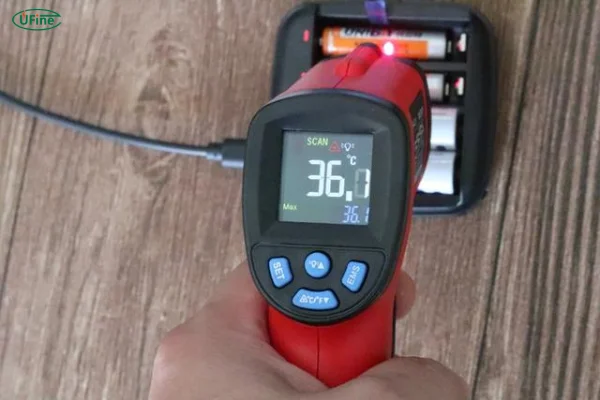
Heat is one of the greatest enemies of any battery. While it may seem like a warm device is a sign of high performance, it’s usually a sign that the battery is working harder than it should. And like any hardworking component, excessive heat can take its toll.
Why Does Heat Harm Batteries?
- Accelerated Chemical Reactions: Heat accelerates the chemical processes inside a battery. This may sound like a good thing at first—faster reactions should mean more power, right? But in fact, it causes increased internal resistance and faster degradation of the materials inside the battery. Over time, this leads to reduced capacity, meaning your battery won’t hold a charge as long as it used to.
- Higher Self-Discharge Rates: Heat also causes batteries to discharge faster, even when not in use. The chemical reactions that power the battery speed up, leading to a phenomenon called self-discharge, which results in a loss of stored energy.
- Thermal Runaway: In the worst-case scenario, excessive heat can lead to thermal runaway, where a battery’s temperature increases uncontrollably, resulting in leakage, fire, or even an explosion. This is especially dangerous in lithium-ion batteries, which are commonly used in consumer electronics and electric vehicles.
So, while it might feel like your device is performing better when it’s warm, it’s crucial to know that excessive heat can significantly impact both performance and safety.
Part 3. How cold temperature affects battery performance
On the flip side, extreme cold can also wreak havoc on battery performance. Whether you’re dealing with freezing temperatures or just a cooler-than-usual environment, cold temperatures can significantly reduce a battery’s ability to perform as expected.
Why Does Cold Damage Batteries?
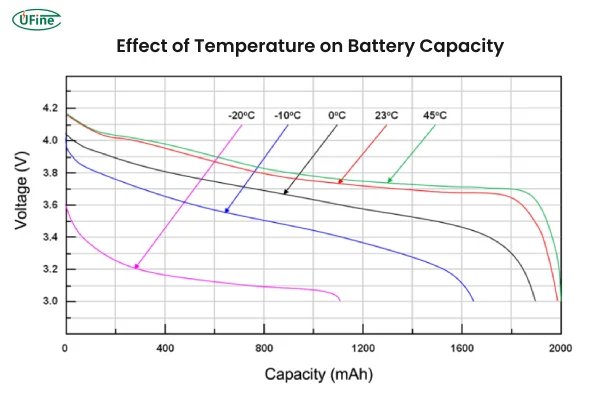
- Reduced Capacity: In cold weather, the battery’s electrolytes become more viscous, making it harder for ions to flow within the battery. As a result, the battery delivers a much lower voltage and capacity. You might notice that in winter, your phone, laptop, or car battery drains much quicker than usual, even when not in heavy use.
- Slower Charging: Cold temperatures also affect the charging rate of batteries. Charging a battery when it’s too cold can cause it to charge more slowly or fail to charge altogether. In extreme cases, charging in cold conditions can cause the battery to be damaged permanently, resulting in reduced performance over time.
- Increased Risk of Internal Damage: Charging a battery when it’s too cold may cause lithium metal plating on the anode, which can irreparably damage the battery. For other battery types, such as Nickel-Metal Hydride (NiMH) or Nickel-Cadmium (NiCd), cold temperatures can freeze the electrolyte, leading to permanent battery failure.
Although cold temperatures don’t pose as immediate a safety risk as heat, they still significantly affect battery performance. In fact, many people experience poor performance in their electronic devices during winter months due to the battery’s cold-induced sluggishness.
Part 4. What temperature is best for batteries?
Most batteries perform best in a moderate temperature range. Not too hot, not too cold.
Typically, batteries operate optimally between 20°C and 30°C. This range balances performance, lifespan, and safety.
Outside this range, batteries still work — but trade-offs begin to appear.
Ufine Battery’s special high-temperature and low-temperature batteries
At Ufine Battery, we understand the critical importance of temperature management when it comes to battery performance and safety. That’s why we offer a range of high-temperature lithium batteries and low-temperature batteries, specially designed to perform optimally under extreme conditions.
Whether you need a battery that can withstand intense heat or one that performs efficiently in freezing cold environments, Ufine Battery has the right solution for you. Additionally, we offer customizable options tailored to meet your specific requirements, ensuring your devices or applications stay powered, no matter the weather.
If you’re looking for reliable temperature-resistant batteries, don’t hesitate to contact us. Our team is here to help you find the perfect battery solution for your needs.
Part 5. Does temperature affect battery voltage?
Yes — and sometimes more than people expect.
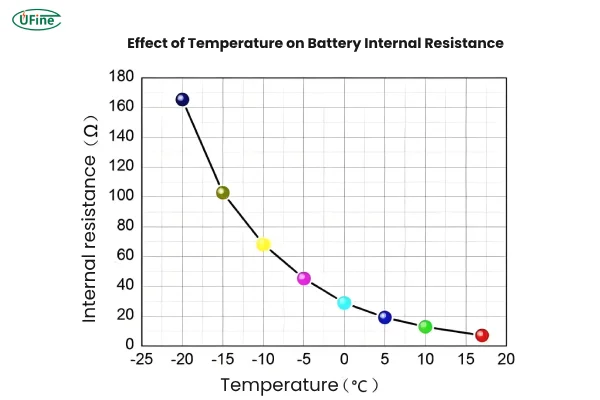
Cold temperatures increase internal resistance, which causes voltage to drop under load. This is why devices sometimes shut down earlier in winter, even when the battery isn’t fully drained.
Warm temperatures have the opposite effect. Voltage may appear slightly higher, and performance can temporarily improve. However, that short-term boost comes at the cost of long-term degradation.
This relationship becomes especially noticeable in:
- Electric vehicles
- Solar storage systems
- Power tools
- Backup batteries
For example, an electric vehicle in cold weather may show reduced range, not because the battery lost energy permanently, but because voltage drops sooner under load.
Over time, repeated voltage stress from temperature extremes can also affect battery health.
Part 6. Battery internal resistance vs temperature
Internal resistance is one of the most important — and often overlooked — battery characteristics.
When temperature drops, internal resistance increases. This leads to:
- Reduced output power
- More voltage drop
- Increased heat during heavy loads
Conversely, when temperature rises, internal resistance decreases. The battery becomes more responsive, but at the cost of accelerated chemical wear.
This is why high-performance applications often include thermal management systems. EVs, drones, and energy storage systems all try to maintain stable battery temperature to balance performance and longevity.
Part 7. LiFePO4 capacity vs temperature
LiFePO4 batteries are known for safety and long cycle life, but they are more sensitive to cold temperatures than some other lithium-ion chemistries.
This doesn’t mean LiFePO4 performs poorly overall — it simply behaves differently in cold conditions.
Here’s a general LiFePO4 capacity vs temperature comparison:
| Temperature | Approximate LiFePO4 capacity |
|---|---|
| 25°C | 100% |
| 0°C | 80–90% |
| -10°C | 60–70% |
| -20°C | 40–50% |
The main reason is slower lithium ion movement inside the battery at lower temperatures. This limits how much energy can be delivered.
Interestingly, once the battery warms up, performance usually returns to normal. However, charging LiFePO4 batteries below freezing can cause permanent damage, which is why many systems include low-temperature charging protection.
Part 8. Temperature’s impact on battery cycle life
A battery’s cycle life refers to the number of charge and discharge cycles it can go through before its capacity degrades to a point where it’s no longer effective. Temperature plays a huge role in determining how long a battery lasts.
-
Heat Shortens Cycle Life: High temperatures, especially when sustained over long periods, drastically shorten a battery’s cycle life. The chemical degradation that occurs due to heat means that the battery will lose capacity much more quickly, and the total number of charge cycles before replacement is reached will be much lower.
-
Cold Conditions: While cold temperatures may not directly accelerate degradation, they still affect the efficiency of the charging process and can lead to incomplete cycles, where the battery doesn’t charge to its full capacity. This causes more stress on the battery, and over time, it can result in premature failure.
Maintaining a battery in an optimal temperature range is crucial to extending its cycle life. Most manufacturers recommend storing and using batteries at room temperature for maximum longevity.
Part 9. Temperature’s effect on battery charging and discharging
Charging and discharging are key processes that can be deeply affected by temperature.
- Charging: Charging a battery at an improper temperature (either too hot or too cold) can be harmful. Charging in heat can result in overheating and decreased battery life, while cold charging can lead to incomplete charging and internal damage.
- Discharging: When a battery discharges in extreme temperatures, the rate of energy release can be much faster than usual. In hot conditions, a battery will discharge quicker, leading to a shorter runtime for your devices. In cold conditions, the battery’s ability to deliver energy is diminished, and your devices may lose power faster than you expect.
Understanding the right temperature ranges for charging and discharging is essential for maintaining battery performance and ensuring safety. In general, most batteries function best within the 20°C to 25°C (68°F to 77°F) range.
Part 10. How you can protect your battery from temperature damage
You don’t need complicated systems to improve battery temperature conditions. Small adjustments often make a big difference.
- Avoid leaving batteries in hot cars or direct sunlight
- Allow batteries to warm up before charging in winter
- Store batteries in moderate temperatures when possible
- Use insulated enclosures in cold environments
Even simple habits can significantly extend battery lifespan over time.
Part 11. FAQs
1. Does battery temperature affect charging speed?
Yes, temperature directly affects charging speed. In cold conditions, batteries charge more slowly because chemical reactions inside the battery slow down. In hot environments, charging may appear faster, but excessive heat can accelerate battery degradation and reduce long-term lifespan.
2. Can high temperature permanently damage a battery?
Yes. Prolonged exposure to high temperatures can permanently reduce battery capacity. Heat accelerates chemical reactions inside the battery, which leads to faster aging and shorter overall lifespan.
3. Is it safe to store batteries in cold environments?
Cold storage is generally safe if temperatures stay above extreme freezing levels. However, batteries should be warmed to room temperature before use or charging to prevent performance issues and potential damage.
4. Do different battery chemistries respond differently to temperature?
Yes. Lithium-ion, LiFePO4, and lead-acid batteries all react differently to temperature changes. For example, LiFePO4 batteries are more sensitive to cold temperatures, while some lithium-ion chemistries perform better in lower temperatures.
Related Tags:

More Articles

Dead Battery or Device Failure? How to Find the Cause
Think your device is broken? Learn how to tell if the problem comes from battery aging or hardware failure before replacing your electronics.
Why iPhone Duo Uses Two Batteries: The Engineering Behind Foldable Phone Power
Why do foldable phones need two batteries? Explore the engineering challenges behind iPhone Duo’s dual-battery architecture and future battery trends.
Solid-State Batteries: 3 Myths You Need to Know
Solid-state batteries promise safer EVs and longer range, but the reality is more complex. Discover the challenges behind this next-gen technology.
Battery Capacity vs Discharge Rate: The Choice Engineers Face
Higher capacity or higher discharge rate? Learn how to choose the right LiPo battery for longer runtime, stable power output, and better device performance.
Battery Cable Size Guide: Choose the Right Wire Fast
Not sure what battery cable size you need? Learn how to select the right wire gauge, terminal size, and cable for safer, more efficient battery systems.


