- Key Takeaways
- Part 1. What is a car battery?
- Part 2. What does "amps" mean in a car battery?
- Part 3. How many amps does a car battery have?
- Part 4. How many amps does a car use while running?
- Part 5. How many amps does a car battery provide when starting?
- Part 6. How to measure car battery amps? (Correct Way)
- Part 7. What affects car battery amperage?
- Part 8. What is parasitic drain in a car battery?
- Part 9. How to choose the right car battery? (Amps Perspective)
- Part 10. Car battery amps FAQs
When people ask “how many amps are in a car battery”, they usually mean two different things:
- Starting current (CCA / CA) — how much power the battery can deliver instantly
- Capacity (Ah) — how long it can supply current
A car battery is not just a number in amps. It is a combination of instant power + energy storage, both critical for starting and running your vehicle.
Key Takeaways
- A typical car battery delivers 400–1000+ amps (CCA) for engine starting.
- Most 12V batteries have 45Ah–100Ah capacity, depending on vehicle size.
- Cold Cranking Amps (CCA) is the most critical rating for real-world performance.
- A running car does not rely on battery amps—the alternator supplies most current.
- Lithium batteries offer higher discharge efficiency and lighter weight than lead-acid.
- Always match battery specs to engine size, climate, and electrical load.
Part 1. What is a car battery?
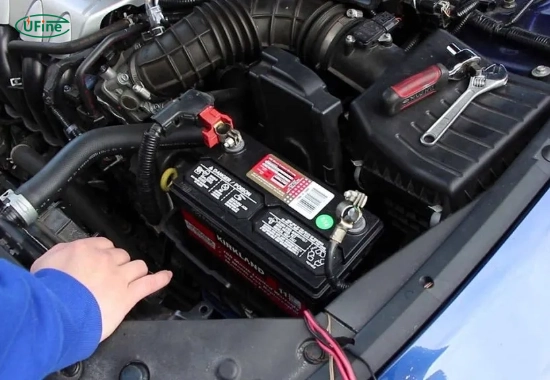
A car battery is a rechargeable energy storage device that powers engine starting and onboard electronics.
- Lead-acid batteries (most common): 6 cells × ~2.1V = 12.6V nominal, low cost, widely used
- Lithium batteries (LiFePO4): Lighter, longer lifespan, higher discharge efficiency, increasingly used in performance and EV applications
👉 For deeper voltage basics, see: How Many Volts Is a Car Battery?
Part 2. What does “amps” mean in a car battery?
Car battery amperage is defined through three key metrics:
- Cold Cranking Amps (Cca) — Most Important
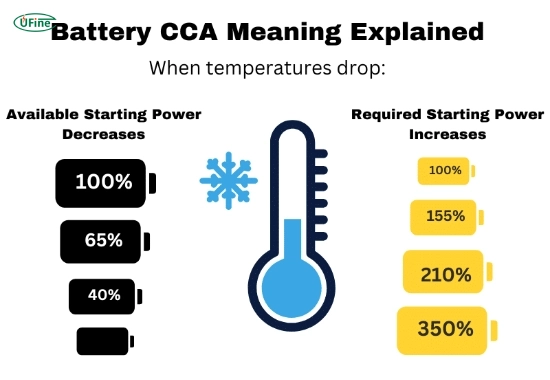
- Measures current at 0°F (-18°C) for 30 seconds
- Indicates starting ability in cold weather
- Cranking Amps (Ca)
- Measured at 32°F (0°C)
- Slightly higher than CCA, but less realistic
- Amp-Hour (Ah)
- Measures capacity over time
- Example: 60Ah = 3A for 20 hours
Part 3. How many amps does a car battery have?
Typical Car Battery Amperage Chart
| Vehicle Type | CCA (Starting Amps) | Capacity (Ah) |
|---|---|---|
| Small cars | 400–600 CCA | 45–60 Ah |
| Sedans | 500–700 CCA | 50–70 Ah |
| SUVs / trucks | 700–900 CCA | 70–100 Ah |
| Diesel engines | 800–1200+ CCA | 80–120 Ah |
Answering common queries:
- How many amps are in a car battery? → 400–1000+ amps (CCA)
- Car battery how much ampere? → Depends on type, but typically 500–800 amps
- Car battery amperage chart? → See table above
Part 4. How many amps does a car use while running?
This is often misunderstood.
When the engine is running:
- The alternator supplies most power
- The battery plays a backup/stabilizing role
Typical Electrical Loads While Driving
| Component | Current Draw |
|---|---|
| Headlights | 10–15A |
| AC system | 15–30A |
| Infotainment system | 5–10A |
| Engine electronics | 10–20A |
👉 Total load: 30–80 amps (typical)
So if you’re asking: “how many amps does a car use while running?” → usually 30–100A, supplied mainly by the alternator.
Part 5. How many amps does a car battery provide when starting?
Engine starting requires a short burst of high current:
- Small engines: 300–500 amps
- Standard cars: 400–700 amps
- Trucks/diesel: 700–1000+ amps
This is why CCA rating matters more than Ah for most users.
Part 6. How to measure car battery amps? (Correct Way)
You don’t directly measure amps with a standard multimeter unless using a clamp meter.
Practical Method:
- Measure voltage:
- 12.6V → fully charged
- 12.2V → ~50% charge
- <12.0V → low battery
- Use load testing for real amp performance
👉 Step-by-step guide: How to Check Car Battery Life
Part 7. What affects car battery amperage?
Key factors:
- Temperature: Cold reduces output significantly
- Battery age: Capacity drops after 2–3 years
- State of charge: Low charge = lower amps
- Internal resistance: Higher resistance reduces current flow
- Electrical load: More devices = higher demand
Cranking Amps Vs Pulse Hot Cranking Amps (Phca)
| Metric | Condition | Use Case |
|---|---|---|
| CCA | 0°F | Real-world cold start |
| CA | 32°F | Mild conditions |
| PHCA | ~80°F | Short bursts (marketing-heavy spec) |
👉 Recommendation: Focus on CCA, not PHCA, when choosing a battery.
Part 8. What is parasitic drain in a car battery?
Even when the car is off, small systems draw power:
- Normal: 20–50 mA
- High drain: caused by faulty wiring or aftermarket electronics
If excessive, it can drain a battery in days.
How Driving Habits Affect Car Battery Amperage Performance
- Short trips → battery never fully recharges
- High accessory use → increased load on alternator
- Long idle periods → risk of discharge
👉 Result: reduced lifespan and lower available amps.
Part 9. How to choose the right car battery? (Amps Perspective)
Quick Selection Checklist:
- Match or exceed OEM CCA rating
- Consider climate: Cold regions → higher CCA
- Evaluate electrical load: Audio systems, winches, etc.
- Choose battery type:
- Lead-acid → cost-effective
- Lithium → high performance, lightweight
Part 10. Car battery amps FAQs
How many amps are in a car battery exactly?
Most car batteries provide 400–1000+ CCA for starting and 45–100Ah capacity.
Can I use a higher amp battery?
Yes, as long as size and voltage match. Higher CCA improves starting reliability.
How many amps does a car battery have at rest?
At rest, it doesn’t “have amps”—it has voltage (12.6V) and stored capacity.
How many amps does a car use while running?
Typically 30–100 amps, mostly supplied by the alternator.
How often should I test my battery?
Every 6 months, or before extreme weather or long trips.
Related Tags:

More Articles

Buck vs. Boost vs. Buck-Boost Converter: Which Is Best for Battery?
Not sure which converter your battery-powered device needs? Compare Buck, Boost, and Buck-Boost designs and discover what affects voltage stability and runtime.
How to Match 18650 Cells for a Reliable Battery Pack?
Building an 18650 battery pack? Learn how to compare cell capacity, voltage, and internal resistance to avoid mismatches and improve reliability.
Why Do 18650 Battery Packs Get Hot During Discharge?
Is your 18650 battery pack overheating under load? Learn what causes excess heat, how to spot dangerous symptoms, and what to do next.
18650 Battery BMS: How to Get the Specs Right
Learn how to choose a BMS for an 18650 battery pack. Compare voltage, current ratings, protection features, and balancing before you buy.
Why Does My Ring Camera Battery Drain So Fast or Stop Charging?
Is your Ring camera battery draining fast or not charging? Discover common causes, practical fixes, and when to replace the battery.