- Part 1. Remote control car LiPo battery features
- Part 2. Remote control car battery types
- Part 3. How to actually estimate rc car speed and runtime
- Part 4. How to choose the right lipo battery for rc car
- Part 5. Common mistakes that ruin rc performance
- Part 6. Best battery choice by rc car type
- Part 7. How much battery capacity does your remote control car need?
- Part 8. How to extend the life of remote control car battery?
- Part 9. How to choose RC car LiPo charger?
- Part 10. FAQs
Key takeaways
- Choosing the right RC battery (rc battery) is not just about capacity — voltage, C rating, and internal resistance matter more for real performance.
- The best LiPo batteries for RC cars (lipo rc car batteries) depend heavily on your driving style: speed, racing, or off-road use.
- Real-world performance (speed + runtime) can be estimated using simple models instead of guessing.
- Most users make avoidable mistakes like over-volting their setup or ignoring ESC limits.
- A structured selection approach helps you avoid wasted money and unlock better speed and control.
Part 1. Remote control car LiPo battery features
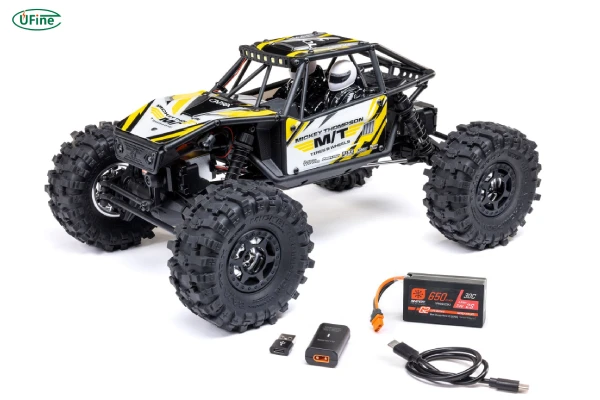
So, what sets remote control car LiPo batteries apart?
- High Power Output: These batteries can deliver bursts of current instantly, giving your RC car incredible acceleration.
- Lightweight Construction: LiPo cells are lighter than their NiMH or NiCd counterparts, improving speed and handling.
- Flexible Design: They come in various shapes and sizes, suitable for everything from mini racers to 1/8 scale monster trucks.
- Consistent Voltage Delivery: You get steady power output throughout the run—not just at the start.
- Customizability: Many LiPo packs are designed to match specific discharge rates, voltages, and capacities.
This is why racers and enthusiasts rely on LiPo batteries—they’re the fuel for competitive edge.
Part 2. Remote control car battery types
Before we get into the nitty-gritty of LiPo batteries, let’s look at the landscape of RC car power sources.
- NiMH (Nickel Metal Hydride): Affordable, beginner-friendly, but heavier and less powerful.
- NiCd (Nickel-Cadmium): Old tech, lower energy density, and prone to memory effect.
- Li-ion (Lithium-ion): Decent energy density, longer life, but can’t match LiPo’s power output.
- LiPo (Lithium Polymer): Light, powerful, fast-charging, and perfect for high-performance RC vehicles.
NiMH Battery vs Li-Ion Battery vs NiCad Battery: How are they different?
Among all these, LiPo batteries dominate the RC world for a reason—they’re built for speed, acceleration, and endurance.
| Battery type | Voltage | Best for | Driving experience |
|---|---|---|---|
| 2S LiPo | 7.4V | Beginners / casual driving | Smooth, stable, safe |
| 3S LiPo | 11.1V | Speed-focused users | Fast acceleration, more aggressive |
| 4S LiPo | 14.8V | Racing / advanced setups | Extreme speed, higher risk |
The jump from 2S to 3S is usually where people start saying: “Okay, this feels like a different car.”
But be careful — more voltage doesn’t always mean better performance if your ESC or motor can’t handle it.
Part 3. How to actually estimate rc car speed and runtime
Most people ask: “How fast will my RC car go with this battery?”
The answer depends on multiple factors, but voltage is the biggest driver.
A simple real-world approximation looks like this:
𝑦∝𝑉y∝V
Meaning: more voltage generally increases speed — but not in a perfectly linear way.
Because in real life, motor KV rating, gear ratio, and ESC limitations all interfere.
A more useful breakdown:
- 2S → baseline performance
- 3S → roughly +30% to +50% speed increase
- 4S → extreme performance, but heat and stress increase sharply
Now let’s talk runtime, because this is where many users get disappointed.
A simple estimation model:
Runtime (minutes)≈Capacity (mAh)×60Average current (mA)Runtime (minutes)≈Average current (mA)Capacity (mAh)×60
For example:
- 5000mAh battery
- 20A average load
You’re looking at roughly 15 minutes of real driving.
Of course, aggressive driving can cut this in half — RC cars are extremely load-sensitive.
Part 4. How to choose the right lipo battery for rc car
Step 1: check your ESC and motor limits
Before anything else, confirm whether your system supports 2S, 3S, or 4S. This alone prevents most failures.
Step 2: match voltage to driving style
- Want smooth control → 2S
- Want balanced speed → 3S
- Want maximum speed → 4S
Step 3: choose capacity based on runtime needs
- 3000–4000mAh → lightweight, short runs
- 5000–6000mAh → balanced
- 7000mAh+ → long sessions, heavier setup
Step 4: don’t ignore C rating
This is where performance actually “feels” different.
- Low C → weak acceleration
- Medium C → balanced driving
- High C → strong punch and consistent voltage under load
Part 5. Common mistakes that ruin rc performance
A lot of people think upgrading batteries automatically improves performance, but that’s not always true.
Here are the most common issues:
1. upgrading voltage without checking ESC limits
This is the fastest way to burn electronics. A 3S upgrade on a 2S-only ESC can end badly.
2. ignoring battery size compatibility
Even if it works electrically, a battery that doesn’t fit properly inside the tray creates balance and safety issues.
3. chasing high mAh only
More capacity adds weight, and sometimes your RC car becomes slower instead of faster.
Part 6. Best battery choice by rc car type
Different RC vehicles need different energy behavior — this is where many generic guides fail.
| RC type | Recommended setup | Why it works |
|---|---|---|
| Drift cars | 2S, stable discharge | Smooth throttle control matters more than speed |
| Racing cars | 3S high C rating | Fast acceleration and voltage stability |
| Off-road trucks | 3S–4S high capacity | Torque + endurance for rough terrain |
This is also where fast rc cars enthusiasts often go wrong — they upgrade voltage too aggressively without considering traction and control.
Part 7. How much battery capacity does your remote control car need?
This depends on how long you want to run your car—and how hard you push it.
Here’s a simple way to calculate: Runtime (mins) = (Battery Capacity in mAh / Motor Current in mA) × 60
So, if your motor draws 20A (20,000mA) and you use a 4000mAh pack: 4000 ÷ 20000 = 0.2 hours = 12 minutes
To extend runtime:
- Use higher mAh batteries
- Reduce throttle use
- Optimize gearing and motor efficiency
Just remember—bigger isn’t always better. Too much weight reduces speed and agility.
Part 8. How to extend the life of remote control car battery?
LiPo batteries can be fragile if not cared for properly. But with a bit of attention, they can last hundreds of cycles. Here’s how:
- Don’t Overcharge or Over-discharge: Keep voltage between 3.3V and 4.2V per cell.
- Balance Charge Every Time: This ensures all cells are charged equally.
- Store at 50–60% Charge: Especially if you won’t use it for more than a few days.
- Avoid Extreme Temperatures: Heat kills LiPos. Cold reduces performance.
- Use a LiPo-Safe Bag: Especially during charging or transport.
- Check for Puffing or Damage: Stop using the battery immediately if you notice bulging.
Caring for your LiPo is like caring for a high-performance engine—it rewards you with speed and reliability.
Part 9. How to choose RC car LiPo charger?
A bad charger can ruin your battery—or worse. Here’s what to look for:
- Balance Charging Feature: Absolutely essential for multi-cell LiPos.
- Adjustable Amperage: Customize charge rate based on battery size.
- Multi-Chemistry Support: Ideal if you use other types of batteries too.
- Smart Features: Auto-detect, LCD screen, error alerts—all helpful.
- Safety Protections: Overcharge, overheat, reverse polarity protections are non-negotiable.
Some brands also offer mobile apps for charge monitoring—handy for racers!
Again, Ufine Battery doesn’t just offer custom batteries—they can also help you source the perfect charger for your RC setup. Reach out for personalized support!
Part 10. FAQs
1. Why does my RC battery swell or puff up?
Swelling usually happens due to overcharging, overheating, or deep discharging. Once a LiPo swells, it should no longer be used.
2. Can I use different brands of LiPo batteries in the same RC car?
Yes, but performance consistency may vary. Mixing batteries with different internal resistance or capacity is not recommended for racing setups.
3. Is it safe to charge LiPo batteries overnight?
No. LiPo batteries should always be charged under supervision using a proper balance charger to avoid fire risks.
Related Tags:

More Articles
Dead Battery or Device Failure? How to Find the Cause
Think your device is broken? Learn how to tell if the problem comes from battery aging or hardware failure before replacing your electronics.
Why iPhone Duo Uses Two Batteries: The Engineering Behind Foldable Phone Power
Why do foldable phones need two batteries? Explore the engineering challenges behind iPhone Duo’s dual-battery architecture and future battery trends.
Solid-State Batteries: 3 Myths You Need to Know
Solid-state batteries promise safer EVs and longer range, but the reality is more complex. Discover the challenges behind this next-gen technology.
Battery Capacity vs Discharge Rate: The Choice Engineers Face
Higher capacity or higher discharge rate? Learn how to choose the right LiPo battery for longer runtime, stable power output, and better device performance.
Battery Cable Size Guide: Choose the Right Wire Fast
Not sure what battery cable size you need? Learn how to select the right wire gauge, terminal size, and cable for safer, more efficient battery systems.